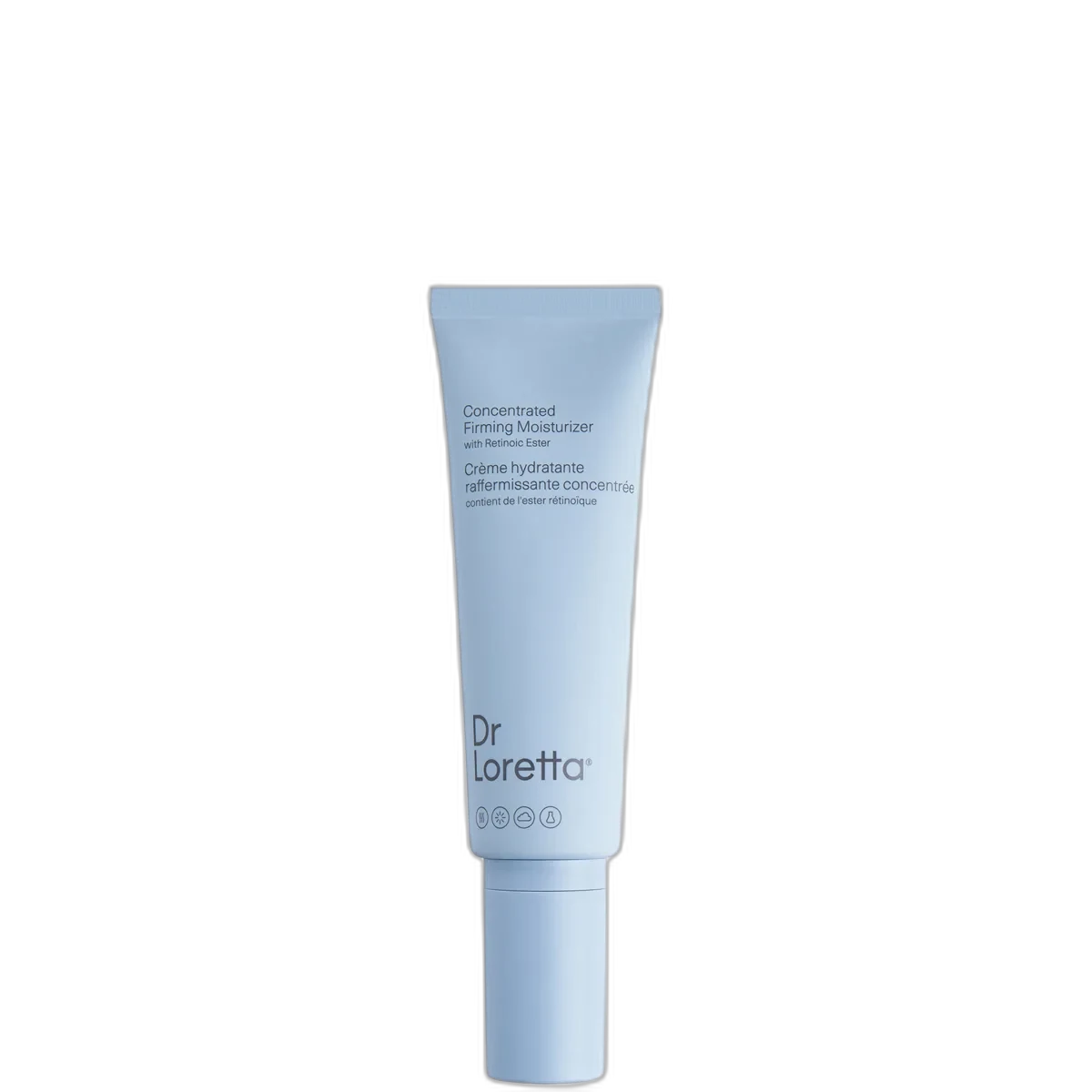
Concentrated Firming Moisturizer
No-Peel Retinoid Alternative
 Verified reviewer
Pros & cons.
- +Hydroxypinacolone retinoate delivers retinoid results without flaking
- +Lipochroman provides best-in-class antioxidant protection for the active
- +Pine bark extract adds collagen preservation to the anti-aging story
- +Tube packaging protects the retinoid ester better than a jar
- +Rich but non-greasy texture suits dry and normal skin
- +Formulated by a dermatologist with 40+ years of clinical practice
- −Contains orange flower oil which can irritate fragrance-sensitive skin
- −Castor seed oil is mildly comedogenic for acne-prone users
- −Results are more subtle than a tolerated retinol routine
- −Brand is still emerging with limited retail distribution
The full review.
Ask any dermatologist with a long patient roster and they’ll tell you the same thing: the people who most want retinoid results — mature skin, visible photoaging, loss of firmness — are disproportionately the ones who can’t actually tolerate retinol. Their barriers are thinner, their tolerance for transient irritation is lower, and they’ve usually tried retinol once or twice in their forties or fifties and quit before the benefits had a chance to show. Dr. Loretta Ciraldo spent more than four decades in Miami dermatology watching that exact pattern play out in consultation after consultation, and when she launched her own brand in 2018, the Concentrated Firming Moisturizer was her answer. It’s a retinoid cream designed specifically for people who can’t use retinol.
The active that makes this possible is hydroxypinacolone retinoate, better known by its trade name Granactive Retinoid. It’s a retinoic acid ester, which means it’s structurally closer to tretinoin than to retinol, but the ester linkage softens the signaling so the cream delivers retinoid-receptor activation without the stinging or flaking that retinol’s two-step conversion pathway creates. The mechanism matters because the reason retinol causes irritation isn’t the final retinoic acid product — it’s the enzymatic conversion pathway that temporarily overloads the skin’s tolerance. Skip the conversion, and you skip most of the discomfort.
Does that mean the results are weaker? Sort of, but not in the way you’d expect. Hydroxypinacolone retinoate produces more modest per-night effects than a properly tolerated retinol routine, but because more users actually stick with it consistently, the twelve-week outcomes often look similar. This is the classic ‘effective dose that doesn’t get taken versus moderate dose that does’ tradeoff, and in real clinical practice, adherence wins. If you’ve started three retinols and quit all three by week four, this cream will almost certainly give you better long-term results because you’ll still be using it in month six.
The supporting architecture is well thought-out in ways that distinguish this from a simple retinoid-plus-emollient formula. The Lipochroman inclusion — dimethylmethoxy chromanol — is a synthetic vitamin E analog with measurably better radical-scavenging activity than natural tocopherol, and it’s here specifically to protect the retinoid ester from oxidation. That’s not a small detail; retinoid stability in a cream base is one of the hardest formulation challenges in the category, and Lipochroman lets Dr. Loretta skip some of the harsher stabilizers a weaker antioxidant would require. Pine bark extract (Pycnogenol) contributes oligomeric proanthocyanidins that bind to and protect existing collagen fibers from matrix metalloproteinase degradation, which complements the retinoid’s collagen-building signal — the cream is both stimulating new collagen production and protecting what’s already there.
The base is rich, cushiony, and feels more like a moisturizer than a treatment product. Caprylic/capric triglyceride and castor seed oil lead the emollient phase, with cetyl alcohol and cetearyl alcohol providing structure. It’s not oil-free, and the castor seed oil is mildly comedogenic for a small percentage of users, so oily and acne-prone skin should look elsewhere. Dry and normal skin will find this texture deeply comfortable under zero other products, which is part of the argument for the price.
The one ingredient choice worth flagging is orange flower oil (citrus aurantium dulcis), which sits fairly low on the INCI but shows up on the label as a citrus fragrance. It’s not at irritation-triggering levels for most users, but rosacea-prone or fragrance-sensitized skin may notice it. If you’re strictly avoiding essential-oil-containing products, this cream isn’t the move.
Results arrive slowly and quietly. In the first week, there’s no retinization, no flaking, no discomfort — just a comfortable nightly routine. By week three, the faintest improvement in firmness becomes visible, particularly around the jawline and forehead. By week eight, fine lines look slightly softer and the skin generally reads ‘better rested.’ By week twelve, the gap between before-and-after photos becomes meaningful, though it’s still subtler than what a tolerated tretinoin routine would produce. If you want dramatic, fast results, this isn’t your cream. If you want results you’ll actually stay on long enough to see, it’s one of the few credible choices.
Dr. Loretta is an emerging brand — eight years in market — so the long-term independent research base is thinner than for a legacy derm brand. That’s factored honestly into the scoring. But Dr. Ciraldo’s 40+ years of clinical practice informs the formulation in a way that matters, and the retinoid ester plus Lipochroman plus pine bark architecture is a genuinely smart approach to a specific problem. For the right user, this cream earns its $70 price without relying on hype.
Formula
Ingredient analysis.
Full INCI list
Water (Aqua), Caprylic/Capric Triglyceride, C10-18 Triglycerides, Glycerin, Glyceryl Behenate, Ricinus Communis (Castor) Seed Oil, Cetyl Alcohol, Candelilla/Jojoba/Rice Bran Polyglyceryl-3 Esters, Glyceryl Stearate, Dimethicone, Microcrystalline Cellulose, Dimethyl Isosorbide, Cetearyl Alcohol, Sodium Stearoyl Lactylate, Glyceryl Oleate Citrate, Hydroxyacetophenone, Lecithin, 1,2-Hexanediol, Caprylyl Glycol, Xanthan Gum, Cellulose Gum, Citrus Aurantium Dulcis (Orange) Flower Oil, Hydroxypinacolone Retinoate, Dimethylmethoxy Chromanol, Citric Acid, Pinus Pinaster Bark Extract, Ubiquinone
Skin match.
The science.
The Science
The cream works via hydroxypinacolone retinoate (HPR), a retinoic acid ester. HPR binds directly to retinoid receptors and skips the oxidative conversion retinol requires. Cosmetic retinoid chemistry research shows HPR triggers retinoid-like gene expression at usable concentrations but causes less erythema, scaling, and irritation than matched retinol doses. Clinical outcomes are generally more modest than tolerated tretinoin or high-dose retinol, but real-world outcomes match because lower dropout rates improve adherence. In vitro work shows Lipochroman's dimethylmethoxy chromanol has higher radical scavenging activity than alpha-tocopherol across peroxyl, hydroxyl, and singlet oxygen species, which protects oxidation-sensitive retinoids in cream formulations. Pine bark extract preserves collagen via its procyanidin content. Rohdewald's work on Pycnogenol shows it binds to elastin and collagen fibers and inhibits matrix metalloproteinase activity—the enzymes that break down collagen in photoaged skin. This makes it a logical partner for a retinoid that signals new collagen production. Studies of dermal fibroblast function under oxidative stress show CoQ10 acts as a supporting mitochondrial antioxidant, though topical skin bioavailability is lower than in vitro data suggests.
Dermatologist Perspective
Dermatologists often recommend hydroxypinacolone retinoate products like this one for patients intolerant to traditional retinol or for sensitive skin where prescription tretinoin is too aggressive. Board-certified dermatologists note that retinoid esters sit between retinyl palmitate (too weak) and retinol (often poorly tolerated). They also note that pairing the retinoid ester with antioxidant support works better than using the active alone. This cream is often skipped for oily or acne-prone skin due to the emollient base; it is suggested for dry, mature, or sensitive patients seeking a gentle nightly anti-aging step.
Where it fits in your routine.
Apply at night as your final step over serums or treatments. Use a pea-sized amount for the face and neck, but avoid the immediate lash line and mouth corners. Most users can use this nightly without the alternating-nights protocol used for retinol. Pair with daily broad-spectrum SPF 30 or higher; any retinoid increases photosensitivity. Do not layer with benzoyl peroxide or high-strength glycolic peels on the same night.
At $70 for 1.7 oz, this cream costs mid-range for prestige anti-aging moisturizers. The price accounts for the retinoid ester, Lipochroman, and pine bark, which cost more to formulate than standard emollients and tocopherol. The value is highest for users who struggle with traditional retinol and switch products often; for them, this cream is a destination purchase. Because Dr. Loretta is a newer brand without the long clinical research track record of legacy derm lines, brand heritage alone does not justify the premium. However, the formulation is honest and the founder's clinical credentials are real, so the price does not feel like hype.
Adults with dry, normal, or sensitive skin want retinoid firming results without the classic retinol adjustment period. This works well for users who failed on retinol due to irritation or those who prefer gentle nightly routines over aggressive actives.
Pregnant or breastfeeding people, oily or acne-prone skin types wanting a lighter vehicle, fragrance-sensitized users reacting to essential oils, and experienced tretinoin users seeking maximum retinoid potency.
Product details.
Rich, cushiony cream that spreads easily and melts into a satin finish
Faint citrus-floral from orange flower oil
Opaque tube with precision tip — protects the retinoid ester better than a jar
It applies smoothly with a light citrus scent and no sting. Most users see no retinization flaking, the main benefit of hydroxypinacolone retinoate over classic retinol. Subtle firming appears around week three.
Approximately 2-3 months with nightly application
12 months
fall winter
The backstory.
Dr. Loretta Ciraldo launched her eponymous brand in 2018 after four decades in clinical dermatology practice in Miami. This moisturizer was part of the founding lineup and reflects her clinical philosophy of delivering retinoid benefits to patients who couldn't tolerate traditional retinol — a common challenge in her sensitive-skin patient base.
About Dr. Loretta
Emerging Brand (2–5 years)Dr. Loretta Ciraldo is a board-certified dermatologist with over 40 years of clinical practice in Miami. Her eponymous brand launched in 2018. The line is young, but the founder's long clinical history gives its claims more weight than most new brands.
Common myths.
Retinoid esters are too weak to produce real results.
Hydroxypinacolone retinoate binds directly to retinoid receptors. It skips the two-step conversion retinol requires, so its bioavailability is good. It produces more modest, consistent results than retinol because more users tolerate it long enough to see the cycle through.
FAQ.
Is hydroxypinacolone retinoate the same as retinol?
No — it is a retinoic acid ester. It binds directly to retinoid receptors in the skin, skipping the two-step conversion retinol requires. This makes it gentler and reduces flaking, but results are typically more subtle and take longer to appear.
Can I use it during pregnancy?
No. hydroxypinacolone retinoate is gentler than retinol, but it is still a retinoid. Do not use it during pregnancy or breastfeeding.
Can I use it with my vitamin C serum?
Yes — use your vitamin C in the morning and this cream at night. They use complementary pathways and do not conflict.
Will I need to 'build tolerance' like with retinol?
For most users, no. The retinoid ester's gentler irritation profile lets you use it nightly, skipping the alternating-nights protocol retinol requires. Use it three nights a week only if you have very reactive skin.
Can I use it around the eyes?
Apply it up to the orbital bone. Most users prefer a dedicated eye product for the immediate under-eye area.
Is the brand reliable?
Dr. Loretta Ciraldo has practiced clinical dermatology for over four decades, but the brand launched in 2018 and remains emerging. The formulations show clinical expertise, though the brand has less independent long-term research than legacy derm brands.
What the community says.
"No peeling or irritation with consistent use"
"Comfortable cushiony texture"
"Works well for sensitive mature skin"
"Results are gradual and subtle"
"Contains orange flower oil that can bother fragrance-sensitive users"
"Smaller brand means limited availability at major retailers"