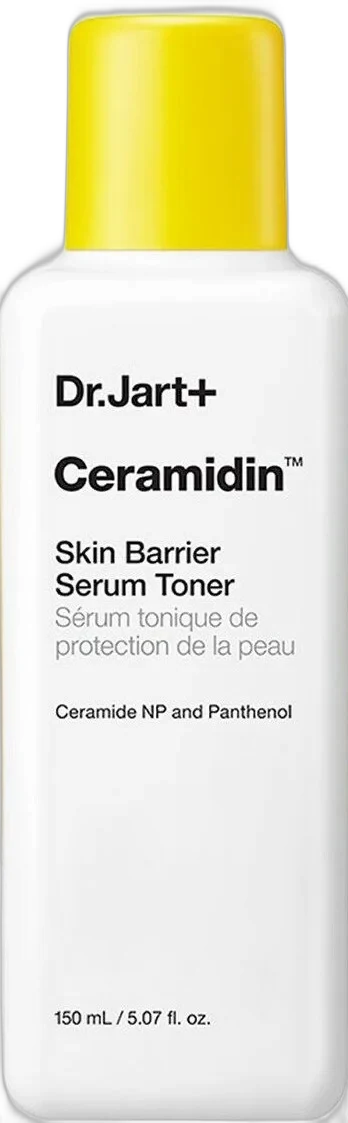
Ceramidin Toner
Barrier-Prep Serum Toner
 Verified reviewer
Pros & cons.
- +Lightweight serum-toner texture absorbs quickly and layers beautifully under other products
- +Strong humectant system with betaine, trehalose, glycerin, and panthenol for multi-level hydration
- +Clinical testing shows measurable moisture boost and barrier strengthening
- +Generous 150 mL size lasts 3-4 months and provides good value
- +Ceramide NP with lecithin delivery provides evidence-based barrier support
- +Vegan formulation free of parabens and sulfates
- −Only one ceramide type vs five in the predecessor Ceramidin Liquid
- −Alcohol denat as fifth ingredient undermines the barrier-repair positioning
- −Essential oils add unnecessary allergen risk for a barrier-support product
- −Lighter texture may feel insufficient for very dry skin used to the original Liquid
- −Contains synthetic colorant Yellow 5 for no functional benefit
The full review.
Reformulations are the third rails of skincare. Touch them and you’ll hear about it. When Dr. Jart+ evolved its beloved Ceramidin Liquid — a product that had spent nearly a decade as the gold standard for ceramide toners — into the Ceramidin Skin Barrier Serum Toner, the shift was seismic enough to split the fanbase into camps. On one side, purists who mourned the loss of the five-ceramide complex. On the other, pragmatists who appreciated the lighter, more contemporary texture.
The Serum Toner is built around a single ceramide type: Ceramide NP. This is, to be fair, one of the most well-studied ceramide subtypes — it’s abundant in healthy skin and has strong evidence supporting its role in barrier repair. But where the original Liquid delivered five ceramide types (NP, EOP, NS, AS, AP) that more closely mimicked the skin’s own lipid composition, this version asks one ceramide to carry the entire structural repair burden.
What the reformulation gains in exchange is a genuinely improved humectant system. Betaine appears early in the formula as the third ingredient — a natural osmolyte that helps cells retain water under stress. Glycosyl trehalose adds sugar-based osmoprotection. Glycerin and panthenol (positioned as the eighth ingredient, suggesting meaningful concentration) round out a hydration quartet that creates a palpable moisture cushion on the skin. Sodium hyaluronate provides the expected humectant support.
The texture reflects the ‘serum toner’ trend that has swept K-beauty in recent years — lighter and more fluid than the original Ceramidin Liquid, which had a viscous, almost milky consistency. The Serum Toner absorbs faster, layers more cleanly, and plays better under subsequent products. For those who build multi-step routines with several serums and treatments, this improved slip is a genuine benefit. For those who used the Liquid as a standalone hydration step, the lighter texture may feel less substantive.
The formula retains the Ceramidin line’s persistent habit of including alcohol denat and essential oils. Alcohol denat is the fifth ingredient — meaningful enough to be relevant. Bergamot, geranium, and sage oils contribute the signature Ceramidin scent and the associated fragrance allergens (citronellol among them). For a product positioned as barrier support, this remains the most perplexing aspect of the Ceramidin line. It’s like hiring a contractor to fix your roof and finding them drilling new holes in it.
Dr. Jart+‘s own clinical testing claims a 134% moisture boost and 34% stronger skin barrier — numbers that suggest the product does deliver measurable results. In daily use, the Serum Toner provides reliable hydration and skin-softening effects. Applied to freshly cleansed skin, it immediately eliminates that tight, dry feeling and creates a smooth canvas for subsequent products. After several weeks of consistent use, skin does feel more resilient and less reactive.
The 150 mL bottle is generous and lasts 3-4 months with twice-daily use. At $39, the per-application cost is quite reasonable — comparable to many K-beauty toners with simpler formulations. The value proposition is fair, even if the formulation is less ambitious than its predecessor.
The honest assessment is that the Ceramidin Skin Barrier Serum Toner is a good product that replaced a great one. It delivers on its core promise of hydration and barrier support, and the improved texture suits modern routine-building preferences. But the single-ceramide formula is a meaningful step down from the five-ceramide complex that made the Ceramidin Liquid special, and the continued presence of alcohol and essential oils in a barrier-repair product remains hard to defend. If you’re new to the Ceramidin line, this serum toner is a perfectly solid entry point. If you’re an original Liquid devotee who’s been hoarding old bottles, this isn’t the product that will make you stop.
Formula
Ingredient analysis.
Full INCI list
Water/Aqua/Eau, Dipropylene Glycol, Betaine, Propanediol, Alcohol Denat, Glycosyl Trehalose, Glycerin, 1,2-Hexanediol, Panthenol, Pentylene Glycol, Erythritol, Hydrogenated Starch Hydrolysate, Triethylhexanoin, Diphenyl Dimethicone, Polyglyceryl-10 Myristate, Ceramide NP, Sucrose Distearate, Ethylhexylglycerin, Sodium Hyaluronate, Theobroma Cacao (Cocoa) Seed Extract, Pelargonium Graveolens Flower Oil, Olea Europaea (Olive) Fruit Oil, Citrus Aurantium Bergamia (Bergamot) Fruit Oil, C12-14 Pareth-12, Hydrogenated Lecithin, Acrylates/C10-30 Alkyl Acrylate Crosspolymer, Tromethamine, Carbomer, Glyceryl Polymethacrylate, Glyceryl Stearate, Dextrin, Salvia Officinalis (Sage) Oil, Citronellol, Disodium EDTA, Yellow 5 (CI 19140)
Skin match.
The science.
The Science
The Ceramidin Skin Barrier Serum Toner uses Ceramide NP, a common ceramide subtype in the human stratum corneum. Masukawa et al. (2008) in the Journal of Lipid Research found Ceramide NP makes up a large part of the skin's total ceramide content, justifying its use in a simple formula. However, Bouwstra et al. (2001) showed the barrier's lamellar lipid structure requires multiple ceramide types; ceramides with different chain lengths and head groups have distinct structural roles in the lipid matrix.
The formula relies on its humectant architecture. Betaine, a natural osmolyte from sugar beets, reduces transepidermal water loss and improves skin hydration in clinical studies. A 2015 study in the International Journal of Cosmetic Science showed betaine at concentrations above 2% improves skin barrier function and moisture retention. As the third ingredient, it likely reaches an effective concentration.
Glycosyl trehalose is a modified trehalose, a disaccharide that protects cells from dehydration stress. Research shows trehalose stabilizes cell membranes and proteins under environmental stress.
Panthenol (provitamin B5) converts to pantothenic acid in the skin to support epidermal differentiation and lipid synthesis. A study in the American Journal of Clinical Dermatology (2002) confirmed dexpanthenol accelerates wound healing, reduces inflammation, and improves skin hydration. At eighth ingredient, it acts as a main active alongside the ceramide.
Hydrogenated lecithin has two roles: it emulsifies to stabilize the ceramide in the water-based formula, and it forms liposomal structures that improve the penetration and delivery of Ceramide NP into the stratum corneum.
References
- Ceramide profiling of the stratum corneum — Journal of Lipid Research (2008)
- Betaine as a skin barrier-improving ingredient — International Journal of Cosmetic Science (2015)
Dermatologist Perspective
Dermatologists view ceramide-based toners as sensible for barrier-repair routines, but clinical consensus favors multi-ceramide formulations over single-ceramide products for full barrier restoration. Board-certified dermatologists note Ceramide NP is a validated choice for barrier support, and the humectant system (betaine, panthenol, hyaluronic acid) provides hydration. Dermatologists flag alcohol denat and essential oils as shortcomings in this formula; barrier-compromised skin is more vulnerable to irritants, making these inclusions counterproductive to the product's purpose.
Where it fits in your routine.
After cleansing, press a coin-sized amount into slightly damp skin. Pat for 30-60 seconds until absorbed. Layer 2-3 applications for extra hydration. Follow with serums and moisturizer. Use morning and evening. You can also use a cotton pad for gentle sweeping application.
At $39 for 150 mL, the Ceramidin Serum Toner costs the same per mL as the Ceramidin Liquid it replaced. The single-ceramide formula is less complex than the five-ceramide Liquid, making the identical price less compelling. However, the improved texture and enhanced humectant system add value. For a ceramide toner, the price is reasonable — it matches mid-premium K-beauty toners and costs much less than luxury alternatives.
This lightweight, layerable hydrating toner supports the ceramide barrier. It works for normal to dry skin types building K-beauty-style multi-step routines, or anyone who finds the Ceramidin Liquid too thick or viscous.
This is for Ceramidin Liquid fans seeking the most complete ceramide profile, people with essential oil sensitivities, those with severely compromised barriers who must avoid alcohol, and oily skin types who want thin, watery toners.
Product details.
This lightweight, serum-like liquid has a slightly viscous consistency between a traditional watery toner and a serum. It spreads easily and absorbs fast, leaving skin smooth and hydrated without tackiness.
Bergamot, geranium, and sage essential oils create a mild herbal-floral scent. It is noticeable but not overwhelming and fades within a minute.
A 150 mL bottle with a dispensing cap. This size lasts a long time with daily use.
The serum-toner feels hydrating on freshly cleansed skin upon first application. The consistency is thicker than water but absorbs in 30-60 seconds. It causes no tingling, stinging, or adjustment period. Skin feels softer and more supple immediately.
3-4 months with twice-daily use
12 months
All Year
The backstory.
The Ceramidin Skin Barrier Serum Toner represents Dr. Jart+'s evolution of the original Ceramidin Liquid, adapting the concept to contemporary K-beauty preferences for serum-toner hybrids. While the original Liquid featured five ceramides in a thicker format, this reformulated version streamlines to a single ceramide (NP) with enhanced humectant support, reflecting a shift toward lighter, more layerable textures.
About Dr. Jart+
Established Brand (5–20 years)Dr. Jart+ was founded in 2004 by dermatologist Jung Sung-jae in South Korea and is now owned by Estée Lauder Companies. The Ceramidin line has been a flagship barrier-repair range for over a decade, and the brand's formulations are developed in collaboration with dermatologists.
Common myths.
A serum toner with only one ceramide repairs the skin barrier less effectively than a five-ceramide product.
Ceramide NP is a common, well-studied ceramide subtype in the skin barrier. A five-ceramide complex replicates lipids more comprehensively, but a well-formulated single-ceramide product still supports barrier repair. This works well with lecithin-supported, cholesterol-free delivery and humectants like betaine and trehalose.
FAQ.
What is the difference between Dr. Jart+ Ceramidin Liquid and Ceramidin Toner?
The Ceramidin Liquid uses the original formulation with five ceramide types (NP, EOP, NS, AS, AP) and a thick texture. The Ceramidin Skin Barrier Serum Toner is a reformulated version with one ceramide (NP) in a lighter, serum-like consistency. The Liquid has a broader ceramide profile, while the Toner has a lighter, more layerable texture.
Does Dr. Jart+ Ceramidin Toner contain alcohol?
Yes — alcohol denat is the fifth ingredient. It acts as a solubilizer to stabilize the ceramide and essential oils in the watery formula. Humectants like betaine, glycerin, and panthenol offset the drying potential, but those with severely compromised barriers may avoid alcohol-containing toners.
Can I use Dr. Jart+ Ceramidin Toner and Ceramidin Cream together?
Yes — this is how you use it. Apply the Serum Toner first to prep your skin, then use serums and finish with the Ceramidin Cream. This layers ceramide-based barrier repair at both the light (toner) and heavy (cream) steps of your routine.
Is Dr. Jart+ Ceramidin Toner good for sensitive skin?
Ceramide and panthenol support sensitive skin, but alcohol denat and essential oils (bergamot, geranium, sage) irritate very sensitive or compromised skin. Reactive skin types should use the original Ceramidin Liquid (if available) or an alcohol-free ceramide toner for safer results.
How do you apply Dr. Jart+ Ceramidin Serum Toner?
Pour a small amount into your palms after cleansing and press it into damp skin. Layer 2-3 applications for extra hydration. Wait 30-60 seconds for absorption before your next product. Use morning and evening.
What the community says.
"Hydrating serum-like consistency that preps skin beautifully for next steps"
"Clinical testing shows measurable moisture and barrier improvement"
"Absorbs quickly without sticky residue"
"Good value at 150 mL for the price"
"Only one ceramide type vs five in the original Ceramidin Liquid"
"Contains alcohol denat which contradicts the barrier-repair positioning"
"Some users find the reformulated version inferior to the original Ceramidin Liquid"
"Essential oils can irritate sensitive skin that needs barrier repair"