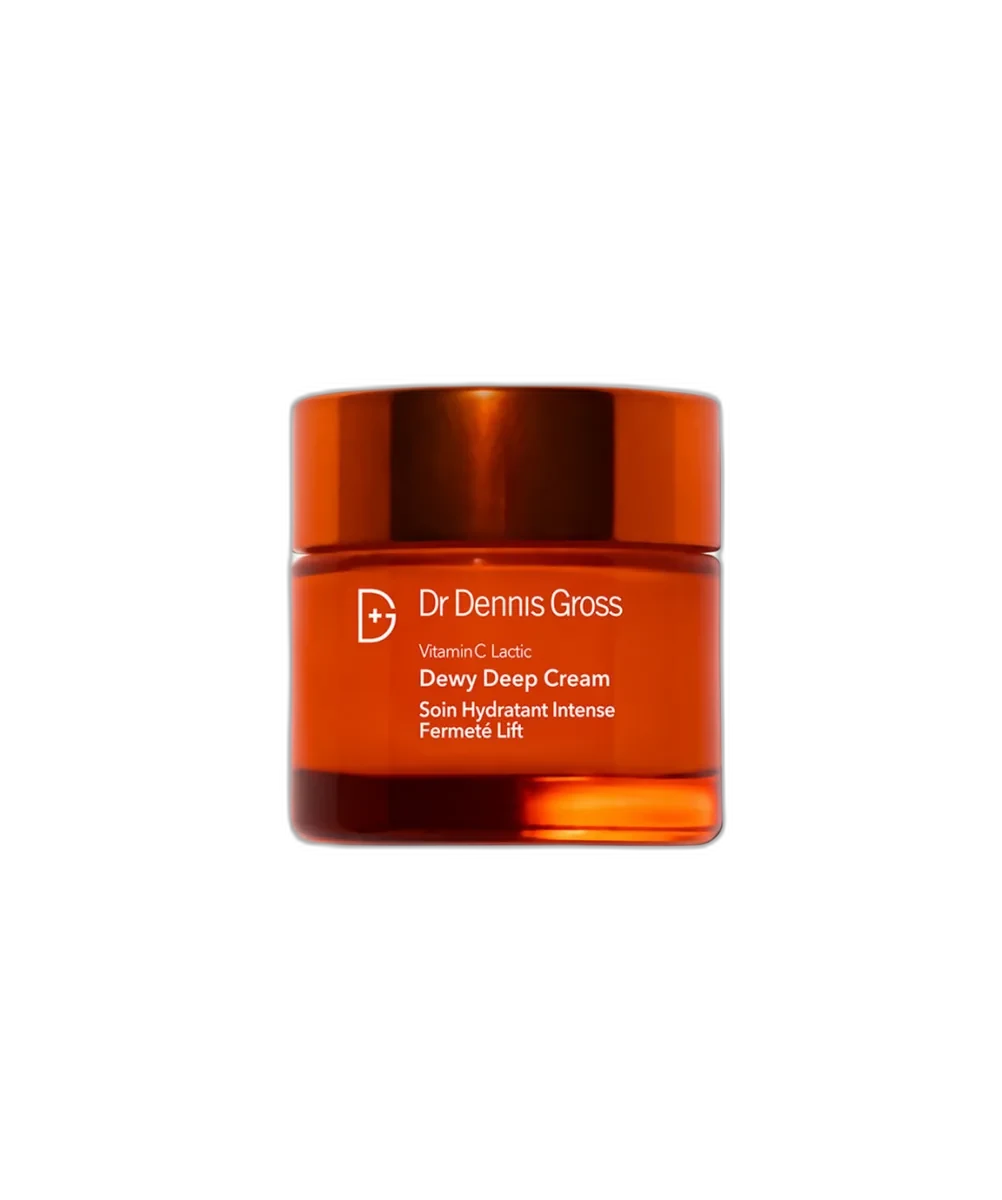
Vitamin C Lactic Dewy Deep Cream
Dewy-Skin Glow Cream
 Verified reviewer
Pros & cons.
- +Genuinely dewy immediate finish from a well-built lipid base
- +Stable vitamin C derivative brightens without cream destabilization
- +Ceramide NP, squalane, and saccharide isomerate deliver real barrier repair
- +Meaningful niacinamide inclusion compounds the brightening effect
- +Lactic acid polish refines surface texture without a separate exfoliant step
- +Pregnancy-safe and layers cleanly under SPF
- −Camellia and rice bran oils can trigger breakouts in acne-prone skin
- −Too rich for true oily skin types or humid summer climates
- −Frosted glass jar is not ideal for protecting vitamin C over time
- −Stable vitamin C derivative is gentler but less potent than a 15% ascorbic serum
The full review.
In winter climates, skin often looks tired during December or January. It feels flat, matte, and papery on the cheeks, appearing dull despite regular vitamin C use. Indoor heating, cold wind, and a compromised barrier that cannot hold surface moisture cause this, changing how light reflects off the face. Highlighter cannot fix this. You must repair the surface to restore luminosity; the Vitamin C Lactic Dewy Deep Cream targets this specific issue.
The base is well-engineered before the actives. camellia japonica seed oil and rice bran oil are high in the formula, with squalane and ceramide NP in the middle. saccharide isomerate acts as a longer-lasting humectant than glycerin, and dimethicone smooths the finish without a synthetic feel. This is barrier-repair architecture, not a cheap cream with added actives. The immediate “dewiness” comes from lipids filling the surface and a polymer system creating a soft cushion.
The brightening actives follow. 3-O-ethyl ascorbic acid is the primary vitamin C form. It was chosen because pure L-ascorbic acid would destabilize this rich cream and its low pH would disrupt the emulsion. This ether form is stable at physiologic pH, converts to ascorbate in the skin, and provides brightening and collagen-signaling effects without hurting the vehicle. It is not as potent as a 15% ascorbic serum, but this cream complements a morning serum rather than replacing it.
The lactic acid is a surprise. At position twelve on the INCI, it works at corneocyte-desquamating strength rather than peel strength, which suits a dewy-finish cream. The lactic acid polishes the surface to improve light reflection and, as a hygroscopic ingredient, draws water into the stratum corneum. This dual role reflects Dr. Gross’s acid-forward philosophy. Glycolic acid appears lower in the list to support surface renewal.
niacinamide also contributes to the structure, sitting high in the formula with dipotassium glycyrrhizate (licorice root anti-inflammatory) and the vitamin C derivative. niacinamide manages melanin-transfer for brightening, reduces lactic acid flush, and supports internal ceramide synthesis. Pairing it with ceramide NP creates a thorough barrier strategy for a prestige moisturizer.
The first application usually provides an “oh” moment. The cream is smooth and thick, absorbs in about two minutes, and leaves skin looking plump and lit-from-within. This effect lasts all day for most normal and dry skin. Long-term results appear over weeks. By week two, lactic acid polish smooths fine texture. By week four, dullness fades. By week eight, uneven tone from post-acne marks and mild sun damage looks softer as the vitamin C and niacinamide effects accumulate.
The limitations match the ingredient list. This cream is too thick for oily skin, and the camellia and rice bran oils are mildly comedogenic for some; acne-prone users risk breakouts on the T-zone and jawline, so patch test first. The frosted glass jar looks good but is not ideal for vitamin C, as air exposure gradually oxidizes the actives. The $72 price for 2 oz is mid-range for prestige—not a bargain, but fair for this engineering.
For dry or normal skin in cold climates or those fighting winter dullness who already use a morning vitamin C serum, this is a top brightening moisturizer in the Dr. Gross catalog. It shows results by week one and improves through month one. For oily or acne-prone skin, the Vitamin C Lactic Oil-Free Radiant Moisturizer from the same line is a better alternative.
Formula
Ingredient analysis.
Full INCI list
Water/Aqua/Eau, Glycerin, Butylene Glycol, Camellia Japonica Seed Oil, Oryza Sativa (Rice) Bran Oil, Dimethicone, Sucrose, Pentylene Glycol, Helianthus Annuus (Sunflower) Seed Oil, Hydroxyethyl Acrylate/Sodium Acryloyldimethyl Taurate Copolymer, 3-O-Ethyl Ascorbic Acid, Lactic Acid, Niacinamide, Dipotassium Glycyrrhizate, Squalane, Ceramide NP, Saccharide Isomerate, Superoxide Dismutase, Ubiquinone, Undaria Pinnatifida Extract, Aloe Barbadensis Leaf Juice, Adenosine, Collagen Amino Acids, Hydroxyproline, Acetyl Hexapeptide-8, Leuconostoc/Radish Root Ferment Filtrate, Glycolic Acid, Carnitine, Glycine, Carnitine HCl, Lactobacillus Ferment, 1,2-Hexanediol, Caprylyl Glycol, Caprylic/Capric Triglyceride, Hydrogenated Lecithin, Lecithin, Maltodextrin, Hydroxyethylcellulose, Polysorbate 60, Carbomer, Ammonium Hydroxide, Potassium Hydroxide, Sodium Phytate, Camellia Sinensis Leaf Extract, Cucumis Sativus (Cucumber) Fruit Extract
Skin match.
The science.
The Science
The cream brightens through three mechanisms: ascorbic derivative activity, niacinamide's melanosome-transfer inhibition, and lactic acid's desquamating effect. 3-O-ethyl ascorbic acid is a stable vitamin C derivative that hydrolyzes to ascorbate intracellularly. Research in the Journal of Cosmetic Dermatology shows it retains collagen-synthesis and tyrosinase-inhibition activity across physiologic pH ranges, allowing use in cream bases where pure ascorbic acid destabilizes. Hakozaki et al. showed niacinamide's effect on pigment in the British Journal of Dermatology (2002); topical niacinamide reduced hyperpigmentation over 8 weeks by interrupting melanosome transfer from melanocytes to keratinocytes. Bissett's work on niacinamide also documented improved barrier function and reduced trans-epidermal water loss, supporting the "dewy" claim when paired with the lipid base. Lactic acid's role is supported by Smith's alpha hydroxy acid reviews and Kornhauser's work; both found lactic acid at polishing concentrations acts as a corneocyte desquamator that improves stratum corneum cohesion and surface light reflection. Finally, the ceramide NP inclusion uses Man, Feingold, and Elias's research on physiologic lipid replacement. Their work shows that applying ceramides with cholesterol and fatty acids (partially provided by rice bran and camellia oils) restores barrier function more effectively than ceramides alone, supporting this cream's barrier claims.
References
- The effect of niacinamide on reducing cutaneous pigmentation and suppression of melanosome transfer — British Journal of Dermatology (2002)
Dermatologist Perspective
Dermatologists often recommend stable vitamin C derivative products for patients seeking daily brightening who cannot tolerate low-pH L-ascorbic acid formulas; this cream fits that category. Board-certified dermatologists note that pairing a vitamin C derivative with niacinamide, a barrier-lipid base, and a low-dose lactic acid polish addresses brightening through multiple mechanisms while minimizing irritation, which helps patients with dry or early-aging skin. Patients with oily or acne-prone skin often pass over this product because the camellia and rice bran oils can contribute to comedones. It is suggested for patients seeking one nighttime moisturizer for brightening, hydration, and mild resurfacing.
Guidance
Where it fits in your routine.
Apply morning and/or night after serums as your last moisturizing step. In the morning, apply, wait two minutes to absorb, then use broad-spectrum SPF 30 or higher. A pea-sized amount covers the full face and neck. Avoid the immediate lash line. If you are new to lactic acid in a cream format, start once daily and move to twice daily if tolerated.
At $72 for 2 oz, this cream sits in the middle of the prestige brightening moisturizer bracket — cheaper than $100+ luxury tiers but more expensive than drugstore options. The price reflects the layered actives, barrier-repair base, and stable vitamin C derivative instead of marketing markup. Dr. Dennis Gross's 25-year derm-developed heritage adds credibility to the price. The 2 oz size lasts 2-3 months with twice-daily use, making the per-use cost better than the 1 oz serums from the same line. It is not a bargain, but a fair prestige price.
Adults with dry, normal, or dry-leaning combination skin face dullness, winter flatness, or early signs of aging. They want a thick brightening moisturizer that gives immediate dewy results and improves tone over time.
Oily, acne-prone, or fungal acne-prone skin, users needing an oil-free vehicle, and anyone seeking maximum vitamin C potency — a 15% L-ascorbic serum from the same line provides stronger brightening in a lighter format.
Product details.
Rich, cushiony cream that melts into a dewy veil on application
Neutral with faint botanical notes, no added fragrance
Frosted glass jar with screw-top lid
The first application leaves a dewy, plumped finish. The cream absorbs in about two minutes and leaves a soft, luminous cushion. The lactic acid causes a faint warmth or tingle for the first few days, but this subsides quickly.
Approximately 2-3 months with twice-daily face application
12 months
fall winter
The backstory.
Introduced in 2017 as the moisturizer companion to the Vitamin C Lactic line, this cream was designed for dry-skinned users who wanted the brightening benefits without the lightweight water-gel format of the brand's vitamin C serums. It quickly became a Dr. Gross staple for winter-season dullness routines.
About Dr. Dennis Gross Skincare
Established Brand (5–20 years)A board-certified dermatologist leads Dr. Dennis Gross Skincare, using her Manhattan practice to guide formulations. The brand has 25 years in prestige retail and a reliable track record for its claims.
Common myths.
Vitamin C creams are always weaker than vitamin C serums.
The delivery system matters more than the format. A well-formulated vitamin C cream using a stable derivative in a lipid-rich base can beat a poorly buffered ascorbic serum for some skin types. The derivative has time to convert in the skin, and the barrier-repair base prevents the irritation that limits a serum's use.
FAQ.
Can I use this on top of a vitamin C serum?
Yes — layering them works. The serum delivers high-concentration vitamin C at low pH first, then this cream adds a stable form, barrier-repair, and lactic polish. The two compound the brightening effect.
Is it too rich for oily skin?
Most true oily skin types will find it heavy. The camellia and rice bran oils create a cushiony feel. Combination skin usually tolerates it in winter but may prefer a lighter option in summer.
Will it cause breakouts?
Camellia and rice bran oils are mildly comedogenic for some, especially on the T-zone and jawline. Acne-prone users should patch test for two weeks before using the full-face routine.
Is it pregnancy safe?
Yes. The vitamin C derivative, niacinamide, ceramides, peptides, and botanical extracts are safe during pregnancy and breastfeeding.
Can I use it around the eyes?
Apply it up to the orbital bone. The formula is gentle enough for that area, but the lactic acid content means you must keep it off the lash margin to prevent migration into the eye.
How is this different from the brand's other moisturizers?
This one focuses on brightening and a dewy finish using a vitamin C derivative, lactic polish, and antioxidant complex. The DermInfusions Fill + Repair Cream uses hyaluronic hydration to plump, while the Hyaluronic Marine cream provides pure hydration without the acid polish.
What the community says.
"Immediate dewy glow from first use"
"Pleasantly rich without feeling heavy"
"Brightens dull skin over time"
"Too rich for oily or acne-prone skin"
"Contains comedogenic oils that can trigger breakouts in the T-zone"
"Pricey for a 2 oz jar at this formulation level"