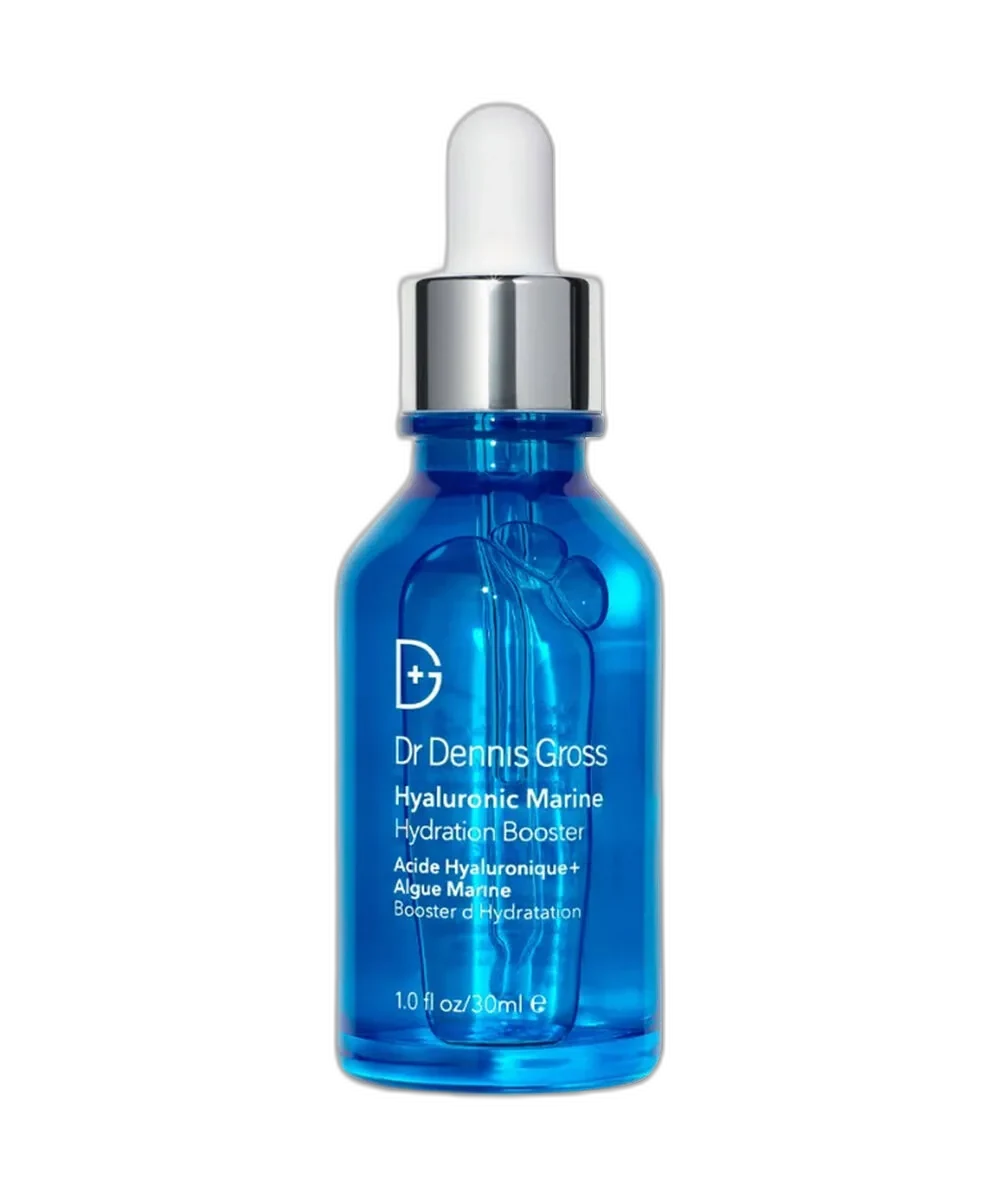
Hyaluronic Marine Hydration Booster
Post-Peel Recovery Hero
 Verified reviewer
Pros & cons.
- +Multi-humectant system outperforms single-ingredient HA serums
- +Niacinamide high on the INCI list reduces water loss effectively
- +Fragrance-free and suitable for sensitive, post-procedure skin
- +Pairs exceptionally well with the brand's Alpha Beta peel pads
- +Lightweight, fast-absorbing texture layers cleanly under anything
- +Two decades of formulation refinement and a reliable track record
- +Non-comedogenic and safe for fungal-acne-prone skin
- −Expensive for 30 ml compared to similar formulas at the pharmacy
- −Small bottle empties quickly with twice-daily use
- −Hydration still needs to be sealed with a moisturizer
- −Contains phenoxyethanol which a minority of users find sensitizing
- −Not vegan despite other clean formulation choices
The full review.
This serum is one of those rare skincare products that was essentially reverse-engineered from a customer complaint. When Dr. Dennis Gross launched his Alpha Beta Peel Pads in the early 2000s, they became a near-instant cult object — but the feedback coming back from fans was consistent: the pads worked, and then skin felt tight and parched for a day afterward. The Hyaluronic Marine Hydration Booster was the answer. And two decades later, it still mostly behaves like the answer to that specific question rather than a general hydration serum trying to be everything to everyone.
Once you know that’s the brief, the formula makes complete sense. Sodium hyaluronate does the immediate plumping work, glycerin backs it up with broader humectant reach, and a surprisingly high placement of niacinamide on the ingredient list takes care of the barrier side of the equation. That last part is the detail most reviewers miss — niacinamide is not a hydrator in the traditional sense, but it reduces transepidermal water loss, which is how a serum full of water-binding humectants keeps that water where you want it instead of watching it evaporate into the air within the hour. Add panthenol and allantoin for the tight, slightly raw feeling you get after acids, and the algae extract for a layer of water-holding polysaccharides on top, and you have a hydration system rather than a single-ingredient pitch.
The texture is the easy part. It’s a thin, watery gel that disappears in seconds, leaving the skin slightly tacky for about thirty seconds and then perfectly soft. It layers cleanly under makeup, under moisturizer, under oils, and especially under the peel pads it was built to follow. There’s no scent to speak of beyond a very faint marine note from the algae, no sting, no tingle, nothing to announce itself. The skin is just suddenly less tight. If you’ve been using acid toners or retinol without a dedicated hydration step, the difference in the first week is genuinely noticeable — less flaking, less morning tightness, makeup that stops breaking up by noon.
The honest limitation, and the one that keeps this from being a universal recommendation, is the price. Seventy-eight dollars for thirty milliliters is a lot of money for what is, mechanically, a niacinamide-plus-HA-plus-glycerin serum with some nice extras. You can find functionally similar stacks at La Roche-Posay, or Naturium, or any number of pharmacy-counter brands for under twenty dollars. The formulation here is better executed — the soothing B5 and allantoin pairing in particular feels considered rather than tacked on — but it is not five times better. If you’re already invested in the Dr. Gross ecosystem and using the peel pads regularly, this is the obvious partner product and the synergy is real. If you’re shopping in isolation, the math is harder to justify.
Where it earns its price tag is in the small details. The fragrance-free, alcohol-free, silicone-free, oil-free profile makes it suitable for essentially every skin type, including sensitized, post-procedure, and fungal-acne-prone skin. The pH sits neutral so it layers without conflict in any routine. The bottle is small but the absorption is fast enough that a few drops go further than you’d expect. And two decades on the market means it has been stress-tested by every skin type and climate imaginable — this is not a novelty formula, it’s a workhorse that has been quietly reformulated and maintained for long enough that you can trust the track record.
The bottom line: if you already use Dr. Gross peel pads, stop reading and just buy this. If you don’t, ask yourself whether the particular combination of humectants, niacinamide and soothers matters enough to pay the brand premium, or whether a cheaper serum with the same mechanism will do the job. Both answers are defensible.
Texture
The texture is the easy part. It’s a thin, watery gel that disappears in seconds, leaving the skin slightly tacky for about thirty seconds and then perfectly soft. It layers cleanly under makeup, under moisturizer, under oils, and especially under the peel pads it was built to follow.
Scent
There’s no scent to speak of beyond a very faint marine note from the algae, no sting, no tingle, nothing to announce itself.
Best for
If you’ve been using acid toners or retinol without a dedicated hydration step, the difference in the first week is genuinely noticeable — less flaking, less morning tightness, makeup that stops breaking up by noon.
Common Complaints
The honest limitation, and the one that keeps this from being a universal recommendation, is the price. Seventy-eight dollars for thirty milliliters is a lot of money for what is, mechanically, a niacinamide-plus-HA-plus-glycerin serum with some nice extras. You can find functionally similar stacks at La Roche-Posay, or Naturium, or any number of pharmacy-counter brands for under twenty dollars. The formulation here is better executed — the soothing B5 and allantoin pairing in particular feels considered rather than tacked on — but it is not five times better. If you’re already invested in the Dr. Gross ecosystem and using the peel pads regularly, this is the obvious partner product and the synergy is real. If you’re shopping in isolation, the math is harder to justify.
Works for
The fragrance-free, alcohol-free, silicone-free, oil-free profile makes it suitable for essentially every skin type, including sensitized, post-procedure, and fungal-acne-prone skin. The pH sits neutral so it layers without conflict in any routine. The bottle is small but the absorption is fast enough that a few drops go further than you’d expect. And two decades on the market means it has been stress-tested by every skin type and climate imaginable — this is not a novelty formula, it’s a workhorse that has been quietly reformulated and maintained for long enough that you can trust the track record.
Pairs Well With
If you already use Dr. Gross peel pads, stop reading and just buy this.
Ingredient analysis.
Full INCI list · pH 5.5
Water/Aqua/Eau, Glycerin, Butylene Glycol, Algae Extract, Niacinamide, Sodium Hyaluronate, Sodium PCA, Allantoin, Panthenol, Caprylyl Glycol, Hexylene Glycol, Disodium EDTA, Chlorphenesin, Phenoxyethanol, Sodium Hydroxide, Potassium Sorbate, Sodium Benzoate, Citric Acid
Skin match.
The science.
The Science
Hyaluronic acid, niacinamide, and a soothing/barrier stack form the three pillars of this formula, all backed by solid evidence. Multiple studies show topical sodium hyaluronate improves skin hydration and reduces fine lines from dehydration-related aging; lower-molecular-weight forms penetrate deeper than higher-MW varieties. Niacinamide's barrier-supporting role is one of the most robustly validated in cosmetic dermatology. At concentrations as low as 2%, it reduces transepidermal water loss, improves ceramide synthesis in the stratum corneum, and modulates sebum in oilier skin. This combination—a humectant that pulls water in and a vitamin that stops water loss—is why this serum outperforms simpler HA products, especially after barrier-compromising procedures. Panthenol converts to pantothenic acid in the skin, where it supports fibroblast activity and soothes irritated or stripped skin. The marine algae extract contribution is more modest; brown algae polysaccharides bind water, but typical cosmetic concentrations limit their effect compared to the primary work of the HA and glycerin. This combination works because it pairs a humectant load with a barrier-support ingredient at a meaningful percentage in a pH-neutral, fragrance-free carrier that does not disrupt downstream actives.
Dermatologist Perspective
Dermatologists often recommend humectant-based serums like this one after in-office procedures like chemical peels, microneedling, or light laser treatments to treat tightness and dehydration from short-term barrier disruption. Board-certified dermatologists note that hyaluronic acid alone is not enough; adding niacinamide and panthenol at effective concentrations separates a serum that improves a compromised barrier from one that only provides temporary surface hydration. The fragrance-free, alcohol-free, and oil-free profile also matches what doctors prescribe for post-procedure or acne-prone patients needing hydration without comedogenic or sensitizing risk. Dermatologists do note that the price point puts this in the luxury tier of functional serums, and more affordable options with similar mechanisms work for patients without brand preference.
Where it fits in your routine.
Apply two to three drops to clean, damp skin after cleansing and toning, morning and night. Press the liquid into your face and neck instead of rubbing. Apply a moisturizer immediately to seal in the humectants; skipping this, especially in dry climates, reduces the benefit. At night, it layers well after the brand's Alpha Beta Peel Pads, as the B5 and allantoin soothe post-acid tightness. It is safe under vitamin C in the morning and under retinol at night. You do not need to wait between layers—it absorbs in under a minute.
At $78 for 30 ml, this serum is a premium product priced above its raw formulation cost. You pay for the Dr. Gross brand, its twenty-year track record, and how it works with the Alpha Beta peel pads. These factors justify the price, but functionally similar multi-humectant serums with niacinamide cost under $25 from reputable pharmacy brands. However, the execution beats most cheaper alternatives, and the pairing of soothers works well for post-peel use. Only one size exists, so no larger-format discount lowers the cost. It offers fair value for Dr. Gross fans but is a harder sell for newcomers.
This works for people using Dr. Gross peel pads or other chemical exfoliants who need compatible hydration. It also suits anyone with chronically dehydrated or post-procedure skin, and sensitive types wanting a fragrance-free humectant serum with meaningful niacinamide content instead of a plain HA product.
Budget-conscious shoppers can find similar mechanisms for less. This works for people needing deep long-term moisture in dry climates where humectants alone fail, and for strict vegans who require explicit vegan certification.
Product details.
Fragrance-free with a faint marine note from the algae extract
Frosted glass bottle with dropper applicator Finish dewy, lightweight, fast-absorbing What to Expect on First Use Skin feels dewy and plumped immediately after application. Expect no tingling or purging. Most users notice less morning skin tightness and better makeup application within the first week.
About 2-3 months with twice-daily face and neck use
12 months
All Year Background
The backstory.
Launched in the mid-2000s as a companion product to Dr. Gross's signature Alpha Beta Peel Pads, this serum was designed specifically to address the post-peel dehydration that customers were flagging. It remains one of the longest-running products in the line.
About Dr. Dennis Gross Skincare
Established Brand (5–20 years)Dr. Dennis Gross Skincare launched in 2000. Dr. Dennis Gross, a board-certified dermatologist in New York City, founded the brand and has a research background in skin cancer. The brand is famous for its Alpha Beta peels and uses clinical formulation experience from Dr. Gross's own practice.
Common myths.
Marine/algae extracts are marketing only and do nothing for skin
Brown algae extracts add polysaccharides that bind water, but they support the hyaluronic acid and glycerin, which do most of the work.
Hyaluronic acid serums always work in any climate
In very dry, low-humidity conditions, pure HA pulls water from deeper skin layers. This formula uses glycerin, niacinamide and barrier soothers to mitigate that — but you still need to seal it with a moisturizer.
FAQ.
Is this a good serum to use after a Dr. Dennis Gross peel pad?
Yes — it was designed for that job. The niacinamide, panthenol and allantoin in this formula buffer post-acid dehydration and tightness, while the hyaluronic acid restores surface moisture without interfering with the peel's exfoliation.
Does this serum replace my moisturizer?
No. Because it is fragrance-free and mostly humectants, you must seal it with a moisturizer or it evaporates within an hour — especially in dry climates. It is the hydration step, not the occlusive step.
Can I use it with retinol or vitamin C?
Yes. Its near-neutral pH and lack of active exfoliants allow it to layer cleanly under retinol at night and after vitamin C in the morning.
Is it safe during pregnancy?
The ingredient list lacks retinoids, salicylic acid, or essential oils, making it generally pregnancy-safe. Check with your OB or derm if you are unsure.
Why is it so expensive for 30 ml?
Much of the cost reflects brand positioning, not the raw formulation. The ingredient deck is solid but not exotic. If budget is the priority, cheaper niacinamide-plus-HA serums perform comparably.
Will it clog pores or trigger breakouts?
This formula is oil-free, silicone-free, and fungal-acne-safe. It has no known comedogenic ingredients, making it a safe choice for acne-prone skin that needs light hydration.
What the community says.
"Plumps fine lines immediately"
"Layers well under makeup"
"Non-sticky finish"
"Calming after peels"
"Expensive for the size"
"Hydration doesn't last all day on very dry skin"
"Small bottle empties quickly"
People also looked at.