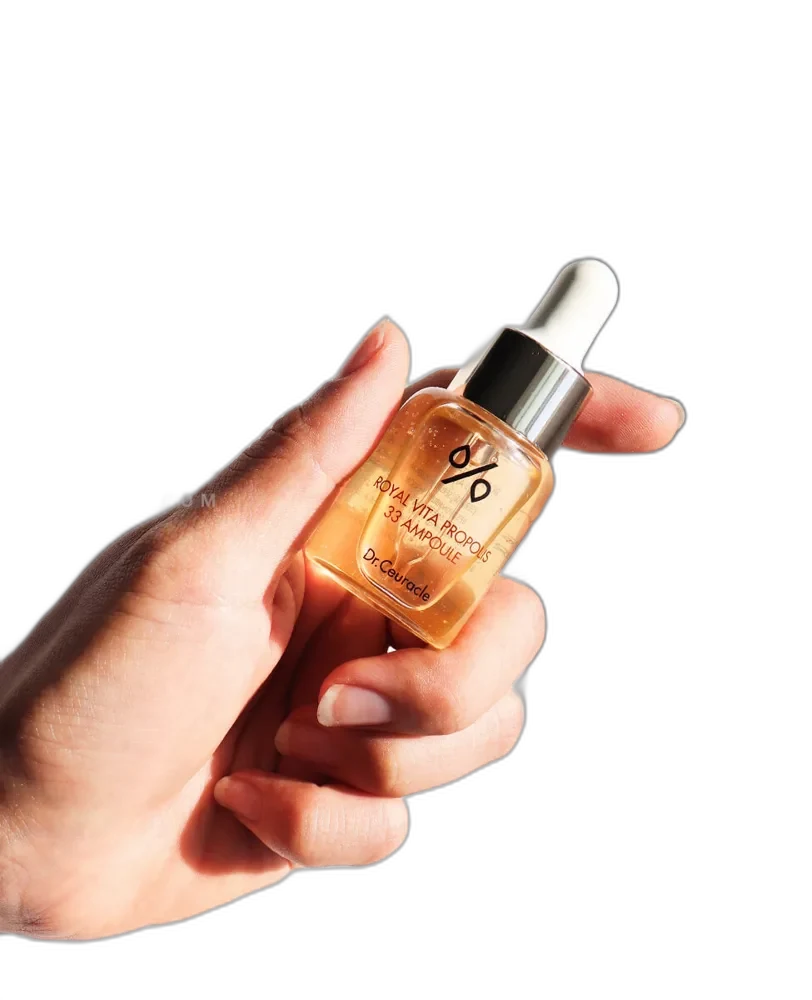
Royal Vita Propolis 33 Ampoule
K-Beauty Propolis MVP
 Verified reviewer
Pros & cons.
- +33% propolis delivers meaningful antibacterial action without stinging
- +Calms active blemishes and post-procedure redness within days
- +Niacinamide and madecassoside address marks and barrier at the same time
- +Safe for sensitive and compromised skin unlike most acne serums
- +Fragrance-free aside from natural honey aroma
- +Good value at around $32 for 50ml, lasts 2-3 months
- +Layers well with retinol and vitamin C as a buffering step
- +Dr. Ceuracle's quality control and transparent INCI are consistent
- −Tacky initial finish can cause pilling if over-applied
- −Natural honey scent is noticeable and bothers some users
- −Bee-derived actives make it a hard no for vegans
- −Possible reactions in users with bee or honey allergies
- −Not fungal-acne safe due to ingredient profile
The full review.
Around 2018, Korean acne routines shifted from tea tree oil to propolis. This change addressed skin fatigue. Tea tree dries and stings, eventually damaging the skin barrier. Propolis, the resin honeybees use to seal and sterilize hives, provides antibacterial benefits without the sandpaper side effects. Dr. Ceuracle’s Royal Vita Propolis 33 Ampoule launched in 2019 and now sets the standard for the category.
The key feature is the 33% propolis extract. This sits at the high end of the category; most competing ampoules use between 10% and 80%. Higher concentrations often turn the texture into actual honey. Dr. Ceuracle uses a concentration that is meaningful but not syrupy. The ampoule pours from the dropper as a thick, fluid liquid with a faint natural honey smell and no added fragrance. It feels sticky due to the propolis, then settles into a hydrated, slightly tacky finish within minutes that your moisturizer smooths out.
The formula includes more than just propolis. Niacinamide provides a functional dose to manage sebum and post-inflammatory marks. Panthenol, the pro-vitamin B5 often called “cica-adjacent,” buffers irritation and keeps the finish comfortable on compromised skin. Madecassoside and asiaticoside—purified centella fractions—provide anti-redness benefits. Royal jelly extract, beta-glucan, and a small dose of bee venom complete the bee-derived ingredients, while hyaluronic acid and glycerin ensure the skin stays hydrated rather than stripped.
The effect on the skin is quiet but measurable. Active blemishes do not scab like they do with salicylic acid or benzoyl peroxide; instead, they lose their red halo within one or two days and shrink without surrounding skin flaking. Redness from maskne, shaving, or recent procedures calms minutes after application. Over several weeks, post-blemish marks fade faster, though niacinamide drives this rather than propolis alone. The ampoule works for sensitized skin, unlike most acne-focused Korean serums, and works as a post-procedure layer for those returning to a routine after a laser session or chemical peel.
The limits are clear. The tackiness is real; layering it too heavily under a silicone-rich sunscreen can cause pilling. Use 2 to 3 drops to avoid this. The natural honey scent may bother some users. Because the hero ingredients are bee-derived, this ampoule is not for vegans and requires a patch test for anyone with a bee allergy.
At approximately $32 for 50ml, it is not the cheapest propolis ampoule in K-beauty—iUNIK’s version costs less—but it is not a budget pick. The madecassoside, stable propolis extraction, and supporting ingredients justify the price. At twice-daily usage, 50ml lasts two to three months, making the cost-per-use reasonable. It is a reliable option for blemish-prone, sensitive skin or a damaged barrier.
Dr. Ceuracle relies on restraint. The brand could have used 50% or 80% propolis for marketing, but instead built a formula where propolis is the headline, not the entire show. This makes the ampoule more useful than a single-ingredient product. Skincare that works quietly—calming breakouts without drying, hydrating without greasing, and fading marks without bleaching—is harder to sell, but it stays in the routine.
Formula
Ingredient analysis.
Full INCI list · pH 5.5
Propolis Extract (33%), Butylene Glycol, 1,2-Hexanediol, Niacinamide, Panthenol, Glycerin, Betaine, Sodium Hyaluronate, Hydrogenated Lecithin, Beta-Glucan, Allantoin, Adenosine, Royal Jelly Extract, Honey Extract, Bee Venom, Madecassoside, Asiaticoside, Madecassic Acid, Asiatic Acid, Tocopherol, Carbomer, Arginine, Ethylhexylglycerin, Disodium EDTA
Skin match.
The science.
The Science
Dermatological and dental literature shows propolis has antibacterial, anti-inflammatory, and wound-healing properties. Reviews in journals like Evidence-Based Complementary and Alternative Medicine document propolis activity against Cutibacterium acnes and Staphylococcus aureus—the two bacteria most linked to acne—via its flavonoid content and caffeic acid phenethyl ester. This ampoule differs from a simple propolis tincture through its delivery system: 33% extract in a hydrating vehicle with niacinamide, panthenol, and madecassoside addresses active bacteria, sebum regulation, and barrier repair at once. Studies show niacinamide reduces sebum excretion and post-inflammatory hyperpigmentation at 2-5% concentrations over 8-12 weeks. Madecassoside, a purified triterpenoid from Centella asiatica, accelerates wound healing and reduces erythema in sensitized and post-laser skin. The synergy matters: propolis manages microbial load, niacinamide manages oil and pigmentation, and the centella fractions manage irritation—a three-axis approach most single-active acne serums cannot replicate.
Dermatologist Perspective
Dermatologists treating adult acne on sensitive or reactive skin often recommend propolis-based ampoules instead of benzoyl peroxide or high-strength salicylic acid for patients who cannot tolerate aggressive antimicrobial actives. Board-certified dermatologists note propolis is generally well-tolerated but is a known contact allergen; patients with bee or honey sensitivities should patch-test before full-face use. This ampoule is a common suggestion as an adjunct during early recovery after superficial chemical peels or non-ablative laser treatments, providing calming and mild antimicrobial support when traditional actives are too harsh.
Where it fits in your routine.
Cleanse and tone, then press 2-3 drops into damp skin, targeting blemish-prone areas. Wait 30-60 seconds for the ampoule to settle before applying moisturizer. Use twice daily. Apply sunscreen in the morning. You can use the ampoule as a targeted spot treatment on active blemishes between routine steps, or as a calming layer after a retinol or acid exfoliant to buffer irritation. If you have a history of bee, honey, or propolis allergy, patch test on the inner forearm for 48 hours before first use.
At about $32 for 50ml, this ampoule sits in the mid-range of the K-beauty propolis category. Cheaper competitors exist, but they use lower propolis concentrations or less sophisticated supporting formulas. One bottle lasts two to three months with twice-daily face application, making the daily cost $0.35 to $0.55. Because the formula works as both a blemish-soothing step and a sensitivity buffer, it often replaces two separate products, improving the value. The price is fair, the brand has a track record, and the ingredient spend goes into the formula instead of the packaging.
This works for adult acne, specifically when skin is sensitive or reactive and cannot tolerate benzoyl peroxide or strong salicylic acid. It also suits post-procedure skin, stressed barriers, or routines needing a calming step with antibacterial support.
Vegans, people with bee or honey allergies, and those avoiding fungal acne triggers can use this. Purely dry skin without blemishes or redness finds better value in other K-beauty ampoules, as the propolis angle lacks utility here.
Product details.
Thick, slightly sticky liquid spreads easily and absorbs to a hydrated, slightly tacky finish
Mild natural honey-propolis aroma with no added fragrance
Frosted glass bottle with dropper applicator
The first use soothes immediately and leaves a noticeable tackiness that settles in 5-10 minutes. It has a light honey smell and feels slightly sticky before you apply moisturizer. Most users experience no purging or tingling.
2-3 months with twice-daily use
12 months
All Year
The backstory.
Dr. Ceuracle launched this ampoule in 2019 to answer Korean consumers' growing demand for antibacterial-yet-gentle acne skincare after tea tree fatigue set in. The brand leaned on its pharmacy-skincare roots to justify a high propolis percentage that most indie brands shy away from due to cost.
About Dr. Ceuracle
Emerging Brand (2–5 years)Dr. Ceuracle launched in 2017. This dermatologist-developed K-beauty line comes from the same parent company as Leegeehaam and uses clinical experience treating sensitive and compromised skin. The brand sits between pharmacy-skincare and indie K-beauty with transparent formulations.
Common myths.
Propolis ampoules are only for acne-prone skin
This formula contains madecassoside and panthenol to calm and repair the skin barrier. It soothes sensitized, post-procedure, or generally compromised skin.
High-percentage propolis products feel too sticky for use under makeup
This ampoule feels tacky when first applied. It settles into a flexible finish within minutes, and layering a moisturizer on top stops most pilling.
FAQ.
Is this safe for sensitive skin?
Yes — panthenol and madecassoside buffer the propolis in this ampoule. This reduces the stinging risk some sensitive users face with raw propolis extracts. Patch test first if you have a known bee allergy.
Can I use this with retinol?
Yes. Apply the ampoule first to calm skin, then your retinol. The panthenol and centella derivatives in this formula buffer retinol irritation.
Is 33% propolis too strong for daily use?
For most users, no. The ampoule uses twice-daily application, and the 33% refers to the extract inclusion level, not a pharmaceutical-active concentration.
Does this help with post-acne marks?
Yes. The propolis targets active bacteria and the niacinamide fades post-inflammatory hyperpigmentation. Expect visible results in 4-8 weeks.
Is it vegan?
No. Propolis, royal jelly, honey extract, and bee venom are bee-derived. This makes this ampoule unsuitable for vegan routines.
Will this pill under sunscreen?
Applying too much or following it with a silicone-heavy sunscreen causes this. Use 2-3 drops and wait one minute for absorption before your next layer.
What the community says.
"Calms active breakouts without drying"
"Sticky but absorbs well"
"Visible reduction in redness"
"Good value for propolis concentration"
"Tacky finish can pill under makeup"
"Bee scent noticeable to some"
"Not suitable for vegans"
People also looked at.