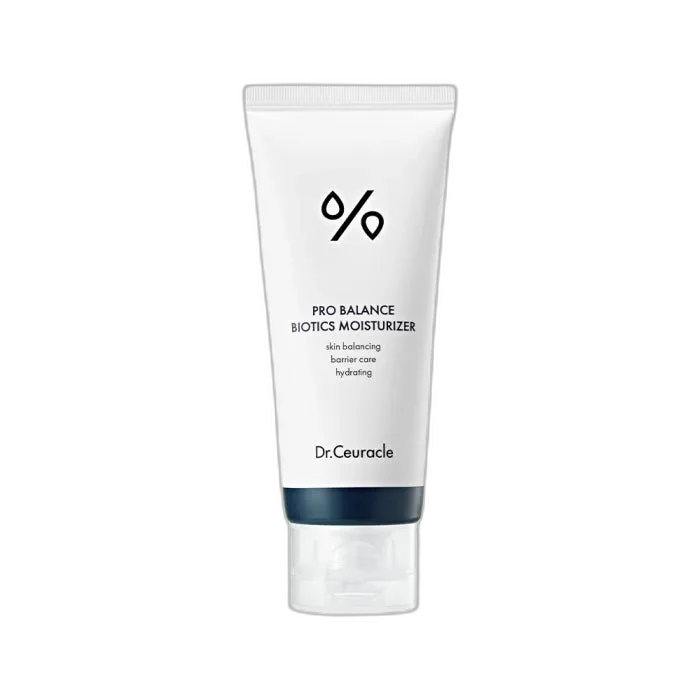
Pro Balance Biotics Moisturizer
Korean Derm Cosmeceutical
 Verified reviewer
Pros & cons.
- +Four-ferment postbiotic stack is unusually comprehensive at this price point
- +Proper lamellar ceramide complex alongside the biome-focused ingredients
- +Madecassoside and asiaticoside provide clinically supported anti-inflammatory support
- +Fragrance-free, alcohol-free formulation suits reactive skin
- +Works well post-procedure or after aggressive active treatments
- +Korean dermatologist-developed cosmeceutical brand with a decade-plus track record
- +Rich but non-greasy texture absorbs well under makeup or sunscreen
- −Expensive compared to simpler Korean centella or ceramide creams
- −Limited availability outside K-beauty specialty retailers
- −Not vegan
- −Postbiotic evidence base is still emerging compared to core ingredients
The full review.
About Dr. Ceuracle
The brand launched in 2012.
Texture
The cream is thick but not heavy. It has a silky, cushioned feel that spreads easily and absorbs in about 90 seconds, leaving a soft satin finish.
Scent
It is fragrance-free and alcohol-free. The silicone-glycerin emulsion base feels comfortable for most skin types, though very oily summer skin may find it slightly too thick.
Common Praise
The cream causes no stinging, no tingling, and no adjustment period. It works as advertised for reactive skin. Users with barrier disruption or sensitization report visible calming within a few days. Cumulative benefits on skin resilience show after 6-8 weeks of consistent use.
Best for
This is a strong pick for reactive, post-procedure, or chronically sensitized skin that needs a barrier-plus-biome cream.
Not ideal for
Cheaper alternatives exist for general-purpose Korean barrier repair.
Ingredient analysis.
Full INCI list · pH 5.5
Water, Glycerin, Caprylic/Capric Triglyceride, Cetyl Ethylhexanoate, Butylene Glycol, Butyrospermum Parkii (Shea) Butter, Lactobacillus Ferment Lysate, Lactobacillus/Soybean Ferment Extract, Bifida Ferment Lysate, Saccharomyces Ferment Filtrate, Niacinamide, Panthenol, Sodium Hyaluronate, Ceramide NP, Ceramide AP, Ceramide EOP, Cholesterol, Centella Asiatica Extract, Madecassoside, Asiaticoside, Glycerin, Cetearyl Alcohol, Glyceryl Stearate, PEG-100 Stearate, Dimethicone, Xanthan Gum, Tocopherol, Allantoin, Phenoxyethanol, Ethylhexylglycerin, Disodium EDTA.
Skin match.
The science.
The Science
This formula uses a postbiotic approach at the intersection of several active research areas. A 2019 review in the Journal of Drugs in Dermatology examined topical postbiotic evidence and concluded that fermented ingredients, specifically Lactobacillus and Bifidobacterium lysates, show activity in reducing inflammation and supporting barrier function, though the authors noted more randomized controlled trials are needed to establish clinical efficacy.
Bifida ferment lysate has the strongest evidence base among the ferments in this product. A 2011 study in the Journal of Cosmetic Dermatology evaluated a Bifida ferment lysate-containing formulation on photoaged skin and found improved skin hydration, elasticity, and reduced fine lines over 12 weeks of twice-daily application. The lysate likely affects mitochondrial function in keratinocytes and supports DNA repair enzymes.
Lactobacillus ferment-derived postbiotics provide short-chain fatty acids (acetate, propionate, butyrate) with documented anti-inflammatory activity on epidermal keratinocytes. A 2017 paper in the British Journal of Dermatology reviewed the skin microbiome's role in atopic dermatitis and rosacea and identified decreased microbial diversity in both conditions, supporting the idea that microbial balance improves barrier-compromised skin outcomes.
The ceramide complex in this formula uses the lamellar ratio approach from Peter Elias's research group at UCSF. A 2002 paper in the Journal of Investigative Dermatology established that topical application of ceramides, cholesterol, and fatty acids at physiologic ratios repairs the barrier faster than any single lipid alone.
Madecassoside and asiaticoside, the triterpenoid actives from centella asiatica, have studied anti-inflammatory and wound-healing properties. A 2008 randomized trial in the Archives of Dermatological Research evaluated topical madecassoside on compromised skin and showed significant improvements in hydration and reduced erythema over four weeks.
References
- Physiological lipid mixtures and barrier repair — Journal of Investigative Dermatology (2002)
- The role of the skin microbiome in atopic dermatitis and rosacea — British Journal of Dermatology (2017)
Dermatologist Perspective
Dermatologists have increased their interest in the skin microbiome's role in atopic dermatitis, rosacea, and acne over the last decade, making postbiotic formulations a promising area for topical intervention. Board-certified dermatologists note the evidence base for microbiome-targeted skincare is still developing; the main benefits of products in this category often come from supporting ingredients — ceramides, niacinamide, and centella asiatica — rather than the ferments alone. For patients with reactive skin, chronic sensitivity, or post-procedure recovery needs, dermatologists often recommend moisturizers with multi-pathway anti-inflammatory and barrier-repair approaches, matching this product's formulation philosophy. Western dermatologists sometimes recommend Korean dermatologist-developed brands like Dr. Ceuracle as cosmeceutical-tier options for patients wanting more complex formulations than standard over-the-counter creams without needing prescription-strength interventions.
Where it fits in your routine.
Apply twice daily, morning and evening, after serums and before sunscreen (AM) or as the final step (PM). Use a pea-sized amount for the face and slightly more for the neck. Warm the product between clean fingertips and press it into skin with patting motions instead of rubbing. Wait 60-90 seconds for absorption before applying sunscreen or makeup. Apply a thicker layer at night for very dry or post-procedure skin. Use it as the final step of a recovery routine after professional treatments like laser, microneedling, or chemical peels, following your provider's specific instructions.
At roughly $38 for 75 mL, this costs more than most K-beauty barrier creams. It costs more than simple Korean centella gels (Purito, Cosrx, iUnik at roughly $15-20) and matches the price of some dermatologist-developed Western indie creams. Value depends on your specific needs. The four-ferment stack, ceramides, and madecassoside combination justifies the price for chronic sensitivity, post-procedure recovery, or reactive skin needing multi-pathway calming. Cheaper Korean alternatives provide similar core benefits for general daily barrier support. One tube lasts 3-4 months with twice-daily use, making the annual cost roughly $115-150.
Sensitive, reactive, rosacea-prone, or post-procedure skin needs a cosmeceutical moisturizer with a multi-postbiotic ferment stack and a proper lamellar ceramide complex. This works well for users who want a biome-plus-barrier approach beyond simple centella creams, or for patients recovering from in-office procedures.
Skip this if you want the best-value Korean barrier cream; Purito or Cosrx offer similar benefits for less. Skip this if you have fungal acne (malassezia folliculitis), because fermented ingredients feed yeast in susceptible skin. Skip this if you distrust microbiome-targeted skincare and want a purely ingredient-validated formulation.
Product details.
Rich but fast-absorbing cream with a silky, cushioned feel.
Fragrance-free with a neutral base note from the ferments.
Pale tube with flip cap. Hygienic, opaque for ferment stability.
The skin softens and feels cushioned on first application. It does not sting or require an adjustment period. Users with sensitized, reactive, or post-procedure skin report visible calming within the first few days of use.
3-4 months with twice-daily face application.
12 months
All Year
The backstory.
Dr. Ceuracle launched in 2012 as a Korean dermatologist-developed cosmeceutical brand with a focus on the emerging microbiome skincare category. The brand grew out of clinical practice in Korean derm offices and built its reputation on probiotic and postbiotic formulations at a time when most Western brands were still treating microbiome skincare as an experimental concept. The Pro Balance line is the brand's core barrier repair range and represents its integrated biome-plus-lipid formulation philosophy.
About Dr. Ceuracle
Established Brand (5–20 years)Dr. Ceuracle is a Korean dermatologist-developed skincare brand founded in 2012 as a clinical cosmeceutical line focused on probiotic and postbiotic formulations. The brand has over a decade on market and is distributed through Korean derm clinics and international K-beauty retailers, with solid regional clinical research supporting its postbiotic products.
Common myths.
Probiotics in skincare add live bacteria to your face.
Topical probiotic products lack live bacteria. They use fermented extracts, postbiotics, or killed cell lysates to deliver fermentation byproducts without the organisms. Peptides, short-chain fatty acids, and cell-wall fragments provide the benefit, not live culture application.
The skin microbiome fixes itself without intervention.
A healthy microbiome is resilient, but aggressive cleansing, alcohol-based products, antibiotics, and compromised barriers disrupt microbial balance and do not self-correct quickly. Postbiotic skincare provides fermentation byproducts that support rebalancing — whether healthy skin strictly needs this is a separate debate.
FAQ.
What are postbiotics in skincare?
Postbiotics are fermentation byproducts of probiotics—short-chain fatty acids, peptides, and cell-wall fragments—that balance the skin microbiome and provide anti-inflammatory activity. Postbiotics lack live bacteria, unlike probiotics, but deliver the beneficial molecules produced during fermentation.
Is Dr. Ceuracle Pro Balance Biotics worth the price?
Yes, if you want microbiome-focused formulas with multiple ferment extracts and a ceramide-plus-madecassoside base. If you want basic barrier repair without postbiotics, simpler Korean ceramide creams like Purito Centella Cream or Cosrx Ceramide Blemish Cream provide similar barrier benefits for less.
Can I use this with retinoids or acids?
This is a strong post-treatment recovery moisturizer for retinoid or acid users. The combination of ceramides, madecassoside, and postbiotic ferments aids barrier recovery and reduces inflammation from active ingredient use.
Is this moisturizer fragrance-free?
Yes. The formula has no added fragrance or essential oils. The faint scent some users notice comes from the ferments and is neutral, not perfumed.
Can I use this after procedures like laser or microneedling?
Korean derm clinics commonly use this as a post-procedure recovery cream. The ceramide complex repairs the barrier, while the postbiotic ferments and madecassoside reduce inflammation during the healing window. Always follow specific post-procedure instructions from your provider.
Is Dr. Ceuracle cruelty-free and vegan?
Dr. Ceuracle is cruelty-free. This product is not strictly vegan because it uses fermented ingredients from microbial processes and some non-vegan secondary ingredients. Check product labeling for the most current status.
Is it safe during pregnancy?
Yes. The formula lacks retinoids, salicylic acid, or essential oils flagged for pregnancy caution. Ceramides, centella asiatica, postbiotic ferments, and niacinamide are safe during pregnancy and breastfeeding.
Community
What the community says.
"Genuinely calming for reactive skin"
"Rich but not greasy texture"
"Postbiotic ingredient positioning is backed by actual ferments, not just marketing"
"Works well post-procedure or after over-exfoliation"
"Expensive relative to similar Korean barrier creams"
"Hard to find outside K-beauty specialty retailers"
"Not vegan"
"Tube size is smaller than expected"