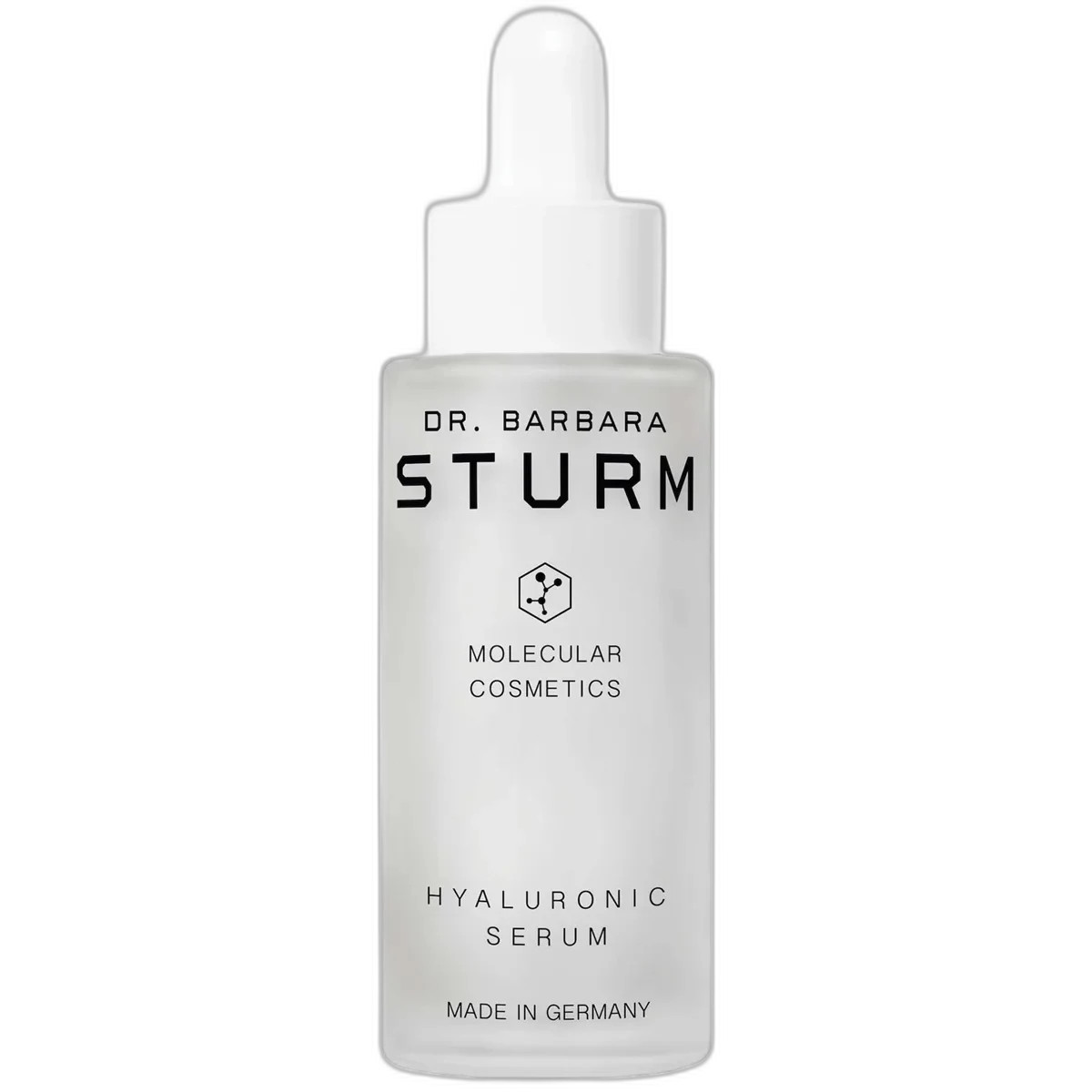
Hyaluronic Serum
Brand Co-Flagship
 Verified reviewer
Pros & cons.
- +Multi-weight hyaluronic acid delivers layered hydration
- +Fragrance-free and extremely well tolerated
- +Broad suitability across skin types and conditions
- +Silky, non-sticky finish unlike cheap HA serums
- +Gentle enough for post-procedure use
- +Pregnancy-compatible and low-risk
- +Signature purslane soothing addition
- −Priced absurdly relative to the HA serum category
- −Equivalent multi-weight alternatives exist at 5-10% of cost
- −Formulation advantages over cheaper options are modest
- −Small 30ml bottle at a luxury price point
- −Wet glass dropper is finicky in some bathrooms
The full review.
This product contains a plain irony. Hyaluronic acid is a cheap, well-studied, commodity ingredient. It costs brands almost nothing. Every skincare tier from drugstore to luxury carries it, and the industry has used the same basic formulation logic for decades. The Ordinary sells a competent HA serum for seven dollars. La Roche-Posay sells one with thermal spring water for around thirty. Paula’s Choice, Naturium, Vichy, Kiehl’s, and almost every other brand make versions in the 15-to-45 dollar range. This one costs 300 dollars for 30 milliliters.
The formulation is actually good. The architecture uses three hyaluronic acid forms: high molecular weight sodium hyaluronate for surface hydration and cushioning, low molecular weight sodium hyaluronate for deeper stratum corneum hydration, and hydrolyzed sodium hyaluronate fragments that reach further into the upper skin layers. This multi-weight delivery is more sophisticated than single-weight HA serums. It is a legitimate formulation choice that produces a measurably better hydration effect than a basic single-weight serum. Not dramatically better, but measurably better.
The soothing ingredients add value. Purslane extract provides the brand’s signature anti-inflammatory function. Panthenol supports barrier recovery. Allantoin, bisabolol, centella, and licorice form a gentle cocktail that makes this serum well-tolerated on sensitive and reactive skin—including post-procedure use after laser, microneedling, or chemical peels. A low-level appearance of niacinamide adds subtle barrier support for combination skin. These ingredients are not unique, but they are all present and working.
The sensory experience is quiet. The texture is watery and slightly slippery from the humectants. It sinks in within seconds and leaves a cushioned, hydrated feel without the tackiness found in cheaper HA serums. Apply it to damp skin to see immediate effects: skin looks plumper, eye lines soften slightly, and the glow of hydrated skin appears within minutes. Over weeks, this cumulative hydration supports better tolerance of active serums and a more stable barrier. That is the long-term value of any hyaluronic acid product.
None of this equals 300 dollars. With luxury HA serums, you pay for the brand experience, packaging, sensory polish, and specific formulation quality control. However, the underlying ingredient cost is a tiny fraction of the retail price. The performance gap between this serum and a 15-dollar multi-weight HA serum is narrow. In blind use, most people cannot distinguish this from a well-formulated mid-tier product. In blind clinical terms, the hydration outcomes are likely indistinguishable.
The Sturm Hyaluronic Serum has defenders. They argue that within the full Sturm routine, brand coherence and the signature scent profile (or the deliberate absence of scent) matter. They say the polished sensory experience justifies the premium for customers who treat skincare as ritual. That is valid if you have the budget. For customers evaluating ingredient performance per dollar, the answer is clear: the formulation is good, the price is absurd, and alternatives deliver nearly identical outcomes for much less.
This serum deserves credit for its broad suitability and low irritation risk. It works on almost every skin type, layers well with other products, and is one of the most well-tolerated formulations in the brand’s lineup. For customers already buying the Sturm experience at the luxury tier, this is a safe bet because the formulation is sound. The value conversation is the only thing preventing a strong recommendation, and the value conversation is not close.
Ingredient analysis.
Full INCI list · pH 5.5
Aqua, Propanediol, Glycerin, Pentylene Glycol, Sodium Hyaluronate (High Molecular Weight), Sodium Hyaluronate (Low Molecular Weight), Hydrolyzed Sodium Hyaluronate, Panthenol, Portulaca Oleracea Extract, Allantoin, Bisabolol, Centella Asiatica Extract, Glycyrrhiza Glabra (Licorice) Root Extract, Niacinamide, Tocopheryl Acetate, Xanthan Gum, Citric Acid, Disodium EDTA, Phenoxyethanol, Ethylhexylglycerin
Skin match.
The science.
The Science
Dermatologic literature establishes the science of multi-weight hyaluronic acid. High molecular weight sodium hyaluronate (typically 1,000+ kDa) stays on the skin surface to provide immediate plumping and water-retention, creating a visible hydration cushion that softens fine lines and supports barrier recovery. Low molecular weight sodium hyaluronate (typically 50-300 kDa) penetrates slightly into the upper stratum corneum to provide a secondary hydration layer. Hydrolyzed hyaluronic acid fragments (typically below 10 kDa) reach deeper into the stratum corneum and contribute to intra-corneal water retention, though the literature contests claims of dermal penetration in intact skin. Multi-weight formulations show measurable but modest clinical advantages over single-weight versions; studies show slightly better hydration outcomes for multi-weight formulations, especially in dry or mature skin. Panthenol converts to pantothenic acid and has published evidence for barrier recovery and mild anti-inflammatory activity. Centella asiatica's triterpenes (asiaticoside, madecassoside) have substantial evidence for wound healing and barrier recovery. Purslane has a smaller but promising evidence base for anti-inflammatory activity. The formulation uses a hydration-plus-soothing architecture that aligns with current dermatologic thinking. The science does not support claims that this specific formulation is clinically superior to equivalent multi-weight HA serums from mid-tier brands—the ingredients are well-chosen but non-proprietary, and the delivery science applies to competitors too.
Dermatologist Perspective
Dermatologists often recommend hyaluronic acid serums as a daily hydration foundation, especially for patients with dry, dehydrated, or compromised skin barriers. Dermatology offices sometimes use The Sturm Hyaluronic Serum for post-procedure recovery because its gentle, fragrance-free, multi-weight architecture calms inflamed skin after treatments. Board-certified dermatologists acknowledge the formulation is competently built but note the price is disproportionate to the outcome. The Sturm Hyaluronic Serum is a valid option for patients invested in the Sturm brand who can afford the luxury position. For outcome-driven patients, dermatologists typically redirect to La Roche-Posay Hyalu B5, Vichy Mineral 89, The Ordinary's multi-weight HA serum, or similar mid-tier alternatives that deliver clinically equivalent hydration at a fraction of the cost.
Where it fits in your routine.
Apply two to three drops to damp skin right after cleansing or toner. Humectants work best when surface water is available to bind. Pat the serum into the face and neck; do not rub. Follow with moisturizer to seal hydration, and use broad-spectrum sunscreen in the morning. The serum layers well with vitamin C, retinol, AHAs, and peptides. Apply it first on damp skin, then layer other actives. Use twice daily. You can also use it as a buffering layer before harsher actives like retinoids to reduce irritation. Store the bottle in a cool place away from direct sunlight, though the formulation is relatively stable.
At 300 dollars for 30 milliliters, this is one of the most expensive hyaluronic acid serums on the market and the worst value in its category. Alternate sizes exist — a 50ml bottle typically has slightly better per-milliliter pricing but remains a luxury item. The 30ml bottle lasts two to three months with twice-daily use, making the monthly cost around 100 dollars. Comparable multi-weight hyaluronic acid serums from reputable brands — The Ordinary Hyaluronic Acid 2% + B5, La Roche-Posay Hyalu B5, Vichy Mineral 89 — provide similar hydration at 7 to 45 dollars per bottle. The value exists only for customers buying the full Sturm brand experience who want the sensory polish and brand coherence at a 10x-to-40x price multiple over effective alternatives. For customers evaluating cost-per-benefit, this is a pass.
This works for Sturm customers wanting a polished, gentle, multi-weight HA serum for a luxury routine. It helps post-procedure recovery and sensitive skin. It suits buyers who value sensory polish and brand experience alongside formulation quality.
Skip this if you judge skincare by cost-per-benefit — alternatives in this category offer better value. Skip it if you are new to hyaluronic acid serums and want to learn the category before committing; start with a mid-tier option first.
Product details.
Watery, slightly slippery serum
Essentially odorless
Frosted glass bottle with glass dropper
The first use provides immediate plumping and a hydrated, cushioned feel. It has no tingling or drama—only water-light absorption and a subtle glow from properly hydrated skin.
About 2-3 months with twice-daily use
6 months
All Year
The backstory.
The Hyaluronic Serum launched in 2014 as part of Sturm's inaugural range and has remained one of the brand's most recognizable products alongside the Enzyme Cleanser. It became particularly associated with the celebrity skincare routines that built the brand's early visibility in Los Angeles dermatology clinics.
About Dr. Barbara Sturm
Established Brand (5–20 years)The Hyaluronic Serum is a founding product, launched in 2014 with the Face Cream. It has over a decade of retailer and editorial coverage, but no independent clinical trials for this specific formulation are public.
Common myths.
High molecular weight hyaluronic acid stays on the surface and does not penetrate.
High molecular weight HA stays on the skin surface. It holds water there to create a plump, cushioned feel. Lower molecular weight fragments hydrate deeper. Both have different, complementary functions.
FAQ.
Is it really worth 300 dollars?
No — not based on ingredients alone. The multi-weight hyaluronic acid architecture works well, but The Ordinary, Vichy, or La Roche-Posay sell comparable multi-weight HA serums for 10 to 30 dollars. The Sturm version sells the brand experience and the signature purslane addition.
Should I apply it to damp skin?
Yes — humectants like hyaluronic acid work best when they bind to surface moisture. Apply immediately after cleansing or toner while skin stays slightly damp.
Can I use it with other serums?
Yes — it layers well with almost any other serum type because it lacks pH-sensitive or conflict-prone actives. Apply the HA serum to damp skin first, then use your other treatment serums.
Is it safe during pregnancy?
Yes — the formulation is fragrance-free, alcohol-free, and has no pregnancy-contraindicated actives. It's one of the safest Sturm products for pregnancy use.
Does it dry sticky?
No — unlike cheap HA serums that leave a tacky residue, this one absorbs cleanly and leaves a non-sticky finish.
Can I use it after a procedure?
Yes — dermatologists frequently use it for post-procedure recovery because the ingredient list is gentle and the hydration supports barrier recovery.
Community
What the community says.
"immediate hydration"
"non-sticky finish"
"gentle enough for post-procedure"
"plays well with all routines"
"extraordinarily expensive for a hyaluronic acid serum"
"not dramatically better than cheap alternatives"
"small bottle"
Featured in.
People also looked at.