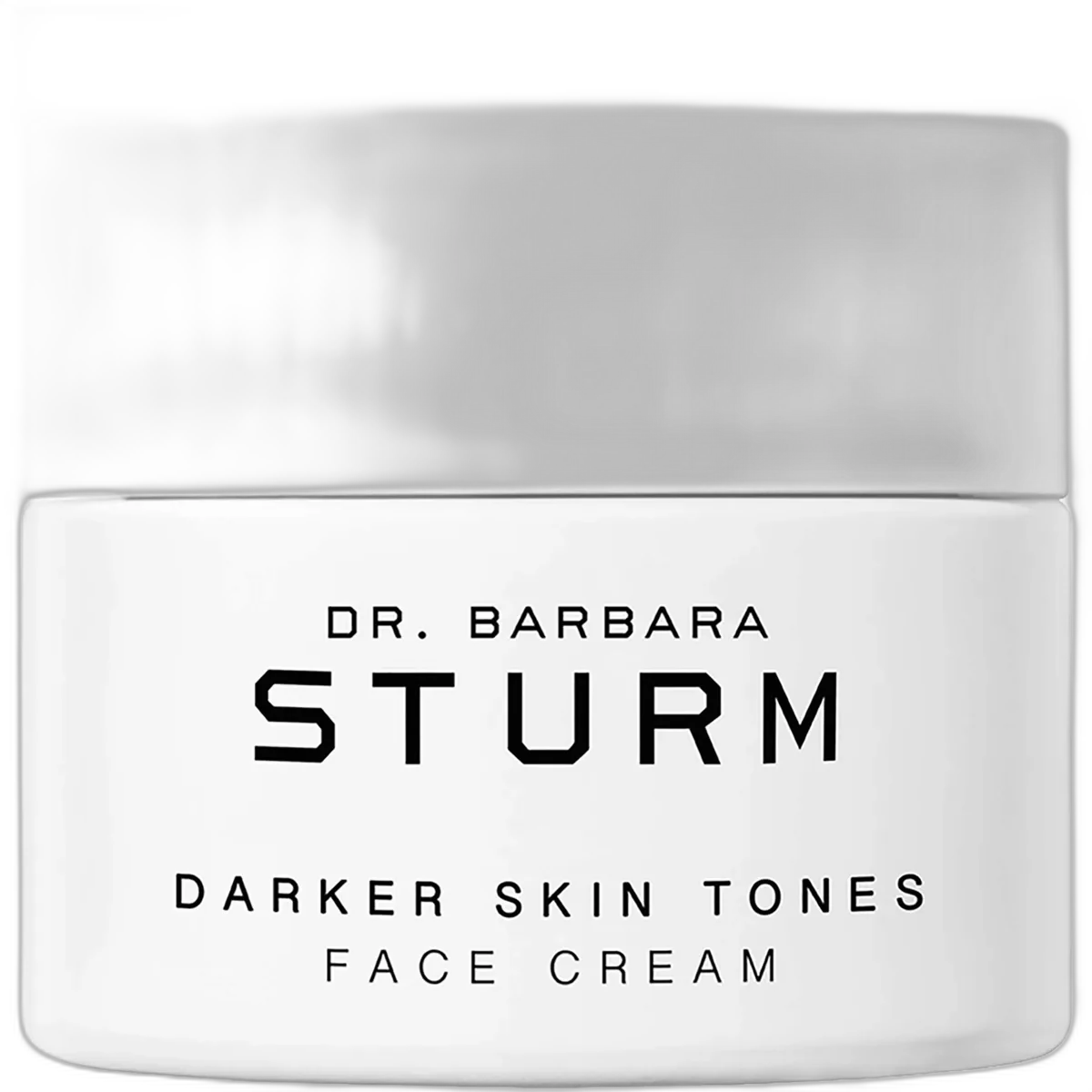
Darker Skin Tones Face Cream
Targeted Hyperpigmentation Luxury
 Verified reviewer
Pros & cons.
- +Multi-pathway brightening with niacinamide, alpha arbutin, and licorice
- +Formulated specifically around post-inflammatory hyperpigmentation
- +Silky finish absorbs cleanly without ashy cast
- +Shea-and-squalane base supports barrier without heaviness
- +Anti-inflammatory purslane helps prevent new marks
- +Representation and concept-first formulation philosophy
- +Pregnancy-compatible active profile
- −Price is extraordinarily steep for the category
- −Fragrance inclusion is incongruent with the pigmentation focus
- −Jar packaging less ideal for formula stability
- −Won't meaningfully clear deep melasma or set pigmentation
- −Comparable alternatives exist at 10 to 15 percent of the cost
The full review.
This cream launched in 2019 with more editorial attention than most Sturm products. It came from a collaboration with Angela Bassett, who noted that luxury skincare brands market universally while ignoring melanin-rich skin concerns. The most common concern is post-inflammatory hyperpigmentation—dark marks from acne, ingrown hairs, eczema flares, or skin injury—which stays longer and shows more on deeper skin tones due to higher baseline melanin activity. Universal face creams rarely address this. This one was built to.
The formulation uses a smart approach. Niacinamide is near the top of the active stack. Instead of inhibiting melanin production directly, niacinamide blocks melanosome transfer from melanocytes to keratinocytes, targeting hyperpigmentation that has already triggered. Alpha arbutin provides a second pathway by gently inhibiting tyrosinase without the darkening risk seen with aggressive lighteners like hydroquinone in deeper skin tones. Licorice root extract adds a third pathway via glabridin, and Sturm’s signature purslane uses anti-inflammatory function to target the irritation that triggers pigmentation. This is multi-pathway brightening.
The base is also considered. Shea butter forms the emollient layer for barrier support; melanin-rich skin often has a dry surface despite sometimes running oily. Squalane prevents the shea base from feeling heavy and provides a silky finish that absorbs without the ashy or whitish cast some mineral-based luxury creams leave on deeper skin tones. The sensory experience earns customer loyalty: it feels like no compromise and solves a long-standing problem for customers with deeper skin.
With consistent use and daily sunscreen, users typically see subtle evening of tone at four-to-six weeks and more visible fading of mild post-inflammatory marks at twelve weeks. The cream is not a pigmentation nuke; it won’t meaningfully clear melasma or deeply set hyperpigmentation, nor will it substitute for dermatologist-level interventions like tranexamic acid or cysteamine for stubborn cases. It provides a steady, gentle daily moisturizer that improves tone without the irritation risk of aggressive formulations. This offers the slow, consistent, non-irritating progress skin of color often needs.
The fragrance is the one formulation compromise. Sturm’s signature parfum is detectable. While most users find it pleasant, fragrance can trigger low-grade inflammation that leads to more post-inflammatory marks in reactive skin. This is an odd inclusion for a product built for pigmentation management and is worth flagging for reactive skin.
Then there is the price. Two hundred and twenty dollars for fifty milliliters makes this one of the most expensive moisturizers for hyperpigmentation on the market. The formulation, while good, does not justify that price on ingredient terms alone. Naturium’s Brightening Cream, Good Molecules’ niacinamide moisturizers, and many mid-tier options deliver comparable brightening logic at 15 to 40 dollars. The Sturm cream is not twenty times better than those formulas; it is a modest step up in sensory quality and brand coherence, and the purslane extract is a thoughtful bonus rather than a transformational element.
This product serves the shopper invested in the luxury skincare experience, the Angela Bassett collaboration, and a coherent Sturm routine tailored to specific concerns. For that customer, this is one of the more defensible products in the brand’s lineup because it addresses a real gap in luxury skincare. For value-focused shoppers, mid-tier niacinamide-and-alpha-arbutin moisturizers deliver most of what this cream does for far less money.
Ingredient analysis.
Full INCI list · pH 5.6
Aqua, Glycerin, Caprylic/Capric Triglyceride, Cetearyl Alcohol, Squalane, Pentylene Glycol, Butyrospermum Parkii (Shea) Butter, Niacinamide, Tocopheryl Acetate, Portulaca Oleracea Extract, Sodium Hyaluronate, Alpha Arbutin, Panthenol, Allantoin, Bisabolol, Glycyrrhiza Glabra (Licorice) Root Extract, Centella Asiatica Extract, Vitis Vinifera (Grape) Seed Extract, Glyceryl Stearate, Cetyl Alcohol, Sodium Stearoyl Glutamate, Xanthan Gum, Disodium EDTA, Phenoxyethanol, Ethylhexylglycerin, Parfum
Skin match.
The science.
The Science
This formulation follows established research on post-inflammatory hyperpigmentation in melanin-rich skin. Niacinamide inhibits melanosome transfer from melanocytes to keratinocytes. Research from Procter & Gamble and independent groups shows 2 to 5 percent concentrations reduce hyperpigmentation over 8 to 12 weeks. Alpha arbutin inhibits tyrosinase more gently than hydroquinone and avoids the ochronosis risk hydroquinone carries for deeper skin tones. Licorice root extract uses glabridin and glycyrrhizin for gentle tyrosinase inhibition and anti-inflammatory activity, as documented in cosmetic literature. This anti-inflammatory strategy targets the inflammation that triggers new marks. Purslane's omega-3 fatty acids and betalains show anti-inflammatory activity in preliminary studies, while centella asiatica's triterpenes support barrier recovery. Shea butter and squalane provide documented barrier support and skin-identical lipid replenishment; this matters because compromised barriers trigger inflammatory pigmentation cascades. The strategy—gentle melanin pathway inhibition, inflammation prevention, and barrier support—reflects current dermatologic thinking. It treats hyperpigmentation in melanin-rich skin using slow, low-irritation approaches instead of aggressive lightening agents.
Dermatologist Perspective
Dermatologists specializing in skin of color recommend gentle, multi-pathway approaches for hyperpigmentation in melanin-rich skin. The ingredient logic of this cream matches that clinical thinking. Board-certified dermatologists frequently recommend niacinamide, alpha arbutin, and licorice as first-line over-the-counter options for mild post-inflammatory hyperpigmentation because they avoid irritation that triggers more pigmentation. The core caution is that products at this price point are not clinically superior to cheaper formulations using the same actives; mid-tier brands deliver comparable outcomes with equivalent formulas. This is a valid option for patients who want a cohesive brand experience and can afford the luxury positioning. For patients with stubborn melasma or deeply set pigmentation, dermatologists typically recommend prescription-level interventions over any over-the-counter cream at any price.
Where it fits in your routine.
Apply to clean skin after serums, focusing on the face and neck. Use morning and evening. In the morning, follow with a broad-spectrum sunscreen of SPF 30 or higher. Sunscreen is required to manage hyperpigmentation in melanin-rich skin, as UV exposure re-triggers the pigmentation pathways this cream calms. Tinted mineral sunscreens work well because they add visible-light protection for melasma. At night, this cream pairs with retinol serums; the soothing components buffer retinol irritation. Store the jar away from steam and use clean hands to preserve the formulation.
At 220 dollars for 50 milliliters, this is one of the most expensive targeted moisturizers in its category. No alternate size exists, so the upfront commitment is steep. Applying it twice daily to the face and neck lasts three to four months, making the monthly cost 55 to 70 dollars. Mid-tier brands like Naturium, Good Molecules, and The Ordinary's Deciem sister brands offer similar niacinamide-and-alpha-arbutin ingredient logic for 15 to 40 dollars total. The Sturm cream has better sensory quality, the purslane complex, brand coherence, and the representation from the Angela Bassett collaboration — whether these justify a 5x-to-10x price multiple is a personal call. For pure ingredient value, the answer is no. For buyers who want the full brand experience and the concept-first formulation philosophy, there is a defensible case.
This suits customers with melanin-rich skin with post-inflammatory hyperpigmentation, mild dark marks, or uneven tone who want a luxury-tier formulation built for those concerns. It works best for normal-to-dry skin and routines using daily sunscreen.
Skip this if you evaluate cost-effectiveness; equivalent ingredient stacks cost much less. Skip it if you have fragrance sensitivity, oily or congestion-prone skin, or deep melasma requiring prescription intervention.
Product details.
Silky, medium-weight cream
Soft floral-powdery parfum
Frosted glass jar with screw lid
The first use leaves skin feeling silky and noticeably softer. It sinks in faster than the jar texture suggests. There is no tingling or purging; expect gradual tone improvements over weeks.
About 3-4 months with twice-daily face and neck application
12 months
All Year
The backstory.
The Darker Skin Tones cream was developed in 2019 in collaboration with actress Angela Bassett, who advocated for the skincare industry's chronic underservice of melanin-rich skin. The product was intended to prove that luxury skincare could be formulated around pigmentation-specific concerns rather than treating them as an afterthought in a universal formula.
About Dr. Barbara Sturm
Established Brand (5–20 years)Sturm collaborated with Angela Bassett in 2019 to create this line for melanin-rich skin. This partnership highlighted pigmentation-specific formulation, but independent clinical validation for this specific product is limited.
Common myths.
Melanin-rich skin doesn't need brightening ingredients.
Melanin-rich skin often develops post-inflammatory hyperpigmentation after acne, injury, or irritation. Gentle brighteners like niacinamide and alpha arbutin address this concern without the aggressive lighteners that cause paradoxical darkening.
FAQ.
Is this cream only for darker skin tones?
The actives in this formula — niacinamide, alpha arbutin, licorice, purslane — work on all skin tones. The product targets concerns common in melanin-rich skin, specifically post-inflammatory hyperpigmentation, but the formulation is not skin-tone-specific.
Does it leave an ashy or white cast?
No. The shea and squalane base absorbs cleanly. It leaves no whitish residue on deeper skin like some mineral-based creams do.
Will it fade my hyperpigmentation?
Paired with daily sunscreen, it gently fades mild post-inflammatory marks over several months. It does not affect deep melasma, which typically requires prescription-level intervention.
Is it safe during pregnancy?
Yes — the brighteners (niacinamide, alpha arbutin, licorice) are all pregnancy-compatible. Only the fragrance requires a patch test for users with pregnancy-sensitive skin.
Can I use it with vitamin C or retinol?
Yes. Pair with vitamin C in the morning to boost brightening. Use retinol at night — the soothing components in this cream buffer retinol irritation well.
Is it worth the 220 dollar price tag?
This formulation works well for hyperpigmentation, but the price is high. Niacinamide-and-alpha-arbutin creams exist for 25 to 50 dollars. The premium covers brand experience and the specific Sturm purslane complex.
What the community says.
"addresses hyperpigmentation thoughtfully"
"silky finish on deeper skin tones"
"doesn't leave an ashy cast"
"pleasant scent"
"very expensive"
"fragrance can bother sensitive skin"
"jar packaging"