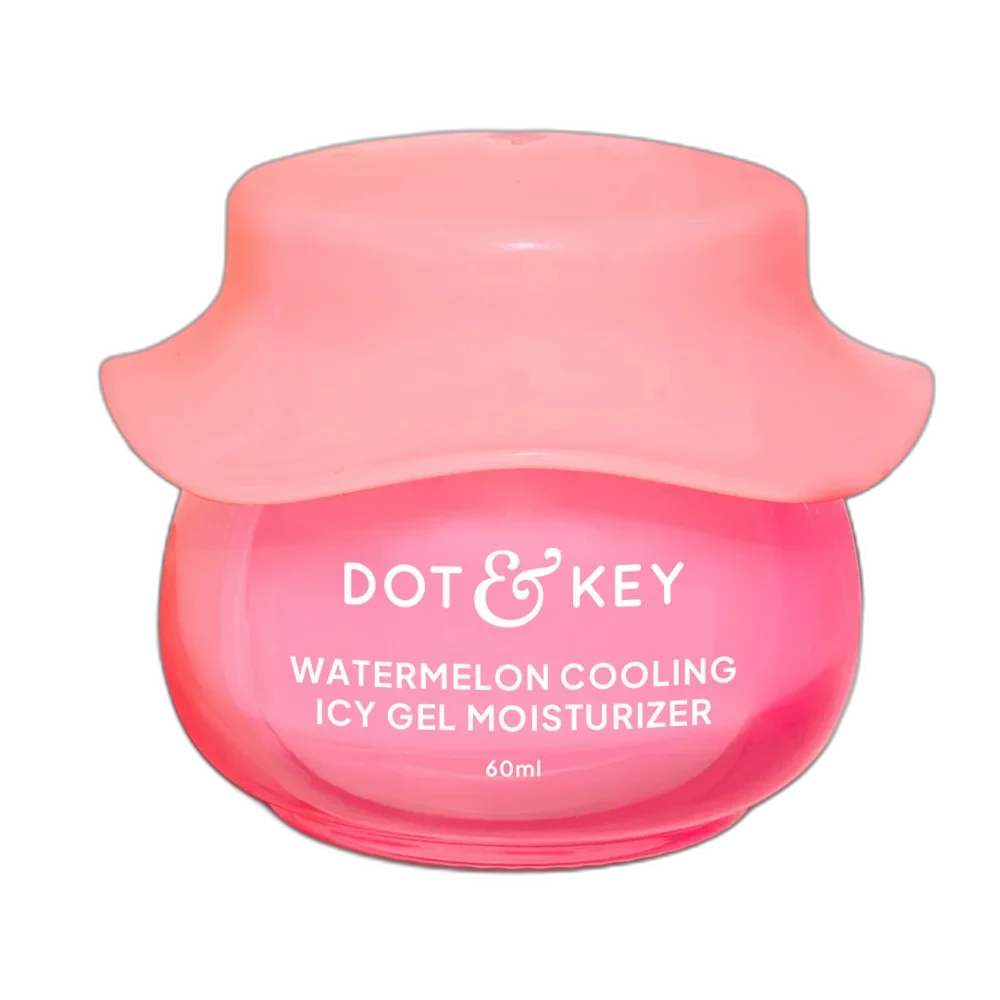
Watermelon Cooling Moisturizer SPF 35
Indian Summer Gel-SPF
 Verified reviewer
Pros & cons.
- +Lightweight gel-cream texture genuinely wearable in humid tropical heat
- +Cooling sensation from watermelon, cucumber, and aloe makes SPF routine enjoyable
- +Niacinamide at meaningful levels for barrier and pigmentation
- +SPF 35 is adequate for light outdoor exposure
- +No white cast on any skin tone
- +Affordable for the texture and SPF combination
- +Pregnancy-safe formulation
- −Added watermelon fragrance rules out sensitive skin
- −SPF 35 is below the AAD-recommended SPF 50+ for prolonged outdoor use
- −First-generation chemical UV filters lack photostability of newer systems
- −60 mL size runs through in 2-3 months
- −Watermelon extract is more sensory than a clinical active
The full review.
Western skincare marketing treats ‘summer skincare’ as a minor seasonal shift, using slightly lighter serums in July and August. In most of India, summer skincare is a fundamental category because temperatures regularly exceed 35°C and relative humidity hits 80% for weeks. Traditional cream moisturizers fail in these conditions—they slide off, feel suffocating, and destabilize your SPF layer by mixing with sweat. Indian consumers do not just prefer lightweight formulas; they cannot tolerate heavy ones. Dot & Key built the Watermelon line to address this, and this moisturizer is the range’s flagship product. It is not a serious clinical treatment cream. It is an SPF moisturizer designed for wear when it is 38°C outside during a walk to the office.
The formulation reflects this. The base is a gel-cream—mostly water, light humectants, and a small amount of silicone for slip—which is the correct chassis for an oily-skin summer product. It lacks heavy occlusives, shea butter, or plant oils that would ruin the lightweight feel. Glycerin, sodium hyaluronate, and panthenol provide hydration instead of emollient oils, so the skin feels cushioned but not coated. The watermelon extract, cucumber extract, and aloe extracts add a signature cooling sensation upon application. This cooling effect is sensory rather than clinically meaningful, but users consistently cite it as the reason they use this product on hot days.
The active ingredient doing the work is niacinamide. It sits high in the INCI list and provides the barrier support and pigmentation benefits that make this a functional moisturizer rather than just a ‘pleasant summer gel.’ For oily and combination skin that is often over-cleansed, the niacinamide helps rebuild barrier function and addresses hyperpigmentation concerns common in the Indian market. Panthenol, allantoin, and cucumber extract provide mild soothing for use after sun exposure or in dusty urban environments. It is a simple, coherent formulation with no filler.
The SPF situation is more complex. SPF 35 is better than the SPF 20 in Dot & Key’s brightening moisturizer, but it is below the SPF 50+ standard Asian sunscreens set for tropical daily wear. At a standardized dose of 2 mg/cm², SPF 35 blocks roughly 97% of UVB; at the real-world dose of 0.5-1 mg/cm² most users apply, effective SPF drops to roughly SPF 12-18. The chemical filter system—ethylhexyl methoxycinnamate (octinoxate), butyl methoxydibenzoylmethane (avobenzone), and ethylhexyl salicylate—is a first-generation combination. It works but lacks the photostability and broad-spectrum coverage of newer Korean or European filters like Tinosorb S, Uvinul A Plus, or Mexoryl XL. It is fine for light outdoor exposure, but layer a dedicated SPF 50+ sunscreen on top for a full day at the beach or outdoor work.
The added fragrance is a drawback. The watermelon scent is a main selling point for many users, creating a sensory experience that feels enjoyable rather than clinical, but it is a dealbreaker for anyone with reactive skin, rosacea, eczema, or fragrance sensitization. Dot & Key has fragrance-free alternatives in its line; shoppers with sensitivity should choose those. There is no ‘lightly fragranced’ version of this product; the scent is part of the Watermelon line brand identity.
Value at roughly $14 for 60 mL is reasonable. You pay a small premium over the cheapest SPF moisturizers in the Indian market, but the gel-cream texture, niacinamide dose, and SPF 35 rating justify the price. For oily-skin summer use, this is one of the more wearable SPF moisturizers in the category. The refreshing sensory experience is a real feature even if it is not clinically load-bearing. Keep expectations calibrated: it is a functional summer moisturizer with backup SPF, not a primary sunscreen for extended outdoor exposure.
Ingredient analysis.
Full INCI list · pH 5.5
Aqua, Ethylhexyl Methoxycinnamate, Citrullus Lanatus (Watermelon) Fruit Extract, Glycerin, Butyl Methoxydibenzoylmethane, Ethylhexyl Salicylate, Niacinamide, Sodium Hyaluronate, Butylene Glycol, Caprylic/Capric Triglyceride, Panthenol, Allantoin, Cucumis Sativus (Cucumber) Fruit Extract, Aloe Barbadensis Leaf Extract, Dimethicone, Cetearyl Alcohol, Glyceryl Stearate, Xanthan Gum, Tocopheryl Acetate, Phenoxyethanol, Ethylhexylglycerin, Parfum.
Skin match.
The science.
The Science
The SPF 35 rating blocks about 97% UVB at the standard 2 mg/cm² test dose. Real-world use usually misses this mark. A 2008 study in the Archives of Dermatology (Faurschou and Wulf) shows average consumers apply only 0.5-1 mg/cm², which can drop the effective SPF 50-70% below the label. This is why the American Academy of Dermatology recommends SPF 30 as the daily minimum and SPF 50+ for long outdoor exposure — the safety margin covers under-application.
The chemical filter system uses ethylhexyl methoxycinnamate (octinoxate), butyl methoxydibenzoylmethane (avobenzone), and ethylhexyl salicylate. Octinoxate absorbs UVB with a peak around 311 nm. Avobenzone absorbs UVA-I and UVA-II from 310-400 nm to provide broad-spectrum coverage, but it is photochemically unstable and degrades under UV light without a stabilizer. Ethylhexyl salicylate works as a UVB absorber and a solvent for the other filters, and it provides some photostabilization for avobenzone. This combination works but uses an older formulation approach. Newer European and Asian filters like Tinosorb S (bis-ethylhexyloxyphenol methoxyphenyl triazine), Uvinul A Plus (diethylamino hydroxybenzoyl hexyl benzoate), and Mexoryl XL (drometrizole trisiloxane) offer better photostability and more complete UVA coverage than the filters in this formula.
Niacinamide has a proven dual role in barrier function and pigmentation. A 2005 paper in the International Journal of Cosmetic Science found topical niacinamide increases ceramide synthesis in the stratum corneum. A 2002 study in the British Journal of Dermatology showed niacinamide reduces melanosome transfer from melanocytes to keratinocytes. Both mechanisms matter in a daily SPF moisturizer — they prevent UV-induced pigmentation and treat existing hyperpigmentation over time.
References
- Sunscreen application and reapplication — Archives of Dermatology (2008)
- The effect of niacinamide on reducing cutaneous pigmentation — British Journal of Dermatology (2002)
Dermatologist Perspective
Dermatologists typically recommend SPF 30 as the minimum for daily use and SPF 50+ for long outdoor exposure, making SPF 35 acceptable but not optimal. Board-certified dermatologists note that real-world application stays below the standard test dose, so the safety margin in higher SPF ratings matters for actual protection. For Indian and South Asian patients, dermatologists note that darker skin tones still sunburn and develop UV-induced pigmentation despite the myth that deeper skin 'doesn't need' sunscreen. Because hyperpigmentation is a primary concern for these populations, daily SPF is vital. The chemical filter system in this product works, but dermatologists treating melasma or recalcitrant hyperpigmentation often suggest patients use SPF 50+ products with newer filter systems for maximum protection. For oily-skin patients who dislike heavy creams in tropical heat, lightweight gel-cream textures like this one improve compliance, which improves real-world outcomes.
Where it fits in your routine.
Apply once every morning after cleansing and treatment serums. Use one pump for the face and neck, warm it between fingertips, and press it into the skin. Wait 30-60 seconds for absorption before applying makeup. Layer a dedicated SPF 50+ sunscreen on top for extended outdoor exposure. Reapply sunscreen every two hours for prolonged or intense sun exposure; this moisturizer is not for outdoor reapplication. Use a separate non-SPF moisturizer at night.
At roughly $14 for 60 mL, this sits in the middle ground for Indian-market SPF moisturizers. The gel-cream texture, SPF 35 rating, and niacinamide content offer good value for the price, even if it isn't the cheapest SPF moisturizer in the category. This provides strong value for shoppers seeking a lightweight summer SPF moisturizer for oily skin in tropical climates. Shoppers wanting maximum sun protection or who have sensitive skin can find better-value alternatives. One jar lasts 2-3 months with daily morning use, making the annual cost roughly $55-80.
Oily and combination skin in tropical climates that finds heavy SPF moisturizers too suffocating in heat and humidity. This works well if you like fragranced skincare, want a cooling feel, and need an affordable gel-cream SPF with niacinamide benefits.
Skip this if you have sensitive, rosacea-prone, or fragrance-reactive skin; the watermelon scent is too strong for reactive barriers. Skip this if you need SPF 50+ coverage for long outdoor activities. Skip this if you prefer unscented skincare, because the signature fragrance is unavoidable.
Product details.
Lightweight gel-cream with a cool application feel.
Fresh sweet watermelon scent from added parfum.
Plastic pump jar in the brand's signature pink.
The cucumber and aloe extracts and the water-based gel base provide an immediate cooling sensation. It absorbs in 30-60 seconds and leaves a non-tacky finish. Most users say this feels like a 'summer skincare' product instead of a serious clinical moisturizer.
2-3 months with once-daily morning use.
12 months
spring summer
The backstory.
Dot & Key built the Watermelon line as a summer-focused product family for the Indian market, where humidity and heat make traditional cream moisturizers feel suffocating. The watermelon ingredient is partly functional (contributing citrulline and hydration) and partly sensory — it delivers the distinctive cooling sensation that's become the line's hallmark.
About Dot & Key
Emerging Brand (2–5 years)Dot & Key launched in India in 2018. The Watermelon line offers a lightweight, oily-skin-friendly alternative to the brand's thicker ceramide and brightening formulas. This range is one of Dot & Key's most popular lines in Indian summer markets.
Common myths.
Watermelon extract is a powerful skincare active.
Watermelon extract has trace amounts of citrulline, vitamins, and lycopene. However, typical cosmetic formula concentrations are too low to produce a measurable clinical effect. Use it as a sensory and mildly hydrating ingredient, not a primary treatment active.
A cooling sensation means the product is working harder.
Water content, menthol analogs, or ingredients like cucumber extract cause the cooling effect. These do not reflect underlying skincare efficacy. A cooling sensation feels pleasant but is not a quality signal.
FAQ.
Is SPF 35 enough for daily sun protection?
It exceeds SPF 20 but falls below the SPF 50 gold standard. SPF 35 at the standardized dose provides adequate protection for short commutes and light outdoor activity. Use a dedicated SPF 50+ for extended outdoor time, beach days, or high-altitude sun.
Can I use this on oily skin?
Yes — this formula works well here. The lightweight gel-cream texture and non-greasy finish suit oily and combination skin types that find traditional SPF moisturizers too heavy.
Does this moisturizer have any actives beyond SPF?
Yes. Niacinamide is the main active; it supports the barrier and reduces pigmentation. Panthenol, allantoin, and botanical extracts soothe and hydrate mildly, while watermelon extract adds a cooling sensation and trace antioxidants.
Is it fragrance-free?
No. This product has added parfum and a sweet watermelon scent. Fragrance-sensitive users can use Dot & Key's fragrance-free barrier cream instead.
Can I use this at night?
This is an AM product. You can use it at night, but the SPF filters do nothing without UV exposure. A dedicated night moisturizer works better for PM routines.
Is this safe during pregnancy?
Yes. The formula has no retinoids, salicylic acid, or essential oils. Chemical UV filters like octinoxate and avobenzone are generally safe for topical use during pregnancy, though some users prefer mineral-only sunscreens as a personal preference.
Does it leave a white cast?
No visible cast. The chemical UV filters leave no residue, and the formula absorbs clear into the skin at any tone.
What the community says.
"Cooling sensation on hot days"
"Lightweight feel perfect for Indian summer"
"Affordable SPF 35 moisturizer"
"Fresh watermelon scent"
"Added fragrance is a dealbreaker for sensitive skin"
"SPF 35 not quite enough for extended outdoor use"
"Small 60 mL size"
"Scent may be overpowering for fragrance-averse users"
People also looked at.