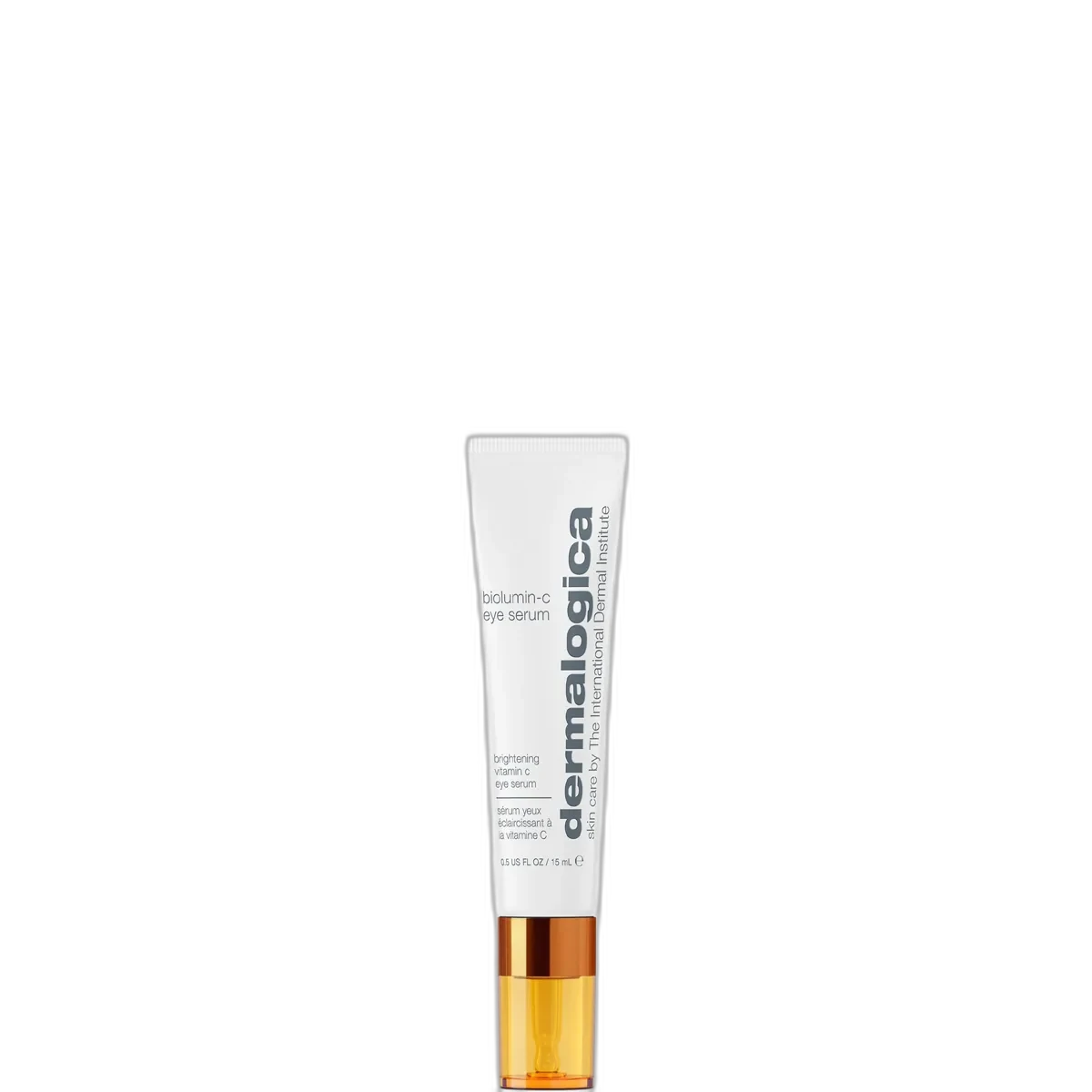
BioLumin-C Eye Serum
Professional Brightening Eye Treatment
 Verified reviewer
Pros & cons.
- +Dual stabilized vitamin C system avoids the irritation of pure ascorbic acid around delicate eye skin
- +Silanol delivery system enhances vitamin C penetration into the thin periorbital area
- +Mushroom complex provides innovative hydration and luminosity benefits
- +Palmitoyl Tripeptide-5 addresses structural collagen loss alongside surface brightening
- +Lightweight texture layers seamlessly under makeup and other eye products
- +Over 1,500 reviews with a 4.5 average confirms consistent user satisfaction
- −Squeeze tube packaging dispenses too much product — a pump would be more precise
- −$78 for 0.5 oz is premium pricing even for a professional-grade eye serum
- −Grapefruit peel oil and limonene are questionable inclusions near sensitive eye skin
- −Slight tacky residue after application bothers some users
- −Not moisturizing enough for very dry skin — may need an additional eye cream
The full review.
Skin around the eyes is roughly 0.5mm thick—ten times thinner than cheek skin. This creates a formulation paradox for vitamin C: the area showing the most oxidative damage (dark circles, fine lines, crepiness) is also the least tolerant of the low-pH, high-concentration ascorbic acid formulas that work elsewhere. The Dermalogica BioLumin-C Eye Serum solves this paradox through specific engineering.
The dual vitamin C system is the product’s core. Aminopropyl Ascorbyl Phosphate is a water-soluble, phosphate-stabilized derivative that works at near-neutral pH. It avoids acid burn and instability, so the product won’t oxidize quickly in the tube. Ascorbyl Methylsilanol Pectinate uses a different method: the silanol component acts as a penetration enhancer to carry vitamin C deeper into the thin periorbital skin, while the pectinate carrier provides slow release. Together, these two forms create a vitamin C delivery system that prioritizes precision.
This differs from applying L-ascorbic acid near the eyes. The trade-off is potency; stabilized derivatives are generally less powerful than pure ascorbic acid. However, for the eye area, this is the correct choice. Eye product irritation causes visible redness, swelling, and watering, which defeats the cosmetic purpose.
The mushroom complex adds sophistication. Tremella fuciformis (snow mushroom) is a hydration powerhouse; research suggests it holds up to 500 times its weight in water. It may rival hyaluronic acid’s moisture-binding capacity but has a lighter molecular weight for thin periorbital tissue. Poria cocos polysaccharide adds soothing luminosity, and fomes officinalis (bracket mushroom) provides antioxidant protection. This fungi-forward approach is rare in competitor formulas.
The chia seed oil inclusion is strategic. Listed sixth in the ingredients, it likely has a meaningful concentration. It delivers omega-3 fatty acids to the eye area, supporting the lipid barrier of skin with fewer oil glands. This ingredient handles smoothing and depuffing while the vitamin C handles brightening.
Papain, the papaya enzyme, provides gentle enzymatic exfoliation. This helps remove the dead cells that contribute to under-eye shadows. Enzymatic exfoliation is gentler than chemical exfoliation (AHAs/BHAs) because it breaks down protein bonds instead of dissolving intercellular cement. This gentler mechanism makes sense for the eye area where you must not disrupt the barrier aggressively.
The texture meets the lightweight promise. It is a thin gel-serum with a faint golden tint that absorbs fully, leaving a base smooth enough for concealer or makeup. Some users report slight tackiness—a film you can feel for a few minutes—but it settles within five to ten minutes and does not interfere with layered products. Tapping with a damp finger after application helps achieve an imperceptible finish.
The squeeze tube is a design misstep. The eye area needs only a grain-of-rice amount of product per use, but a squeeze tube often dispenses three to four times that much. At $78 for 15ml, every excess drop matters. A pump or precision dropper would be better; it is surprising that Dermalogica did not prioritize this for a professional brand.
The grapefruit peel oil is a substantive concern. Even at low concentrations, citrus peel oils contain furanocoumarins that cause phototoxicity, and limonene is a documented contact allergen. Using these in a product for the thinnest, most sensitive facial skin contradicts the rest of the formula’s sensitivity engineering. Most users won’t have issues, but for those with citrus sensitivity, reactions in this area are immediately visible.
Performance is consistent with time. Over 1,500 reviews show users report visible under-eye brightening within three to four weeks, and better results in fine lines and luminosity after two months of consistent twice-daily use. Improvements are gradual, not overnight, but they are measurable and sustained. The product works best for dark circles from pigmentation and dehydration, and less effectively for those caused by vascular pooling or genetics.
At $78 for 0.5 oz, this is a professional-grade premium product. The per-ounce cost is $156, which is high for eye products. However, small applications stretch the tube to three to four months, making the per-month cost roughly $20-26. This is expensive compared to The Ordinary or The Inkey List, but moderate compared to luxury eye serums at $150 or more.
Dermalogica built this for skin therapists needing a vitamin C eye treatment to recommend without worrying about irritation. That professional standard shows in the formulation, even if the packaging and citrus oil suggest different priorities for different teams.
Formula
Texture
The texture meets the lightweight promise. It is a thin gel-serum with a faint golden tint that absorbs fully, leaving a base smooth enough for concealer or makeup. Some users report slight tackiness—a film you can feel for a few minutes—but it settles within five to ten minutes and does not interfere with layered products. Tapping with a damp finger after application helps achieve an imperceptible finish.
Scent
No information in this section.
Packaging
The squeeze tube is a design misstep. The eye area needs only a grain-of-rice amount of product per use, but a squeeze tube often dispenses three to four times that much. At $78 for 15ml, every excess drop matters. A pump or precision dropper would be better; it is surprising that Dermalogica did not prioritize this for a professional brand.
Common Complaints
The grapefruit peel oil is a substantive concern. Even at low concentrations, citrus peel oils contain furanocoumarins that cause phototoxicity, and limonene is a documented contact allergen. Using these in a product for the thinnest, most sensitive facial skin contradicts the rest of the formula’s sensitivity engineering. Most users won’t have issues, but for those with citrus sensitivity, reactions in this area are immediately visible.
Common Praise
Performance is consistent with time. Over 1,500 reviews show users report visible under-eye brightening within three to four weeks, and better results in fine lines and luminosity after two months of consistent twice-daily use. Improvements are gradual, not overnight, but they are measurable and sustained. The product works best for dark circles from pigmentation and dehydration, and less effectively for those caused by vascular pooling or genetics.
Price
At $78 for 0.5 oz, this is a professional-grade premium product. The per-ounce cost is $156, which is high for eye products. However, small applications stretch the tube to three to four months, making the per-month cost roughly $20-26. This is expensive compared to The Ordinary or The Inkey List, but moderate compared to luxury eye serums at $150 or more.
Who Should Buy
Dermalogica built this for skin therapists needing a vitamin C eye treatment to recommend without worrying about irritation. That professional standard shows in the formulation, even if the packaging and citrus oil suggest different priorities for different teams.
Ingredient analysis.
Full INCI list
Water/Aqua/Eau, Butylene Glycol, Propanediol, Glycerin, C15-19 Alkane, Salvia Hispanica Seed Oil, Sodium PCA, Trehalose, Poria Cocos Polysaccharide, Fomes Officinalis (Mushroom) Extract, Papain, Dunaliella Salina Extract, Aminopropyl Ascorbyl Phosphate, Terminalia Arjuna Extract, Tremella Fuciformis Sporocarp Extract, Ascorbyl Methylsilanol Pectinate, Palmitoyl Tripeptide-5, Sodium Hyaluronate, Phytosterols, Algin, Citrus Grandis (Grapefruit) Peel Oil, Phytosteryl Oleate, Tocopherol, Serine, Oleic Acid, Inositol, Helianthus Annuus (Sunflower) Seed Oil, Betaine, Carrageenan, Panthenol, Dipotassium Glycyrrhizate, Methylpropanediol, Proline, Xylitol, Calcium Gluconate, Pantolactone, Lecithin, Xanthan Gum, Pentylene Glycol, Aminomethyl Propanol, Caprylyl Glycol, Polyacrylate-13, Acrylates/C10-30 Alkyl Acrylate Crosspolymer, Tetrasodium Glutamate Diacetate, Polyisobutene, Ethylhexylglycerin, Sodium Benzoate, Citric Acid, Gluconolactone, Polysorbate 20, Potassium Sorbate, Carbomer, 1,2-Hexanediol, Sodium Hydroxide, Limonene, Phenoxyethanol
Skin match.
The science.
The Science
This formula uses a dual vitamin C delivery system to solve periorbital vitamin C application challenges. Aminopropyl Ascorbyl Phosphate is a water-soluble ascorbic acid derivative. A phosphate group stabilizes it to prevent oxidation at neutral pH. L-ascorbic acid requires a pH below 3.5 for effective absorption, but this derivative works across a broader pH range. This makes it suitable for the sensitive eye area where low-pH formulas cause irritation.
Ascorbyl Methylsilanol Pectinate uses a different approach. The silanol (organosilicon) component acts as a penetration enhancer. Multiple studies show silicon-containing compounds improve transcutaneous delivery because they affinity for both aqueous and lipid skin phases. The pectinate carrier provides a sustained-release mechanism, which extends the vitamin C's activity window beyond the initial application.
Tremella fuciformis (snow mushroom) extract is a focus in dermatological research due to its polysaccharide content. Studies show tremella polysaccharides retain moisture like hyaluronic acid, but with a smaller molecular weight that improves penetration into thin skin. Research in the International Journal of Biological Macromolecules documented the extract's antioxidant and moisture-binding properties, supporting its use in anti-aging formulations.
Palmitoyl Tripeptide-5 is a synthetic peptide that mimics the body's thrombospondin-1, a protein that activates TGF-beta signaling to stimulate collagen synthesis. In vitro studies show it increases type I collagen production in fibroblast cultures. This mechanism is directly relevant to the periorbital area, where collagen degradation causes thinning skin and visible vasculature (one component of dark circles).
Dermatologist Perspective
Board-certified dermatologists know that traditional L-ascorbic acid formulations often irritate the periorbital area. The stabilized vitamin C derivatives in this serum trade some potency for much better tolerance. Dermatologists note that dark circles have multiple causes — pigmentation, vascular pooling, structural thinning, and dehydration — and topical vitamin C primarily addresses pigmentation and oxidative components. Some dermatologists would flag the grapefruit peel oil as a potential phototoxic irritant in a product for sensitive periorbital skin.
Where it fits in your routine.
Apply a small amount (grain of rice size per eye) to your ring finger. Gently pat the product around the orbital bone, moving from the inner corner outward under the eye, then above the eye along the brow bone. Do not pull or drag the skin. Use morning and evening after cleansing and applying face serum, but before moisturizer and sunscreen. You can layer it under eye cream for more hydration. Wait one minute for absorption before applying makeup.
At $78 for 0.5 oz (15ml), the price is $156 per ounce—high, but typical for professional-grade eye treatments. Using a grain of rice per eye per application lasts the tube for about 3-4 months, making the monthly cost $20-26. A 0.2 oz travel size costs around $35 for those who want to try the formula. The specialized vitamin C delivery system and mushroom complex make this more expensive than basic vitamin C eye products; budget-conscious consumers must decide if the stabilized derivative approach works better than cheaper, simpler alternatives.
Use this vitamin C eye treatment if you want to target under-eye dark circles, fine lines, and dullness without irritating delicate periorbital skin. It works well for people who experienced stinging or redness from pure ascorbic acid products near the eyes. This lightweight, layerable eye serum from a professional-grade brand suits normal to combination skin types.
Avoid this if you have citrus oil sensitivity because it contains grapefruit peel oil and limonene. Vitamin C alone does not fix vascular dark circles (blue-purple tints visible through thin skin). Budget-conscious consumers can find comparable vitamin C eye products for much less. Very dry skin types need an additional eye cream for enough moisture.
Product details.
Lightweight gel-serum with a slight golden tint from vitamin C derivatives. The thin consistency glides smoothly around the orbital bone. It absorbs quickly but leaves a faint tacky film.
Grapefruit peel oil adds a faint, detectable citrus note. No synthetic fragrance is added. The natural scent is mild enough that most users do not notice it.
Opaque silver-grey squeeze tube with a screw cap fits Dermalogica's professional aesthetic. The tube protects the vitamin C from light degradation, but the squeeze format makes dispensing hard to control. A pump works better for the small amounts needed around the eyes.
It glides on smoothly and feels slightly cool. Most users feel no stinging or burning, but those with very sensitive periorbital skin should patch test first because of the grapefruit peel oil and papain. The golden tint vanishes as it absorbs. Results start subtle; expect gradual brightening instead of instant transformation.
3-4 months with twice-daily use on both eyes
12 months
All Year
The backstory.
Launched in January 2020 as Dermalogica's biggest product introduction of the year, this eye serum extended the BioLumin-C franchise (originally a face serum from 2018) into the eye care category. The formulation was developed by Dermalogica's team in partnership with the International Dermal Institute, specifically addressing the challenge of delivering vitamin C benefits to the thin, sensitive periorbital skin without the irritation that pure ascorbic acid formulas typically cause.
About Dermalogica
Legacy Brand (20+ years)Jane Wurwand founded Dermalogica in 1986 in Los Angeles, working with the International Dermal Institute. Over 100,000 professional skin therapists worldwide use the brand, which Unilever has owned since 2015. Professional esthetic education drives its formulations.
Common myths.
Vitamin C serums are too irritating to use around the eyes.
Low pH L-ascorbic acid irritates the delicate eye area. This formula uses stabilized vitamin C derivatives (Aminopropyl Ascorbyl Phosphate and Ascorbyl Methylsilanol Pectinate) that work at near-neutral pH. The delivery system is designed for periorbital tolerance.
Eye serums are face serums in smaller bottles that cost more.
This formula differs from the BioLumin-C face serum. The vitamin C forms, delivery system, and supporting ingredient complex target the thinner, more sensitive periorbital skin. Chia seed oil and mushroom extracts address eye-specific concerns like puffiness and dehydration.
FAQ.
Does the Dermalogica BioLumin-C Eye Serum actually work for dark circles?
The dual vitamin C system and mushroom complex target dark circles using three methods: antioxidant brightening, improved circulation support, and hydration that plumps thin under-eye skin. Over 1,500 reviews average 4.5 stars and show most users see brightening within 4-8 weeks, though results vary by the cause of dark circles.
Can I use this eye serum with retinol?
Yes, but use them at different times. Use the BioLumin-C Eye Serum in the morning for antioxidant protection and vitamin C benefits. Apply retinol eye products in the evening. Using both at once around the delicate eye area causes irritation.
Is this eye serum worth $78?
The formula uses Aminopropyl Ascorbyl Phosphate and Ascorbyl Methylsilanol Pectinate, vitamin C derivatives designed for periorbital delivery, alongside a peptide and mushroom complex. A 0.5 oz tube lasts 3-4 months with regular use. Whether that justifies $78 depends on your budget and how much you value the stabilized delivery system over cheaper vitamin C alternatives.
Is this safe to use during pregnancy?
Authorized retailers list this product as suitable for pregnancy. The vitamin C derivatives are stable forms and lack the concerns of retinoids. However, papain (papaya enzyme) and grapefruit peel oil require a conversation with your healthcare provider if you have specific sensitivities.
Do I still need an eye cream with this serum?
If your under-eye area is dry, layer a moisturizing eye cream over this serum for full hydration. For normal to oily skin, the chia seed oil and hyaluronic acid in the serum provide enough moisture. The serum brightens and firms, while a cream provides occlusive moisture.
What the community says.
"Noticeably brightens the under-eye area and reduces dark circle appearance"
"Lightweight texture absorbs quickly and layers well under makeup"
"Hydrating without causing milia or puffiness around the eyes"
"Visible reduction in fine lines with continued use"
"Pleasant formula suitable for multiple skin types"
"Leaves a slightly sticky or tacky residue after application"
"Expensive at $78 for 0.5 oz of product"
"Squeeze tube dispenses too much product — users prefer a pump"
"Contains grapefruit peel oil and limonene which can sensitize the eye area"
"Not moisturizing enough on its own for very dry skin types"
People also looked at.