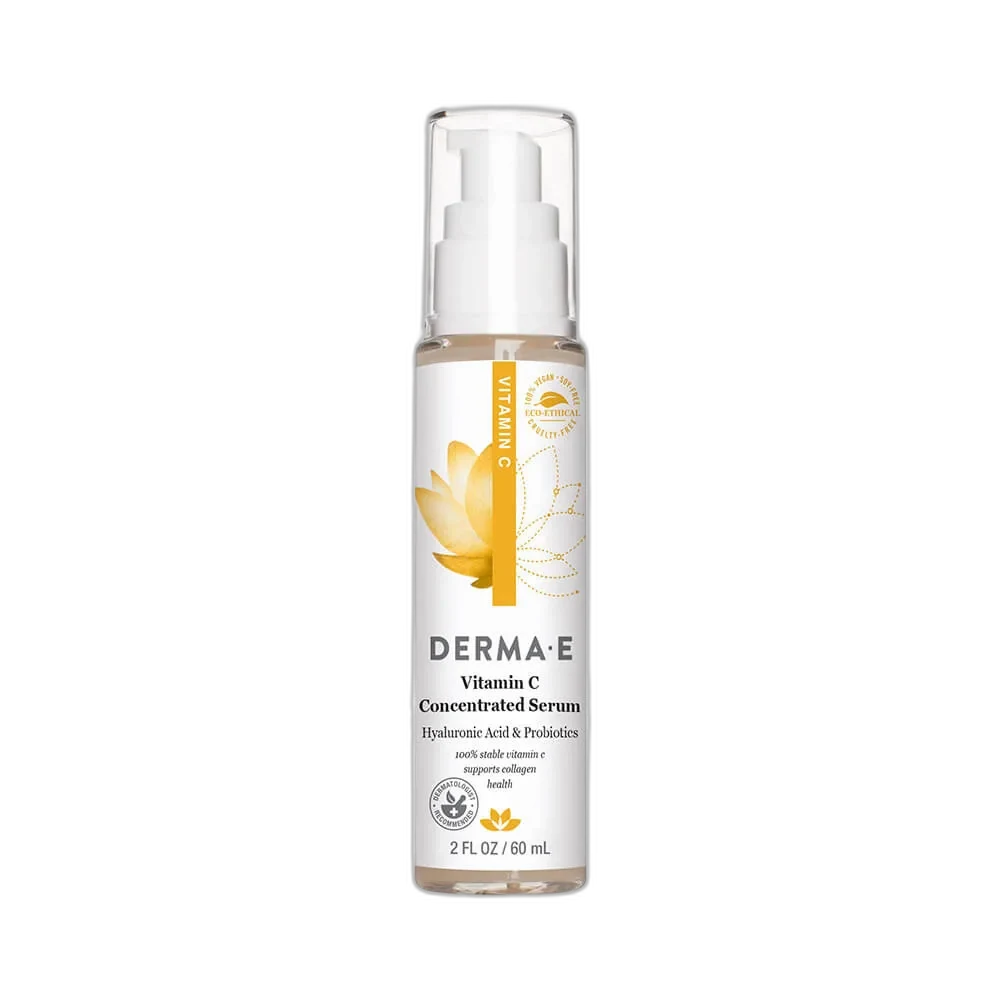
Vitamin C Concentrated Serum
Gentle Vitamin C Entry Point
 Verified reviewer
Pros & cons.
- +Stable sodium ascorbyl phosphate form tolerates higher pH and longer shelf life
- +Gentle enough for sensitive and reactive skin
- +Multi-antioxidant stack with vitamin E and green tea extract
- +Lightweight, non-sticky finish that layers well under SPF
- +Vegan and Leaping Bunny cruelty-free certified
- +Affordable relative to prestige L-ascorbic acid options
- +Glass dropper packaging protects the actives from air exposure
- +Pregnancy-safe with no questionable actives
- −Contains natural fragrance oil — unnecessary in a vitamin C serum
- −Sodium ascorbyl phosphate has less clinical evidence than L-ascorbic acid
- −Brightening effects develop slowly over 8-12 weeks
- −Small 2 oz size with no larger option
- −Subtle yellow tint can occasionally transfer to light fabrics
The full review.
The vitamin C serum category is confusing, mostly because of one question: L-ascorbic acid or a derivative? Editorials favor L-ascorbic acid—the most-studied form with the strongest clinical evidence and high Google search volume. However, L-ascorbic acid is unstable, irritating at effective concentrations, expensive, and often oxidizes into uselessness by the second month. Derma E’s Vitamin C Concentrated Serum takes the opposite approach. It uses sodium ascorbyl phosphate, a stable water-soluble derivative of ascorbic acid. This derivative converts to the active form in skin, works at a higher and skin-friendlier pH, and stays potent for the full bottle lifespan. You trade peak clinical evidence for a serum that costs about a third of prestige options, doesn’t sting, and gets used daily. For sensitive, reactive, or vitamin-C-curious users, this is a better trade than marketing suggests. The formula is more thoughtful than the price implies. Vitamin C is the fourth ingredient after water, aloe, and glycerin, meaning the active is present in meaningful quantity. The INCI also includes green tea extract, sodium hyaluronate, vitamin E, a trace of yacon root juice, rosehip seed oil, a probiotic ingredient, alpha-glucan oligosaccharide, allantoin, and panthenol. This list shows intentionality: vitamin E regenerates oxidized vitamin C in published combination studies, green tea adds a second antioxidant layer, hyaluronic acid and aloe buffer mild tightness, and panthenol and allantoin soothe. These ingredients aren’t new, but together they build a more rounded serum than most derivative-based vitamin Cs on drugstore shelves. The serum performs as promised. It is pale yellow, lightweight, sinks in quickly without tackiness, causes no tingling or burning, and sits under sunscreen without pilling. First-week impressions come from the humectant base; skin looks subtly plumper and smoother, similar to any well-formulated aloe-and-HA serum. Actual vitamin C effects take longer. Subtle brightening and improved tone usually show up after four to six weeks of consistent morning use. Meaningful reduction in dark spots and sun-related discoloration takes 8 to 12 weeks. To be clear: a 15% L-ascorbic acid serum paired with ferulic acid will outperform this on speed and depth of fade. The tradeoff is that most prestige vitamin C bottles sit half-used because they sting, oxidize, or intimidate users. The bottle you actually use wins the long game. Regarding fragrance: the INCI ends with ‘natural fragrance oil.’ This is the one decision in this well-built serum I would push back on. Vitamin C serums suit being fragrance-free because users interested in vitamin C—those with sensitive skin, rosacea, or pigmentation concerns—are often fragrance-averse. The level is low, the mild herbal-citrus scent rarely causes irritation, but it prevents a no-caveat recommendation for reactive skin. On shelf life and packaging: the glass dropper bottle protects better than a jar. Because sodium ascorbyl phosphate is more stable than L-ascorbic acid, this serum still works at month three or four, while a 15% L-ascorbic acid bottle would turn yellow-brown and lose its punch. For anyone who has seen a SkinCeuticals bottle go dark and lost a hundred dollars to oxidation, this is a meaningful upgrade. For sensitive, budget-conscious users seeking a gentle entry into vitamin C, this is an easy recommendation with one caveat. Buy it, use it every morning with SPF, and wait at least two months before judging.
Ingredient analysis.
Full INCI list
Purified Water, Aloe Barbadensis Leaf Juice, Glycerin, Sodium Ascorbyl Phosphate, Camellia Sinensis (Green Tea) Leaf Extract, Sodium Hyaluronate, Tocopheryl Acetate, Polymnia Sonchifolia Root Juice, Rosa Canina Seed Oil, Lactobacillus, Citric Acid, Alpha-Glucan Oligosaccharide, Allantoin, Panthenol, Cellulose Gum, Microcrystalline Cellulose, Caprylic/Capric Triglyceride, Ethylhexyl Palmitate, Xanthan Gum, Maltodextrin, Sodium Citrate, Ethylhexylglycerin, Phenoxyethanol, Natural Fragrance Oil
Skin match.
The science.
The Science
This serum uses sodium ascorbyl phosphate (SAP), a phosphate-ester derivative of ascorbic acid. SAP is more stable in aqueous formulation than L-ascorbic acid.
Stability studies show SAP stays stable at pH values between approximately 6 and 7. L-ascorbic acid requires a pH below 3.5 to stay bioavailable. This difference makes SAP serums gentler and prevents potency loss over time. Once on the skin, endogenous phosphatases cleave SAP to yield ascorbic acid. This enters the standard vitamin C mechanism: it neutralizes free radicals, acts as a cofactor for collagen-synthesizing prolyl and lysyl hydroxylases, and inhibits tyrosinase activity in melanocytes. Trials show SAP at concentrations around 5% improves skin brightness, hyperpigmentation, and acne markers, though effect sizes are smaller than L-ascorbic acid at 10-15%. Tocopherol is included because older combination studies show vitamin E regenerates oxidized vitamin C to its active form, extending the antioxidant activity of both compounds; the classic Pinnell research out of Duke documented this synergy. Green tea polyphenols — primarily epigallocatechin gallate — add a complementary antioxidant and photoprotective mechanism. The formula also contains Lactobacillus ferment and an alpha-glucan oligosaccharide; both have emerging evidence for supporting the skin microbiome but less robust clinical backing than the core antioxidants. The strategy is sensible: instead of competing with prestige L-ascorbic acid serums on concentration, the formulator built a multi-antioxidant, well-buffered serum for daily tolerability.
Dermatologist Perspective
Dermatologists often recommend sodium ascorbyl phosphate-based vitamin C serums for patients with sensitive skin, rosacea, or a history of stinging from L-ascorbic acid formulas.
Board-certified dermatologists acknowledge L-ascorbic acid is the most evidence-supported form for brightening and photoprotection, but many recommend SAP as a first-line vitamin C for reactive skin due to its tolerability. This serum is often suggested for patients starting a brightening routine without active skincare tolerance, or for pregnant patients seeking a safe daily antioxidant. Dermatologists emphasize that any vitamin C serum delivers the best benefit when used consistently each morning under broad-spectrum sunscreen, as SPF is the most important daytime product for preventing and fading sun-related pigmentation.
Where it fits in your routine.
Apply to clean, dry skin every morning after cleansing and any water-based toner. Press 3-4 drops onto fingertips, then into the face and neck. Let it absorb for about 60 seconds before applying moisturizer and sunscreen. Use broad-spectrum SPF 30 or higher; vitamin C serums work best with daily SPF, as unprotected sun exposure undoes brightening gains. Use once daily in the morning for 8-12 weeks before evaluating results. Do not layer directly with high-strength exfoliating acids in the same pass. Store the bottle away from direct sunlight to maximize the serum's shelf life.
At around $25.95 for 2 fl oz, this serum costs less than prestige L-ascorbic acid options like SkinCeuticals CE Ferulic. Its price matches other clean-beauty vitamin C serums at Ulta and Target. Stability drives the value: this serum works until the bottle ends, unlike some L-ascorbic acid at the same or higher price point. The lack of a larger size limits value. Prestige L-ascorbic acid options offer better per-result value for users seeking peak clinical potency regardless of cost or tolerability. This serum offers strong value for users wanting a daily vitamin C without stinging or oxidation drama.
This serum works for sensitive, reactive, or vitamin-C-curious skin seeking affordable, gentle brightening without stinging or fast oxidation. It fits pregnant users, skincare beginners, and those who find L-ascorbic acid serums irritating.
Users with a history of hyperpigmentation or melasma seeking the strongest topical brightening will find L-ascorbic acid serums outperform this one. The added natural fragrance oil is also the main formulation weakness for anyone seeking a fragrance-free serum.
Product details.
This lightweight pale-yellow serum sinks in within about 60 seconds and is not sticky.
Natural fragrance oil gives it a mild herbal-citrus scent. It is not strong, but it is not fragrance-free.
2 fl oz glass bottle with dropper applicator. The dropper protects sodium ascorbyl phosphate from air exposure better than a jar.
The first application sinks in fast without tingling or stinging. This gives sensitive users an advantage over L-ascorbic acid serums. Skin looks slightly plumper within a week. No purging or adjustment period is expected. Consistent morning use shows visible brightening in 4-8 weeks.
Approximately 3 months with once-daily full-face application.
12 months
All Year
The backstory.
The Vitamin C Concentrated Serum anchors Derma E's long-running Vitamin C line, which was built around sodium ascorbyl phosphate as a deliberate alternative to the unstable L-ascorbic acid formulas dominating the brightening category. The Stay C-50 trade name refers to the stabilized delivery system DSM developed for this form of the active.
About Derma E
Legacy Brand (20+ years)Derma E has made affordable vegan skincare since 1984 and has Leaping Bunny cruelty-free certification. Its Vitamin C line is one of the brand's best-selling collections. It uses sodium ascorbyl phosphate — a stable vitamin C derivative — instead of the more volatile L-ascorbic acid found in prestige serums.
Common myths.
Only L-ascorbic acid vitamin C 'really works'
L-ascorbic acid has the most evidence. Stable derivatives like sodium ascorbyl phosphate convert to active vitamin C in skin. Published trials show these derivatives brighten skin and reduce oxidative damage. The effect size is smaller, but tolerability is better.
Vitamin C serums always sting
Prestige vitamin C serums sting because they use a low pH (around 2.5-3.5) to keep L-ascorbic acid stable. Derivative-based serums like this one work at a higher, skin-friendlier pH and do not sting.
FAQ.
What form of vitamin C does this serum use?
It uses sodium ascorbyl phosphate (branded as Stay C-50), a stable water-soluble derivative that converts to active ascorbic acid in skin. This form tolerates a higher pH than L-ascorbic acid and oxidizes more slowly.
How does it compare to prestige L-ascorbic acid serums?
L-ascorbic acid serums like SkinCeuticals CE Ferulic have more published clinical evidence, but they cost more, cause more irritation, and oxidize within months. This serum trades some peak potency for better tolerability and a longer shelf life.
Can sensitive skin use this serum?
Yes — the sodium ascorbyl phosphate, aloe, and hyaluronic acid base makes this vitamin C option tolerable for sensitive users, but the added fragrance affects highly reactive skin.
Does it really brighten dark spots?
Yes, but slowly. Most users see subtle improvement in dullness within 4-6 weeks and more noticeable reduction in dark spots at 8-12 weeks with consistent daily morning use alongside SPF.
Should I use it in the morning or at night?
Use this in the morning to pair vitamin C antioxidants with daytime free radical exposure and boost SPF protection. You can use it at night, but daytime antioxidant benefit is the main reason to use this type of serum.
Is it safe during pregnancy?
Yes. The formula has no retinoids, salicylic acid, or hormone-active botanicals. It is safe for pregnant users seeking a brightening option.
Does it contain fragrance?
Yes — the INCI lists 'natural fragrance oil' at the end of the formula. It's a minor drawback for fragrance-averse users, though the level is low.
Community
What the community says.
"lightweight feel"
"doesn't sting like L-ascorbic acid"
"noticeable glow"
"affordable vitamin C option"
"gentle enough for daily use"
"light fragrance unwanted"
"results are subtle compared to stronger actives"
"small 2 oz size"
"slight yellow tint can transfer"
Featured in.
People also looked at.