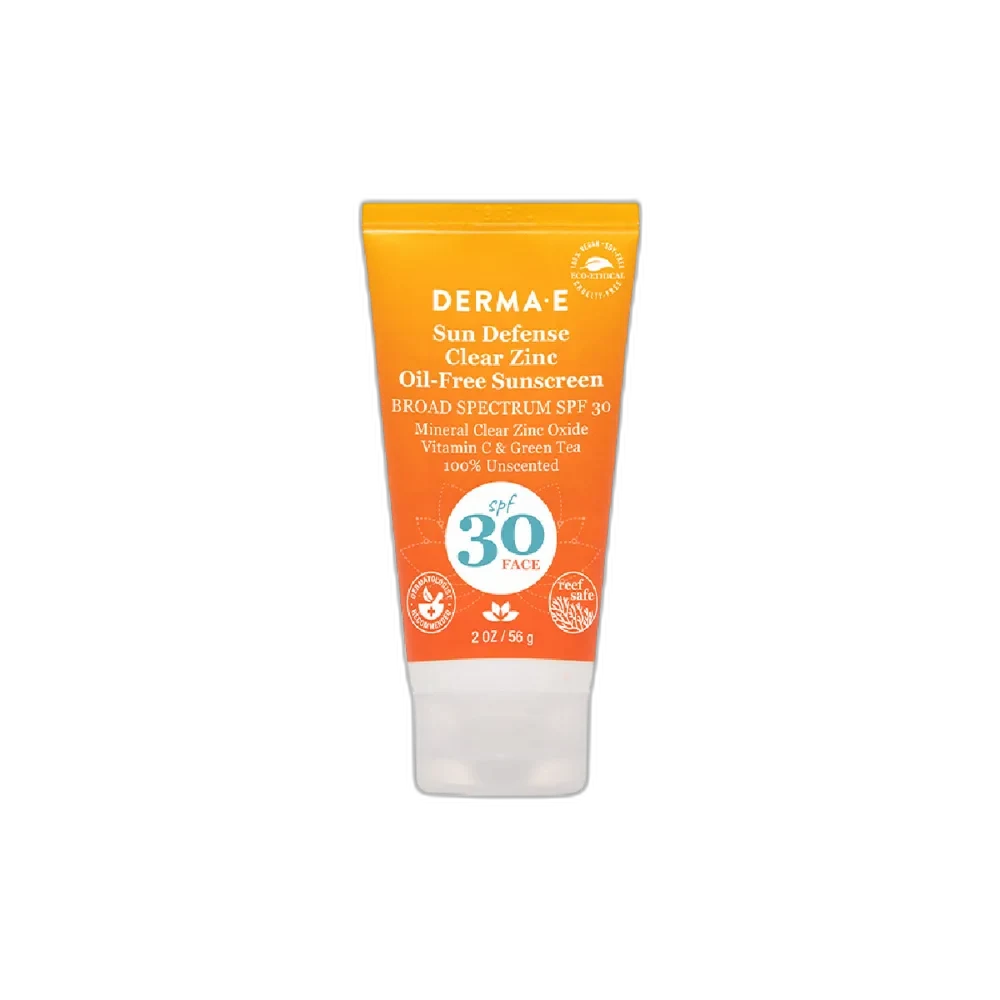
Sun Protection Mineral Face Sunscreen SPF 30
Sensitive-Skin Mineral Workhorse
 Verified reviewer
Pros & cons.
- +High 18.9% zinc oxide provides genuine SPF 30 protection without chemical filters
- +Fully vegan, cruelty-free, and EWG Verified with real certifications
- +Fragrance-free and alcohol-free formula suits reactive and rosacea-prone skin
- +Backed by 40+ years of manufacturing track record from a legacy natural brand
- +Pairs antioxidant vitamin E with a botanical polyphenol stack for added protection
- +No oxybenzone, octinoxate, or other reef-unsafe filters
- +Reliable pregnancy-safe option given zinc's long safety record
- +Reasonably priced compared to premium indie mineral sunscreens
- −Leaves a visible white cast on medium and deep skin tones
- −Thicker, waxier texture than modern Asian mineral sunscreens
- −Contains beeswax and jojoba oil that may break out acne-prone users
- −Can pill under silicone-heavy makeup primers if not given time to set
- −Only available in a single 2 oz size, limiting value for body use
The full review.
Most people find Derma E at Whole Foods and assume it is a post-2015 clean-beauty brand following the reef-safe sunscreen trend. It is not. Derma E launched in 1984 in Simi Valley, California — the same year Apple released the Macintosh — as an early American brand built on vitamin-E and botanical formulations. By the time ‘clean beauty’ became a marketing category around 2014, Derma E had made fragrance-free, vegan, and paraben-free products for thirty years. This context matters for this sunscreen; what looks like a standard mineral SPF comes from a brand that has refined vitamin-led formulas since Reagan’s first term.
The formulation is simple. The sole active is 18.9% zinc oxide, near the FDA limit for over-the-counter products. This high zinc load makes the lotion thicker than the Korean and Japanese mineral sunscreens popular on skincare TikTok over the last two years. It also earns its SPF 30 rating without avobenzone, octinoxate, or other organic filters that sensitive-skin users avoid. The inactive base uses plant oils — sunflower, jojoba, argan — with glycerin, panthenol, vitamin E acetate as the main antioxidant, and polyphenol-rich extracts (green tea, rooibos, grape, apple). These extracts lack clinically meaningful concentrations, but they provide the botanical texture Derma E users expect.
On the skin, this behaves like a mineral sunscreen. It is thick, requires warming between fingertips before application, and leaves a soft white cast that fades on fair skin but remains visible on medium-to-deep tones. This is the standard tradeoff for high-percentage zinc: more protection, less cosmetic elegance. If you want the invisible finish of a Beauty of Joseon Relief Sun or Biore UV Aqua Rich, you will be disappointed. If chemical sunscreens sting your eyes or irritate your rosacea, this provides the heavy, reassuring layer you want.
It excels where sensitive skin needs it: no fragrance, no essential oils, no alcohol, no chemical filters, and a short ingredient list. The beeswax and plant oils make it less ideal for oily or acne-prone skin. While jojoba oil is low on the comedogenic scale, it can trigger breakouts on highly reactive skin. Fungal acne sufferers should avoid it because the fatty ingredients can feed malassezia. For normal, dry, and sensitive skin, it layers well over a hydrating moisturizer and works with vitamin C serums and niacinamide underneath.
Value is notable. At around $24 for 2 ounces, it is not a drugstore price, but it is not a specialty beauty-counter price either. You pay for the certifications (Vegan, Cruelty-Free, EWG Verified, Gluten-Free), US manufacturing, and the four-decade track record of the brand. It is a bargain compared to $35-45 indie natural sunscreens. Compared to generic drugstore mineral SPFs, the small premium buys a cleaner formula and a better sensory experience.
The white cast and slightly waxy feel are real. No 19% zinc sunscreen feels invisible. But for ‘mineral SPF that actually works for sensitive skin without trying to hide what it is,’ this is a reliable American market pick. Derma E’s longevity means the formula remains consistent batch after batch, unlike newer indie brands that sometimes shift formulations between restocks.
Ingredient analysis.
Full INCI list
Active Ingredient: Zinc Oxide 18.9%. Inactive Ingredients: Aqua (Purified Water), Butyloctyl Salicylate, C12-15 Alkyl Benzoate, Polyglyceryl-3 Polyricinoleate, Caprylic/Capric Triglyceride, Glycerin, Polyhydroxystearic Acid, Magnesium Sulfate, Sorbitan Sesquioleate, Sodium Chloride, Beeswax, Tocopheryl Acetate (Vitamin E), Aloe Barbadensis Leaf Juice, Helianthus Annuus (Sunflower) Seed Oil, Argania Spinosa Kernel Oil, Panthenol (Pro-Vitamin B5), Simmondsia Chinensis (Jojoba) Seed Oil, Aspalathus Linearis (Rooibos) Leaf Extract, Camellia Sinensis (Green Tea) Leaf Extract, Pyrus Malus (Apple) Fruit Extract, Vitis Vinifera (Grape) Fruit Extract, Phenoxyethanol, Ethylhexylglycerin, Caprylyl Glycol, Citric Acid.
Skin match.
The science.
The Science
The photoprotective claim relies on one active: 18.9% non-nano zinc oxide. Zinc oxide is one of two mineral filters the FDA's 2019 proposed sunscreen monograph labels as GRASE (Generally Recognized as Safe and Effective) — the other is titanium dioxide. It is the only OTC UV filter approved in the US that provides true broad-spectrum coverage across UVB, UVA-II, and the longer UVA-I wavelengths linked to photoaging. The SPF 30 rating tested under ISO methodology means this formula blocks about 97% of incident UVB at the standardized 2 mg/cm² dose. However, real-world application is usually a quarter to a half of that, which reduces protection in daily use.
The vitamin E acetate paired with the zinc adds a secondary antioxidant layer to quench UV-generated reactive oxygen species (ROS) that physical filters miss. A 2018 review in Antioxidants (Basel) shows that topical vitamin E, when paired with UV filters, reduces UV-induced lipid peroxidation in the stratum corneum, though the benefit depends on concentration and formulation stability. The botanical extract stack — green tea, rooibos, grape, apple — adds polyphenols with published in vitro antioxidant data, but at typical non-leave-on concentrations, this contribution is modest compared to the zinc and vitamin E.
The formulation avoids endocrine-disruption concerns linked to oxybenzone and octinoxate. A 2020 study in JAMA (Matta et al.) showed that chemical filters like oxybenzone, octocrylene, and avobenzone absorb systemically at levels above the FDA's toxicology thresholds, leading the agency to request more safety data. Zinc oxide does not absorb through intact skin in any meaningful quantity. This makes it the default choice for pregnancy, infants over six months, and users with compromised skin barriers.
References
- Systemic Absorption of Sunscreen Active Ingredients — JAMA (2020)
- Vitamin E in Human Skin: Functionality and Topical Products — Antioxidants (Basel) (2018)
Dermatologist Perspective
Board-certified dermatologists often recommend high-percentage zinc oxide sunscreens like this one for patients with rosacea, eczema, post-procedure skin, and fragrance sensitivities, as chemical filters can cause stinging or reactive flushing. Dermatologists treating pregnant patients often use 100% mineral formulas as the default safe option because zinc's systemic absorption is negligible. Most clinical guidance notes a cosmetic tradeoff: higher zinc percentages provide more reliable protection but leave a more visible cast. Dermatologists usually frame this as a choice between protection and elegance rather than a quality hierarchy. For patients with active acne or fungal-acne, dermatologists generally suggest zinc-based formulas without occlusive plant oils and beeswax, as those inactive ingredients can complicate a compromised pore environment.
Where it fits in your routine.
Apply this as the final step of your morning routine, after moisturizer and hydrating serums. Use about a quarter teaspoon for the face and neck — roughly two finger-lengths — and warm it between your fingertips before pressing and patting it onto clean skin. Do not drag or rub, as this streaks the mineral film. Let it set for two to three minutes before applying makeup; skipping this step causes pilling under foundation. Reapply every two hours during sun exposure, and reapply immediately after sweating, swimming, or toweling off. One morning application works for daily indoor use with intermittent window exposure.
At roughly $24 for 2 ounces, this sits in the mid-range for mineral face sunscreens — more than a drugstore Cerave or Neutrogena mineral SPF, but less than Supergoop, Tower 28, or the indie EltaMD alternatives. Derma E has four decades of manufacturing history and carries legitimate third-party certifications (EWG Verified, Vegan, Cruelty-Free), so the price reflects formulation and production value instead of brand hype. Only one size exists, which limits economies of scale for those using it on face, neck, and exposed body areas; heavy reapplication lasts about six to eight weeks per tube. For sensitive-skin users priced out of premium indie mineral SPFs who want more than the drugstore floor, it is a reasonable middle-ground purchase.
This works for sensitive, reactive, rosacea-prone, or pregnancy-phase skin seeking a reliable mineral SPF 30 without chemical filters or fragrance. It is a strong choice if you prefer US-made products from brands with long manufacturing track records and value third-party certifications like EWG Verified and Vegan.
The beeswax and plant oil base may cause problems for oily, acne-prone, or fungal-acne-susceptible skin; a fluid-texture mineral sunscreen from an Asian brand works better. Skip it if you want cosmetic invisibility; this leaves a white cast on medium-to-deep skin tones.
Product details.
Thick, creamy lotion feels slightly waxy at first, then warms and spreads.
Very faint neutral scent from the plant oils — effectively fragrance-free.
Opaque white squeeze tube with flip cap. Recyclable, travel-friendly, hygienic.
A white cast lasts for the first few minutes; it softens but stays visible on medium-to-deep skin tones. The texture is thicker than most K-beauty mineral SPFs, so use warming motions to work it in instead of spreading it cold.
Apply to face and neck daily for 2-3 months at the 1/4 teaspoon dose.
12 months
All Year
The backstory.
Derma E launched in 1984 as one of the first vitamin-E-led natural skincare brands in the US, decades before 'clean beauty' was a category. This sunscreen is part of their expansion into physical SPFs aimed at sensitive-skin users avoiding oxybenzone and octinoxate — the two filters that later became the core of Hawaii's reef-safe ban.
About Derma E
Legacy Brand (20+ years)Derma E launched in 1984 in California. It is an early natural skincare brand that focuses on vitamin-based formulations. The brand has over four decades on market and has third-party certifications for cruelty-free, vegan, and gluten-free status, though its clinical research footprint is smaller than pharmacy-brand competitors.
Common myths.
Mineral sunscreens do not require reapplication because they work as physical blockers.
The zinc oxide film in this formula rubs off with sweat, sebum, and contact just like any sunscreen. Reapply every two hours when outdoors, regardless of filter type.
EWG Verified means clinical testing shows the product is safer.
EWG verification uses ingredient hazard-score databases and label transparency, not clinical testing. This formula is gentle, but the verification is not a clinical safety claim.
What the community says.
"No chemical sunscreen sting for sensitive skin"
"Vegan and cruelty-free certification"
"Doesn't clog pores for most users"
"Reasonable price for 100% mineral"
"Visible white cast on deeper skin tones"
"Thicker than modern Asian mineral sunscreens"
"Can pill under certain makeup primers"
People also looked at.