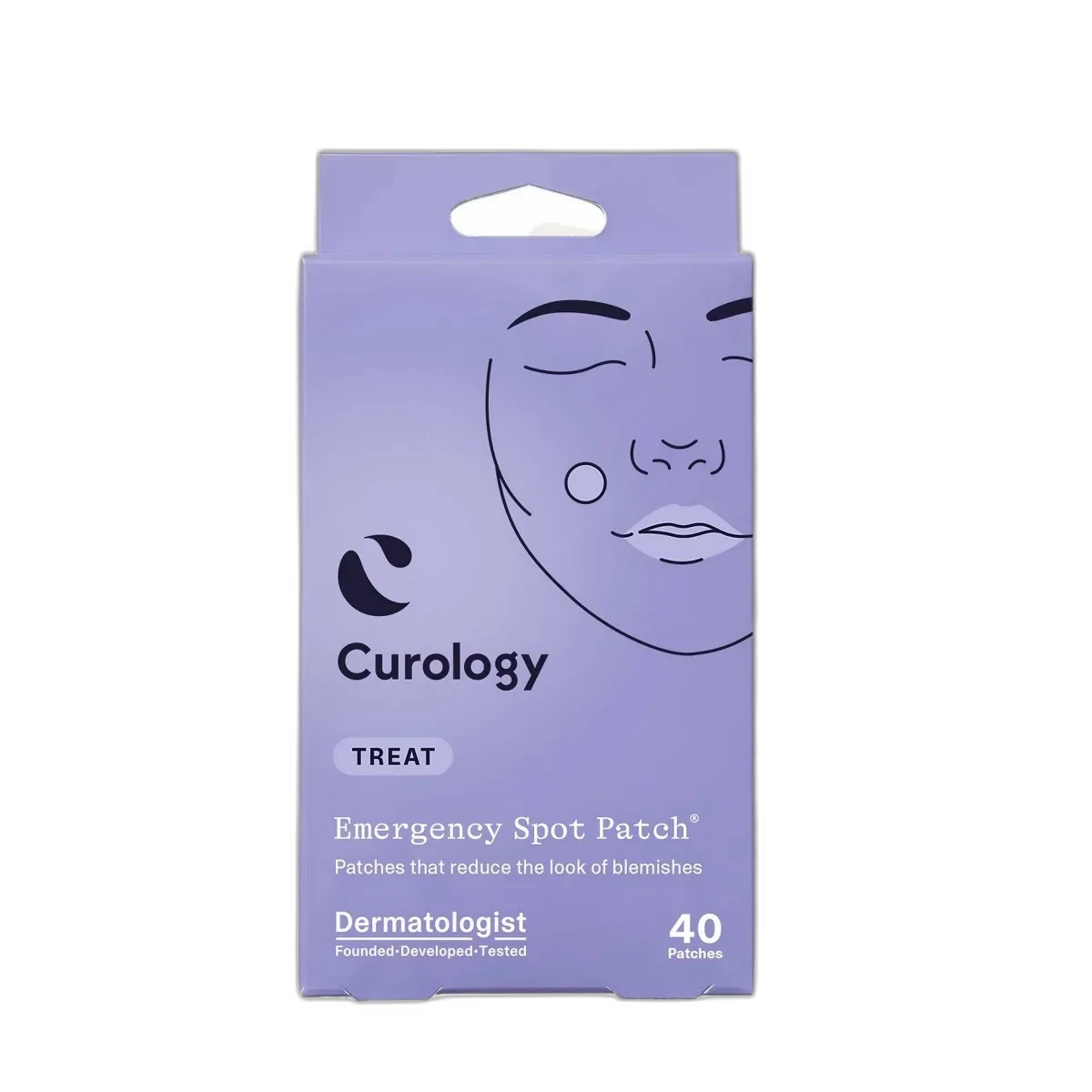
Emergency Spot Patch
Derm-Backed Spot Treatment
 Verified reviewer
Pros & cons.
- +Pure hydrocolloid formula works for virtually every skin type including highly sensitive skin
- +Ultra-thin translucent design is nearly invisible and wearable under makeup
- +Strong waterproof adhesion stays put through sleep, sweat, and showering
- +Effectively draws out fluid from whiteheads and surface-level blemishes overnight
- +Prevents picking and contamination — a physical barrier against the worst acne habit
- +Competitive pricing at about $0.22 per patch
- +Backed by a dermatologist-founded brand with genuine clinical credibility
- −No active ingredients (salicylic acid, tea tree, etc.) for those who prefer medicated patches
- −Limited effectiveness on deep cystic acne that hasn't surfaced
- −Requires completely clean, dry skin for proper adhesion — can't apply over serums
- −40-count may not last long for those with frequent or widespread breakouts
- −Somewhat less distinctive than competitors offering medicated or microneedle options
The full review.
Dr. David Lortscher founded Curology in 2014. He observed that most acne responds to remote treatment if patients access correct prescription ingredients and a dermatologist who assesses skin via photos. This insight built a telehealth skincare company worth hundreds of millions of dollars. Curology compounds custom tretinoin, azelaic acid, and clindamycin formulas at its own San Diego laboratory. When Curology released an over-the-counter pimple patch—a category requiring approximately zero prescriptions—the question was whether they would use their clinical credibility on a proven format or reinvent it.
They chose credibility. The Emergency Spot Patch is pure hydrocolloid. It has no salicylic acid in the adhesive. No tea tree oil. No niacinamide, no centella, and no proprietary blend with a trademarked name. It is just a thin, translucent disc of moisture-absorbing hydrocolloid material that sticks to a pimple to work. While other pimple patch brands race to cram more active ingredients into a one-centimeter circle, Curology’s restraint is radical.
Hydrocolloid science comes from wound care, where these dressings have managed exuding wounds for decades. When applied to a blemish, the hydrocolloid creates a moist occlusive environment that does several things. It draws fluid out of the blemish via osmotic pressure—the same principle that makes salt draw water out of an eggplant. It protects the wound from external bacteria and environmental debris. It maintains moisture levels to support the skin’s natural healing cascade. Most importantly, it creates a physical barrier between your fingers and the pimple, preventing the picking and squeezing that causes scarring.
The patches execute the basics well. They are thin enough to be nearly invisible on the skin; you often forget you are wearing one until you see your reflection. The adhesion is strong and waterproof. These stay put through sleep, showering, and light exercise without curling. The translucent finish accepts makeup well, making daytime wear viable.
The visual payoff is the transformation from clear to white. Over six to twelve hours, the patch turns opaque as it absorbs pus and sebaceous fluid from the blemish. Peeling off a white patch in the morning provides proof that the patch pulled something tangible out of your skin. The spot underneath is typically flatter, less inflamed, and less painful. For a whitehead ready to pop, one overnight application often resolves most of the visible blemish.
These patches have limitations with deeper acne. Cystic lesions below the skin surface, nodules without a head, and deep inflammatory papules do not respond well. Hydrocolloid needs accessible fluid to absorb; if inflammation is buried under layers of skin, the patch only addresses what reaches the surface. This is a fundamental limitation of the technology, not a flaw unique to Curology. For deep cystic acne, Curology’s strength is their custom prescription service, not their patches.
The value is nine dollars for forty patches. This costs about twenty-two cents per patch. This price competes with drugstore options and is significantly cheaper than boutique pimple patch brands that charge premium prices for similar hydrocolloid technology plus trace amounts of actives. The patches come on a compact, portable peel-and-stick sheet—easy to keep in a travel bag or desk drawer for midday emergencies.
Choosing Curology’s patch over alternatives comes down to trust in their philosophy. A dermatologist-founded brand that treats real acne with real prescriptions every day chose not to add actives to their patch. This decision implies they believe actives add no meaningful benefit at patch concentrations, or that pure hydrocolloid is better for products sitting on potentially compromised skin for hours. Either way, clinical experience informs this restraint rather than marketing ambition.
For everyday breakouts—the random whitehead, stress pimple, or hormonal blemish before a meeting—these patches work reliably and gently. They work on every skin type because they contain nothing that triggers a reaction. They fit any routine because they go on clean skin before other products. They also solve a human problem in acne management: they keep your hands off your face. Sometimes the simplest solution is most effective, especially from a brand that knows enough about acne to avoid overcomplicating things.
Ingredient analysis.
Full INCI list
Hydrocolloid (Cellulose Gum, Styrene Isoprene Styrene Block Copolymer, Polyisobutylene, Petroleum Resin, Liquid Paraffin)
Skin match.
The science.
The Science
Hydrocolloid wound dressings have been used in clinical settings since the 1980s, with extensive research supporting their ability to create an optimal moist wound healing environment. The mechanism is well-established: hydrocolloid polymers (typically combinations of gelatin, pectin, and carboxymethyl cellulose) absorb wound exudate through osmotic action, swelling as they take up fluid. This creates a gel-like interface between the dressing and the skin that maintains moisture balance — wet enough to support epithelial cell migration and wound closure, but not so wet as to macerate surrounding tissue.
A study published in the Journal of Cosmetic Dermatology (Lee et al., 2018) specifically evaluated hydrocolloid patches for acne treatment and found that patches significantly reduced lesion size, erythema, and pigmentation compared to untreated control sites. The study attributed the benefits to three primary mechanisms: fluid absorption, occlusive wound protection, and prevention of external contamination.
The occlusive barrier function is particularly relevant for acne management. Research on wound healing demonstrates that covered wounds heal faster than those exposed to air — the moist environment accelerates the migration of keratinocytes and fibroblasts necessary for tissue repair. For acne specifically, the barrier also prevents the introduction of additional bacteria from hands, phones, pillowcases, and other common vectors of reinfection.
Regarding medicated patches: while many competing products contain actives like salicylic acid or tea tree oil, research on their efficacy in patch format is limited. The occlusive environment of a patch already enhances ingredient penetration, but the total dose delivered by a one-centimeter patch is extremely small. Some dermatologists argue that the hydrocolloid mechanism itself accounts for the majority of clinical benefit observed with any pimple patch, medicated or not.
References
- Efficacy of hydrocolloid patches in treating acne — Journal of Cosmetic Dermatology (2018)
Dermatologist Perspective
Dermatologists have increasingly recommended hydrocolloid patches as a safe, accessible spot treatment that complements prescription acne regimens. Board-certified dermatologists note that the primary therapeutic value of these patches lies in the moist wound healing environment and the physical barrier against picking — a behavior that significantly worsens acne outcomes and increases scarring risk. Many dermatologists prefer simple hydrocolloid patches without added actives, reasoning that acne-fighting ingredients are more effectively delivered through dedicated serums and creams at appropriate concentrations, while the patch serves a distinct protective and absorptive function. Curology's decision to keep these patches free of actives aligns with this clinical perspective.
Where it fits in your routine.
Cleanse and dry the affected area. Peel a patch from the sheet and press it firmly over the blemish for a few seconds to ensure adhesion. Do not apply over serums, moisturizers, or treatments; the patch requires direct skin contact. Leave on for 6-12 hours or until the patch turns white. Gently peel it off from one edge. Use a fresh patch if the blemish still shows visible fluid. Continue your regular skincare routine on non-patched areas.
At $9 for 40 patches ($0.22 per patch), Curology's Emergency Spot Patch has a competitive price in the hydrocolloid patch market. Premium medicated patches cost $0.50-1.00+ per patch, often for little extra benefit. The value is highest for users who already trust the Curology brand via their prescription service and want a simple, derm-approved spot treatment to use with their custom formula. A patch cluster version exists for larger or multiple blemishes. For this price, you get a reliable, well-adhering hydrocolloid patch from a brand with genuine dermatological credentials.
This works for anyone with occasional whiteheads or surface-level pimples seeking a simple, gentle overnight spot treatment. It helps compulsive pickers by providing a physical barrier, helps makeup wearers conceal daytime blemishes, and suits sensitive skin needing a zero-irritation option.
These patches do not reach subsurface inflammation in deep cystic acne. Use them if you want medicated patches with active ingredients like salicylic acid or microneedle delivery, or if you rarely get individual spots and want a preventive acne treatment.
Product details.
Ultra-thin, flexible hydrocolloid disc that conforms to skin contours
No scent — completely fragrance-free
Peel-and-stick sheet with individual patches; compact and travel-friendly
The patches apply easily to clean, dry skin and stick within seconds. They are thin and feel unnoticeable once applied. Overnight, the patch turns from clear to white as it absorbs fluid. Removal is gentle and painless. The spot underneath is usually flatter and less inflamed.
Variable — 40 patches last 2 weeks to 2 months, depending on breakout frequency
24 months
All Year
The backstory.
Curology spent nearly a decade as a prescription-only teledermatology service before expanding into over-the-counter products. The Emergency Spot Patch represents the brand's approach to retail: take a product category flooded with gimmicky variations and strip it down to what dermatologists actually know works. No unnecessary actives, no proprietary blends — just well-executed hydrocolloid technology from a brand that built its reputation on clinical credibility.
About Curology
Established Brand (5–20 years)Dr. David Lortscher, a board-certified dermatologist, founded Curology in 2014 as the first online service for customized prescription skincare. Originally PocketDerm, the brand started the teledermatology-to-doorstep model and entered Target retail in 2023. Dermatologists back the company, which compounds custom prescriptions at its San Diego laboratory.
Common myths.
Pimple patches with active ingredients like salicylic acid work better than plain hydrocolloid
Most medicated pimple patches use active ingredients at concentrations too low to penetrate the patch. The hydrocolloid itself creates the moist healing environment and absorbs fluid. A well-made plain patch often works better than a poorly made medicated one.
Pop a pimple before applying a patch for it to work
Hydrocolloid patches work best on blemishes that have come to a head naturally. Popping introduces bacteria, increases inflammation risk, and causes scarring. The patch draws out fluid through osmotic action, though this takes longer on intact blemishes.
FAQ.
Can I wear Curology Emergency Spot Patches under makeup?
Yes — these patches are ultra-thin and translucent. They are thin enough to layer under foundation or concealer. For best results, apply the patch to clean dry skin first, then apply makeup over and around it. The matte finish helps makeup adhere.
How long should I leave Curology Spot Patches on?
Wear each patch for 6-12 hours or until it turns white. This color change shows it absorbed oil and fluid from the blemish. Most users apply them overnight and remove them in the morning. Use a fresh patch if the blemish still shows visible fluid.
Do Curology Spot Patches work on cystic acne?
Hydrocolloid patches work best on whiteheads and pustules with visible fluid. Deep cystic acne below the surface responds less because hydrocolloid needs accessible fluid to absorb. For cystic acne, prescription treatments through Curology's telehealth service work better.
Are Curology Spot Patches waterproof?
The patches are waterproof and sweat-resistant if you adhere them to clean, dry skin. They stay put during exercise and showering. Direct water pressure or rubbing may loosen the edges over time.
Can I use acne treatments under a Curology Spot Patch?
Applying serums or treatments under the patch prevents proper adhesion and traps irritating concentrations of active ingredients against the skin. Apply your acne treatment to non-patched areas during your regular routine, and use the patch on bare, clean skin.
What the community says.
"Effectively draws out pus and oil from blemishes overnight"
"Ultra-thin and translucent enough to wear under makeup"
"Waterproof and sweat-resistant adhesion"
"Prevents unconscious picking and touching"
"Gentle enough for sensitive skin"
"No active ingredients like salicylic acid or tea tree compared to some competitors"
"May not adhere well to very oily or sweaty skin without proper prep"
"Less effective on deep cystic acne that hasn't come to a head"
"40 patches may not last long for frequent breakout sufferers"
People also looked at.