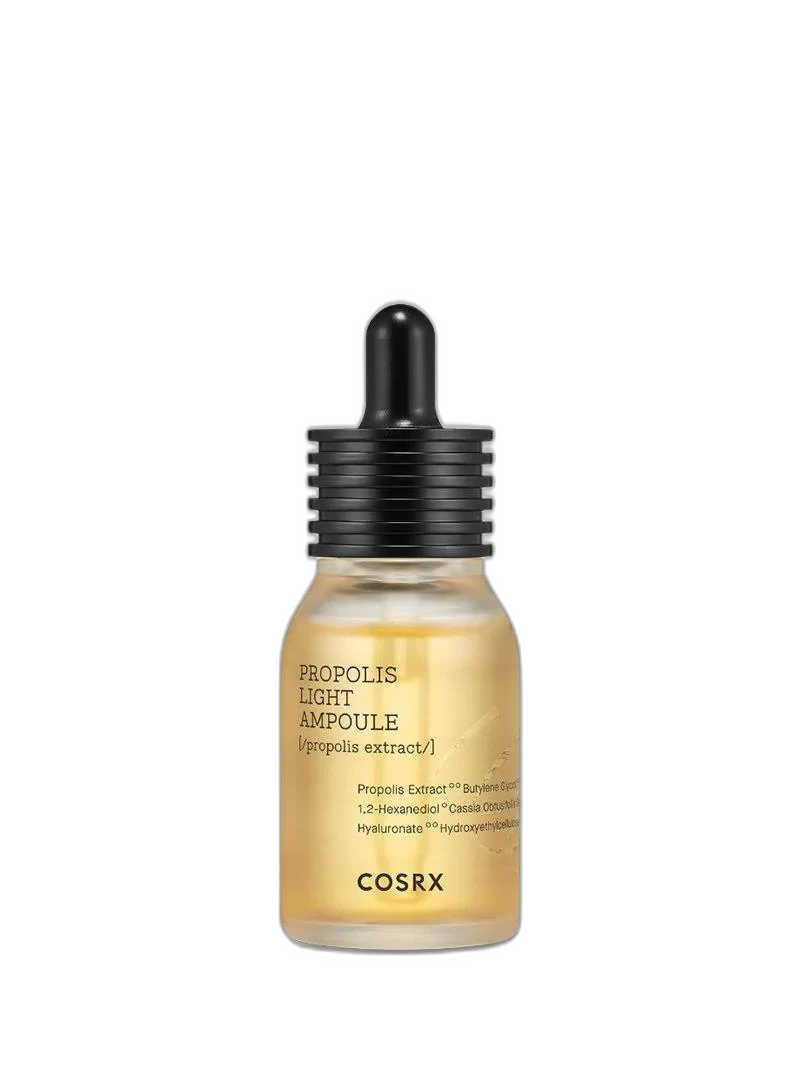
Full Fit Propolis Light Ampoule
Minimalist Propolis Powerhouse
 Verified reviewer
Pros & cons.
- +83.25% Black Bee Propolis concentration is among the highest available in any commercial product
- +Only 11 ingredients — minimal irritation risk from non-essential additives
- +Fragrance-free, oil-free, silicone-free, and generally fungal acne safe
- +Immediately visible dewy glow with no stickiness or residue
- +Excellent as a soothing base before retinol to buffer irritation
- +Calms redness and inflammation noticeably within days of consistent use
- +Lightweight texture absorbs in seconds and layers seamlessly
- −Small 30mL bottle lasts only 4-6 weeks with twice-daily use
- −Propolis is a contact allergen for individuals with bee product or pollen allergies
- −Price per mL is higher than many competing serums at this volume
- −Not vegan due to bee-derived propolis extract
- −Plastic dropper packaging feels less premium than glass alternatives
- −Does not address pigmentation, deep wrinkles, or other concerns beyond soothing and hydration
The full review.
About COSRX
The skincare industry loves complexity. Most product launches feature 30, 40, or 50 ingredients—each adding a new variable that might cause skin reactions. The COSRX Full Fit Propolis Light Ampoule contains only eleven ingredients. You could memorize the entire INCI list during a single traffic light.
This isn’t laziness; it is a philosophy. COSRX’s founding principle—‘Cosmetics + RX’—treats skincare like medicine: identify the active ingredient for the concern, deliver it at an effective concentration, and minimize everything else. The Propolis Light Ampoule is that principle at its most extreme.
Reality
The formula starts with 83.25% Black Bee Propolis Extract. For context, most products advertising propolis use 2-20%. Some high-concentration products reach 50-60%. At 83.25%, the COSRX Full Fit Propolis Light Ampoule is not a serum with propolis added—it is propolis with a serum structure added. The remaining 16.75% contains five humectants (glycerin, betaine, sodium hyaluronate, butylene glycol, and panthenol), two stabilizers (hydroxyethylcellulose and carbomer), one preservative system component (1,2-hexanediol), one botanical extract (Cassia Obtusifolia seed), and one amino acid (arginine). That is the entire formula.
Propolis is a complex resin bees make by combining tree sap with their own enzymes. This substance contains over 300 identified compounds, including flavonoids, phenolic acids, terpenes, and amino acids. These compounds provide anti-inflammatory, antimicrobial, antioxidant, and wound-healing properties through multiple pathways. A 2020 study in Nutrients shows propolis suppresses UV-induced photoaging by targeting PI3K signaling and blocking the MMP-1 expression that degrades collagen. A 2022 clinical study in the Journal of Cosmetic Dermatology shows propolis increased collagen production by 19-24% and reduced collagenase activity by up to 31%.
COSRX uses Black Bee propolis, which the brand claims has higher concentrations of bioactive flavonoids than propolis from other bee species. While comparative studies between bee-species-specific propolis are limited, the principle is sound: propolis composition varies by geographic origin and bee species, and some varieties are richer in specific bioactive compounds.
Texture
The formula’s simplicity defines the texture. Despite the high propolis concentration, the ampoule applies like a lightweight watery serum. Two to three drops spread easily across the face and absorb within thirty seconds without the stickiness found in many high-concentration actives. It leaves a subtle dewy glow—the K-beauty ‘glass skin’ look—that appears immediately and stays under moisturizer. There is no fragrance, no scent, no film, and no residue.
Packaging
The plastic dropper packaging is functional and modest. The honey-dipper-inspired dropper and built-in wiper at the bottle neck prevent waste. Some users prefer glass for a premium feel, but the plastic is lighter and less prone to breakage—a fair trade for a daily-use product.
Best for
Minimalism drives performance here. With so few ingredients, there is no ambiguity about what works. The propolis calms redness and irritation quickly; many users see improvement within two to three days of twice-daily use. For post-breakout marks and general inflammation, the effect is cumulative. The ampoule will not address pigmentation or deep wrinkles, but it is effective for soothing, hydrating, and restoring a healthy glow to stressed or barrier-compromised skin.
Pairs Well With
Using this with retinol is a popular use case. Applied before retinol, the ampoule creates an anti-inflammatory, hydrating base that buffers common retinol irritation. The propolis and panthenol calm inflammation while the humectant base prevents the tight, peeling dryness that causes many to stop retinol use. It is not a miracle solution—severe retinol reactions still require reducing frequency or concentration—but it makes a measurable difference for everyday retinol adjustment.
Common Complaints
The main limitation is volume. At 30 mL for $25, the bottle lasts about four to six weeks with twice-daily use. The per-use cost is reasonable at roughly $0.40-0.60 per application, but the small size requires frequent repurchasing. COSRX calls this an ampoule (concentrated treatment) rather than a serum to justify the smaller volume, but heavy users will reorder often.
Not ideal for
The bee-derived allergen concern applies to the entire propolis line. European patch-test studies report propolis sensitization rates of 1.2-6.6%, meaning a small percentage of people will react. If you have a history of bee product allergy, bee venom sensitivity, or pollen allergies, this product is not for you. Patch testing on the inner arm for 48 hours is essential for first-time propolis users.
Ingredient analysis.
Full INCI list · pH 7
Propolis Extract, Butylene Glycol, Glycerin, Betaine, 1,2-Hexanediol, Cassia Obtusifolia Seed Extract, Sodium Hyaluronate, Hydroxyethylcellulose, Carbomer, Panthenol, Arginine
Skin match.
The science.
The Science
Propolis contains over 300 identified bioactive compounds, with flavonoids and phenolic acids as the primary drivers of its dermatological benefits. A 2020 study published in Nutrients demonstrated that propolis directly targets phosphoinositide 3-kinase (PI3K) to suppress UV-induced photoaging, blocking the MMP-1 expression responsible for collagen degradation. This mechanism is particularly relevant for daily-use products applied before sun exposure, as the propolis provides an additional protective layer beyond sunscreen.
A 2022 study published in the Journal of Cosmetic Dermatology examined propolis polymeric nanoparticles and found they increased collagen production by 19.81-24.59% while reducing collagenase activity by 7.46-31.52%. A subsequent 2024 double-blind randomized controlled trial in the same journal demonstrated 25-34% wrinkle reduction after 28 days of topical application of a standardized phenolic acids polymer extract from propolis.
The anti-inflammatory pathway is well-documented: propolis inhibits NF-kB nuclear translocation, reducing the production of pro-inflammatory cytokines including TNF-alpha, IL-1beta, and IL-6. A 2022 review in Molecules surveyed clinical wound-healing studies and found that propolis-treated groups showed 41% wound area shrinkage within one week compared to control groups.
The supporting ingredient panthenol enhances the anti-inflammatory profile through a complementary mechanism — it is converted to pantothenic acid in the skin, which accelerates wound healing and reduces transepidermal water loss. The combination of propolis's flavonoid-mediated anti-inflammatory action with panthenol's barrier-repair properties creates a dual-pathway approach to skin recovery that is more effective than either ingredient alone.
References
- Propolis Suppresses UV-Induced Photoaging in Human Skin through Directly Targeting Phosphoinositide 3-Kinase — Nutrients (2020)
- Clinical Anti-aging Efficacy of Propolis Polymeric Nanoparticles — Journal of Cosmetic Dermatology (2022)
- Healing Potential of Propolis in Skin Wounds Evidenced by Clinical Studies — Molecules (2022)
Dermatologist Perspective
Dermatologists evaluating this formula would note the exceptionally high propolis concentration in a minimal vehicle — an approach that maximizes delivery of the active ingredient while minimizing potential sensitizers from the base formula. Board-certified dermatologists increasingly recognize propolis for its anti-inflammatory and wound-healing properties, though they emphasize the importance of screening for bee product allergy before recommendation. The 11-ingredient formula is particularly appealing from a dermatological standpoint because it simplifies the process of identifying the cause of any adverse reaction. Dermatologists frequently recommend this type of product for post-procedure recovery and barrier-compromised skin, where complex formulations with multiple potential irritants are undesirable. The near-neutral pH (6.5-7.5) aligns with dermatological recommendations for maintaining barrier integrity.
Where it fits in your routine.
Cleanse and tone (use the COSRX Propolis Synergy Toner for maximum propolis benefits), then dispense 2-3 drops onto fingertips. Pat the liquid into your face and neck; do not rub. Wait 30 seconds for absorption before you apply moisturizer, treatments, or sunscreen. Use this morning and evening. If you use retinol, apply this ampoule first to buffer, then apply retinol after it absorbs.
At $25 for 30mL, the price per milliliter exceeds many competing serums. But the 83.25% propolis concentration justifies this — premium K-beauty brands charge $35-50 for similar volumes of high-concentration propolis treatments. The small bottle lasts 4-6 weeks using the recommended 2-3 drops twice daily, costing about $0.40-0.60 per application. Some retailers sell a 40mL version with a slightly better per-mL value. Given the ingredient concentration and the brand's track record, the pricing is fair — though the small format requires more frequent repurchasing than larger-format serums.
This propolis treatment is for those seeking a concentrated, minimal-ingredient formula. It works for sensitive skin that reacts to complex formulations, post-breakout recovery, barrier-compromised skin, and retinol users needing a soothing buffer. K-beauty enthusiasts who value ingredient transparency and minimal formulation will like this product.
Avoid this product if you have allergies to bee product, bee venom, or pollen. The bee-derived propolis makes this incompatible with vegan values. If you want multi-functional actives like vitamin C, retinol, or niacinamide, look elsewhere. This ampoule does one thing—propolis delivery—well, but it does only that.
Product details.
A slightly viscous gel with a faint honey-like tint. It has a thick consistency but spreads and absorbs like a lightweight watery serum. Two to three drops cover the entire face.
Essentially unscented — no fragrance, no essential oils, no detectable aroma.
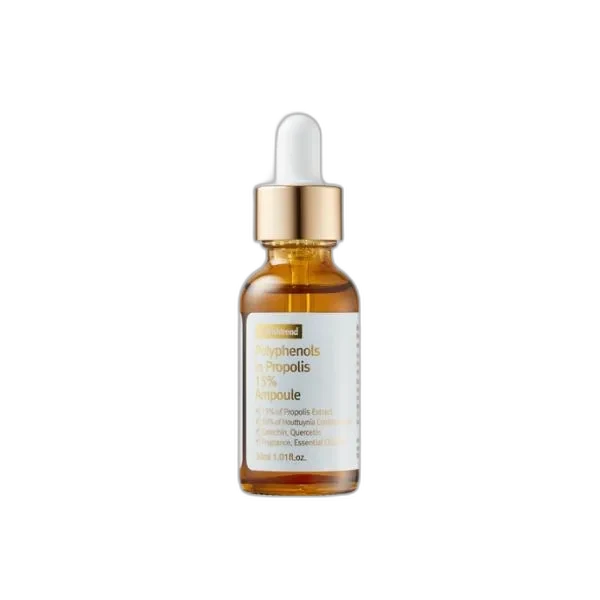
Translucent amber plastic bottle uses a dropper shaped like a honey dipper. A built-in wiper at the bottle neck removes excess product from the dropper. This design is functional and on-brand, though some users prefer glass.
2-3 drops spread easily across the face with low viscosity on first application. The product absorbs within 30 seconds and leaves a subtle dewy glow without stickiness. Skin feels softer and looks healthier immediately — the 'glass skin' effect shows from the first use. Most users experience no purging, stinging, or adjustment period. Those with bee product sensitivity should patch test for 48 hours first.
4-6 weeks with twice-daily use (2-3 drops per application)
12 months
All Year
The backstory.
The original COSRX Propolis Light Ampule launched around 2017 with approximately 73.5% propolis extract and quickly gained a cult following in K-beauty communities for its simplicity and effectiveness. In 2019, COSRX reformulated it under the 'Full Fit' line rebrand, boosting the Black Bee Propolis concentration to 83.25% while maintaining the same minimalist ingredient philosophy. Black bees were specifically chosen for their propolis, which contains higher concentrations of bioactive flavonoids than propolis from other bee species. The product exemplifies COSRX's founding principle: use fewer ingredients at higher concentrations rather than diluting many actives into an ineffective blend.
About COSRX
Established Brand (5–20 years)COSRX launched in 2013 with a philosophy of minimal, effective formulations (the name stands for 'Cosmetics + RX'). Over 11 years, the brand built a reputation for ingredient-forward products dermatologists praise, and AmorePacific acquired it in 2023.
Common myths.
Propolis products use the same ingredient at similar concentrations.
Propolis concentration varies from under 1% in mass-market formulations to over 80% in concentrated treatments like this one. Propolis composition also changes based on bee species, geographic region, and plant source. COSRX uses Black Bee propolis, which research shows has higher flavonoid concentrations than propolis from other bee varieties.
A product with only 11 ingredients cannot be effective.
Ingredient count does not correlate with efficacy. This formula works using one ingredient at a high concentration (83.25% propolis) instead of dozens of actives at ineffective levels. The minimal formula also has fewer potential irritants and allergens — a real advantage for sensitive skin that complex formulations often undermine.
FAQ.
What does the COSRX Propolis Ampoule do for skin?
This ampoule contains 83.25% Black Bee Propolis Extract. This extract provides flavonoids and phenolic acids with anti-inflammatory, antimicrobial, and antioxidant properties. It reduces redness and irritation, hydrates deeply, aids barrier repair, and leaves a visible dewy glow. It works well for sensitized, dehydrated, or post-breakout skin.
Can I use the COSRX Propolis Ampoule with retinol?
Yes — applying this ampoule before retinol creates a soothing, anti-inflammatory base that buffers retinol irritation. The propolis and panthenol in the formula calm inflammation, while the hydrating base prevents the dryness retinol causes. Apply the ampoule first, let it absorb, then follow with retinol.
Is the COSRX Propolis Ampoule fungal acne safe?
This formula is generally fungal acne safe. It is oil-free, contains no fatty acids or esters that feed Malassezia, and has only 11 ingredients. One minor caveat: arginine may cause issues for some fungal-acne-prone individuals when lipids are present, but this formula is entirely oil-free, which minimizes that risk.
How is this different from the COSRX Propolis Synergy Toner?
The Ampoule has 83.25% propolis in a concentrated gel-serum treatment format. The Synergy Toner has 72.6% propolis and 10.7% honey in a thin, watery hydrating prep format. Use the Synergy Toner first for hydrating prep, then the Ampoule for concentrated propolis treatment.
Why does my skin react to propolis products?
Propolis is a contact allergen, especially for people with bee product, bee venom, or pollen allergies. European patch-test studies show sensitization rates of 1.2-6.6%. If propolis products cause redness, itching, or bumps, stop use and see a dermatologist. Patch test new propolis products on your inner arm for 48 hours before facial use.
What the community says.
"Delivers an immediate healthy glow and dewiness"
"Calms redness and irritation quickly and effectively"
"Incredibly lightweight despite 83% propolis concentration"
"Minimal 11-ingredient list is ideal for sensitive skin"
"Absorbs quickly without residue or greasiness"
"Heals breakouts and reduces inflammation noticeably"
"Small 30mL bottle runs out quickly with twice-daily use"
"Can trigger breakouts in people sensitive to bee products"
"Slightly tacky feel before moisturizer is applied on top"
"Price per mL is on the higher side"
"Plastic dropper packaging feels less premium than glass"
People also looked at.