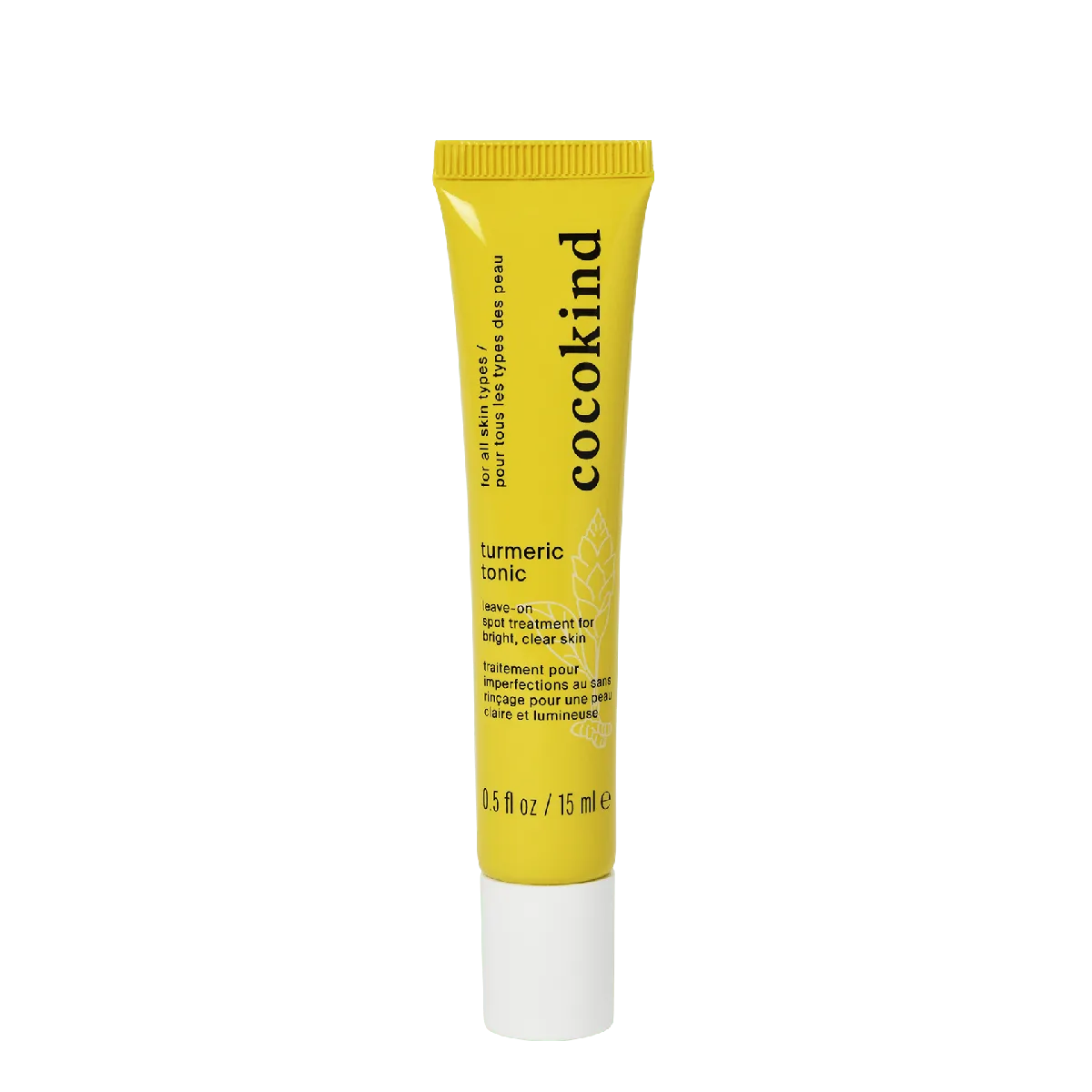
Turmeric Spot Treatment
Gentle Natural Spot Fighter
 Verified reviewer
Pros & cons.
- +Metal rollerball applicator is hygienic, cooling, and satisfying to use on blemishes
- +Non-drying formula that treats without stripping moisture or causing peeling
- +Turmeric-ginger anti-inflammatory combo noticeably reduces blemish redness within hours
- +Tea tree oil provides antimicrobial action against acne-causing bacteria
- +Broccoli seed oil prevents the dryness that most spot treatments cause
- +Affordable at $14 and lasts 2-3 months with targeted application
- +Clean ingredient list with organic certified key actives
- −Less potent and slower-acting than benzoyl peroxide or salicylic acid spot treatments
- −Dark spot fading is gradual and modest compared to dedicated brightening actives
- −Tea tree oil scent is noticeable and may bother fragrance-sensitive users
- −Can leave a faint yellow tint when applied generously
- −Tea tree and witch hazel may irritate very sensitive or eczema-prone skin
The full review.
South Asian skincare traditions used turmeric long before wellness trends. Generations applied Haldi — turmeric paste mixed with milk or yogurt — to blemishes, wounds, and uneven skin. Science now confirms what grandmothers knew: curcumin, turmeric’s primary polyphenol, has anti-inflammatory, antioxidant, and melanin-inhibiting properties. Cocokind’s Turmeric Spot Treatment puts this traditional ingredient into a modern, convenient format. This review tests if a rollerball tonic delivers what a traditional paste promises.
The delivery system works well. The metal rollerball applicator is a hygienic choice for a spot treatment because fingers do not touch active breakouts. The metal cools the skin on contact, providing an immediate soothing sensation on an inflamed blemish. This design choice separates considered products from lazy ones.
The formula interprets a traditional remedy for clean beauty. Organic turmeric root extract provides the curcumin that defines this product. Ginger root extract — a botanical cousin in the Zingiberaceae family — brings gingerols to amplify the anti-inflammatory effect. Tea tree leaf oil provides antimicrobial action against the P. acnes bacteria that drive breakouts. Witch hazel extract adds astringent and anti-inflammatory properties to help decongest pores around active blemishes.
The combination is logical. In practice, results are real but modest. Applied to an active blemish, the treatment reduces redness and swelling within hours; the anti-inflammatory effects from curcumin, gingerols, and witch hazel tannins work quickly. The tea tree oil’s antibacterial effects take more time. Clinical studies show tea tree oil at 5% concentrations can reduce acne lesions similarly to benzoyl peroxide over a longer timeframe. The concentration here is not disclosed, and the product’s role as a gentle, non-drying treatment suggests it is not at the limit.
For dark spots and post-inflammatory hyperpigmentation, the timeline is longer. Curcumin inhibits tyrosinase — the enzyme driving melanin production — but topical delivery is hard. Curcumin has poor bioavailability and limited skin penetration in most formulations. While this extract may improve on raw turmeric, do not expect dramatic dark spot fading like vitamin C or alpha arbutin. You will likely see gradual, modest improvement over 6-8 weeks of consistent use.
The broccoli seed oil is a creative addition. It is a lightweight, non-comedogenic oil with vitamin A and sulforaphane precursors that moisturizes the treatment area. This addresses the common complaint that spot treatments leave surrounding skin dry and flaky. Most spot treatments are desiccating; this one calms and nourishes while it treats. This feature suits dry and normal skin, though very oily skin might find any oil on a breakout counterintuitive.
The formula has limitations. This is not a replacement for benzoyl peroxide for moderate to severe acne. It will not resolve deep cystic breakouts or fade dark spots as fast as a retinoid or dedicated vitamin C treatment. It gently calms active blemishes, reduces redness, and gradually improves marks without the dryness, peeling, and irritation of aggressive treatments.
The scent is polarizing. Tea tree oil has a medicinal, herbal aroma that is not masked or diluted here. You will notice it on application, though it fades within a few minutes.
At $14 for 0.5 fluid ounces, the price is accessible since you apply targeted dots rather than spreading product across your whole face. One bottle should last two to three months of regular use. For the clean beauty category, this is affordable, and the rollerball packaging feels more premium than the price.
The best candidate is someone seeking a gentle, non-drying approach to blemish management and post-breakout marks who has patience for botanical-pace results. If harsh spot treatments left your skin raw and peeling, this turmeric tonic treats without punishing, following the philosophy Cocokind built its brand around.
Ingredient analysis.
Full INCI list
Water, Glycerin, Glyceryl Stearates, Stearyl Alcohol, Cetyl Phosphate, Brassica Oleracea Italica (Broccoli) Seed Oil, Curcuma Longa (Turmeric) Root Extract, Melaleuca Alternifolia (Tea Tree) Leaf Oil, Xanthan Gum, Zingiber Officinale (Ginger) Root Extract, Hamamelis Virginiana (Witch Hazel) Extract, Glyceryl Stearate, Sodium Dehydroacetate, Leuconostoc/Radish Root Ferment Filtrate
Skin match.
The science.
The Science
Curcumin is the main bioactive compound in turmeric root extract and has extensive research on its anti-inflammatory and antioxidant properties. A 2016 review in Phytotherapy Research shows curcumin inhibits NF-kB, COX-2, and multiple pro-inflammatory cytokines—mechanisms that drive acne and post-inflammatory hyperpigmentation. That same review notes curcumin inhibits tyrosinase, providing the biochemical basis for its dark spot-fading potential.
Bioavailability is the challenge with topical curcumin. Curcumin is lipophilic and most formulations have limited penetration through the stratum corneum. A 2019 study in the Journal of Cosmetic Dermatology found curcumin-containing topical formulations improved skin brightness and reduced hyperpigmentation, but the effect was modest compared to established brightening agents like hydroquinone or vitamin C derivatives.
Tea tree oil (Melaleuca alternifolia) has the strongest clinical evidence in this formula for acne treatment. A landmark 1990 study in the Medical Journal of Australia compared 5% tea tree oil to 5% benzoyl peroxide in a randomized controlled trial of 124 patients with mild to moderate acne. Both treatments significantly reduced inflamed and non-inflamed lesions, but benzoyl peroxide worked faster. Tea tree oil caused fewer side effects (dryness, stinging, burning), making it a gentler alternative.
Witch hazel (Hamamelis virginiana) contains hamamelitannin, a polyphenol with documented anti-inflammatory and antioxidant properties. A 2002 study in Skin Pharmacology and Applied Skin Physiology shows witch hazel extract suppressed UV-induced erythema, supporting its role as a topical anti-inflammatory in this formula.
References
- A comparative study of tea-tree oil versus benzoylperoxide in the treatment of acne — Medical Journal of Australia (1990)
Dermatologist Perspective
Dermatologists generally view botanical spot treatments as appropriate for mild acne and post-inflammatory marks, but note that evidence-based options like benzoyl peroxide, salicylic acid, and retinoids offer faster, more predictable results. Board-certified dermatologists acknowledge clinical support for tea tree oil at 5% concentration, though this formula's concentration is undisclosed. Dermatologists often recommend this type of product for patients who prefer a gentler approach or cannot tolerate conventional spot treatments, noting that more severe acne typically requires stronger interventions. The non-drying formula is viewed favorably, as many dermatologists see patients who damage their skin barrier with overly harsh spot treatments.
Where it fits in your routine.
Roll the metal ball onto blemishes or dark spots 2-3 times daily after cleansing. Apply before moisturizer so the active ingredients contact the skin directly. Dark spot fading requires consistent twice-daily application. Always use sunscreen during the day — UV exposure worsens hyperpigmentation and undoes the turmeric's brightening work. For overnight treatment, apply a generous amount before bed when the slight yellow tint is not a concern.
At $14 for 0.5 fluid ounces, this is one of Cocokind's most affordable products and fits the clean beauty spot treatment price point. Because you apply targeted dots instead of full-face coverage, one bottle lasts 2-3 months, bringing the monthly cost under $7. The rollerball packaging provides hygienic application and a premium feel. However, shoppers must weigh these gentler, slower results against conventional spot treatments that cost less and work faster — a tube of 10% benzoyl peroxide costs $5-8 and typically resolves blemishes more quickly.
Use this for a gentle, non-drying spot treatment that avoids skin peeling or irritation. It suits people who find benzoyl peroxide too harsh or want a clean-label, natural approach to blemish management. It works for mild acne and post-breakout dark spots if you are patient.
People with moderate to severe acne needing stronger, faster-acting treatments. Anyone with known tea tree oil allergies or who dislikes the herbal scent. For rapid dark spot correction, dedicated brightening actives like vitamin C or alpha arbutin deliver more dramatic results.
Product details.
A lightweight milky liquid uses a metal rollerball applicator. It absorbs fast and leaves no heavy or sticky residue.
The essential oils create a noticeable tea tree and herbal scent. It is present but not overpowering.
Small glass bottle uses a metal rollerball applicator. This hygienic delivery system cools the skin on contact. It is portable and travel-friendly.
The metal rollerball feels cooling and soothing on a blemish. The lightweight formula absorbs within seconds and leaves no visible residue on most skin tones, though generous application leaves a faint yellow tint. It does not sting or burn, unlike conventional spot treatments.
2-3 months with targeted spot application only.
12 months
All Year
The backstory.
This was one of Cocokind's earliest products to lean into turmeric — an Ayurvedic ingredient with centuries of traditional skin use. The brand positioned it as a gentler alternative to conventional spot treatments for consumers who found benzoyl peroxide too harsh or who wanted to avoid synthetic actives. The rollerball format was designed to prevent contamination from fingers touching blemishes.
About Cocokind
Established Brand (5–20 years)Priscilla Tsai founded Cocokind in 2014 to make affordable, transparent, and sustainable skincare. The brand has a large following due to its clean ingredient approach. You can find Cocokind at Target, Ulta, and Whole Foods, though it focuses on clean-beauty ethos over clinical research.
Common myths.
Turmeric will stain your skin bright yellow.
This formula uses turmeric root extract instead of raw turmeric powder to reduce staining. Most users see no visible color, but applying too much leaves a faint temporary tint that fades within an hour.
Natural spot treatments work as fast as benzoyl peroxide.
Botanical actives like turmeric and tea tree oil work slower than benzoyl peroxide or prescription treatments. Tea tree oil has clinical backing for acne but needs higher concentrations (5%) and longer treatment periods to match benzoyl peroxide's speed.
FAQ.
Does Cocokind Turmeric Spot Treatment work on acne?
tea tree oil provides antimicrobial action against acne-causing bacteria. turmeric and ginger extracts reduce inflammation and redness. It calms active breakouts and reduces their appearance, but works slower than conventional benzoyl peroxide treatments. Use it for mild to moderate blemishes instead of severe cystic acne.
Will this spot treatment stain my skin yellow?
The formula uses turmeric extract instead of raw powder to minimize staining. Most users see no yellow tint when applying sparingly with the rollerball. Applying generously or having very fair skin can cause a faint temporary tint. This tint fades within an hour; apply it before bed to avoid concern.
Can I use this on dark spots and hyperpigmentation?
Curcumin from turmeric inhibits melanin production, which helps fade post-inflammatory hyperpigmentation over time. Results are gradual; use it daily for 4-8 weeks to see meaningful fading. For faster dark spot results, pair this with a vitamin C serum and daily sunscreen.
How often should I apply the Turmeric Spot Treatment?
Use the rollerball to apply 2-3 times daily directly to blemishes or dark spots. Apply twice daily to dark spots for best results. Always use sunscreen during the day; treating dark spots without UV protection can worsen hyperpigmentation.
Is this better than benzoyl peroxide for acne?
They serve different purposes. Benzoyl peroxide kills acne bacteria faster and more potently, but it dries and irritates skin more. This turmeric treatment is gentler and non-drying, so it works better for people who cannot tolerate harsh spot treatments. Benzoyl peroxide or prescription treatments work better for severe acne.
What the community says.
"Metal rollerball applicator feels cooling and soothing on blemishes"
"Non-drying unlike many harsh spot treatments"
"Small size is portable and convenient"
"Clean, natural ingredient list"
"Helps reduce redness and calm active breakouts"
"Can leave a slight yellow tint from the turmeric"
"Less effective than conventional spot treatments with benzoyl peroxide"
"Small bottle for the price"
"Tea tree scent is noticeable"
"Results on dark spots are slow and subtle"
People also looked at.