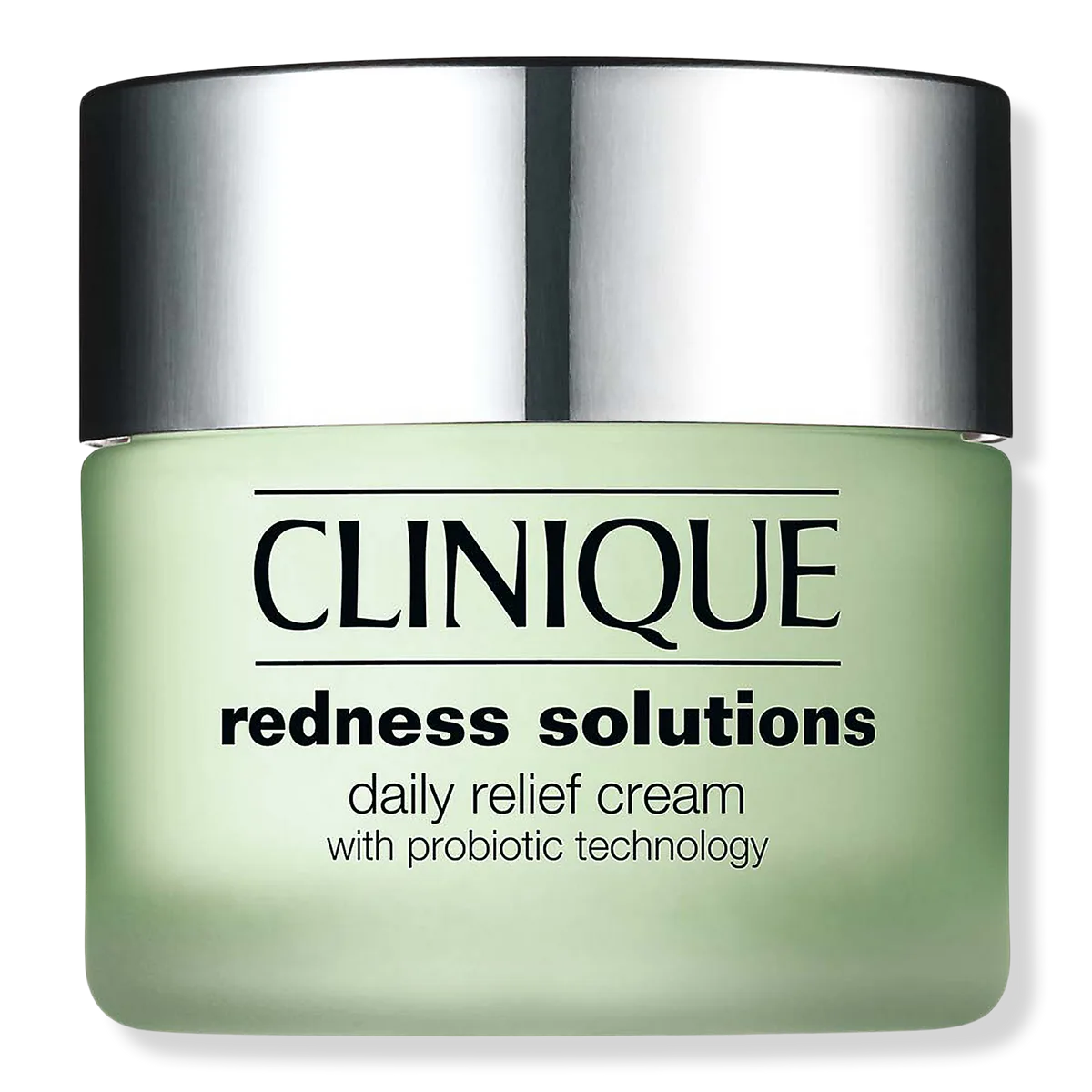
Redness Solutions Daily Relief Cream
Redness Relief Specialist
 Verified reviewer
Pros & cons.
- +Multi-tea anti-inflammatory complex addresses redness through four different botanical pathways
- +Probiotic support helps rebalance the microbiome dysfunction linked to chronic redness
- +Green tint provides immediate visual color correction while actives work underneath
- +Phytosphingosine delivers both barrier repair and anti-inflammatory benefits simultaneously
- +Fragrance-free, non-acnegenic, and allergy-tested — critical for rosacea-prone skin
- +Nearly two decades of market presence with consistent positive results for redness management
- −Premium pricing at $54 for 1.7 oz for what is a daily-use moisturizer
- −Green tint requires cosmetic colorants that some sensitive-skin users prefer to avoid
- −Not potent enough for severe rosacea requiring prescription-level treatment
- −Jar packaging is less hygienic than tubes for compromised, reactive skin
- −Contains wheat germ extract, which may concern those with wheat allergies
The full review.
Chronic facial redness makes you suspicious of skincare. Every new product can trigger a flare. You treat your medicine cabinet defensively, choosing boring options that sometimes fail anyway. Clinique’s Redness Solutions Daily Relief Cream addresses this distrust, and its nearly two-decade track record earns the confidence of redness-prone users.
The formula uses a multi-pathway approach to redness based on what drives chronic facial flushing. It does more than apply soothing ingredients to inflamed skin. The system uses botanical anti-inflammatories to calm active redness, probiotic support to rebalance the microbiome dysfunction linked to rosacea, and barrier-repair lipids to fix the structural weakness in redness-prone skin.
The four-tea complex is the botanical backbone. Green tea provides epigallocatechin gallate (EGCG), a polyphenol that inhibits the inflammatory cytokines driving vascular redness. Yellow and white tea offer antioxidant support without the intensity that reactive skin resists. Red tea (rooibos) is caffeine-free and adds anti-inflammatory flavonoids through a different pathway. This multi-tea approach covers more redness bases than a single botanical.
The probiotic element—lactobacillus ferment and saccharomyces lysate extract—reflects how microbiome imbalance affects rosacea and chronic redness. These ferments support microbial diversity on the skin’s surface to help restore immune balance and control inflammation. This addresses a root cause rather than just suppressing inflammation.
Phytosphingosine is a strategic inclusion. As a ceramide precursor with barrier-repair and anti-inflammatory properties, it hits two targets: the structural weakness that lets triggers penetrate and the resulting inflammatory response. Combined with cholesterol, squalane, and linoleic acid, the formula rebuilds the lipid barrier that protects redness-prone skin.
Bisabolol provides reliable calming. This chamomile derivative is one of the least sensitizing anti-inflammatory ingredients, which is vital for skin that reacts to almost everything.
The texture is thick and comforting. Mineral colorants, including chromium hydroxide green and titanium dioxide, create a green tint that neutralizes redness immediately upon application. The effect is subtle and won’t make you look green; it simply dials down the redness. The effect is most noticeable on lighter skin tones. On deeper tones, the green tint matters less, but the anti-inflammatory benefits remain.
Clinique reports visible redness reduction within 2.5 hours of application, showing the immediate effect of the botanical anti-inflammatories. Long-term benefits require patience: consistent use over 4-8 weeks builds the barrier strength and microbiome balance needed to reduce trigger sensitivity. This product rewards daily use.
The non-acnegenic testing is useful. Many people with rosacea also have papulopustular flares that look like acne; using a moisturizer confirmed not to cause comedones removes one variable from a complex condition.
Limitations: At $54 for 1.7 ounces, the price is premium for a daily moisturizer. The formula uses well-researched rather than exotic ingredients; the price reflects Clinique’s brand, testing, and formulation expertise. It performs well for mild to moderate redness. For severe rosacea with persistent papules and pustules, use this as a complementary moisturizer alongside prescription treatments, not a replacement for medical intervention.
The green tint means this cream contains cosmetic colorants (Blue 1, Yellow 5, Chromium Hydroxide Green) that some sensitive-skin purists avoid. These are non-irritating for most, but users with dye sensitivities should be aware.
The jar packaging is the standard Clinique glass jar. It looks good but is less ideal for reactive skin than a tube or pump, which would reduce air exposure and contamination risk.
Clinique’s Redness Solutions Daily Relief Cream has lasted nearly twenty years because it makes redness-prone skin feel safe. While most moisturizers ignore reactive skin, this formula uses careful ingredient selection, extensive allergy testing, and a multi-pathway approach to inflammation to provide reliability. It won’t cure rosacea, but it makes living with it more comfortable.
Ingredient analysis.
Full INCI list
Water/Aqua/Eau, Cyclopentasiloxane, Butyrospermum Parkii (Shea Butter), Cetearyl Alcohol, Hydrogenated Polyisobutene, Butylene Glycol, Glycerin, Sucrose, Isostearyl Palmitate, PEG-100 Stearate, Camellia Sinensis (Green Tea) Leaf Extract, Polygonum Cuspidatum Root Extract, Hordeum Vulgare (Barley) Extract, Triticum Vulgare (Wheat) Germ Extract, Cetearyl Glucoside, Camellia Sinensis (Yellow Tea) Leaf Extract, Aspalathus Linearis (Red Tea) Leaf Extract, Saccharomyces Lysate Extract, Ascophyllum Nodosum Extract, Asparagopsis Armata Extract, Camellia Sinensis (White Tea) Leaf Extract, Yeast Extract, Algae Extract, Caffeine, Lactobacillus Ferment, Sodium Lauroyl Oat Amino Acids, Hydrogenated Lecithin, Polyethylene, Glyceryl Stearate, Salicylic Acid, Sorbitol, Methyl Glucose Sesquistearate, Cholesterol, Linoleic Acid, Acetyl Carnitine HCl, Glycine, Inulin, Tromethamine, Decarboxy Carnosine HCl, Phytosphingosine, Cetyl Alcohol, Tocopheryl Acetate, Bisabolol, Squalane, HDI/Trimethylol Hexyllactone Crosspolymer, Behenyl Alcohol, Carbomer, Silica, Disodium EDTA, Potassium Sorbate, Phenoxyethanol, Blue 1 (CI 42090), Yellow 5 (CI 19140), Chromium Hydroxide Green (CI 77289), Titanium Dioxide (CI 77891), Mica
Skin match.
The science.
The Science
Green tea polyphenols, especially epigallocatechin gallate (EGCG), have documented anti-inflammatory activity. A Journal of Investigative Dermatology study shows EGCG inhibits NF-kB activation, a transcription factor in the inflammatory cascade. This reduces pro-inflammatory cytokine production that drives vascular dilation and visible redness. For rosacea, a 2005 Archives of Dermatology study by Draelos shows a cream with green tea polyphenols significantly reduced redness severity and papule count in rosacea patients over 4 weeks.
Evidence links skin microbiome dysbiosis to inflammatory conditions like rosacea, supporting probiotic redness management. Research in the British Journal of Dermatology shows the skin microbiome of rosacea patients differs from healthy controls; lower microbial diversity correlates with higher inflammation. Topical Lactobacillus ferment and saccharomyces-derived extracts show immunomodulatory effects, helping restore microbial balance and reduce the overactive immune response.
Phytosphingosine works as both a barrier-repair agent and anti-inflammatory. A Journal of the European Academy of Dermatology and Venereology study shows topical phytosphingosine significantly reduces inflammatory acne lesions and improves skin barrier markers. It works by replenishing ceramide precursors in the stratum corneum and inhibiting pro-inflammatory leukotriene synthesis.
Bisabolol, the active compound in chamomile, has documented anti-inflammatory properties by inhibiting cyclooxygenase and lipoxygenase pathways. Its low sensitization potential suits products for reactive skin; an International Journal of Cosmetic Science study confirmed it reduces skin irritation without causing additional sensitization.
References
- The effect of a daily facial lotion containing a green tea polyphenol on rosacea subjects — Archives of Dermatology (2005)
Dermatologist Perspective
Dermatologists often recommend soothing, barrier-supportive moisturizers to manage rosacea, and Clinique's Redness Solutions Daily Relief Cream follows these principles. Board-certified dermatologists note that the multi-botanical anti-inflammatory approach, barrier-repair lipids, and probiotic support address rosacea from multiple angles. This matches the understanding of rosacea as a multifactorial condition involving barrier dysfunction, immune dysregulation, and microbiome imbalance. The non-acnegenic, fragrance-free, allergy-tested formulation minimizes flare risks. Clinicians typically recommend this as a daily moisturizer alongside prescription treatments, not as a replacement, especially for moderate to severe rosacea.
Where it fits in your routine.
Apply to clean skin after cleansing and lightweight serums. Use clean fingertips or a spatula to gently pat the cream onto redness-prone areas. Patting preserves the green tint's color-correcting effect. Use morning and evening. In the morning, follow with a mineral sunscreen SPF 30+. Do not rub or massage aggressively; friction triggers redness in sensitive skin.
At $54 for 1.7 ounces, this daily-use moisturizer costs more than average. The formula uses a multi-pathway anti-redness approach, probiotic technology, and extensive allergy testing to justify the price, though the core ingredients are not exotic. A 0.5 oz travel size (approximately $20) lets you test it before buying the full size. For users with chronic redness disappointed by generic 'sensitive skin' moisturizers, the specialist formulation and nearly two decades of proven results justify the cost. Twice-daily use costs roughly $27 per month — a significant but reasonable expense for targeted redness management.
People with chronic facial redness, rosacea, or reactive skin that flushes easily. It works well for anyone needing a daily moisturizer that won't trigger flares, or those frustrated by generic sensitive-skin products that ignore redness. It also helps people whose redness stems from barrier dysfunction.
This works alongside, but does not replace, prescription treatments for severe rosacea. Oily skin types will find the thick texture too heavy. If you have no redness concerns, the specialist formula and premium price are unnecessary for general moisturizing.
Product details.
This thick, smooth cream has a subtle green tint to visually neutralize redness. It absorbs evenly without feeling heavy or greasy. It feels cushiony on application.
Fragrance-free with no detectable scent.
Green-tinted glass jar with a screw-top lid matches the Redness Solutions line's calming green branding. A 0.5 oz travel size exists.
The green-tinted cream blends into the skin on first application and reduces redness immediately. The texture feels soothing; it does not sting, tingle, or warm. Reactive skin feels more comfortable within minutes. Clinical testing shows visible redness reduction within 2.5 hours.
2 months with twice-daily use of the 1.7 oz size
12 months
All Year
The backstory.
Clinique developed the Redness Solutions line to fill a gap in prestige skincare — products specifically designed for the millions of people dealing with chronic redness and rosacea. While most brands offered a single calming moisturizer as an afterthought, Clinique created an entire system with dedicated science targeting the inflammatory pathways that drive visible redness. The line has been refined over nearly two decades, most recently adding probiotic technology as the connection between microbiome health and skin redness became clearer.
About Clinique
Legacy Brand (20+ years)Clinique launched in 1968 as the first prestige skincare brand created by dermatologists. The Redness Solutions line targets redness-prone and rosacea-appropriate skin. It has undergone nearly two decades of refinement, including a reformulation using probiotic technology.
Common myths.
Redness is cosmetic and does not indicate a skin barrier problem.
Chronic facial redness often signals compromised barrier function — skin with a weakened barrier is more susceptible to environmental triggers that provoke the inflammatory redness response. This formula addresses both the visible redness (with botanical anti-inflammatories) and the underlying barrier dysfunction (with phytosphingosine, cholesterol, and squalane), which is why consistent use can actually reduce trigger sensitivity over time.
Green-tinted products only color correct; they do not treat redness.
The green tint provides immediate visual color correction, but the active ingredients reduce skin inflammation. The multi-tea complex, probiotic ferments, and phytosphingosine target the biological mechanisms that drive redness. The green tint improves appearance while the treatment works beneath the surface.
FAQ.
Is Clinique Redness Solutions good for rosacea?
Yes — this cream is formulated for rosacea-prone skin. The multi-tea anti-inflammatory complex, probiotic support, and barrier-repair ingredients target the mechanisms that cause rosacea redness. It is fragrance-free, allergy-tested, and non-acnegenic to minimize flare risks. However, this is a cosmetic moisturizer, not a prescription treatment — severe rosacea may require prescription medications too.
Does the green tint in Clinique Redness Solutions show on skin?
The subtle green tint blends into the skin during application. It neutralizes redness without leaving a visible green cast. On lighter skin tones, it works as an invisible corrector. The green tint matters less for color correction on deeper skin tones, but the anti-inflammatory benefits remain effective.
Can you use Clinique Redness Solutions with retinol?
Use with caution. Retinol can increase skin sensitivity and redness, which may counteract this cream's calming effects. If you use retinol, apply it on alternate nights and use this cream on the off-nights, or layer it over retinol as a calming buffer. Start with a low-concentration retinol and monitor your skin's response.
Does Clinique Redness Solutions Daily Relief Cream have SPF?
No — this cream does not contain sun protection. Since UV exposure is a major redness trigger for sensitive and rosacea-prone skin, always apply a mineral sunscreen SPF 30+ over this cream during the day. Mineral (zinc oxide/titanium dioxide) sunscreens are generally better tolerated by redness-prone skin than chemical filters.
How long does it take for Clinique Redness Solutions to work?
Clinical testing shows visible redness reduction within 2.5 hours of the first application. Most users see progressive improvement in baseline redness over 2-4 weeks with consistent twice-daily use. Barrier strengthening and reduced trigger sensitivity show results after 4-8 weeks of daily use.
``` ```markdown
Community ---
What the community says.
"Visibly reduces redness and calms reactive skin"
"Green tint provides subtle color correction"
"Rich yet non-greasy texture comfortable for daily wear"
"Fragrance-free and doesn't irritate even severely sensitive skin"
"Works well under makeup as a soothing base"
"Expensive at $54 for 1.7 oz"
"Green tint may not suit very dark skin tones"
"May not be potent enough for severe rosacea"
"Contains colorants that some sensitive-skin users prefer to avoid"