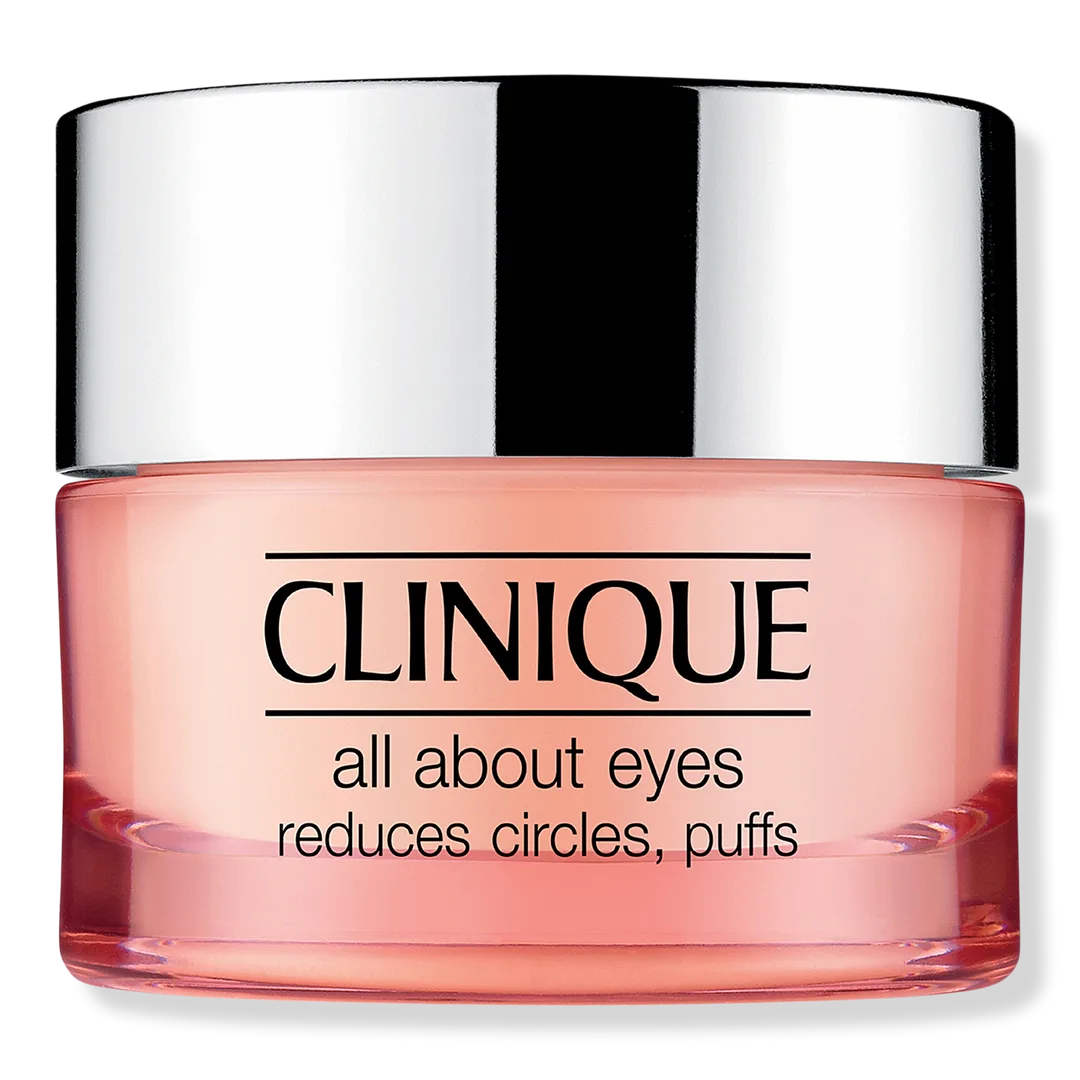
All About Eyes
Eye Cream Gateway Product
 Verified reviewer
Pros & cons.
- +Silicone-first vehicle specifically designed for the thin periorbital skin rather than adapted from a face cream
- +Triple-mechanism approach addresses puffiness, pigmentation-based dark circles, and barrier fragility separately
- +Ophthalmologist-tested and safe for contact lens wearers with zero fragrance
- +Absorbs in seconds and layers flawlessly under concealer without pilling or creasing
- +Dual brighteners — vitamin C derivative plus mulberry root — target dark circles from multiple angles
- +Genuine barrier-repair lipids (phytosphingosine, cholesterol, linoleic acid) protect the delicate eye area
- +Twenty-five years of market validation and consistent repurchase rates
- −Thirty-nine dollars for half an ounce is a prestige premium on an otherwise sensibly formulated product
- −Jar packaging exposes antioxidants to air and light with every use — a tube would be better
- −Not rich enough for very dry under-eye skin in cold, low-humidity climates
- −Results for deep genetic dark circles are gradual and modest rather than transformative
- −Contains whey protein which is a concern for individuals with dairy sensitivities
The full review.
There is a specific kind of product loyalty that transcends trends, price sensitivity, and the constant rotation of new launches demanding attention. Clinique All About Eyes has that loyalty. Launched around 2000, it has been repurchased more consistently than almost any eye cream in department store history — a claim that’s easy to dismiss as marketing until you consider what it actually means. Millions of people, over twenty-five years, kept buying the same small jar instead of switching to the dozens of newer, flashier alternatives that appeared on shelves beside it every season.
The formula reveals why. This isn’t a facial moisturizer squeezed into a smaller container with an eye cream label. The base is cyclopentasiloxane — a volatile silicone that evaporates after depositing the active ingredients, leaving a weightless, non-occlusive film on the thinnest skin on your face. That’s a deliberate vehicle choice. The periorbital area is six to ten times thinner than the rest of facial skin, and it behaves differently — it’s more permeable, more reactive, and more prone to milia if you apply something too heavy. Starting with a silicone vehicle rather than a water-and-emollient base respects these differences.
The active strategy targets the three main under-eye concerns through three separate mechanisms. For puffiness, caffeine acts as a vasoconstrictor, reducing the blood vessel dilation that causes fluid accumulation and that swollen morning look. For dark circles caused by visible blood vessels beneath thin skin, that same caffeine reduces the vascular prominence that creates bluish-purple shadows. For dark circles caused by hyperpigmentation — the brownish discoloration common in deeper skin tones — magnesium ascorbyl phosphate and mulberry root extract work as dual tyrosinase inhibitors, slowing melanin production at the enzymatic level.
The barrier-repair component is what elevates this beyond a simple caffeine eye cream. Phytosphingosine, cholesterol, and linoleic acid form a trio of skin-identical lipids that reinforce the stratum corneum specifically in an area where barrier function matters enormously. Thin skin loses moisture faster. Compromised barriers allow irritants in more easily. And the area around the eyes is subjected to constant mechanical stress from blinking, squinting, and eye-rubbing. Building barrier resilience here reduces the chronic low-grade inflammation that accelerates fine line formation and worsens dark circles over time.
Green tea extract adds antioxidant depth — its EGCG polyphenols are among the most potent free radical scavengers identified in botanical research. Combined with tocopheryl acetate for lipid-phase antioxidant coverage, the formula provides oxidative stress defense in an area that’s particularly vulnerable due to its thinness and constant sun exposure.
The texture is a genuine strength. It absorbs in seconds, leaves no visible residue, and creates a smooth, non-greasy surface that concealer glides over without pilling, creasing, or migrating into fine lines. This matters more than most product reviews acknowledge — an eye cream that disrupts makeup application gets abandoned regardless of its ingredient quality. Clinique understood that the best formula in the world is useless if people stop using it because it ruins their concealer.
The fragrance-free, ophthalmologist-tested positioning is not just marketing compliance. The periorbital area has a higher density of mast cells than most facial skin, making it more reactive to irritants and allergens. Fragrance in eye cream is a genuinely bad idea, and Clinique’s founding commitment to fragrance-free formulation pays dividends here.
Limitations exist. Thirty-nine dollars for half an ounce is a prestige price, and while the per-use cost is reasonable given how little product each application requires, the sticker price can sting. The jar packaging is the bigger practical concern — dipping fingers into a jar introduces bacteria and exposes the antioxidants to air and light with every use. A pump or tube would better protect both the formula and the user. There’s also the matter of expectations: this is a maintenance product, not a transformative one. It will de-puff, gradually brighten, and protect the under-eye area, but deep-set genetic dark circles and advanced wrinkles need different interventions.
The 1.0 oz size offers better per-ounce value for committed users and is worth the upfront investment if you’ve already confirmed the formula works for your skin. Three to four months per jar at the standard size is reasonable for an eye cream used twice daily.
All About Eyes has survived a quarter-century of competition because it does several things well simultaneously — de-puffs, brightens, repairs, and sits invisibly under makeup — without doing any of them poorly. That’s harder to formulate than it sounds, and it’s why the loyalty persists.
Formula
Texture
The texture is a genuine strength. It absorbs in seconds, leaves no visible residue, and creates a smooth, non-greasy surface that concealer glides over without pilling, creasing, or migrating into fine lines. This matters more than most product reviews acknowledge — an eye cream that disrupts makeup application gets abandoned regardless of its ingredient quality. Clinique understood that the best formula in the world is useless if people stop using it because it ruins their concealer.
Scent
The fragrance-free, ophthalmologist-tested positioning is not just marketing compliance. The periorbital area has a higher density of mast cells than most facial skin, making it more reactive to irritants and allergens. Fragrance in eye cream is a genuinely bad idea, and Clinique’s founding commitment to fragrance-free formulation pays dividends here.
Packaging
The jar packaging is the bigger practical concern — dipping fingers into a jar introduces bacteria and exposes the antioxidants to air and light with every use. A pump or tube would better protect both the formula and the user.
Ingredient analysis.
Full INCI list
Cyclopentasiloxane, Water/Aqua/Eau, Isostearyl Palmitate, Polyethylene, Butylene Glycol, Polysilicone-11, Ethylene/Acrylic Acid Copolymer, Morus Bombycis (Mulberry) Root Extract, Caffeine, Phytosphingosine, Triticum Vulgare (Wheat) Bran Extract, Scutellaria Baicalensis Root Extract, Whey Protein/Lactis Protein/Proteine Du Petit-Lait, Olea Europaea (Olive) Fruit Extract, Camellia Sinensis (Green Tea) Leaf Extract, Cholesterol, Linoleic Acid, Tocopheryl Acetate, Magnesium Ascorbyl Phosphate, Pyridoxine Dipalmitate, Sucrose, Glycerin, Dimethicone, Glyceryl Laurate, PEG/PPG-18/18 Dimethicone, Petrolatum, Cetyl PEG/PPG-10/1 Dimethicone, Propylene Carbonate, Sodium Chloride, Quaternium-90 Bentonite, Disodium EDTA, Phenoxyethanol, Iron Oxides (CI 77491, CI 77492, CI 77499)
Skin match.
The science.
The Science
The caffeine mechanism in this formula is well-characterized. As a methylxanthine, caffeine inhibits phosphodiesterase and promotes vasoconstriction by blocking adenosine receptors in vascular smooth muscle. When applied to thin periorbital skin where blood vessels sit near the surface, it reduces the vascular dilation causing puffiness and the blood pooling that creates bluish-purple dark circles. Research shows topical caffeine penetrates human skin effectively; in vitro permeation studies show significant dermal absorption within hours of application.
The brightening approach targets melanin-mediated dark circles through tyrosinase inhibition. Magnesium ascorbyl phosphate is a stable, phosphorylated vitamin C derivative that inhibits melanogenesis at the enzymatic level and provides antioxidant protection. Mulberry root extract contains compounds with tyrosinase inhibitory activity comparable to or exceeding kojic acid in some comparative studies, but with lower irritation risk.
The barrier-repair trio of phytosphingosine, cholesterol, and linoleic acid mirrors the lipid composition of healthy stratum corneum. Phytosphingosine acts as a precursor to ceramides and has anti-inflammatory and antimicrobial properties. Research on physiologic lipid replacement therapy shows that applying skin-identical lipids in appropriate ratios accelerates barrier recovery and reduces transepidermal water loss — which matters for periorbital skin where the thin tissue compromises barrier function.
Dermatologist Perspective
Dermatologists consistently rank All About Eyes among the most recommendable prestige eye creams because it combines targeted actives with minimal sensitization risk. Board-certified dermatologists note that the caffeine-plus-brightener approach addresses the two most common causes of dark circles — vascular pooling and hyperpigmentation — whereas many eye creams treat them as a single issue. The ophthalmologist testing provides additional reassurance for dermatologists recommending this to patients with contact lens sensitivity or a history of periorbital dermatitis. Dermatologists typically advise applying with the ring finger to minimize mechanical stress on the delicate periorbital tissue.
Where it fits in your routine.
Dot a rice-grain-sized amount around the orbital bone using your ring finger. Start at the inner corner below the brow and move to the outer corner beneath the eye. Pat gently until absorbed. Do not tug or drag. Apply morning and evening after cleansing and toning, before moisturizer. In the morning, wait thirty seconds for absorption before applying concealer or makeup.
At thirty-nine dollars for 0.5 oz, the sticker price places this firmly in prestige territory. However, eye cream requires tiny amounts per application — a rice-grain-sized dot per eye — so a jar lasts three to four months of twice-daily use, making the per-use cost under fifty cents. The 1.0 oz size at around fifty-four dollars offers better per-ounce value for committed users. For a brand with Clinique's legacy of dermatologist-guided, allergy-tested formulations and a formula that includes genuine targeted actives rather than just basic hydration, the pricing is defensible if not exactly generous.
This fragrance-free, lightweight formula works under makeup for under-eye puffiness, dark circles, or early fine lines. It suits contact lens wearers and sensitive eye areas because it is ophthalmologist-tested. It is a strong choice for eye cream beginners entering the category for the first time.
This product maintains skin rather than corrects deep-set genetic dark circles or advanced wrinkles. The prestige pricing may not suit budget-conscious shoppers. Users with very dry under-eye skin in harsh climates may need a thicker formula.
Product details.
Fragrance-free with no discernible scent whatsoever. ***
Small green glass jar with screw-top lid. Iconic Clinique design. The jar format is less hygienic than a tube or pump but has remained unchanged for decades as part of the brand's recognizable aesthetic. A 1.0 oz size is also available. ***
The silicone base makes skin around the eyes feel smoother and lightly hydrated on first application. It causes no tingling, stinging, or irritation. De-puffing effects are subtle after one use and increase with daily use. No adjustment period is needed.
3-4 months with twice-daily use (0.5 oz size) ***
12 months ***
All Year ***
The backstory.
Launched around 2000, All About Eyes quickly became one of Clinique's most iconic products and one of the best-selling eye creams in department store history. It was developed as an ophthalmologist-tested formula specifically for the periorbital area — skin that is six to ten times thinner than the rest of the face and requires different formulation considerations. Its longevity on the market reflects both genuine efficacy and the kind of repeat-purchase loyalty that only comes from products that reliably deliver.
About Clinique
Legacy Brand (20+ years)Clinique was founded in 1968 as the first prestige cosmetics brand to be allergy-tested and fragrance-free, developed in partnership with dermatologist Norman Orentreich and Vogue editor Carol Phillips. A subsidiary of Estée Lauder Companies, Clinique pioneered dermatologist-guided skincare with its original Three-Step System and remains one of the most recognized prestige skincare brands worldwide.
Common myths.
Eye cream is just moisturizer in a smaller, more expensive jar
This formula uses a cyclopentasiloxane-first vehicle instead of a water-first base to suit the thin, delicate skin around the eyes. The ingredient ratios, delivery system, and ophthalmologist testing make it different from a downsized facial moisturizer.
Caffeine in eye cream only provides temporary de-puffing
Single-application caffeine effects are temporary. Consistent twice-daily use reduces chronic inflammation and fluid retention that cause persistent under-eye puffiness. This effect builds over weeks of regular use.
FAQ.
Is Clinique All About Eyes good for dark circles?
Yes — this formula treats dark circles two ways: caffeine constricts dilated blood vessels that cause bluish-purple circles from vascular pooling, while magnesium ascorbyl phosphate and mulberry root extract target brownish circles from hyperpigmentation. Results take 4-6 weeks of consistent use.
Can I use Clinique All About Eyes with contact lenses?
Yes — this product is ophthalmologist-tested and safe for contact lens wearers. The fragrance-free, gentle formula reduces eye irritation risk. Apply around the orbital bone instead of directly on the lids.
Is Clinique All About Eyes worth the price?
At thirty-nine dollars for half an ounce, the per-use cost stays low because eye cream uses small amounts — one jar lasts three to four months. The formula uses targeted actives instead of just basic moisturizing ingredients, and the 25-year track record builds confidence. A larger 1.0 oz size has better per-ounce value.
Can I use Clinique All About Eyes under makeup?
Yes — the lightweight silicone-based texture absorbs fast and creates a smooth canvas for concealer application. It does not pill, migrate, or cause concealer to crease. This is why many makeup artists recommend it as a prep step.
Is Clinique All About Eyes safe during pregnancy?
Yes — this formula lacks retinoids, salicylic acid, or other pregnancy-restricted ingredients. The caffeine is topical and at a low concentration, so it does not pose systemic absorption concerns. It is one of the more pregnancy-compatible eye cream options from prestige brands.
How long does it take for Clinique All About Eyes to work?
The silicone base provides immediate smoothing from the first use. De-puffing effects build over one to two weeks of consistent application. Brightening ingredients improve dark circles in four to six weeks. Fine line softening shows at two to three weeks.
Community
What the community says.
"Lightweight texture that layers beautifully under concealer without creasing"
"Noticeable reduction in morning puffiness with consistent use"
"Fragrance-free and gentle enough for the most sensitive eye area"
"Absorbs quickly without migrating into eyes or causing irritation"
"Visible improvement in dark circles over several weeks"
"Ophthalmologist-tested provides confidence for contact lens wearers"
"Thirty-nine dollars for half an ounce is steep for the amount of product"
"Not rich enough for very dry under-eye skin in winter"
"Results are gradual rather than dramatic for deep dark circles"
"Silicone-heavy base may cause milia in some users over time"
"Contains whey protein which is a concern for dairy-allergic individuals"
People also looked at.