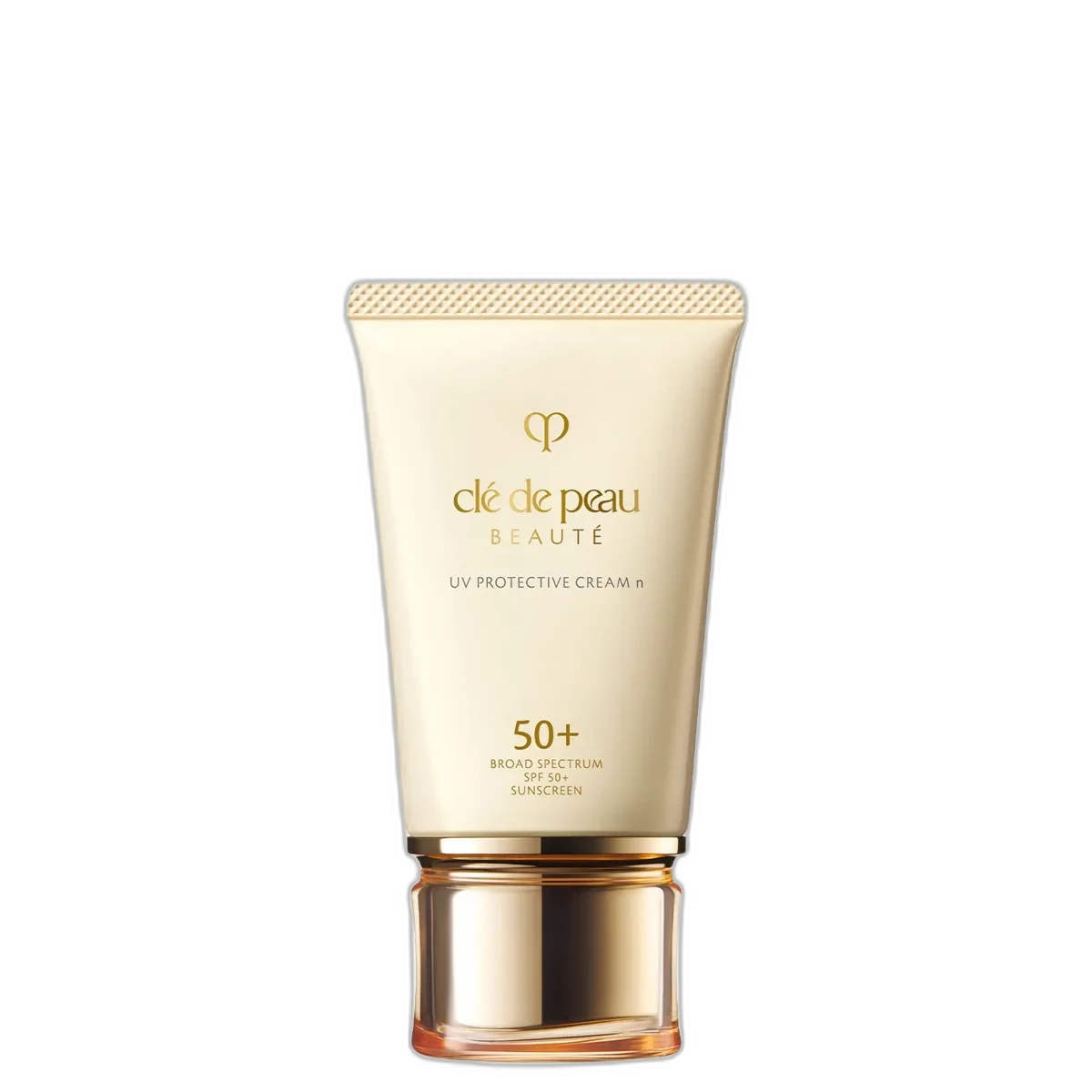
UV Protective Cream SPF 50+
Luxury Skincare Sunscreen
 Verified reviewer
Pros & cons.
- +Texture is genuinely indistinguishable from a luxury moisturizer with none of the typical sunscreen drawbacks
- +No white cast confirmed by 90% of clinical test participants across diverse skin tones
- +Stable vitamin C derivative provides antioxidant defense beyond passive UV filtration
- +Luminous dewy finish works beautifully both under makeup and worn alone
- +Fragrance-free formula is a welcome departure from most Clé de Peau products
- +Japanese botanical complex adds meaningful antioxidant and anti-inflammatory support
- +10-hour hydration claim holds up in real-world daily use
- −At $150 for 1.8 oz the cost per application is exceptionally high for a sunscreen
- −UV filter system uses the same chemical filters available in far cheaper sunscreens
- −Contains alcohol denat which can compromise sensitive or barrier-damaged skin
- −Tube empties quickly when applying the dermatologist-recommended amount
- −Luminous finish may be too dewy for oily skin types preferring matte protection
The full review.
People skip sunscreen for a reason. It is rarely about UV damage ignorance or skin health indifference. Most sunscreens feel bad. They are sticky, chalky, greasy, pill under makeup, sting eyes, or leave a white cast like flour. The daily sunscreen struggle remains a major unsolved skincare problem.
Clé de Peau’s UV Protective Cream assumes the problem is formulation, not behavior. If a sunscreen feels like a luxury moisturizer, people use it. If it looks beautiful on the skin, they enjoy it. If it includes skincare ingredients with visible benefits beyond sun protection, they return. At one hundred and fifty dollars a tube, they must.
The texture earns attention first. This does not feel like sunscreen. The cream is thick and velvety, spreading across the face as easily as a high-end moisturizer. It has no drag, no pilling, and no uncomfortable film. It absorbs into a luminous, dewy finish that looks like healthy skin rather than product — a quality Japanese sunscreen formulation has perfected for decades while much of the Western market argued about SPF numbers.
The UV filter system is entirely chemical — avobenzone at 2.3% for UVA, plus homosalate at 10%, octisalate at 5%, and octocrylene at 5% for UVB coverage. This filter combination is not groundbreaking; these are standard FDA-approved ingredients found in twenty-dollar sunscreens. But the concentration ratios and the elegant vehicle system ensure photostability (octocrylene stabilizes the avobenzone) and cosmetic elegance that most affordable formulations lack.
The skincare layer built on top of the UV protection distinguishes this from price-tier competition. 2-O-Ethyl Ascorbic Acid provides a stable vitamin C derivative that delivers antioxidant activity during wear. This is not a trivial addition — UV radiation generates free radicals that even SPF 50+ cannot entirely prevent, and the vitamin C mops up what the filters miss. Trehalose protects skin cells from dehydration stress, maintaining moisture beneath the sunscreen film. Polyquaternium-51 (Lipidure) supports the skin barrier with biomimetic hydration. Hydrolyzed silk adds a light-diffusing quality for the luminous finish.
The Japanese botanical complex is thorough — ginseng root, ginkgo leaf, baicalensis root, angelica root, hawthorn flower, perilla leaf. These provide an antioxidant and anti-inflammatory supporting cast for the formula’s environmental defense strategy. Whether botanical extracts at these concentrations deliver measurable skin benefits is debatable, but they contribute to the formulation sophistication that justifies the luxury positioning.
Notably, this sunscreen is fragrance-free — a departure from many Clé de Peau products that include fragrance and listed allergens. For a product applied to the entire face every day, this matters for those with sensitivities.
The formula includes alcohol denat to act as a solubilizer and quick-dry agent. It helps the cream absorb rapidly and contributes to the non-sticky finish, but it can dry those with already-compromised barriers. The trehalose and Lipidure compensate, and most users do not report drying issues.
Wear performance is excellent. The cream claims 10-hour moisturizing, and daily users report skin feels hydrated all day rather than the tight, parched sensation many sunscreens cause by afternoon. The luminous finish holds under makeup and looks attractive alone — a crucial quality for people who use sunscreen as their only daytime face product.
The price remains the main issue. One hundred and fifty dollars buys approximately six to eight weeks of daily use at proper application amounts. If you reapply at midday — as dermatologists recommend for extended sun exposure — that timeline shrinks. On a per-application basis, this is an expensive sunscreen.
The counterargument: if this cream’s texture and skincare benefits ensure you apply sunscreen properly every day — the full recommended amount, to every exposed area, without skipping because you hate the feel — then the investment may deliver more skin protection than a cheaper product sitting unused in a cabinet. The most effective sunscreen, as dermatologists repeat, is the one you actually wear.
Clé de Peau’s UV Protective Cream is not the best value in sun protection. It is one of the best experiences in sun protection — a product that makes the daily UV defense ritual feel like a luxury skincare treatment rather than an obligation. For those who can absorb the cost, it is one of the rare sunscreens that earns genuine loyalty.
Ingredient analysis.
Full INCI list
Active Ingredients: Avobenzone 2.3%, Homosalate 10.0%, Octisalate 5.0%, Octocrylene 5.0%. Inactive Ingredients: Water, Butylene Glycol, Glycerin, Silica, Glyceryl Diisostearate, Alcohol Denat., Caprylyl Methicone, Behenyl Alcohol, C30-45 Alkyl Methicone, Dipropylene Glycol, Dimethicone, Ammonium Acryloyldimethyltaurate/Beheneth-25 Methacrylate Crosspolymer, Xanthan Gum, Trehalose, Tocopheryl Acetate, 2-O-Ethyl Ascorbic Acid, Scutellaria Baicalensis Root Extract, Glycine, PEG/PPG-14/7 Dimethyl Ether, Thymus Serpyllum Extract, Garcinia Mangostana Bark Extract, Panax Ginseng Root Extract, Fagus Sylvatica Bud Extract, Aminoethanesulfinic Acid, Bupleurum Falcatum Root Extract, Angelica Acutiloba Root Extract, Hydrolyzed Conchiolin Protein, Hydrolyzed Silk, Perilla Ocymoides Leaf Extract, Polyquaternium-51, Crataegus Monogyna Flower Extract, Saxifraga Sarmentosa Extract, Ginkgo Biloba Leaf Extract, Mentha Piperita (Peppermint) Leaf Extract, Beheneth-20, C30-45 Olefin, Stearyl Alcohol, Disodium EDTA, Carbomer, Potassium Hydroxide
Skin match.
The science.
The Science
The UV filter system uses four chemical absorbers for broad-spectrum SPF 50+ protection. Avobenzone (2.3%) is the main UVA filter, absorbing in the 310-400nm range. Octocrylene (5%) enhances its photostability by acting as a triplet-state quencher to prevent avobenzone degradation. Homosalate (10%) and octisalate (5%) absorb UVB in the 290-315nm range.
2-O-Ethyl Ascorbic Acid is a stable, water-soluble vitamin C derivative with antioxidant activity in skin. Research shows topical antioxidants applied under sunscreen add photoprotection by neutralizing reactive oxygen species that UV radiation generates through sunscreen film. A study in the Journal of the American Academy of Dermatology shows combining antioxidants with sunscreen provides superior photoprotection compared to sunscreen alone.
Polyquaternium-51 (Lipidure), developed by NOF Corporation in Japan, is a phospholipid polymer that mimics the phosphatidylcholine structure of cell membranes. Research in the Journal of Biomedical Materials Research shows Lipidure retains moisture about twice as effectively as hyaluronic acid at equivalent concentrations, providing barrier-supporting hydration beneath the sunscreen film.
Scutellaria baicalensis root extract contains flavonoid constituents (specifically baicalein and baicalin) with antioxidant and anti-inflammatory properties relevant to UV-induced skin damage.
Dermatologist Perspective
Board-certified dermatologists note that SPF 50+ provides excellent daily protection when applied in adequate amounts. The chemical filter combination in this formula — avobenzone stabilized by octocrylene — has well-validated broad-spectrum coverage. Dermatologists value sunscreens with elegant textures that improve compliance, as the gap between recommended and actual sunscreen use remains significant. Adding a vitamin C derivative aligns with evidence that antioxidant-enriched sunscreens provide better photoprotection. Dermatologists would note that while the formula is impressive, the UV protection itself — the most clinically important aspect — is functionally equivalent to well-formulated drugstore alternatives.
Where it fits in your routine.
Apply a generous amount as your final morning skincare step. Use a nickel-sized amount for the face and more for the neck. Press the formula evenly across all exposed areas. Let it set for 1-2 minutes before applying makeup. Reapply every two hours during extended outdoor sun exposure. One morning application provides adequate protection for daily indoor use with incidental sun exposure.
At $150 for 1.8 oz, this is one of the most expensive facial sunscreens. One tube lasts about 6-8 weeks with daily use, costing roughly $20-25 per month — similar to some prescription skincare. The UV protection works the same as $15 drugstore sunscreens using the same filters. The premium price pays for the vitamin C derivative, Lipidure, trehalose, Japanese botanical complex, and the thin, elegant texture. If you value the skincare-sunscreen hybrid concept and use SPF more often because of the luxury texture, the investment makes sense. If you only care about UV protection, the value is hard to defend.
This sunscreen suits luxury skincare enthusiasts who want daily SPF to feel and work like a premium moisturizer. It helps users who struggle with sunscreen compliance due to product texture. Normal to dry skin types get a luminous, hydrated finish. It works as a final skincare step for those who wear minimal makeup and want a stand-alone finish.
Budget-conscious shoppers get equivalent SPF 50+ protection for much less. Oily skin types wanting matte finishes should look elsewhere. Those with very sensitive skin or compromised barriers should note the alcohol denat content. If you use sunscreen only for UV protection and not for the skincare experience, the premium is not justified.
Product details.
Minimal — no added fragrance, with only a faint product scent
Clé de Peau uses a signature gold-accented squeeze tube. This design dispenses precise amounts. Finish dewyglowynon-greasy What to Expect on First Use The cream has a skincare-like texture. It spreads easily like a moisturizer, not a typical sunscreen. The finish is luminous and non-greasy; skin looks healthy and radiant. It leaves no white cast. The difference from conventional sunscreens shows during the first use. How Long It Lasts 6-8 weeks with daily face and neck application at proper SPF amounts Period After Opening 12 months Best Season All Year Background
The backstory.
Clé de Peau developed this sunscreen from the belief that UV protection should not be a compromise — that the product you apply every morning for sun defense should also be the most elegant, skin-beneficial product in your routine. Drawing on Shiseido's decades of sunscreen technology research and Clé de Peau's skincare formulation expertise, the UV Protective Cream bridges the gap between sunscreen and skincare treatment.
About Clé de Peau Beauté
Legacy Brand (20+ years)Clé de Peau Beauté launched in 1982 as Shiseido's prestige skincare division. Shiseido is one of Japan's oldest and most scientifically advanced cosmetic companies. The brand develops formulations at Shiseido's Skin Beauty Innovation Research Center using over four decades of skin-cell science research.
Common myths.
Luxury sunscreens offer better UV protection than drugstore options
SPF 50+ is SPF 50+ at any price. This cream uses homosalate, octisalate, octocrylene, and avobenzone, the same chemical filters found in drugstore sunscreens. The luxury price adds skincare-grade ingredients, a better texture, and a finish that makes daily application enjoyable.
Chemical sunscreens work less effectively than mineral sunscreens
Chemical filters in this formula absorb UV radiation effectively. They reach high SPF ratings with more elegant textures than mineral-only formulations. The avobenzone provides robust UVA protection, and the UVB filters ensure broad-spectrum coverage.
FAQ.
Is Clé de Peau UV Protective Cream SPF 50+ worth $150?
SPF 50+ from chemical filters is available at any price. The $150 price tag buys a skincare-grade formula with vitamin C derivative, Lipidure, trehalose, and Japanese botanicals that treat the skin while protecting it. It also has a smooth texture for easy daily reapplication. Whether this justifies the premium depends on your budget and how much you value the skincare extras.
Does Clé de Peau sunscreen leave a white cast?
No — this is an all-chemical filter sunscreen (no zinc oxide or titanium dioxide as UV actives). 90% of clinical test participants saw no visible white cast. The luminous finish works on all skin tones without the chalky residue mineral sunscreens leave.
Can I skip moisturizer when using this sunscreen?
For normal skin, the thick texture with trehalose, Lipidure, and glycerin hydrates enough to act as both moisturizer and sunscreen. Dry skin needs a hydrating serum underneath. Oily skin types may prefer a lighter moisturizer, as this cream feels heavy alone.
How often should I reapply Clé de Peau UV Protective Cream?
Like all sunscreens, reapply this every two hours during extended sun exposure, or right after swimming or heavy sweating. For indoor days with incidental sun exposure, the initial morning application provides adequate protection for most people. Note that at $150 per tube, frequent reapplication increases the ongoing cost.
Is Clé de Peau UV Protective Cream fragrance-free?
Yes — unlike many products in the Clé de Peau range, this sunscreen lacks fragrance or parfum in its ingredients. The ingredients themselves produce only a faint scent. This makes it a better choice for those with fragrance sensitivities than many other CdP products.
What the community says.
"Feels like a skincare cream rather than a sunscreen"
"No white cast with a beautiful luminous finish"
"Exceptional texture that layers beautifully under makeup"
"10-hour moisturizing claim feels accurate in practice"
"$150 for a sunscreen that requires reapplication is hard to justify"
"Contains alcohol denat which can dry sensitive skin"
"Luminous finish may be too dewy for oily skin types"
"Tube empties quickly with proper application amounts"
People also looked at.