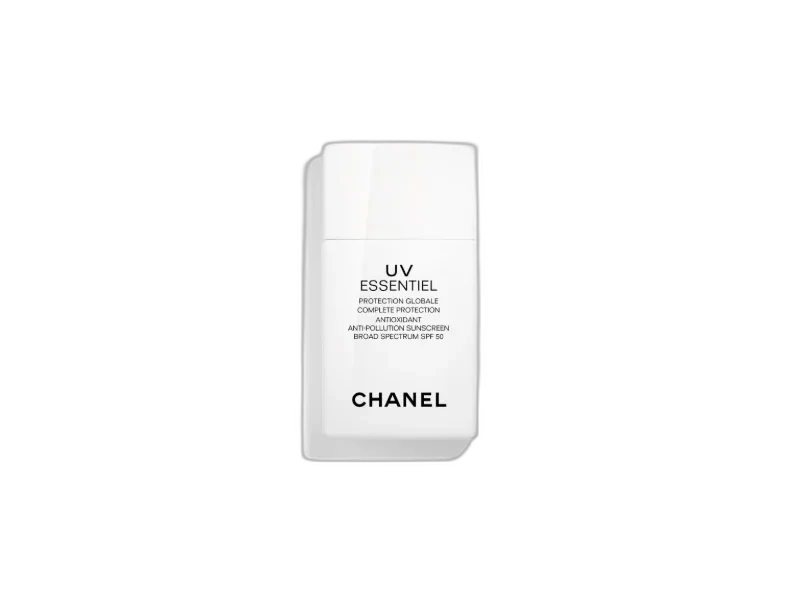
UV Essentiel Complete Protection SPF 50
Luxury UV Shield
 Verified reviewer
Pros & cons.
- +Exceptional UV filter trio (Tinosorb M, Tinosorb S, DHHB) provides photostable broad-spectrum protection
- +Ectoin adds cellular-level protection beyond standard UV filtering
- +Weightless, invisible texture with zero white cast on any skin tone
- +Elegant finish that sits perfectly under makeup without pilling
- +Licorice root extract provides anti-inflammatory and brightening support
- +Absorbs within seconds for a comfortable, non-greasy daily wear
- −Alcohol as the third ingredient can disrupt the skin barrier with daily use
- −Only 1 oz — far too small for responsible daily sunscreen application at this price
- −Contains octinoxate, controversial for reef safety and potential endocrine disruption
- −Added fragrance increases photosensitivity risk in a sun protection product
- −Not suitable for sensitive, rosacea-prone, or barrier-compromised skin
- −Pregnancy caution due to octinoxate content
The full review.
There is an irony at the heart of Chanel’s UV Essentiel. The UV filter system inside this small, elegant tube is genuinely sophisticated — the kind of multi-filter combination that sunscreen enthusiasts actively seek out. Tinosorb M, Tinosorb S, and DHHB form a photostable trio that covers the full UVA and UVB spectrum, including the deep UVA1 range (340-400nm) that many simpler sunscreens miss entirely. These are not legacy filters coasting on decades-old approvals; they represent the current gold standard in photoprotection technology. And then Chanel put alcohol as the third ingredient and added fragrance, undermining much of what makes the UV system appealing.
The texture, it must be said, is excellent. UV Essentiel applies like a lightweight lotion that vanishes into the skin within seconds, leaving behind no white cast, no greasiness, and no tackiness. The finish is natural — not matte enough to look flat, not dewy enough to look shiny. Under makeup, it creates a smooth, even base that does not pill or interfere with foundation. This is the kind of sunscreen experience that converts people who hate wearing sunscreen into people who tolerate it. And that conversion has value, because a sunscreen you will actually use is worth more than a perfect formula you leave in the drawer.
The alcohol serves the texture. Denatured alcohol, sitting third on the INCI list, is the primary reason this sunscreen feels so weightless and dries so quickly. It is also the primary reason dermatologists specializing in sensitive or barrier-compromised skin would hesitate to recommend it. Alcohol denat disrupts the stratum corneum’s lipid structure, increases transepidermal water loss, and can provoke inflammation — particularly ironic in a product designed to protect skin from UV-induced damage. For a daily-use product applied to the face 365 days a year, this cumulative exposure deserves consideration.
The supporting ingredients show genuine thoughtfulness. Ectoin — a natural extremolyte produced by bacteria in extreme environments — provides cellular protection against UV-induced stress, essentially reinforcing the sun protection at a biological level beyond what the UV filters alone deliver. Licorice root extract adds anti-inflammatory and mild brightening activity. Jojoba esters contribute emollience. These are not throwaway additions; they reflect a formulation team that understands photoprotection goes beyond UV filtering.
Octinoxate, the second ingredient, will concern some users. While it is an effective UVB absorber and helps achieve the high SPF rating, it has been banned in Hawaii and several other jurisdictions due to potential harm to coral reefs. It is also a known photosensitizer for some individuals and has been flagged for potential endocrine-disrupting activity in animal studies, which is why many dermatologists advise pregnant individuals to avoid it. In a formula that otherwise uses cutting-edge, photostable filters, the inclusion of octinoxate feels like an older generation’s compromise.
The size is the practical elephant in the room. One ounce of sunscreen is simply not enough for generous, responsible daily use. The recommended application for the face alone is approximately a quarter teaspoon — which means this bottle contains roughly 24 applications. If you are reapplying during a day of outdoor activity, that number drops further. At $60, the per-use cost for adequate protection is substantial, and the small bottle may unconsciously encourage under-application — the single most common mistake in sunscreen use.
The fragrance, while subtle and pleasant in the context of a luxury product, has no place in a sunscreen from a dermatological perspective. Fragrance ingredients can increase photosensitivity and irritation risk, which is precisely what a sunscreen should prevent. Its presence here is a concession to brand identity over skin health.
What UV Essentiel does well, it does very well. The UV protection is genuinely excellent. The texture is among the most elegant in any sunscreen category. The ectoin and licorice root provide meaningful supporting benefits. For someone with resilient, non-sensitive skin who wants a sunscreen that feels invisible and sits perfectly under makeup, this delivers.
But the formulation contradictions are hard to overlook. Alcohol and fragrance in a daily-use sunscreen, octinoxate in a formula that could easily rely solely on its superior Tinosorb system, and a price-to-volume ratio that discourages the generous application sunscreens require. Chanel invested in world-class UV filters and then packaged them in a base formula that undermines their appeal for the skin types that need sun protection most — sensitive, aging, and barrier-compromised skin. It is a luxury sunscreen that functions best for people who need sun protection the least.
Ingredient analysis.
Full INCI list
Aqua (Water), Ethylhexyl Methoxycinnamate, Alcohol, Methylene Bis-Benzotriazolyl Tetramethylbutylphenol (Nano), C12-15 Alkyl Benzoate, Glycerin, Isononyl Isononanoate, Dicaprylyl Carbonate, Bis-Ethylhexyloxyphenol Methoxyphenyl Triazine, Polyglyceryl-6 Distearate, Diethylamino Hydroxybenzoyl Hexyl Benzoate, Pentylene Glycol, Dimethicone, Steareth-21, Propanediol, Faex (Yeast Extract), Kalanchoe Pinnata Leaf Extract, Glycyrrhiza Glabra (Licorice) Root Extract, Decyl Glucoside, Ammonium Acryloyldimethyltaurate/VP Copolymer, Jojoba Esters, Dimethicone/Vinyl Dimethicone Crosspolymer, Phenoxyethanol, Parfum (Fragrance), Butylene Glycol, Caprylyl Glycol, Xanthan Gum, Cetyl Alcohol, Polyglyceryl-3 Beeswax, Ectoin, Propylene Glycol, Sodium Citrate, Citric Acid, BHT, 1,2-Hexanediol, Maltodextrin
Skin match.
The science.
The Science
The UV filter system in Chanel UV Essentiel uses a best-in-class approach to photoprotection. Methylene bis-benzotriazolyl tetramethylbutylphenol (Tinosorb M) is a broadband UV filter that absorbs, reflects, and scatters UVA and UVB radiation. Its nano-form particulate nature provides both physical and chemical protection, a property documented in photoprotection research.
Bis-ethylhexyloxyphenol methoxyphenyl triazine (Tinosorb S) is an oil-soluble filter with exceptional photostability. It does not degrade under UV exposure, unlike older filters such as avobenzone which require stabilizers. Studies in Photochemistry and Photobiology show Tinosorb S has superior photostability compared to conventional UV filters.
Diethylamino hydroxybenzoyl hexyl benzoate (DHHB, also known as Uvinul A Plus) is a powerful UVA absorber targeting the UVA1 range (340-400nm). Research in the Journal of the American Academy of Dermatology highlights UVA1 protection's importance in preventing photoaging, as these longer wavelengths penetrate deep into the dermis and cause collagen degradation.
Ectoin, the formula's supporting active, has photoprotective properties beyond UV filtering. Research in Skin Pharmacology and Physiology shows ectoin reduced UV-induced cell damage and inflammatory mediator release in keratinocytes, adding biological protection against sun damage.
Dermatologist Perspective
Dermatologists specializing in photoprotection would appreciate this advanced UV filter combination — the Tinosorb M/S and DHHB trio is the current evidence-based gold standard for chemical sunscreen formulation. However, most board-certified dermatologists would flag three concerns: the high-concentration denatured alcohol that can compromise the skin barrier with daily use, the added fragrance that increases photosensitivity risk, and the 1 oz size that discourages adequate application. Dermatologists typically recommend sunscreens that patients apply generously and consistently — the economics of this product work against that principle.
Where it fits in your routine.
Apply a generous amount to face and neck after moisturizer as your final morning step. Use about a nickel-sized amount for the face. Let it set for 2-3 minutes before applying makeup. Reapply every 2 hours during prolonged sun exposure. Use it year-round in any weather or season.
At $60 for 1 oz, UV Essentiel is one of the most expensive daily-use sunscreens per ounce. The UV filter system is excellent, matching European pharmaceutical sunscreen brands that cost $15-25 for 1.7 oz. The price covers the Chanel brand, the elegant texture, and the luxury packaging. Because dermatologists recommend using sunscreen generously and reapplying every 2 hours during sun exposure, the per-use cost is hard for most consumers to justify.
People with resilient, non-sensitive skin who want an invisible sunscreen texture for daily wear under makeup. Users who prefer advanced European UV filters and pay a luxury premium for better wear.
People with sensitive, rosacea-prone, or barrier-compromised skin. Users seeking a reef-safe sunscreen. Pregnant individuals. Budget-conscious consumers who apply sunscreen generously and frequently. Those who want fragrance-free and alcohol-free sun protection.
Product details.
This lightweight, fluid lotion spreads easily and absorbs quickly without a white cast or greasy residue.
Light floral fragrance typical of Chanel skincare — subtle but noticeable
Sleek white tube with pump dispenser, travel-friendly 1 oz size
It applies smoothly without stickiness or white cast. The alcohol helps it absorb fast, leaving a matte-to-natural finish within minutes. It requires no adjustment period. Dry skin users may feel slight tightness from the alcohol content.
1-2 months with daily facial application
12 months
All Year
The backstory.
While most luxury brands treat sunscreen as an afterthought, Chanel developed UV Essentiel with a serious UV filter system typically found in European pharmaceutical sunscreens. The inclusion of Tinosorb filters — which are not FDA-approved for US sale as active ingredients — means this product may use a different formulation in the US market compared to the international version.
About Chanel
Legacy Brand (20+ years)Chanel launched in 1910 and started skincare in 1927. The UV Essentiel line uses European UV filters (Tinosorb M, Tinosorb S, DHHB) and proprietary botanical complexes for broad-spectrum protection in a luxury format.
Common myths.
Luxury sunscreens offer better UV protection than drugstore alternatives
UV protection depends on the filter system, concentration, and application amount—not brand or price. This sunscreen uses excellent photostable filters, but pharmaceutical sunscreen brands offer comparable protection for much less.
A small amount of luxury sunscreen works because it is more concentrated
SPF testing uses a standard application density of 2mg/cm² regardless of product price. This bottle contains only 1 oz. Applying the recommended amount for face and neck depletes this product rapidly, making adequate daily protection expensive.
FAQ.
Is Chanel UV Essentiel SPF 50 worth the price?
The UV filter combination works well — the triple Tinosorb system with DHHB provides broad, photostable UVA/UVB protection. But at $60 for 1 oz, daily use at the recommended amount makes this an expensive sunscreen habit. Alcohol and fragrance also limit its universality. European pharmacy brands offer comparable UV filter protection for less money.
Does Chanel UV Essentiel leave a white cast?
No — chemical UV filters and nano-form Tinosorb M mean this sunscreen absorbs without visible white residue. The alcohol base dries quickly to a natural, non-greasy finish that works well under makeup.
Is Chanel UV Essentiel reef-safe?
This sunscreen contains Ethylhexyl Methoxycinnamate (octinoxate), which some jurisdictions banned because it harms coral reefs. If you want reef-safe sunscreen, choose formulations without octinoxate or oxybenzone.
Can I use Chanel UV Essentiel on sensitive skin?
This sunscreen is not ideal for sensitive skin. Denatured alcohol is the third ingredient and can compromise the skin barrier. Octinoxate is a known sensitizer for some, and the added fragrance increases irritation risk. People with sensitive, rosacea-prone, or eczema-affected skin can use fragrance-free, alcohol-free mineral sunscreens instead.
Is Chanel UV Essentiel pregnancy safe?
This sunscreen contains octinoxate. Some dermatologists and health authorities recommend avoiding octinoxate during pregnancy because it may disrupt the endocrine system. Pregnant individuals typically use mineral sunscreens with zinc oxide or titanium dioxide as safer alternatives.
What the community says.
"Lightweight, non-greasy texture that absorbs quickly"
"No white cast despite high SPF protection"
"Sits well under makeup without pilling or balling"
"Elegant finish that does not look shiny or oily"
"Advanced European UV filters provide excellent protection"
"Very expensive at $60 for only 1 oz — difficult to reapply generously"
"Contains alcohol high in the formula which can be drying"
"Added fragrance is unnecessary in a sunscreen"
"Octinoxate is controversial for both skin sensitivity and environmental concerns"
"Small size makes it impractical as a daily-use sunscreen"
Featured in.
People also looked at.