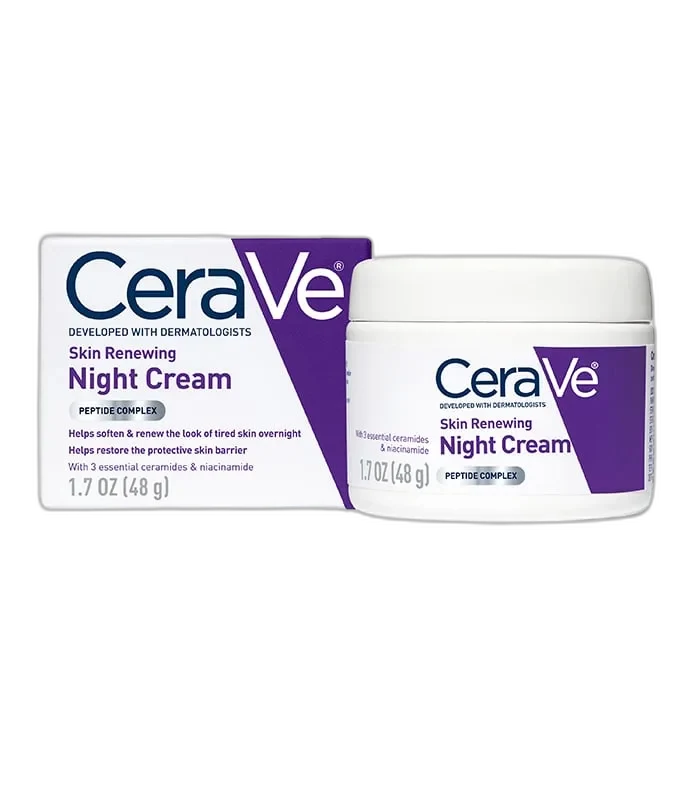
Skin Renewing Night Cream
Budget Peptide Powerhouse
 Verified reviewer
Pros & cons.
- +Two distinct signal peptides deliver genuine anti-aging benefits at a fraction of luxury peptide cream prices
- +Three essential ceramides with MVE sustained-release technology provide overnight barrier repair
- +Niacinamide amplifies ceramide production and adds independent wrinkle-reducing benefits
- +Rich, velvety texture leaves skin visibly softer and more hydrated by morning
- +Fragrance-free and non-irritating, making it safe for sensitive and reactive skin types
- +Excellent base layer over retinol serums, providing barrier support against retinoid irritation
- +Biosaccharide Gum-1 high in the formula provides sustained hydration throughout the night
- −Too thick and occlusive for oily and acne-prone skin types
- −Jar packaging without a spatula raises hygiene concerns for a nightly-use product
- −Anti-aging results are gradual and subtle — not comparable to retinoid-level wrinkle reduction
- −Small 1.7 oz jar lasts only five to seven weeks with nightly use
- −Can pill when layered over certain silicone-based serums or treatments
The full review.
Finding a twenty-two dollar product that outperforms creams ten times its price is satisfying. Luxury night creams offer elegant textures, glass jars, and scents for a ritualistic experience. But for what actually goes onto and into your skin, the CeraVe Skin Renewing Night Cream makes a difficult-to-refute argument.
The formula uses two signal peptides: Caprooyl Tetrapeptide-3, a biomimetic peptide clinically evaluated for fine line reduction, and Tripeptide-1, which contains the GHK sequence that stimulates collagen synthesis. These are not filler peptides at trace concentrations for label appeal. They are the same peptide technologies found in sixty-to-two-hundred-dollar creams, and CeraVe delivers them via MVE technology — a sustained-release system that deposits actives throughout the night instead of dumping everything on the skin surface at once.
Wrapping these peptides in CeraVe’s three-ceramide complex makes this a smart formulation. Peptides need a healthy barrier to function. If the stratum corneum is compromised — cracked, dehydrated, or lipid-depleted — peptides sit on a damaged surface instead of integrating into skin repair processes. The ceramides NP, AP, and EOP ensure a sound foundation. Niacinamide amplifies this by stimulating the skin’s own ceramide production. A 2010 study in the British Journal of Dermatology showed that a niacinamide-peptide combination produced wrinkle reduction comparable to 0.02% tretinoin — a finding relevant to this formula’s ingredient pairing.
Biosaccharide Gum-1 is third in the INCI list, a higher position than most formulations. This complex sugar provides sustained moisturization and skin soothing, creating a hydration reservoir that lasts through the night. Combined with glycerin, hyaluronic acid, and shea butter, the hydration architecture is layered: humectants draw moisture, the biosaccharide gum holds it, and the shea butter and dimethicone seal it in.
The texture is thick. This is not a light, watery night cream — it is a velvety, dense formula that feels substantial. A pea-sized amount covers the full face, and it absorbs into a smooth, satin finish that does not transfer to pillowcases. By morning, skin that felt dry and taut the night before feels plump, soft, and refreshed. Immediate hydration effects appear from the first use, while peptide and niacinamide benefits accumulate over weeks.
Calibrate anti-aging expectations appropriately. This is not a retinoid. Wrinkle reduction is real but gradual — expect subtle softening of fine lines over four to eight weeks rather than the visible skin renewal from prescription tretinoin. For those who cannot tolerate retinoids or want a gentler anti-aging approach, the peptide pathway is a legitimate alternative. For retinoid users, this cream has a different purpose: it is a top barrier-support moisturizer to layer over a retinol serum, where the ceramides and niacinamide counteract retinoid-induced dryness and sensitivity.
The product’s limitations are straightforward. The thick texture is too heavy for oily skin, and the shea butter and dimethicone base may cause congestion in acne-prone skin. The jar packaging is an annoyance — scooping cream with fingers introduces bacteria, and the lack of a spatula is a missed detail for a brand focused on clinical precision. The 1.7-ounce size is modest, lasting roughly five to seven weeks with nightly use, making the per-ounce cost less impressive than CeraVe’s usual value.
Perspective matters. A 1.7-ounce jar of luxury peptide cream costs sixty to two hundred dollars. CeraVe delivers comparable peptide technology, a superior ceramide delivery system, niacinamide, hyaluronic acid, and shea butter for twenty-two dollars. The math is clear.
The Skin Renewing Night Cream lacks luxury looks, feel, or display-worthy packaging. It delivers clinically relevant anti-aging ingredients in a barrier-supportive vehicle at a price that removes financial barriers to good nighttime skincare. For dry to normal skin types seeking peptide benefits without the luxury markup, it is a rational drugstore purchase.
Formula
### PM routineIngredient analysis.
Full INCI list
Purified Water, Glycerin, Biosaccharide Gum-1, Caprylic/Capric Triglyceride, Butyrospermum Parkii (Shea Butter), Dimethicone/Vinyl Dimethicone Crosspolymer, Glyceryl Stearate SE, Stearic Acid, Cyclopentasiloxane, Cetyl Alcohol, Dimethicone, Saccharide Isomerate, Glycine Soja (Soybean) Sterols, Ceramide NP, Ceramide AP, Ceramide EOP, Niacinamide, Hyaluronic Acid, Caprooyl Tetrapeptide-3, Tripeptide-1, Cholesterol, Phenoxyethanol, Cetearyl Alcohol, Carbomer, Behentrimonium Methosulfate, Sodium Hydroxide, Tocopherol, Allantoin, Ethylhexylglycerin, Butylene Glycol, Sodium Lauroyl Lactylate, Phytosphingosine, Dextran, Xanthan Gum
Skin match.
The science.
The Science
This night cream uses a synergy between signal peptides, niacinamide, and ceramide barrier repair to reinforce anti-aging efficacy.
Caprooyl Tetrapeptide-3, marketed as ChroNOline, is a biomimetic peptide tested in a clinical study of 27 participants. At 2.5% concentration, it shows a 16% reduction in fine lines after 28 days and a 27% reduction in wrinkle appearance after 56 days. This is manufacturer-sponsored data, not independent peer-reviewed research, but the peptide's mechanism—stimulating skin matrix proteins—matches established peptide biology. Tripeptide-1 contains the GHK sequence, a well-studied peptide motif in dermatology that promotes collagen synthesis, glycosaminoglycan production, and extracellular matrix renewal.
Niacinamide adds a complementary anti-aging pathway. A randomized controlled study in the British Journal of Dermatology (2010) found a cosmetic niacinamide-peptide regimen provided comparable wrinkle reduction to 0.02% tretinoin after eight weeks. A 2004 study in the International Journal of Cosmetic Science showed topical niacinamide significantly reduced fine lines, wrinkles, hyperpigmentation, and skin blotchiness over 12 weeks. Niacinamide also increases ceramide biosynthesis; a 2000 British Journal of Dermatology study showed a 4.1 to 5.5-fold increase, meaning it supports the barrier-repair function of the applied ceramides.
A 2017 review in the Journal of Clinical and Aesthetic Dermatology confirms that MVE ceramide-containing moisturizers provide sustained release and improve skin barrier function. Sustained release matters for a night cream because transepidermal water loss increases as the skin's barrier function weakens during sleep. Continuous ceramide delivery counteracts this nocturnal vulnerability.
References
- A randomized, controlled comparative study of the wrinkle reduction benefits of a cosmetic niacinamide/peptide/retinyl propionate product regimen vs. a prescription 0.02% tretinoin product regimen — British Journal of Dermatology (2010)
- Topical niacinamide reduces yellowing, wrinkling, red blotchiness, and hyperpigmented spots in aging facial skin — International Journal of Cosmetic Science (2004)
- Nicotinamide increases biosynthesis of ceramides as well as other stratum corneum lipids to improve the epidermal permeability barrier — British Journal of Dermatology (2000)
- Multivesicular Emulsion Ceramide-containing Moisturizers: An Evaluation of Their Role in the Management of Common Skin Disorders — Journal of Clinical and Aesthetic Dermatology (2017)
Dermatologist Perspective
Dermatologists often recommend the CeraVe Skin Renewing Night Cream as an affordable peptide-based anti-aging option for patients who cannot tolerate retinoids. Board-certified dermatologists note the ceramide-niacinamide-peptide combination addresses both structural aging and barrier deterioration, a dual approach many expensive products lack. This cream works as a protective final layer over prescription retinoids, using its occlusive ceramide base to reduce irritation and moisture loss. Dermatologists value that it provides anti-aging actives without fragrance, irritating preservatives, or unnecessary botanical extracts.
Where it fits in your routine.
Apply a pea-sized amount to clean, dry skin as your last evening step. Press it into the face and neck using upward motions. Wait one or two minutes for absorption. If you use a retinol serum, wait five minutes after applying retinol before applying this cream. Use a larger amount for very dry skin. Store in a cool, dry place. Use a small spatula to keep the jar hygienic.
At twenty-two dollars for 1.7 ounces, the Skin Renewing Night Cream offers exceptional value for a peptide night cream. Luxury peptide creams with similar or fewer active peptides usually cost sixty to two hundred dollars for this size. The formula uses two signal peptides, three ceramides with MVE technology, niacinamide, hyaluronic acid, and shea butter. A prestige brand would charge much more for these ingredients. The small jar size is the main drawback; larger packaging or a pump would increase the value.
Dry to normal skin types want an effective anti-aging night cream without luxury prices. It works for people in their late twenties and beyond seeking peptide-based wrinkle prevention, retinoid users needing a barrier-supportive night cream to layer over their treatment, and budget-conscious consumers who want high ingredient quality.
Oily and acne-prone skin types may find the thick texture too heavy and pore-clogging. Peptide benefits are real but gradual; do not expect dramatic wrinkle reduction comparable to retinoids.
Product details.
All Year Certifications Non-comedogenicFragrance-freeAllergy tested
The backstory.
CeraVe developed the Skin Renewing Night Cream to bring peptide technology to the drugstore aisle without sacrificing the barrier-repair foundation the brand is known for. Rather than chasing the retinol trend, CeraVe chose peptides as their anti-aging active — a deliberate decision that made the cream accessible to retinol-sensitive skin types and positioned it as either a standalone anti-aging moisturizer or a protective base layer for retinoid users who need barrier support.
About CeraVe
Established Brand (5–20 years)Dermatologists helped develop CeraVe in 2005. It is the number-one dermatologist-recommended skincare brand in the United States. The patented MVE delivery technology releases ceramides and other actives steadily throughout the night.
Common myths.
Peptide creams need to be expensive to work
This formula uses Caprooyl Tetrapeptide-3 and Tripeptide-1, the same peptides found in creams costing fifty to two hundred dollars. Peptide efficacy depends on peptide type, delivery system, and formulation stability, not price. CeraVe's MVE technology provides a sustained delivery advantage some luxury formulas lack.
Night creams are just thicker versions of day moisturizers
This night cream uses signal peptides and biosaccharide gum-1 for overnight skin repair. The thick texture with shea butter and dimethicone creates an occlusive environment. This minimizes transepidermal water loss during sleep, when skin naturally loses more moisture.
FAQ.
Does the CeraVe Skin Renewing Night Cream actually reduce wrinkles?
Caprooyl Tetrapeptide-3 and Tripeptide-1 provide clinical evidence for fine line reduction with consistent use over several weeks. A clinical evaluation of Caprooyl Tetrapeptide-3 shows 16% fine line reduction in 28 days and 27% after 56 days. Results are gradual and cumulative, not dramatic. The niacinamide in the formula adds wrinkle-reducing benefits supported by a 2010 British Journal of Dermatology study.
Can I use the CeraVe Night Cream with retinol?
Yes — this cream works well with retinol. The three ceramides and niacinamide repair and strengthen the barrier retinol compromises, while the thick shea butter and dimethicone base creates an occlusive seal to prevent moisture loss. Apply your retinol first, wait a few minutes to absorb, then seal with this cream as the final step.
Is the CeraVe Night Cream good for oily skin?
This formula is too thick for oily skin. The shea butter and dimethicone create a dense, occlusive texture that feels heavy and clogs pores on oily skin. CeraVe's PM Facial Moisturizing Lotion is a lighter alternative. It contains ceramides and niacinamide in a non-comedogenic, lightweight formula for oily or combination skin.
How does the CeraVe Night Cream compare to luxury peptide creams?
This cream uses the same signal peptides — Caprooyl Tetrapeptide-3 and Tripeptide-1 — found in luxury creams costing five to ten times more. Differences lie in sensorial experience and packaging, not ingredient quality. CeraVe's MVE delivery system provides sustained release that some luxury formulas lack. The trade-off is a clinical texture instead of a luxurious one and jar packaging instead of elegant glass.
Can I use the CeraVe Night Cream during the day?
You can, but the thick texture feels heavy under makeup or sunscreen for most people. The cream lacks SPF protection, so you need a separate sunscreen. CeraVe's lighter daytime moisturizers — like the Daily Moisturizing Lotion or PM Facial Moisturizing Lotion — work better for daytime. Use this thicker formula at night when its occlusive properties work best.
What age should you start using the CeraVe Night Cream?
No strict age requirement exists. The cream helps anyone with early signs of aging — fine lines, loss of firmness, or dullness — which often start in the late twenties to early thirties. The ceramide and niacinamide content makes it a good preventive option before visible aging signs appear, especially for dry skin types needing thick hydration regardless of anti-aging concerns.
What the community says.
"Skin feels exceptionally soft and hydrated by morning"
"Visibly improved skin texture and plumpness over time"
"Excellent value compared to luxury peptide night creams costing five to ten times more"
"Non-irritating and suitable for sensitive skin types"
"Fragrance-free formulation with no detectable scent"
"Absorbs overnight without leaving greasy residue on pillowcases"
"Too thick and heavy for oily or combination skin types"
"Jar packaging raises hygiene concerns with no spatula included"
"Some acne-prone users report breakouts from the occlusive formula"
"Anti-aging results are subtle and gradual rather than dramatic"
"Small 1.7 oz jar does not last long with nightly use"
"Can pill when layered over silicone-based serums"