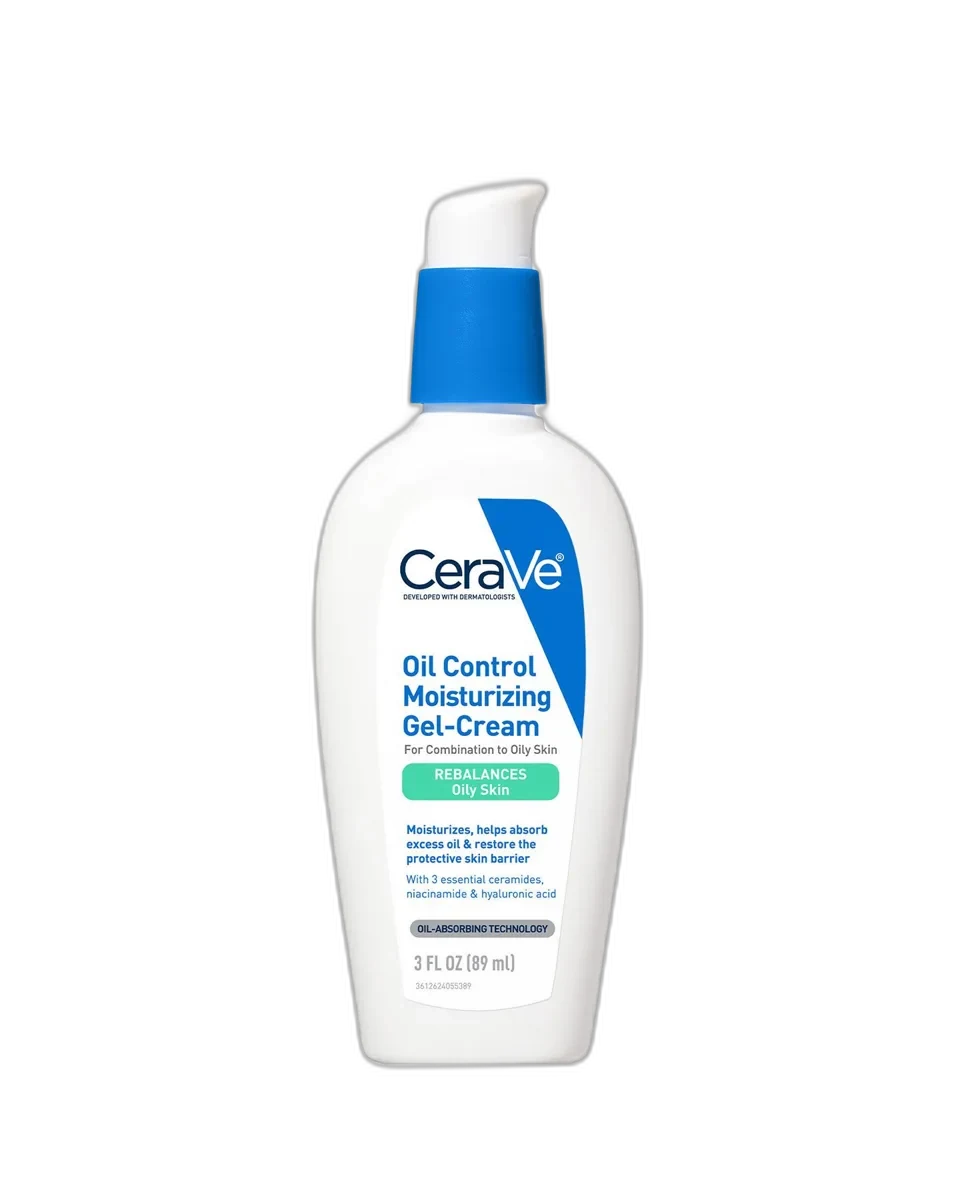
Oil Control Moisturizing Gel-Cream
Matte Without the Misery
 Verified reviewer
Pros & cons.
- +Dual-mechanism oil control combines physical absorption (silica, corn starch) with cellular regulation (niacinamide)
- +Matte finish feels genuinely comfortable — not chalky, tight, or desert-dry
- +High-concentration niacinamide (5-7%) progressively reduces baseline oil production over weeks
- +Full ceramide-MVE barrier system prevents the rebound oiliness that aggressive oil control causes
- +Lightweight gel-cream absorbs in seconds and works beautifully under makeup
- +Oil-free, fragrance-free, and paraben-free — suitable for sensitive oily skin
- +Hyaluronic acid addresses the dehydration that often lurks beneath oily skin
- −Contains isopropyl myristate — a comedogenic emollient that causes breakouts in some oily/acne-prone users
- −At $19.99 for 3 oz, the most expensive per-ounce moisturizer in CeraVe's core lineup
- −Oil control may not last a full 8 hours in hot, humid conditions or for very oily skin
- −Pump requires 10-20 presses to prime on first use — initially frustrating
- −Not moisturizing enough for drier areas on combination skin without supplementation
The full review.
Oily skin faces a paradox. It needs moisture, but most moisturizers increase shine. Skipping moisturizer dehydrates the barrier, triggering compensatory sebum production that worsens oiliness. Standard moisturizers often fail within twenty minutes as oil returns. This cycle frustrates oily-skin types.
CeraVe launched the Oil Control Moisturizing Gel-Cream in August 2024 to break this cycle. The approach is methodical. Instead of adding a mattifying agent to an existing formula, they engineered a dual-mechanism oil control system: physical absorption for immediate results and cellular sebum regulation for long-term improvement.
Silica microspheres and corn starch provide the physical layer. These two oil-absorbing particles soak up excess sebum throughout the day, providing an immediate matte finish from the first application. The gel-cream is lightweight, absorbs in seconds, and leaves a matte finish that isn’t chalky, dry, or uncomfortable. Unlike mattifying primers that feel like parchment, this matte finish feels like skin without the midday shine that requires blotting papers.
The cellular layer uses niacinamide. Listed second in the INCI at an estimated 5-7% concentration, this is one of the most niacinamide-forward moisturizers CeraVe makes. At this concentration, niacinamide brightens, soothes, and downregulates sebocyte lipid production to signal oil glands to reduce output. The effect builds over weeks of consistent use. By the four-to-eight-week mark, most users see decreased baseline oil production, requiring less blotting and powder.
The ceramide trio (NP, AP, EOP) with cholesterol and phytosphingosine uses CeraVe’s institutional intelligence. Most oil-control products ignore barrier consequences. Aggressive oil control without barrier support creates a cycle where a stripped barrier signals for more oil, leading to more aggressive control and further stripping. By including the full ceramide-MVE system, CeraVe ensures oil control doesn’t undermine structural integrity. The barrier stays healthy and calm, so oil glands don’t receive panic signals to increase production.
Sodium hyaluronate provides necessary hydration. It draws water into the skin without adding oil or heavy emollients, addressing the dehydration beneath surface oiliness. Glycerin reinforces this hydration.
Texture
The texture is a genuine gel-cream. It is water-based, spreads easily, and absorbs within fifteen seconds. It performs well under makeup. Foundation applies smoothly over the matte finish, wear time extends, and the midday oil breakthrough that usually requires a full blot-and-reapply cycle is delayed.
Common Complaints
The formulation includes isopropyl myristate. This emollient improves texture and absorption but has a high comedogenicity rating in patch-test studies. In a product for oily, acne-prone skin, this choice may cause issues for some users. CeraVe tested the complete formula as non-comedogenic, and individual ingredient patch tests don’t always predict complex formulation outcomes. However, user reviews show a subset of people reporting breakouts, and isopropyl myristate is the likely cause. If you are severely acne-prone, use a patch test.
Reality
The eight-hour oil control claim varies by environment. In temperate, climate-controlled settings, the mattifying effect holds well. In hot, humid conditions or for very oily skin, expect four to six hours of effective shine control before needing a touch-up. This is physics; no topical product indefinitely overpowers active sebaceous glands in a subtropical summer. The product extends the window between touch-ups while niacinamide works to reduce oil output at the source.
Packaging
The pump dispenser requires ten to twenty presses to prime on first use.
Price
At $19.99 for 3 ounces, this is the most expensive per-ounce moisturizer in CeraVe’s core lineup. You pay for specialized oil-control technology and high-concentration niacinamide. For a face-only product used in thin layers, 3 ounces lasts six to eight weeks with twice-daily use. The monthly cost is roughly $10-13, which is reasonable for a targeted treatment moisturizer, though it costs more than other CeraVe products with larger volumes.
Common Praise
As a 2024 launch, the Oil Control Gel-Cream is still proving itself. Early reception is strong, with a 4.5-star average across approximately 1,700 reviews. Most praise focuses on the comfortable matte finish and gradual improvement in oil control over weeks. This product serves oily and combination skin types previously underserved by CeraVe’s moisturizer lineup.
Ingredient analysis.
Full INCI list
Aqua/Water/Eau, Niacinamide, Glycerin, Cetearyl Isononanoate, C14-22 Alcohols, Isopropyl Myristate, Zea Mays Starch/Corn Starch, Ceramide NP, Ceramide AP, Ceramide EOP, Carbomer, Cetearyl Alcohol, Behentrimonium Methosulfate, Triethyl Citrate, Silica, Sodium Hydroxide, Sodium Hyaluronate, Sodium Lauroyl Lactylate, Cholesterol, Phenoxyethanol, Citric Acid, Caprylyl Glycol, Trisodium Ethylenediamine Disuccinate, Xanthan Gum, Phytosphingosine, Polyacrylate Crosspolymer-6, Benzoic Acid, C12-20 Alkyl Glucoside
Skin match.
The science.
The Science
The Oil Control Gel-Cream uses three scientific strategies to manage oily skin: physical oil absorption, sebum regulation, and barrier maintenance.
Niacinamide regulates sebum. Draelos et al. (Dermatologic Surgery, 2005) showed that topical niacinamide improves skin appearance and reduces sebaceous secretion. At the estimated 5-7% concentration in this formula, niacinamide downregulates sebocyte lipogenesis—the cellular process where oil glands produce sebum. This targets oiliness at the source instead of just absorbing surface oil, and the effect builds with consistent use. Tanno et al. (British Journal of Dermatology, 2000) also showed that niacinamide increases ceramide biosynthesis. This means the ingredient reduces unwanted oil while boosting necessary barrier lipids.
The silica and corn starch system creates an immediate mattifying layer through physical adsorption of sebum. Silica microspheres have a high surface-area-to-volume ratio to trap oil molecules, while corn starch particles absorb moisture and oil through capillary action. Together, they create an oil-absorbing reservoir that depletes gradually throughout the day as it meets sebum.
The ceramide component follows Man et al.'s foundational research (Journal of Investigative Dermatology, 1996) on barrier repair with physiological lipid mixtures. This is strategic for oily skin: research on sebum overproduction shows that barrier compromise can trigger compensatory lipogenesis. By maintaining barrier integrity during oil control, the ceramides help prevent the rebound oiliness common with aggressive mattifying products.
Sodium hyaluronate addresses dehydration, a frequent issue in oily skin management. Oily skin can be both oily (excess sebum) and dehydrated (insufficient water content); water loss often triggers increased sebum production. Hyaluronic acid's water-binding capacity fixes the hydration deficit without adding oils, helping break the dehydration-overproduction cycle.
References
- Niacinamide: A B vitamin that improves aging facial skin appearance — Dermatologic Surgery (2005)
- Nicotinamide increases biosynthesis of ceramides as well as other stratum corneum lipids to improve the epidermal permeability barrier — British Journal of Dermatology (2000)
- Optimization of physiological lipid mixtures for barrier repair — Journal of Investigative Dermatology (1996)
Dermatologist Perspective
Board-certified dermatologists view this addition to CeraVe's lineup as a solution for a common clinical challenge: providing hydration and barrier support to oily-skin patients without increasing shine. Dr. Toral Vaidya has recommended the product for its combined 48-hour hydration and 8-hour shine control claims. Dermatologists note the niacinamide-ceramide approach is scientifically sound. Addressing oil production at the cellular level while maintaining barrier health prevents the cycle of over-stripping and compensatory oiliness many patients experience with aggressive oil-control products. The gel-cream format is frequently recommended for patients who avoid moisturizer due to oiliness, as it provides barrier support in a texture oily skin types apply consistently.
Where it fits in your routine.
Cleanse your skin and apply treatment serums first, then dispense one to two pumps of the gel-cream onto your fingertips. Smooth it over your face and neck, focusing on the T-zone and oily areas. Wait 1-2 minutes for full absorption before you apply sunscreen or makeup. Use morning and evening. If you have combination skin, apply to oily zones and use a thicker moisturizer on drier areas if needed. Note: the pump requires 10-20 presses to prime on first use — this is normal.
At $19.99 for 3 ounces, this is CeraVe's most expensive core facial moisturizer per ounce. This price pays for specialized oil-absorbing technology and high-concentration niacinamide—formulation innovations absent from cheaper CeraVe options. The 3 oz tube lasts 6-8 weeks with twice-daily facial use, costing roughly $10-13 per month. A prestige brand oil-control moisturizer costs $35-60 for a similar volume. CeraVe's dermatologist-developed pedigree means the price reflects formulation investment. If your oiliness is mild, the PM Facial Moisturizing Lotion costs less per ounce and provides niacinamide without the mattifying technology.
Oily and combination skin types want oil control without losing hydration or barrier health. It works for people who avoid moisturizer due to shine, those needing a matte makeup base, and anyone whose oily skin resists simpler moisturizers. It is useful for oily-skin retinoid users who need barrier support.
Dry skin types will find this insufficient; the gel-cream texture and oil-absorbing particles leave dry skin wanting more. Those with severe cystic acne should patch-test carefully because of the isopropyl myristate. If your skin is oily but not problematically so, the lighter Ultra-Light Moisturizing Gel or the standard PM Lotion provides adequate control for less.
Product details.
Fragrance-free with no discernible scent. ***
Sleek pump bottle uses CeraVe's signature white-and-blue design. The airless pump protects the formula but needs 10-20 presses to prime on first use. The 3 oz size fits easily in travel kits.
The first pump delivers a lightweight gel-cream that spreads easily and absorbs in seconds. The matte finish shows almost immediately; skin looks and feels less shiny but not chalky or dry. Most users experience no tingling, stinging, or adjustment period. The oil-absorbing effect peaks in the first few hours after application.
6-8 weeks with twice-daily facial use ***
12 months ***
spring summer ***
The backstory.
CeraVe launched the Oil Control Moisturizing Gel-Cream in August 2024 as part of a four-product expansion targeting specific skin concerns. It was developed to address a common frustration among oily-skin users: most oil-control products either strip the barrier (causing rebound oiliness) or mattify without properly hydrating. The ceramide-niacinamide-silica combination attempts to break this cycle by controlling oil while maintaining barrier health.
About CeraVe
Established Brand (5–20 years)Dermatologists helped develop CeraVe in 2005. It is the #1 dermatologist-recommended skincare brand in the U.S. Peer-reviewed research backs its formulations, and multiple products carry the National Eczema Association Seal of Acceptance.
Common myths.
Oily skin does not need a moisturizer; moisturizer only increases oil production.
Skipping moisturizer on oily skin often increases oil production. Dehydrated skin barriers trigger more sebum production to compensate. This gel-cream uses hyaluronic acid and glycerin to hydrate oily skin and silica, corn starch, and niacinamide to control excess oil, breaking the dehydration-overproduction cycle.
Matte-finish moisturizers always feel dry and uncomfortable.
Silica and corn starch provide the matte finish, not drying alcohols or astringents. The ceramide-hyaluronic acid base hydrates skin beneath the matte finish, so skin feels comfortable and hydrated without looking shiny.
FAQ.
How long does the oil control last?
CeraVe claims 8-hour oil control. Most users report effective shine reduction for 4-8 hours, depending on skin type and climate. Very oily skin in hot, humid conditions may need a midday touch-up. The niacinamide works on long-term sebum regulation, so oil control improves over several weeks of consistent use.
Can I use this gel-cream under makeup?
Yes — the matte finish creates an excellent canvas for foundation and concealer. The lightweight texture absorbs quickly without pilling, and oil-absorbing particles extend makeup wear time. Wait 1-2 minutes for full absorption before applying primer or foundation.
Is this moisturizing enough for combination skin?
This gel-cream hydrates and controls oil in the oily T-zone of combination skin. Drier areas like the cheeks and jawline may need more hydration. Some combination skin users apply a thicker moisturizer to dry patches and this gel-cream to the T-zone, or use this in the morning and a thicker CeraVe moisturizer at night.
Why does this contain isopropyl myristate if it's for oily skin?
Isopropyl myristate is an emollient that improves the gel-cream's spreadability and absorption. Isopropyl myristate has a high comedogenicity rating alone, but the overall formula tests non-comedogenic. Some acne-prone individuals are more sensitive to Isopropyl myristate — if you breakout, try an alternative.
How is this different from the CeraVe PM Facial Moisturizing Lotion?
Both contain niacinamide and ceramides. The Oil Control Gel-Cream adds silica and corn starch to absorb oil, provides a matte finish (unlike the PM Lotion's satin finish), and has a lighter gel-cream texture. The PM Lotion works best for normal-to-dry skin; the Oil Control Gel-Cream targets oily-to-combination skin that needs shine control.
Can I use this with retinol or salicylic acid?
Yes — the ceramide-niacinamide base makes this an excellent companion to active treatments. The barrier-supportive formula buffers potential irritation from retinoids and BHAs, while the oil control keeps skin matte despite the moisturizing active-treatment layers underneath.
What the community says.
"Lightweight, fast-absorbing gel-cream that doesn't feel greasy"
"Effective shine and oil control especially in the T-zone"
"Matte finish works beautifully under makeup without pilling"
"Skin feels soft and hydrated despite the mattifying effect"
"Fragrance-free and suitable for sensitive oily skin"
"High-concentration niacinamide provides visible pore-minimizing benefits"
"Oil control doesn't always last a full day — may need midday touch-up"
"Pump dispenser requires many presses to prime on first use"
"Some users report breakouts despite non-comedogenic claims"
"Small 3 oz tube feels expensive at $19.99"
"Not moisturizing enough for drier areas on combination skin"