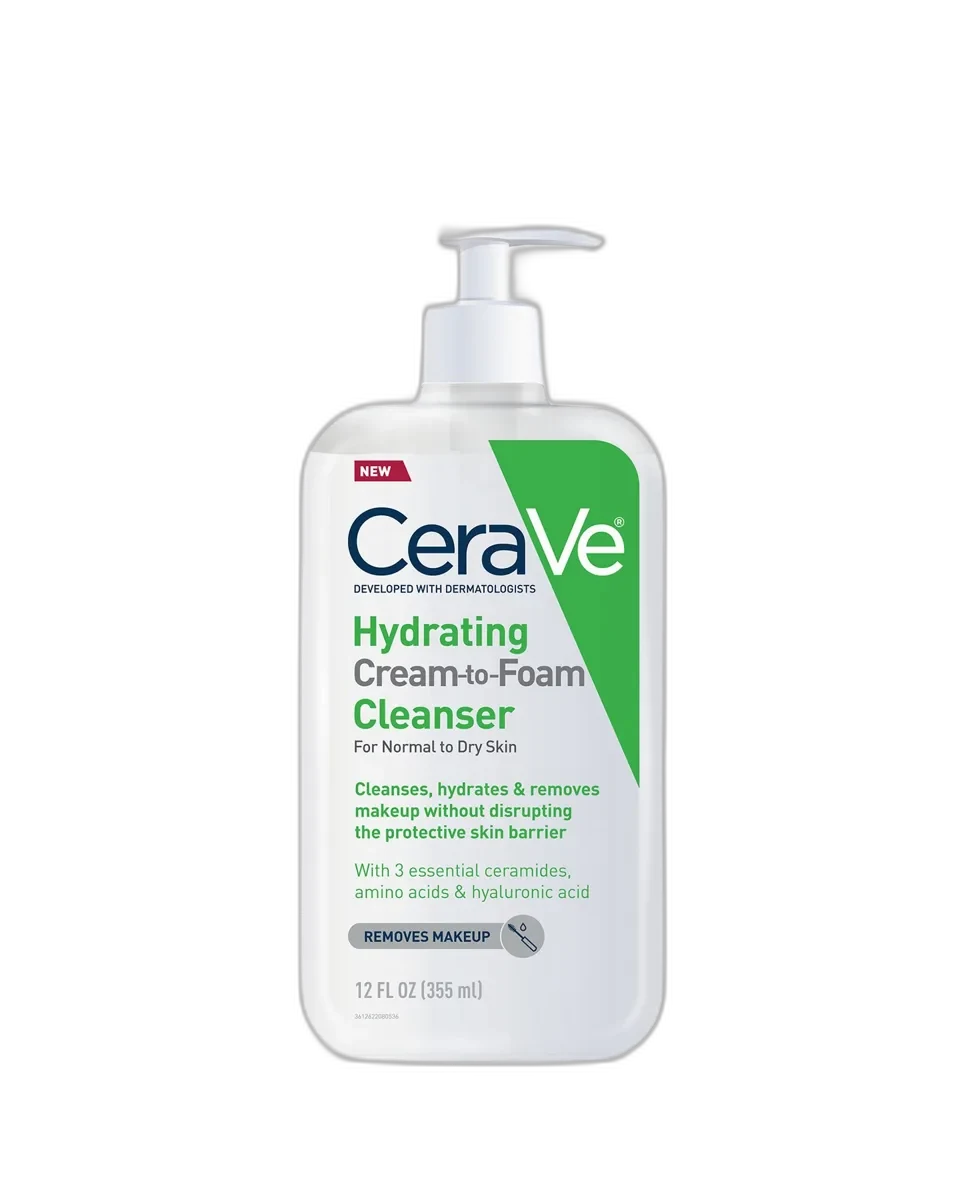
Hydrating Cream-to-Foam Cleanser
The Hybrid Cleanser
 Verified reviewer
Pros & cons.
- +Eleven amino acids replicate the skin's Natural Moisturizing Factor — the richest amino acid profile in CeraVe's cleanser range
- +Cream-to-foam transformation provides thorough cleansing without the tightness of traditional foaming cleansers
- +Removes light-to-moderate makeup and sunscreen in a single step
- +Skin-identical pH of 5.0 protects the acid mantle during cleansing
- +Sulfate-free amino acid surfactants are among the gentlest effective cleansing agents available
- +Outstanding value at $15.99 for 12 oz with multiple size and refill options
- +Three essential ceramides with MVE delivery offset surfactant-induced lipid stripping
- +Fragrance-free and well-tolerated by sensitive skin types
- −Less moisturizing than the original Hydrating Cleanser — very dry skin may feel shortchanged
- −Some acne-prone users report breakouts from the emollient-rich cream base
- −Foam consistency varies depending on water temperature and product amount
- −Contains multiple PEG compounds that ingredient-conscious consumers may prefer to avoid
- −Does not carry the National Eczema Association Seal like the original Hydrating Cleanser
The full review.
About CeraVe
The concept is simple but the execution is clever. You squeeze out a thick white cream — opaque and rich-looking, like something you’d expect from a hydrating cleanser. Add water, massage, and it transforms into a milky foam that lathers and rinses like a foaming cleanser. You get the cleansing power you need to remove a day’s worth of sunscreen, light makeup, and urban grime, but the cream base ensures your skin doesn’t pay a hydration tax for the privilege of being clean.
Reality
What makes this formula stand out within CeraVe’s own lineup is the amino acid complex. Eleven amino acids — aspartic acid, glycine, threonine, arginine, serine, valine, proline, isoleucine, alanine, phenylalanine, and histidine — are included to replicate the skin’s Natural Moisturizing Factor. This is the most amino acid-rich cleanser CeraVe makes, and the reasoning is sound: when surfactants cleanse your skin, they don’t just remove dirt and oil. They also wash away NMF components that keep the upper skin layers hydrated and flexible. By including these amino acids in the formula itself, the Cream-to-Foam replenishes what the cleansing process inevitably takes.
The ceramide trio (NP, AP, EOP) is present as expected, alongside cholesterol and phytosphingosine for complete lipid barrier support. CeraVe’s MVE technology delivers these lipids gradually, though in a rinse-off product, the contact time is necessarily brief. The real value of ceramides in a cleanser isn’t deep penetration — it’s damage mitigation. By depositing barrier lipids during cleansing, the formula helps offset the lipid stripping that surfactants inherently cause.
The surfactant system deserves attention. Sodium methyl cocoyl taurate leads the cleansing agents — an amino acid-derived surfactant that’s significantly gentler than the sodium lauryl sulfate found in many drugstore cleansers. It’s joined by coco-betaine and sodium cocoyl isethionate, both well-regarded for their mild cleansing profiles. The result is a sulfate-free cleanser that actually foams — no small feat, as many sulfate-free cleansers produce disappointing lather that makes users feel like nothing is happening.
That said, the foam can be inconsistent. Some users report a luxurious lather, while others find the transformation underwhelming on certain days. Factors like water temperature, how much product you use, and how wet your skin is all affect the cream-to-foam conversion. This isn’t a dealbreaker, but it’s worth knowing — your first pump might not always produce the same experience as your hundredth.
The pH of 5.0 is exactly where a cleanser should be. It matches the skin’s natural acid mantle, meaning this formula cleanses without forcing your skin to spend hours recovering its pH equilibrium — a process that temporarily compromises barrier function and increases sensitivity to everything you apply afterward.
Sodium hyaluronate and glycerin (listed second) provide the hydration backbone. In a cleanser, these humectants don’t have time to work as deeply as they would in a leave-on product, but they serve an important immediate function: preventing the tight, dry, uncomfortable sensation that many foaming cleansers leave behind. The difference is noticeable. After rinsing, skin feels clean and comfortable — not dewy or moisturized per se, but neutral in a way that means you’re not racing for your moisturizer.
For makeup removal, the Cream-to-Foam genuinely works as a one-step cleanser for everyday wear. Foundation, tinted sunscreen, light mascara — the surfactant system handles these without needing a pre-cleanse. Heavy waterproof makeup is another story; for that, a dedicated first-step oil or balm cleanser is still needed. But for the majority of daily wear, eliminating the double-cleanse step is a real time-saver.
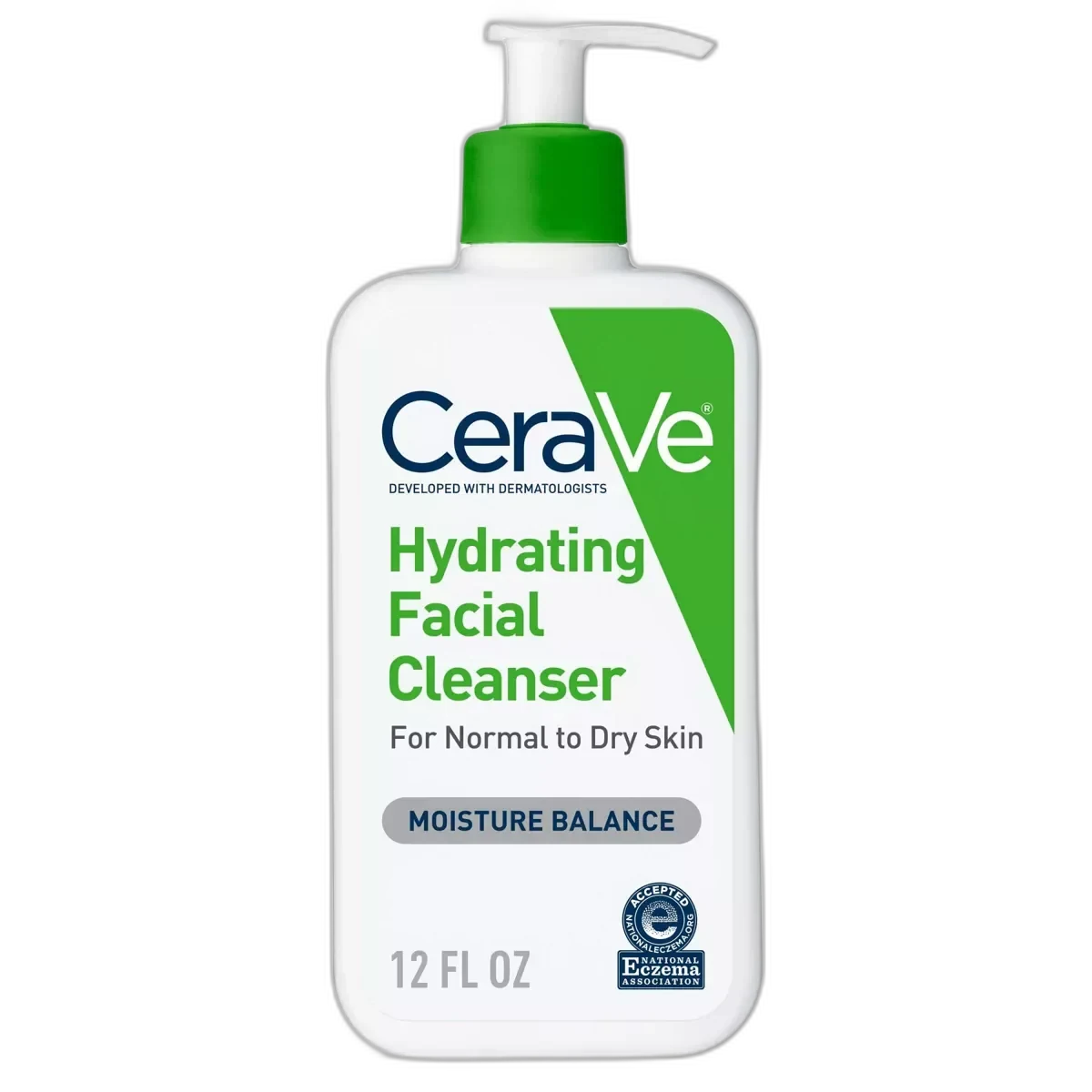
The honest limitations: this is not as moisturizing as the original Hydrating Facial Cleanser. If your skin is very dry — genuinely parched, flaking, or eczema-prone — the Hydrating Cleanser remains the better choice. The Cream-to-Foam trades some of that extreme gentleness for cleansing efficacy, and that trade-off can leave the driest skin types wanting more.
Some acne-prone users report breakouts, particularly along the cheeks and jawline. The formula contains several emollient compounds (glyceryl stearate, glyceryl oleate, cetearyl alcohol) that normal-to-dry skin loves but oily, congestion-prone skin may not tolerate. If you’re acne-prone, approach with a patch test or consider the regular Foaming Cleanser instead.
The formula also contains multiple PEG compounds — necessary for the cream-to-foam transformation but noted by ingredient-conscious consumers. While cosmetic PEGs have been assessed as safe by regulatory bodies, this is worth mentioning for transparency.
At $15.99 for twelve ounces, the value proposition is outstanding. This is one of the best-formulated cleansers available at any price point, and it costs less than most prestige cleansers charge for a third of the volume. Multiple sizes — from a 3 oz travel bottle to a 19 oz value size — and a refill pouch option mean you can scale your commitment and reduce waste. For the price of a single use of a luxury cleanser at a spa, you can use this twice daily for months.
Five years and tens of thousands of reviews have established the Cream-to-Foam as CeraVe’s quiet bestseller — the cleanser that doesn’t get the social media hype of the Foaming Cleanser or the cult devotion of the Hydrating Cleanser, but consistently earns 4.5-star ratings from the people who actually use it every day. It exists in the unfashionable middle ground where most people’s skin actually lives, and it occupies that space better than almost anything else on the shelf.
Texture
You squeeze out a thick white cream — opaque and rich-looking, like something you’d expect from a hydrating cleanser. Add water, massage, and it transforms into a milky foam that lathers and rinses like a foaming cleanser.
Packaging
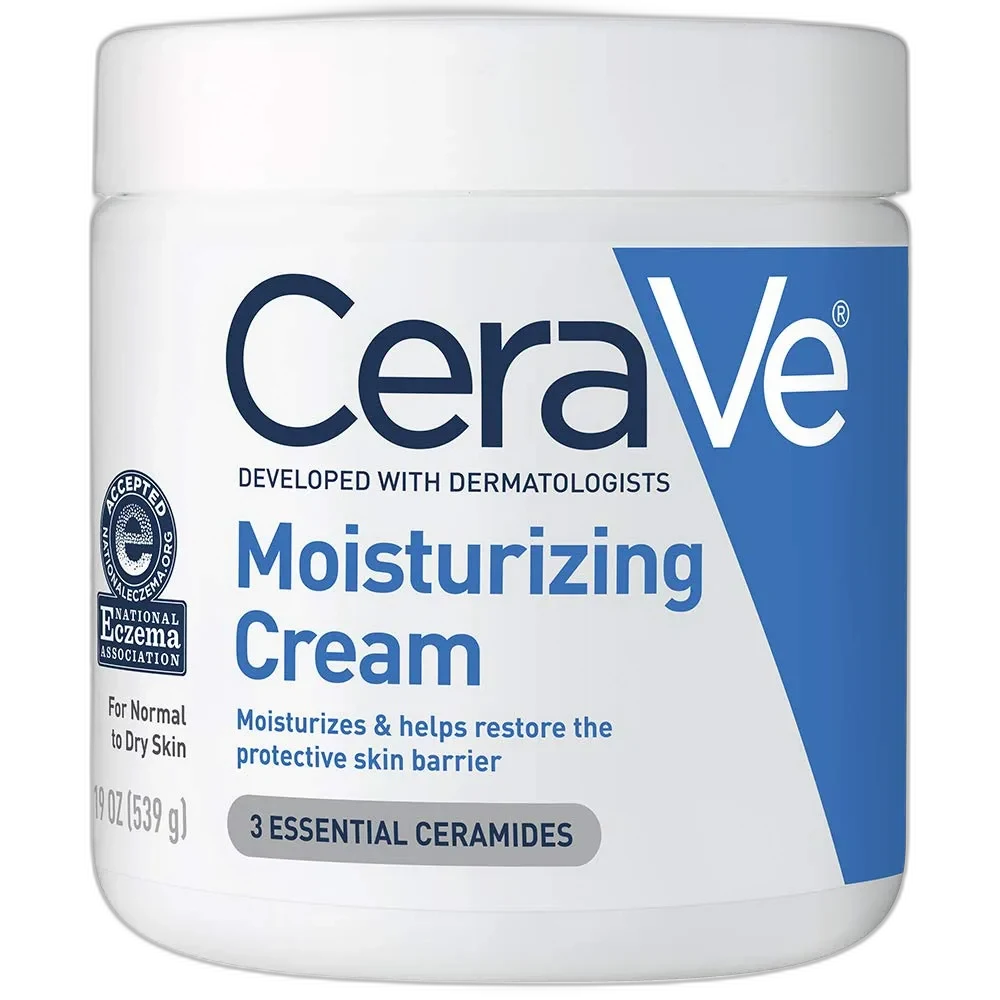
Multiple sizes — from a 3 oz travel bottle to a 19 oz value size — and a refill pouch option mean you can scale your commitment and reduce waste.
Common Complaints
Some acne-prone users report breakouts, particularly along the cheeks and jawline.
Works for
For makeup removal, the Cream-to-Foam genuinely works as a one-step cleanser for everyday wear. Foundation, tinted sunscreen, light mascara — the surfactant system handles these without needing a pre-cleanse.
Not ideal for
If your skin is very dry — genuinely parched, flaking, or eczema-prone — the Hydrating Cleanser remains the better choice.
Ingredient analysis.
Full INCI list · pH 5
Aqua/Water/Eau, Glycerin, Sodium Methyl Cocoyl Taurate, Coco-Betaine, Sodium Cocoyl Isethionate, Sodium Chloride, PCA, PPG-5-Ceteth-20, PEG-100 Stearate, PEG-150 Pentaerythrityl Tetrastearate, PEG-6 Caprylic/Capric Glycerides, PEG-30 Dipolyhydroxystearate, CI 77891/Titanium Dioxide, Aspartic Acid, Ceramide NP, Ceramide AP, Ceramide EOP, Sorbitan Isostearate, Carbomer, Glycol Distearate, Glyceryl Stearate, Glyceryl Oleate, Glycine, Trideceth-6, Cetearyl Alcohol, Behentrimonium Methosulfate, Threonine, Sodium Hydroxide, Salicylic Acid, Sodium PCA, Sodium Lactate, Arginine, Sodium Lauroyl Lactylate, Serine, Sodium Benzoate, Valine, Sodium Hyaluronate, Proline, Isoleucine, Cholesterol, Phenoxyethanol, Alanine, Phenylalanine, Coconut Acid, Coco-Glucoside, Chlorphenesin, Disodium EDTA, Hydroxyethyl Urea, Citric Acid, Hydroxyethyl Acrylate/Sodium Acryloyldimethyl Taurate Copolymer, Caprylyl Glycol, Phytosphingosine, Xanthan Gum, Histidine, Acrylates/C10-30 Alkyl Acrylate Crosspolymer, Polyquaternium-53, Polyquaternium-39, Polysorbate 60, Ethylhexylglycerin, Benzoic Acid
Skin match.
The science.
The Science
The Cream-to-Foam Cleanser uses three evidence-based strategies to maintain skin health during cleansing: barrier lipid replenishment, NMF preservation, and gentle surfactant selection.
The ceramide component follows principles from Man et al. (Journal of Investigative Dermatology, 1996), which showed that an equimolar mixture of ceramides, cholesterol, and free fatty acids best accelerates barrier repair. This formula includes all three ceramide subtypes (NP, AP, EOP) plus cholesterol and phytosphingosine. While rinse-off products have brief contact time, research on ceramide-containing cleansers shows measurable barrier lipid deposition even during short cleansing periods.
The amino acid complex is the formula's most scientifically interesting feature. The skin's Natural Moisturizing Factor — a mixture of amino acids, PCA, urea, and other hygroscopic molecules — maintains hydration in the stratum corneum. Surfactant-based cleansing depletes NMF components, causing post-wash dryness and tightness. By including 11 amino acids, PCA, sodium PCA, sodium lactate, and hydroxyethyl urea, this formula replaces the hydration factors that cleansing removes.
The surfactant selection uses mild cleansing technology reviewed by Draelos et al. (Journal of Drugs in Dermatology, 2019). Sodium methyl cocoyl taurate and sodium cocoyl isethionate are amino acid and isethionate-derived surfactants. They generate enough foam for effective cleansing but cause significantly less barrier disruption than sodium lauryl sulfate. Studies on detergent-induced barrier dysfunction (Tsai and Maibach, Journal of Dermatological Science, 2002) show surfactant choice directly impacts transepidermal water loss, stratum corneum integrity, and inflammatory response — justifying this gentler surfactant system.
The formula's pH of 5.0 matches the skin's natural acid mantle (pH 4.5-5.5). This matters because alkaline cleansers can temporarily raise skin pH, disrupting the acid mantle and impairing barrier enzyme function for hours after washing.
References
- Optimization of physiological lipid mixtures for barrier repair — Journal of Investigative Dermatology (1996)
- Recent Advances in Mild and Moisturizing Cleansers — Journal of Drugs in Dermatology (2019)
- Detergent-induced epidermal barrier dysfunction and its prevention — Journal of Dermatological Science (2002)
Dermatologist Perspective
Board-certified dermatologist Dr. Tiffany Clay endorses this cleanser for its soap-free surfactants, hyaluronic acid, and ceramides — the ingredients she looks for in a facial cleanser recommendation. Dermatologists often recommend the Cream-to-Foam as a compromise for patients who find the Hydrating Cleanser insufficient for makeup removal but experience dryness with the Foaming Cleanser. The amino acid-enriched formula matches the dermatological view that NMF preservation during cleansing is critical for skin health, especially for patients using active treatments like retinoids or AHAs that already compromise barrier function. Dermatologists frequently cite a pH of 5.0 as ideal for maintaining the acid mantle.
Where it fits in your routine.
Wet your face with lukewarm water. Squeeze a dime-to-nickel-sized amount of cream onto your fingertips. Massage onto damp skin using gentle circular motions; the cream turns into a milky foam. Massage for 30-60 seconds to cover your entire face, including the hairline, jawline, and nose. Rinse with lukewarm water and pat dry. Use morning and evening. To remove makeup, massage the cream onto dry skin first, then add water to foam and rinse.
The Cream-to-Foam Cleanser costs $15.99 for 12 ounces, offering high value. The amino acid-ceramide formula costs much more in prestige brands; luxury cleansers often cost $30-50 for 5-6 ounces. Sizes range from 3 oz (travel) to 19 oz (value), plus a 16 oz refill pouch for more savings. CeraVe's brand heritage and dermatologist backing show the price reflects formulation investment. The only value concern is compared to CeraVe's own lineup: the Hydrating Cleanser costs less per ounce. Users who do not need foaming action or makeup removal may prefer the cheaper option.
Normal-to-dry skin types want a cleanser that cleans without leaving skin tight or stripped. This is the daily cleanser for retinol users, people wearing light-to-moderate makeup, and anyone who found the Hydrating Cleanser too gentle or the Foaming Cleanser too aggressive.
Use the Hydrating Facial Cleanser for maximum gentleness if you have very dry or eczema-prone skin. The emollient cream base in that formula is too thick for acne-prone or very oily skin; the Foaming Facial Cleanser or Acne Foaming Cream Cleanser work better for congestion-prone skin.
Product details.
This thick, opaque white cream turns into a soft, milky foam when mixed with water. This transformation is the product's signature experience — it gives the tactile satisfaction of a foaming cleanser and the hydrating properties of a cream.
Fragrance-free with no discernible scent.
Standard CeraVe squeeze bottle comes in white with blue and green accents. Sizes range from travel (3 oz) to value (19 oz). A 16 oz refill pouch also exists, which reduces plastic waste for loyal users.
The cream-to-foam transformation is immediate and satisfying on first use. Massaging the white cream onto damp skin turns it into a milky foam, which feels different from gel or lotion cleansers. Skin feels comfortable and hydrated after rinsing — less tight than traditional foaming cleansers.
3-4 months with twice-daily use (12 oz size)
12 months
All Year
The backstory.
CeraVe launched the Hydrating Cream-to-Foam Cleanser in September 2020 to address a persistent gap in their lineup. Customers with normal-to-dry skin who wanted more thorough cleansing than the Hydrating Cleanser provided — but found the Foaming Cleanser too drying — had no CeraVe option. The cream-to-foam format solved this by delivering surfactant-based cleansing within a hydrating cream matrix loaded with amino acids.
About CeraVe
Established Brand (5–20 years)Dermatologists helped develop CeraVe in 2005. It is the #1 dermatologist-recommended skincare brand in the U.S. Peer-reviewed research backs its formulations, and multiple products carry the National Eczema Association Seal of Acceptance.
Common myths.
Cream cleansers do not remove makeup effectively; you need a separate step.
This cleanser transforms from a cream to a foam. This change creates enough surfactant activity to dissolve and rinse light-to-moderate makeup and most sunscreens in one step. Use a first-step oil cleanse for heavy waterproof makeup, but one step works for daily wear.
Avoid PEG compounds in skincare; they are dangerous.
PEG compounds in this formula act as emulsifiers and solubilizers to enable the cream-to-foam transformation. The Cosmetic Ingredient Review panel and the European Commission's Scientific Committee on Consumer Safety assess PEGs in cosmetics as safe at typical use concentrations. Modern purification processes address concerns about PEG contamination with 1,4-dioxane.
FAQ.
Is the CeraVe Cream-to-Foam Cleanser better than the Hydrating Cleanser?
Choice depends on skin type and preference. The Cream-to-Foam cleanses more thoroughly, removes makeup better, and rinses cleaner — use it if the Hydrating Cleanser leaves residue. The Hydrating Cleanser remains more moisturizing for very dry skin. The Cream-to-Foam works better for normal-to-dry skin that wants cleansing efficacy without losing hydration.
Can this cleanser remove waterproof makeup?
It removes light-to-moderate makeup and most daily sunscreens in one step. Use an oil-based cleanser first, then this as your second cleanse, for heavy waterproof makeup or stubborn long-wear formulas. The cream-to-foam surfactant system works for everyday cleansing, not heavy-duty makeup removal.
Why does this cleanser contain so many amino acids?
The 11 amino acids replicate the skin's Natural Moisturizing Factor — compounds that keep the upper skin layers hydrated. Surfactants can wash away NMF components during cleansing. This cleanser includes these amino acids to replace what the cleansing process removes, helping skin retain moisture instead of losing it.
Is the CeraVe Cream-to-Foam Cleanser good for acne-prone skin?
This formula is non-comedogenic and fragrance-free, but some acne-prone users report breakouts. This happens because the emollient base targets dry skin. For acne-prone skin, CeraVe's Foaming Facial Cleanser or Acne Foaming Cream Cleanser use lighter formulations.
Can I use this cleanser with retinol or tretinoin?
Yes — the ceramide-amino acid formula works well with retinoids. The gentle surfactant system and hydrating ingredients offset the dryness and sensitivity retinoids cause, supporting barrier health during active treatment.
What's the pH of the CeraVe Cream-to-Foam Cleanser?
The pH is about 5.0 — called 'skin-identical pH.' This fits the ideal range for facial cleansers (4.5-6.5) and matches the skin's natural acid mantle, which reduces barrier disruption during cleansing.
Is there a refill option for this cleanser?
Yes — CeraVe offers a 16 oz refill pouch that cuts plastic waste and often costs less per ounce than a new bottle. The product comes in sizes from 3 oz (travel) to 19 oz (value) to fit your usage.
What the community says.
"Removes light makeup and SPF in one step without a separate makeup remover"
"Cream-to-foam transformation feels luxurious and satisfying during use"
"Rinses clean without residue — an improvement over the original Hydrating Cleanser"
"Skin feels clean but not stripped or tight after use"
"Fragrance-free and gentle enough for sensitive skin daily use"
"Outstanding value at under $16 for 12 ounces of ceramide cleanser"
"Slightly less hydrating than the original Hydrating Cleanser for very dry skin"
"Some acne-prone users report breakouts, particularly on cheeks"
"Foaming action can be inconsistent — sometimes very frothy, other times minimal"
"Contains multiple PEG compounds that some ingredient-conscious users prefer to avoid"