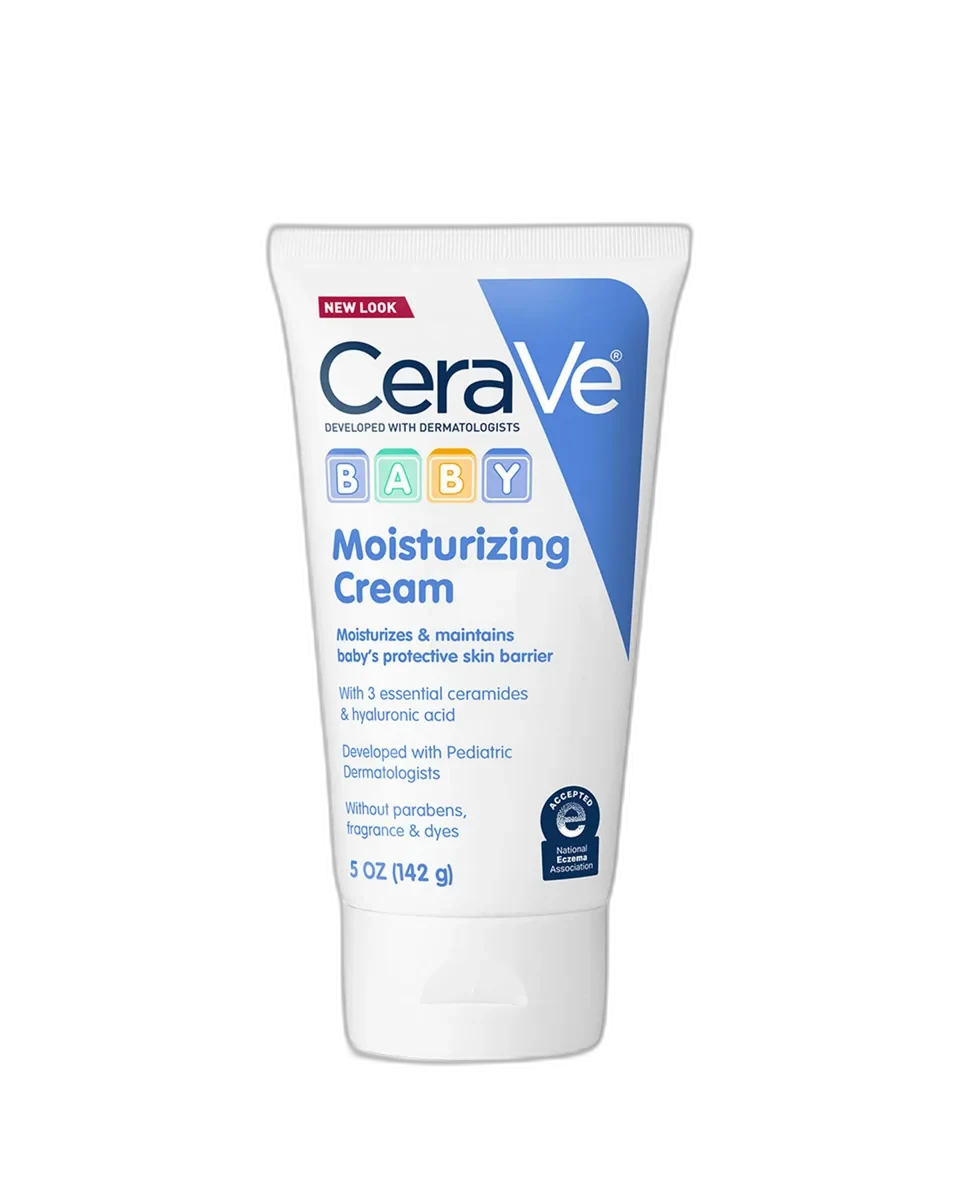
Baby Moisturizing Cream
Pediatric Derm Pick
 Verified reviewer
Pros & cons.
- +Developed with pediatric dermatologists specifically for infant skin
- +Same three essential ceramides as adult CeraVe for proven barrier repair
- +Paraben-free preservative system for parents who prefer to avoid parabens
- +Fragrance-free, dye-free, and phthalate-free — minimal sensitization risk
- +Effective for baby eczema, cradle cap, and chronic dryness
- +Absorbs quickly enough for practical post-bath application on active infants
- +Works equally well for adults with sensitive or compromised skin
- −Not meaningfully different from adult CeraVe Moisturizing Cream aside from preservatives
- −Tub/jar packaging is less hygienic than a pump or tube for baby use
- −Slightly more expensive per ounce than the adult version
- −May need reapplication for extremely dry or eczema-prone skin
- −Contains dimethicone which some parents prefer to avoid in baby products
The full review.
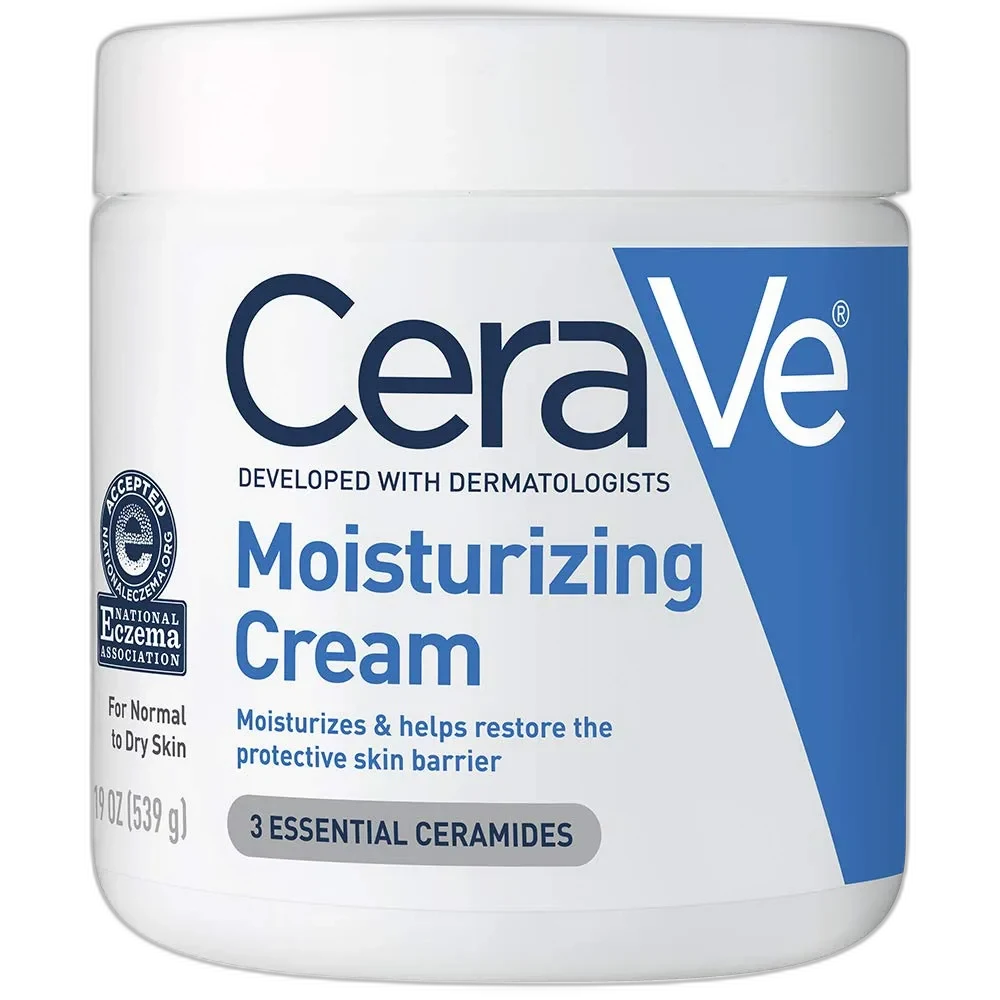
The product’s open secret is its adult following. Parents who bought it for their babies discovered it worked remarkably well on their own sensitive skin — because of course it did. The formula is essentially the adult CeraVe Moisturizing Cream with better preservatives. Adults with eczema, rosacea, or skin sensitized by retinoid use have quietly adopted the baby version as their daily moisturizer, attracted by the paraben-free formula and the knowledge that if it’s gentle enough for a newborn’s skin, it’s gentle enough for their compromised barrier.
Texture
It is a thick, rich cream that spreads more easily than its density suggests and absorbs within minutes to a non-greasy finish.
Scent
The fragrance-free formulation means no scent competing with that singular new-baby smell, which is either a feature or irrelevant depending on your priorities.
Packaging
The tub packaging is the same practical-if-imperfect design as the adult version: effective at dispensing product, less hygienic than a pump or tube, and liable to get baby fingers in it during unsupervised moments.
Common Praise
For baby eczema — the condition that drives most parents to seek out a ceramide moisturizer — the results are well-documented across thousands of reviews. Dry, rough patches on cheeks, elbows, and legs show visible improvement within three to five days of twice-daily application.
Ingredient analysis.
Full INCI list
Aqua/Water/Eau, Glycerin, Cetearyl Alcohol, Propanediol, Caprylic/Capric Triglyceride, Cetyl Alcohol, Dimethicone, Ceteareth-20, Petrolatum, PEG-100 Stearate, Potassium Phosphate, Ceramide NP, Ceramide AP, Ceramide EOP, Carbomer, Glyceryl Stearate, Behentrimonium Methosulfate, Triethyl Citrate, Sodium Phytate, Sodium Lauroyl Lactylate, Sodium Hyaluronate, Cholesterol, Tocopherol, Dipotassium Phosphate, Disodium EDTA, Phytosphingosine, Xanthan Gum, Ethylhexylglycerin
Skin match.
The science.
The Science
CeraVe Baby Moisturizing Cream uses the same ceramide-based barrier repair technology found in the CeraVe product line, tailored for infant skin.
Infant skin differs from adult skin clinically. It has a thinner stratum corneum, higher transepidermal water loss (TEWL), lower ceramide content, and lower natural moisturizing factor (NMF) production. These traits make infant skin more prone to barrier disruption, irritant contact dermatitis, and eczema—a condition affecting 10-20% of infants in developed countries.
Ceramides NP, AP, and EOP in this formula match the three major ceramide subclasses in human skin. Research in the Journal of Investigative Dermatology shows ceramide deficiency marks eczema-prone skin, and topical ceramide supplementation improves barrier function and reduces disease severity. Combining these with cholesterol and phytosphingosine at a physiological ratio mimics the skin's natural intercellular lipid composition.
Extensive pediatric safety data supports petrolatum as an occlusive. The American Academy of Dermatology lists petrolatum as a top occlusive agent, reducing TEWL by up to 98% on compromised skin. In infant skincare, this occlusive function keeps the moisture that humectants (glycerin, sodium hyaluronate) pull into the skin.
The paraben-free preservative system uses ethylhexylglycerin and sodium phytate. While parabens have an extensive cosmetic safety record, these replacement preservatives provide microbial protection without the consumer-perception concerns associated with parabens in baby products.
Dermatologist Perspective
Pediatric dermatologists regularly recommend ceramide-containing moisturizers to manage infant eczema and dry skin. Board-certified pediatric dermatologists note the three-ceramide complex in this formula fixes the barrier deficiency behind most infant skin conditions. The fragrance-free, paraben-free formulation also minimizes sensitization risk while the immune system develops in the early months. Doctors often recommend this product for daily full-body application after bathing. This is the best time to apply moisturizer, as damp skin absorbs both the humectant and occlusive components maximally.
Where it fits in your routine.
Apply a generous amount to clean baby skin after bathing while skin is still damp. Massage gently over the face and body, focusing on dry patches, elbows, and knees. Reapply to dry areas as needed during the day. For eczema-prone skin, apply at least twice daily after morning and evening baths. This works on newborns. Avoid the eye area. Store at room temperature.
At approximately $12.99 for 5 oz, the Baby Moisturizing Cream costs slightly more per ounce than the adult CeraVe Moisturizing Cream. This price accounts for pediatric formulation development and paraben-free preservatives. The 8 oz size offers better per-unit value for frequent users. For parents buying a separate moisturizer for their baby, the cost matches or beats many baby-specific brands without ceramide technology. The Baby Moisturizing Cream works for both infant and adult sensitive skin, so the whole family uses one jar.
Parents want a dermatologist-recommended, ceramide-based moisturizer for infant dry skin, eczema, or hydration. It also works for adults with sensitive, eczema-prone, or compromised barrier skin who want a paraben-free formula. This product works safely for the whole family.
A lighter lotion works if your baby's skin is healthy and not prone to dryness. Parents who want silicone-free products should note the dimethicone content. If the adult CeraVe Moisturizing Cream works well on your baby, you may not need to switch.
Product details.
All Year
The backstory.
Created when CeraVe recognized that parents were already using their adult Moisturizing Cream on babies — pediatric dermatologists were recommending it off-label for infant eczema. The Baby Moisturizing Cream formalized this use case with a paraben-free preservative system and pediatric dermatologist oversight, giving parents a product explicitly designed and tested for infant skin.
About CeraVe
Legacy Brand (20+ years)Dermatologists helped develop CeraVe in 2005, and pediatric dermatologists co-created the Baby line. The brand is the #1 dermatologist-recommended moisturizer brand in the US and has multiple National Eczema Association Seals of Acceptance.
FAQ.
What is the difference between CeraVe Baby Moisturizing Cream and regular CeraVe Moisturizing Cream?
The main difference is the preservative system. The Baby version is paraben-free (no methylparaben or propylparaben) and uses ethylhexylglycerin and sodium phytate instead. The core ceramide-cholesterol-phytosphingosine barrier repair technology is the same. Pediatric dermatologists also helped develop the Baby version.
Can newborns use CeraVe Baby Moisturizing Cream?
Yes — the product is safe for newborn skin. It is fragrance-free, paraben-free, dye-free, and phthalate-free, with low sensitization risk. Pediatric dermatologists often recommend ceramide-based moisturizers from birth for babies with dry or eczema-prone skin.
Can adults use CeraVe Baby Moisturizing Cream?
Many adults with sensitive, eczema-prone, or reactive skin use the Baby version because it is paraben-free. The ceramide technology is identical to the adult version, so the Baby version provides the same barrier repair with a gentler preservative system.
Is CeraVe Baby Moisturizing Cream good for baby eczema?
Yes — the three-ceramide complex fixes the barrier deficiency that causes eczema, while petrolatum provides occlusive protection to reduce moisture loss. Applying it twice daily after bathing shows visible improvement in dry, rough patches within 3-5 days. Many pediatric dermatologists recommend it as first-line moisturizer management for infant eczema.
Does CeraVe Baby Moisturizing Cream contain fragrance?
No — it is fragrance-free. It has no added fragrance or masking scent. This matters for infant skin, which is more susceptible to fragrance sensitization than adult skin.
What the community says.
"Effectively soothes and moisturizes baby eczema and dry patches"
"Fragrance-free and gentle enough for newborns"
"Thick but absorbs well without greasiness"
"Improves cradle cap and rough skin quickly"
"Many adults use it for their own sensitive skin"
"Paraben-free formula"
"May need reapplication for extremely dry skin"
"Jar/tub packaging is less hygienic for baby use"
"Slightly more expensive than regular CeraVe Moisturizing Cream"
"Not significantly different from the adult version aside from paraben-free formula"
"Contains dimethicone which some parents prefer to avoid"