Charcoal & Tea Tree Oil Breakout Control Facial Moisturiser
Budget Acne Moisturiser
 Verified reviewer
Pros & cons.
- +Non-greasy finish that sits well under sunscreen
- +Niacinamide meaningfully reduces oiliness and surface redness
- +Pairs seamlessly with the brand's cleansing bar for ritual consistency
- +Affordable for an indie acne-targeted moisturiser
- +Cruelty-free and vegan certified
- +Panthenol and allantoin keep the tea tree from feeling harsh
- −Charcoal is visual rather than functional
- −Contains tea tree, linalool, and limonene — wrong for sensitive skin
- −Not fungal-acne safe
- −Formulation doesn't meaningfully differ from cheaper generic niacinamide creams
- −50ml tube runs out quickly with twice-daily use
The full review.
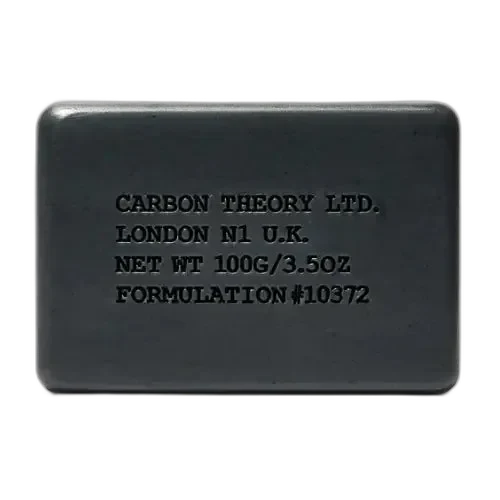
Viral skincare brands often face one problem after a hero product succeeds: what comes next? Carbon Theory answered by applying the charcoal-and-tea-tree aesthetic of its famous cleansing bar to every other step. This moisturiser is the cream designed to sit next to that bar. The grey tint, herbal scent, and packaging all signal “this is the bar, but for the next step.” Whether it stands alone or relies on brand loyalty is the real question.
The formulation is fine. The base uses standard ingredients—water, caprylic/capric triglyceride, glycerin, cetearyl alcohol, and shea butter. The bioactives are niacinamide, tea tree oil, panthenol, and allantoin. Charcoal powder provides the signature look and mild cosmetic adsorbence, but lacks meaningful leave-on function. Niacinamide does the heavy lifting here; it is evidence-backed for sebum regulation and redness reduction. Tea tree oil adds a modest antimicrobial layer that keeps the product “breakout-focused” instead of a generic cream with a gimmick. Unlike the plain Breakout Control Facial Moisturiser, which includes 0.5% salicylic acid, this version replaces the BHA with the charcoal aesthetic. This works for users already using a BHA elsewhere, but fails those wanting their moisturiser to handle exfoliation.
The texture earns the most praise. Despite the visible pigment from the charcoal, the finish is impressively non-greasy. It blends from grey to almost invisible in ten seconds, leaving a soft, lightweight finish that sits well under SPF and feels light enough for nighttime use on oily skin. The tea tree scent is noticeable but less aggressive than the cleansing bar, as the shea butter and caprylic/capric base dampen its volatility. Within a few days, oily-combination users typically see less midday shine and calmer breakouts due to the niacinamide’s fast-acting sebum regulation.
The cream lacks distinctiveness. A skincare formulator would find little special about it. The actives are standard, the levels are modest, and the charcoal is functionally decorative. A user could replicate most of these effects with any niacinamide-centric drugstore moisturiser from CeraVe, La Roche-Posay, or Bioderma—often for less money and without the fragrance. The reason to buy this specific cream is the brand ritual: you love the cleansing bar, you want the matching moisturiser, and you value aesthetic consistency.
Its limitations match the rest of the range. Tea tree essential oil, linalool, and limonene mean sensitive-skin users should avoid it. Fungal-acne sufferers will struggle with the shea butter and triglyceride base. Dry skin users will find it sufficient but not hydrating enough to lead a moisture-focused routine. Pregnant users should skip it because of the tea tree content. These are not formulation mistakes, but the cost of maintaining the brand’s essential-oil-forward identity.
Value is mid-range. At roughly fifteen dollars for 50ml, it costs more per application than the cleansing bar, but stays well below prestige acne brand prices. If you want Carbon Theory brand continuity, this is an easy buy. If you are a utilitarian shopper comparing formulation merits against drugstore niacinamide creams, the verdict is less certain—the decision depends on whether the tea tree scent is a feature or a bug for you.
Ingredient analysis.
Full INCI list · pH 5.5
Aqua (Water), Caprylic/Capric Triglyceride, Glycerin, Cetearyl Alcohol, Glyceryl Stearate, Butyrospermum Parkii (Shea) Butter, Niacinamide, Dimethicone, Charcoal Powder, Melaleuca Alternifolia (Tea Tree) Leaf Oil, Tocopheryl Acetate, Panthenol, Allantoin, Sodium Hyaluronate, Xanthan Gum, Phenoxyethanol, Ethylhexylglycerin, Citric Acid, Linalool, Limonene, CI 77266
Skin match.
The science.
The Science
Niacinamide and tea tree oil drive the science here, not the charcoal. At standard 2-5% concentrations, niacinamide is a top-tier cosmetic ingredient for acne-adjacent benefits. Multiple randomised trials show it reduces sebum excretion rate, improves barrier function, and lowers inflammatory acne lesions at rates similar to low-dose topical antibiotics. Tea tree oil has modest clinical evidence: a 2007 trial in the Indian Journal of Dermatology and a cited Australian study both show 5% tea tree oil significantly reduces acne lesions over 6-12 weeks, though more slowly than benzoyl peroxide. Activated charcoal in leave-on cosmetics lacks published clinical evidence for skin improvement. Its adsorbent properties work in vitro, but contact time, surface area, and leave-on matrix interactions make skin-level activity implausible; dermatology literature treats its inclusion as aesthetic. The formulation logic is "niacinamide plus tea tree with brand continuity," so evaluate it on those merits rather than the charcoal marketing.
Dermatologist Perspective
Dermatologists see moisturisers like this as reasonable over-the-counter options for oily, mildly acneic skin on resilient users. Board-certified dermatologists note niacinamide is the star ingredient and recommend similar products for this user profile—though most prefer a fragrance-free equivalent if the patient has a history of sensitivity or fragrance allergy. Derms also note the charcoal content is cosmetic rather than clinically meaningful and should not dictate product choice. For acne-focused patients, derms frequently recommend pairing this moisturiser with a proper BHA and a mineral sunscreen instead of using it as a standalone treatment.
Where it fits in your routine.
Apply a pea-sized amount twice daily after cleansing and leave-on serums. The grey tint blends out within seconds; do not over-apply to make it disappear. Use sunscreen in the morning. Avoid stacking with other tea tree products to keep fragrance and irritant loads low, and alternate with retinoid nights instead of using both at once.
At around $15 for 50ml, this is competitively priced within the indie acne moisturiser category, though it's noticeably more expensive per ml than the brand's cleansing bar, which is where Carbon Theory's value proposition is strongest. Compared against drugstore niacinamide moisturisers from legacy derm brands, the price is close enough that the decision usually comes down to whether you want the Carbon Theory aesthetic or you want a longer clinical track record. No larger size is available, which is a mild downside for anyone making this a daily staple.
Oily and combination skin with mild surface breakouts that already use and love the Carbon Theory cleansing bar. Budget shoppers seeking an acne-targeted moisturiser with niacinamide at a fair price. Users who like essential oil scents.
Dry, sensitive, rosacea-prone, or eczema-prone skin. Pregnant users, fungal acne sufferers, and people with fragrance allergies. Shoppers seeking the best formula on merit — a fragrance-free niacinamide moisturiser from a large derm-developed brand usually performs just as well.
Product details.
Medium-weight grey-tinted cream that spreads into an almost-invisible finish
Tea tree and mild herbal
Squeeze tube
The grey tint looks alarming on first application, but it disappears as you blend. A mild tea tree tingle settles within a minute. Skin feels soft, not tight, afterwards.
Roughly 2 months with twice-daily facial use
12 months
All Year
The backstory.
Launched as a follow-up to the brand's viral cleansing bar, this cream was designed for users who loved the bar but needed something to restore moisture after the alkaline wash. It fills the most common complaint about the bar — post-cleanse tightness — while keeping the charcoal-and-tea-tree aesthetic loyal customers were already buying into.
About Carbon Theory
Emerging Brand (2–5 years)Carbon Theory launched in the UK in 2018, gaining fame for its viral charcoal and tea tree cleansing bar. This moisturiser brings that signature style to a leave-on step. The brand sells well at Boots but lacks formal clinical validation.
Common myths.
The charcoal in this moisturiser draws impurities out of the skin all day.
Charcoal in a leave-on cream at this level is mostly pigment and marketing. Niacinamide, tea tree, and shea butter do the skin-improving work, not the charcoal powder.
FAQ.
Is this different from the plain Breakout Control moisturiser?
Yes, but subtly. The plain version uses low-dose salicylic acid, while this version adds charcoal powder and follows the brand signature. Choose this one for the cleansing bar aesthetic; choose the other for the built-in BHA.
Does the grey tint stain?
No — it disappears when you blend it. It looks dramatic on very light or very dark skin during application, but leaves no residue once rubbed in.
Is this fungal-acne safe?
No. Caprylic/capric triglyceride and shea butter feed Malassezia. Fungal acne sufferers should avoid this and choose a simpler glycerin-and-niacinamide moisturiser instead.
Can I use it in the morning under SPF?
Yes. The finish is non-greasy and sits well under a mineral sunscreen, though oily skin types may prefer a lighter SPF formula on top.
Will it sting active breakouts?
Tea tree causes a brief tingle, but this settles within a minute. Sharp stinging or sustained burning shows your barrier is too compromised for the tea tree; switch to a fragrance-free cream.
Is it safe in pregnancy?
Skip this during pregnancy. Tea tree essential oil is on the 'avoid to be safe' list for pregnant users, and fragrance-free alternatives exist.
What the community says.
"pairs well with the brand's cleansing bar"
"good value"
"noticeable calming effect on breakouts"
"grey tint can look odd on darker skin"
"strong tea tree scent"
"nothing standout in the formula"