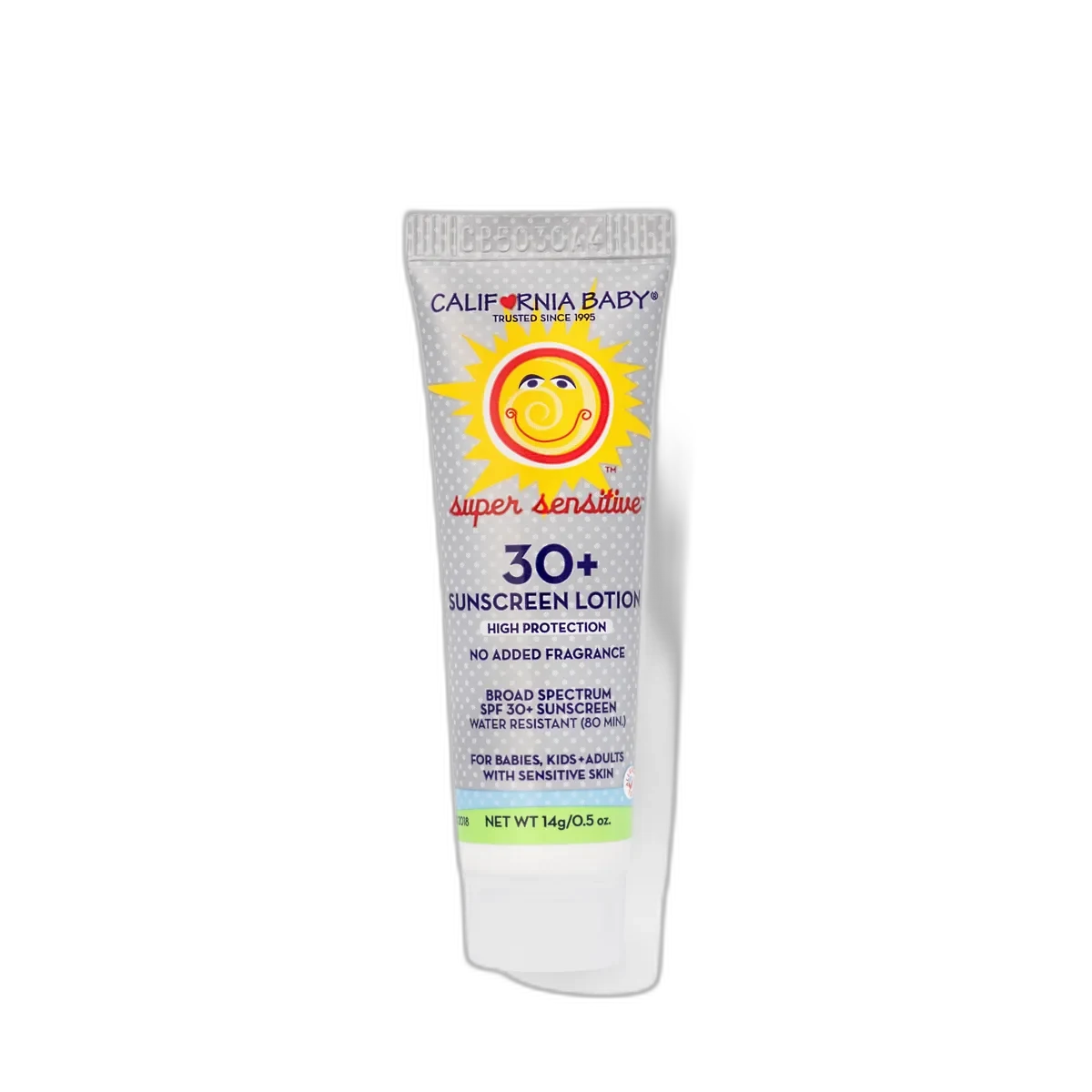
SPF 30+ Sunscreen No Fragrance
Pediatric Sun Safety Gold Standard
 Verified reviewer
Pros & cons.
- +Titanium dioxide-only formula with no chemical UV filters or nanoparticles
- +Completely fragrance-free — no essential oils or synthetic scents
- +Allergen-free excluding gluten, soy, sesame, oat, dairy, peanuts, and tree nuts
- +14 consecutive years on EWG's Safe Sunscreen Guide
- +80-minute water resistance for a pure mineral formulation
- +Allantoin and panthenol provide genuine skin-soothing benefits beyond sun protection
- −Thick texture requires effort to blend and leaves noticeable white cast
- −Premium pricing at $25.99 for 2.9 oz — expensive for full-body family use
- −SPF 30 may feel insufficient for parents accustomed to higher-SPF products
- −Coconut oil inclusion may concern acne-prone individuals
- −Not cosmetically elegant compared to modern mineral sunscreens with zinc oxide blends
The full review.
There is a reason pediatric dermatologists keep a mental list of exactly three or four sunscreens they recommend for their most reactive patients. California Baby’s No Fragrance Super Sensitive SPF 30+ is on virtually every one of those lists. It has been recommended by the Environmental Working Group’s Safe Sunscreen Guide for fourteen consecutive years — a streak that requires not just a good initial formula, but consistent reformulation to meet evolving safety standards while maintaining the gentleness that earned the recommendation in the first place.
The formula is deliberately minimalist in its UV approach. Titanium dioxide at 12% is the sole active ingredient. No zinc oxide, no chemical filters, no combination strategies. This single-filter approach is both the product’s greatest strength and its most common criticism. Titanium dioxide reflects and scatters UV radiation from the skin’s surface without penetrating the stratum corneum — a mechanism that has been validated in decades of photobiology research and is universally considered safe for the most vulnerable skin, including newborns.
The inactive ingredients reveal the brand’s formulation philosophy. Safflower oleosomes — a relatively novel delivery technology — provide gentle emolliency through lipid vesicles that release their contents slowly on the skin. Squalane adds skin-identical moisture. Glycerin provides humectant hydration. Allantoin and panthenol contribute soothing and skin-conditioning properties that elevate this beyond a simple sun blocker into something that actually cares for the skin underneath. Tapioca starch and magnesium stearate help manage the texture and improve application feel. The preservative system uses levulinic acid, caprylhydroxamic acid, and glyceryl caprylate — all plant-derived alternatives to traditional preservatives.
What is absent is equally important. No fragrance of any kind — not even essential oils, which the brand uses in other products. No gluten, soy, sesame, oat, dairy, peanuts, or tree nuts (with the exception of coconut, which is botanically a fruit). For families managing multiple allergies alongside sun protection, this level of ingredient exclusion is not a marketing exercise — it is a practical necessity.
The texture is honest and unapologetic. This is a thick, white mineral sunscreen that behaves like a thick, white mineral sunscreen. It requires deliberate rubbing, preferably after warming a generous amount between your palms. It will leave some white cast, particularly on medium to deep skin tones. The tapioca starch helps absorb some of the chalkiness, and the squalane provides enough slip to improve spreadability, but if cosmetic elegance is your primary concern, this is not the sunscreen for you. California Baby is not trying to compete with Korean beauty sunscreens for the most invisible finish. It is trying to protect the most vulnerable skin from UV damage without causing a reaction, and on that criterion, it succeeds unequivocally.
The 80-minute water resistance is notable for a 100% titanium dioxide formula. Many mineral sunscreens struggle with water resistance because the physical particles tend to wash away more readily than chemical filters. California Baby achieves this through the candelilla wax and polymer emulsifier system that helps the titanium dioxide adhere to skin through water exposure — important for a product frequently used on children at the beach or pool.
The value proposition requires context. At $25.99 for 2.9 ounces, this is expensive sunscreen. Full-body application on a child uses roughly an ounce, meaning a tube lasts perhaps three trips to the beach. The 6-ounce size at $42.99 is more economical for regular use but still premium. What you are paying for is the allergen exclusion testing, the plant-based preservative system, the FDA-registered organic manufacturing, and the peace of mind that comes with a product specifically validated for the most sensitive skin on the planet — literally, newborn skin.
For adult use, the equation shifts. Adults with eczema, rosacea, or post-procedure skin will appreciate the extreme gentleness, but most adults without specific sensitivities will find the texture and white cast unnecessarily compromising when more cosmetically elegant mineral sunscreens exist at similar or lower price points. Where this product earns its place in adult routines is in specific clinical scenarios: post-laser, post-chemical peel, during isotretinoin treatment, or during eczema flares when every other sunscreen stings.
The SPF 30+ level is occasionally criticized by parents who want higher numbers, but dermatologists consistently note that SPF 30 blocks approximately 97% of UVB radiation — the incremental benefit of SPF 50 (98%) or SPF 70 (less than 99%) is marginal. Proper application amount and consistent reapplication every two hours are far more important than the number on the bottle. California Baby’s approach of prioritizing gentleness and clean formulation over an SPF arms race reflects sound dermatological thinking.
This sunscreen has earned its reputation the slow way — three decades of protecting sensitive skin, fourteen years of EWG recognition, and a user community of parents and dermatologists who trust it with the skin they care about most. It is not glamorous. It is not Instagram-worthy. It is the sunscreen you reach for when nothing else will do, and it never lets you down.
Ingredient analysis.
Full INCI list
Active Ingredient: Titanium Dioxide 12%. Inactive Ingredients: Water, C12-15 Alkyl Benzoate, Carthamus Tinctorius (Safflower) Oleosomes, Caprylic/Capric Triglyceride, Polyhydroxystearic Acid, Coco-Caprylate, Glycerin, Euphorbia Cerifera (Candelilla) Wax, Polyglyceryl-2 Dipolyhydroxystearate, Tapioca Starch, Rosmarinus Officinalis (Rosemary) Leaf Extract, Polyglyceryl-3 Diisostearate, Squalane, Magnesium Stearate, Cocos Nucifera (Coconut) Oil, Levulinic Acid, Allantoin, Panthenol, Caprylhydroxamic Acid, Glyceryl Caprylate
Skin match.
The science.
The Science
Titanium dioxide is one of two FDA-approved mineral UV filters, alongside zinc oxide, used in sunscreens for decades. It works by reflecting, scattering, and absorbing UV radiation at the skin's surface instead of penetrating the stratum corneum. Research supports this safety advantage. A 2019 FDA study in JAMA found that chemical sunscreen ingredients absorbed into the bloodstream at levels requiring more safety evaluation, while mineral filters like titanium dioxide showed minimal systemic absorption.
At 12% concentration, titanium dioxide provides broad-spectrum protection for UVB (290-320nm) and UVA (320-400nm) ranges. Its UVA coverage skews toward UVA-II (320-340nm) rather than the longer UVA-I wavelengths where zinc oxide excels. The broad-spectrum designation on this product means it meets FDA testing requirements for both UVA and UVB protection.
The formula uses safflower oleosomes. Oleosomes are natural lipid bodies in plant seeds that act as microscale delivery systems for oils and lipid-soluble ingredients. Research in the Journal of the American Oil Chemists' Society shows oleosomes provide sustained-release emolliency and can enhance active ingredient stability in cosmetic formulations.
Allantoin provides keratolytic and cell-proliferative properties to support skin recovery, which helps skin that is chronically sensitized or recovering from UV exposure. Panthenol (provitamin B5) adds humectant hydration; dermatological research shows it improves stratum corneum hydration and reduces transepidermal water loss.
References
- Effect of Sunscreen Application Under Maximal Use Conditions on Plasma Concentration of Sunscreen Active Ingredients — JAMA (2019)
Dermatologist Perspective
Board-certified dermatologists often recommend this sunscreen for difficult sensitive-skin cases: neonatal patients, children with multiple allergies, adults with eczema or rosacea during flares, and post-procedure patients. Using a single mineral filter eliminates variables that cause reactions in sensitized skin. Pediatric dermatologists value the comprehensive allergen exclusion, as children with atopic dermatitis often have concurrent food allergies that complicate topical product selection. The consistent EWG endorsement gives practitioners more confidence when counseling worried parents.
Where it fits in your routine.
Apply generously to all exposed skin at least 15 minutes before sun exposure. Use about 1/4 teaspoon for the face and a shot glass amount for the full body. Warm the product between palms, then press onto skin to apply it easier and reduce white cast. Reapply every 2 hours, or immediately after swimming (even within the 80-minute water-resistance window for best protection), sweating, or towel-drying. For infants, apply to all areas not covered by clothing and hats.
At $25.99 for 2.9 oz ($8.96/oz), this sunscreen is premium-priced. The 6 oz tube at $42.99 ($7.17/oz) offers better value for families using the product regularly. The price covers allergen exclusion testing, organic-certified manufacturing, and plant-based formulation, rather than exotic UV filter technology. For families managing severe eczema, multiple allergies, or newborn sun protection, the price avoids the cost of trial-and-error spending on sunscreens that cause reactions. For general-purpose sun protection without specific sensitivity concerns, comparable mineral sunscreens cost less.
Parents of newborns and children with sensitive, eczema-prone, or allergy-prone skin needing the gentlest sun protection. Adults with reactive skin, eczema, rosacea, or post-procedure healing who find other sunscreens irritating. Anyone who chooses a clean, allergen-free mineral sunscreen over cosmetic elegance.
This sunscreen leaves a white cast, so it is not for those who prioritize cosmetic elegance and invisible finish. The per-ounce cost is too high for daily sun protection on a tight budget. The coconut oil and thick texture can cause issues for adults with oily or acne-prone skin. If you lack specific sensitivity concerns, more affordable and cosmetically elegant mineral sunscreens exist.
Product details.
Thick, creamy mineral sunscreen with a classic mineral feel. It needs deliberate rubbing to blend. It feels chalky at first but settles into a more comfortable finish after a few minutes. The tapioca starch absorbs excess oil and improves the feel.
Completely unscented — no detectable fragrance of any kind.
Tube format comes in multiple sizes (sample 0.5 oz, 1.8 oz, 2.9 oz, 6 oz). The tube squeezes easily and travels well. Clear labels show allergen information prominently.
The first application is a thick white cream that takes time to blend. A significant white cast appears at first but fades with thorough rubbing. The formula feels protective but not greasy after absorption. It causes no stinging, burning, or irritation — even on freshly sensitized skin.
2-4 weeks with daily facial application (2.9 oz), much less with full-body use
12 months
All Year
The backstory.
California Baby's sunscreens emerged from the same philosophy as the rest of the brand: founder Jessica Iclisoy's commitment to knowing exactly what touches her child's skin. The No Fragrance Super Sensitive version was specifically developed for the most reactive skin types — newborns, eczema sufferers, and those with multiple allergies. Its 14-year streak on EWG's Safe Sunscreen Guide reflects consistent reformulation to meet evolving safety standards while maintaining the gentle, plant-based approach.
About California Baby
Legacy Brand (20+ years)Jessica Iclisoy founded California Baby in 1995 in Los Angeles. EWG's Safe Sunscreen Guide has recommended the brand's sunscreens for over 14 consecutive years. The company manufactures in an FDA-registered, organic-certified facility. With nearly three decades of sun protection products, California Baby has earned trust from parents and dermatologists for sensitive and pediatric skin.
Common myths.
SPF 30 isn't enough protection — you need SPF 50 or higher
SPF 30 blocks about 97% of UVB rays, and SPF 50 blocks about 98%. This difference is marginal. Application amount (1/4 teaspoon for face) and reapplication every 2 hours matter more. SPF 30 with proper reapplication outperforms SPF 50 applied once and forgotten.
Mineral sunscreens don't provide adequate UVA protection
Titanium dioxide at 12% provides broad-spectrum protection against UVA and UVB. Zinc oxide is sometimes called superior for UVA, but titanium dioxide's broad-spectrum labeling shows it meets FDA standards for both UVA and UVB protection.
FAQ.
Does California Baby SPF 30 sunscreen leave a white cast?
Yes — like all non-nano mineral sunscreens with titanium dioxide, this product leaves a visible white cast, especially on deeper skin tones. Rubbing the product thoroughly and warming it between your palms before application minimizes this. The white cast is the trade-off for the physical UV-blocking mechanism that makes this sunscreen gentle.
Is California Baby sunscreen reef safe?
Yes. The formula uses only titanium dioxide (no oxybenzone or octinoxate) and is eco-friendly to protect marine life and coral reefs. This meets Hawaii's reef-safe sunscreen requirements.
Why is California Baby sunscreen so expensive?
The price covers the allergen-free formulation, FDA-registered organic manufacturing facility, plant-based preservative system, and extensive safety testing like RIPT allergy assessment. The 6 oz tube at $42.99 has better per-unit value for families who use it regularly. The price matches other premium baby mineral sunscreens with similar safety certifications.
Can adults use California Baby sunscreen?
Many adults with sensitive, eczema-prone, or post-procedure skin use this sunscreen for its gentle, fragrance-free formula. For adults, the white cast and thicker texture are the only drawbacks compared to cosmetically elegant adult sunscreens. This is an excellent choice if gentleness matters more than aesthetics.
Community ---
What the community says.
"Extremely gentle — safe for newborns and ultra-sensitive skin"
"No fragrance and no common allergens"
"Reef-safe mineral formula that parents trust"
"80-minute water resistance holds up well for a mineral sunscreen"
"Clean ingredient list with no synthetic chemicals"
"Thick, chalky texture requires effort to rub in properly"
"Can leave a noticeable white cast, especially on deeper skin tones"
"Very expensive compared to other mineral sunscreens"
"SPF 30 is lower than some parents prefer for extended outdoor play"
"Small tube size doesn't last long with full-body application"
People also looked at.