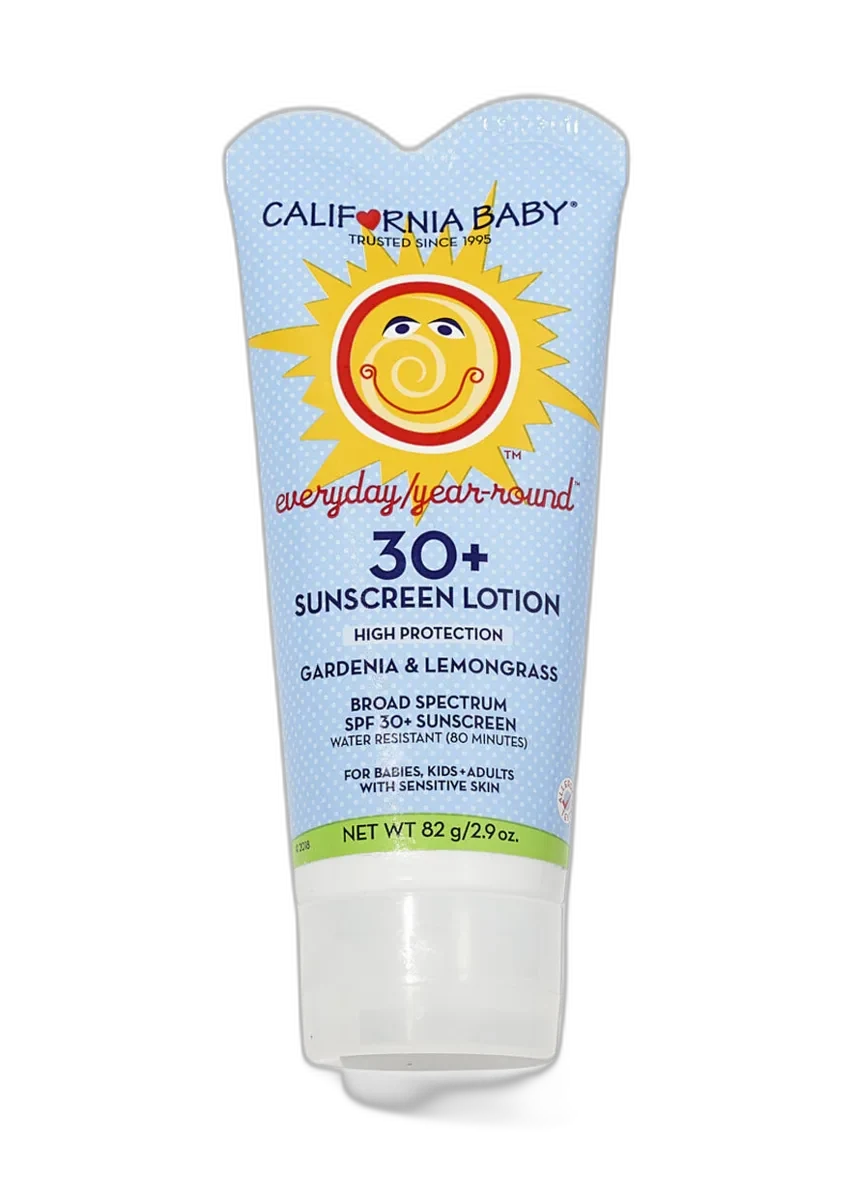
Everyday/Year-Round Sunscreen SPF 30+
Pediatrician-Trusted Clean Sunscreen
 Verified reviewer
Pros & cons.
- +Titanium dioxide-only mineral formula sits on skin without absorption
- +Allergen-free base excludes gluten, soy, dairy, sesame, oat, and nuts
- +Over 12 consecutive years of EWG Safe Sunscreen Guide recommendation
- +80-minute water resistance rating meets FDA maximum standard
- +Soothing botanical base with calendula, allantoin, and panthenol
- +Silicone-free and paraben-free with plant-derived emollients
- +Three decades of pediatrician and dermatologist endorsement
- −Essential oils (lemongrass) are potential sensitizers despite sensitive-skin marketing
- −Premium price of $25.99 for a small 2.9 oz tube
- −Titanium dioxide alone provides less UVA coverage than zinc oxide combinations
- −Noticeable white cast on medium to deep skin tones
- −Oily finish may feel too greasy for adult facial use
The full review.
In 1995, Jessica Iclisoy mixed plant-based skincare in her kitchen because she could not find safe products for her newborn. Three decades later, her Everyday/Year-Round sunscreen remains a top name in pediatric sun protection. Its reputation comes from years of endorsement by pediatricians and the Environmental Working Group, not influencer partnerships.
The formula is straightforward. Titanium dioxide at 12% provides all the UV-blocking; it uses no zinc oxide or chemical filters. This minimalist approach follows the California Baby philosophy: fewer ingredients reduce risks for reactive skin. The inactive ingredients—squalane, allantoin, panthenol, calendula extract, and safflower oleosomes—act like a gentle moisturizer to counteract the drying effects of mineral filters.
The texture is typical for a mineral sunscreen. It is creamy, requires blending, and leaves a slight sheen that some adults may find too dewy. On a child’s skin, this moisturizing quality is a benefit; the visible product provides reassurance when applying it to a squirming toddler at the beach. The white cast is present but manageable, fading to near-invisible on lighter skin tones within minutes of rubbing.
The scent highlights the tension between clean-beauty identity and dermatological reality. Lemongrass and gardenia essential oils provide a pleasant, herbal fragrance. However, lemongrass oil is a known contact sensitizer. Including essential oils in a product for the most sensitive skin is a contradiction. California Baby developed a separate Super Sensitive (No Fragrance) version to address this, but the “Everyday” formula contains these potential irritants.
SPF 30+ with broad-spectrum designation meets the dermatological minimum for daily wear. However, titanium dioxide alone provides less UVA coverage than formulas combining it with zinc oxide. This level of protection works for school drop-off, playground time, or walks to the store. For extended beach days or high-altitude sun, use a formula with dual mineral filters or higher SPF.
The allergen-free formulation distinguishes this product. It is free of gluten, oat, soy, sesame, dairy, and nuts (except coconut), addressing a gap for families managing multiple food allergies. Cross-contamination through skincare is a documented concern for severely allergic children, and California Baby excludes these ingredients to manage that risk.
Water resistance is rated at 80 minutes, the FDA maximum. The plant oil base holds up well during splashing and light swimming, though chlorinated pools break it down faster than synthetic-base sunscreens.
At $25.99 for 2.9 ounces, this is a premium-priced sunscreen. The price covers the clean ingredient profile, allergen-free manufacturing, and thirty years of brand trust. If your child has reactive or allergy-prone skin, this purchase provides peace of mind. For a general-purpose family sunscreen, other mineral options exist at a lower price.
California Baby helped pioneer this category and has maintained its standards for thirty years. The brand did not chase clean beauty; clean beauty caught up to them. The Everyday sunscreen is a solid, trustworthy product with a clear identity for its specific audience.
Formula
Water resistance
Ingredient analysis.
Full INCI list
Active Ingredient: Titanium Dioxide 12%. Inactive Ingredients: Water, Isoamyl Laurate, Coco-Caprylate, Calendula Officinalis Extract, Viola Tricolor Extract, Polyglyceryl-2 Dipolyhydroxystearate, Euphorbia Cerifera (Candelilla) Wax, Glyceryl Starch, Carthamus Tinctorius (Safflower) Oleosomes, Polyglyceryl-3 Diisostearate, Levulinic Acid, Glycerin, Tapioca Starch, Rosmarinus Officinalis (Rosemary) Leaf Extract, Cocos Nucifera (Coconut) Oil, Gardenia Tahitensis Flower Extract, Squalane, Magnesium Stearate, P-Anisic Acid, Cymbopogon Schoenanthus Oil, Allantoin, Panthenol
Skin match.
The science.
The Science
Titanium dioxide is one of two FDA-approved mineral UV filters, alongside zinc oxide, and has been in sunscreens since the 1960s. At 12% concentration, titanium dioxide gives reliable UVB protection and moderate UVA2 protection. Its UVA1 coverage is less comprehensive than zinc oxide, a trade-off California Baby accepts to provide a gentler skin feel.
A 2019 study in JAMA found that chemical sunscreen ingredients (avobenzone, oxybenzone, octocrylene, and ecamsule) entered the bloodstream above FDA safety thresholds after one application. Mineral filters like titanium dioxide stayed on the skin's surface. This study does not prove chemical filters are harmful, but it explains why mineral-only formulations appeal for pediatric use under the precautionary principle.
The formula uses botanical components — calendula officinalis and viola tricolor (pansy) — which have traditional anti-inflammatory uses but limited modern clinical evidence at cosmetic concentrations. A 2009 study in the Journal of Clinical Oncology showed calendula extract reduced radiation dermatitis incidence compared to trolamine. This suggests anti-inflammatory properties, even if the concentrations and context differ from a leave-on sunscreen.
The titanium dioxide uses non-nano particle size. Nano-sized titanium dioxide reduces white cast and improves cosmetic elegance, but California Baby uses non-nano particles. Independent research confirms these do not penetrate intact skin. This choice prioritizes safety over cosmetic finish, matching the product's formulation philosophy.
References
- Effect of Sunscreen Application Under Maximal Use Conditions on Plasma Concentration of Sunscreen Active Ingredients — JAMA (2019)
- Calendula officinalis versus trolamine for the prevention of acute dermatitis during irradiation — Journal of Clinical Oncology (2004)
Dermatologist Perspective
Pediatric dermatologists often recommend mineral-only sunscreens for children, and California Baby's titanium dioxide formula follows this guidance. Removing chemical UV filters eliminates systemic absorption risks, which matters for infants and toddlers with high surface-area-to-body-weight ratios. Board-certified dermatologists note that titanium dioxide provides effective broad-spectrum protection, but zinc oxide-containing formulas offer better UVA1 coverage. This matters for children with photosensitivity or a family history of melanoma. The allergen-free formulation is useful in pediatric dermatology practices where patients often have eczema and food allergies.
Where it fits in your routine.
Shake well before use. Apply liberally to all exposed skin 15 minutes before sun exposure. For children under 6 months, consult a pediatrician before use. Spread evenly and blend until the white cast diminishes. Reapply at least every two hours, or immediately after swimming, sweating, or towel-drying. Use with protective clothing, hats, and sunglasses for comprehensive sun protection. Store in a cool, dry place and check the expiration date before each season.
At $25.99 for 2.9 ounces, this mineral sunscreen costs roughly $8.96 per ounce, placing it among the more expensive options. The price covers allergen-free manufacturing, clean ingredient sourcing, and the brand's U.S.-based solar-powered production facility. California Baby also sells a stick format for targeted application. The premium price works for families managing severe allergies. For general sun protection without allergy concerns, mineral sunscreens from brands like CeraVe or Neutrogena cost roughly half as much per ounce.
Parents of children with sensitive, allergy-prone, or eczema-prone skin need a mineral sunscreen free of common allergens. It also works for adults who want silicone-free, chemical-filter-free clean-beauty options they can trust.
People sensitive to essential oils (especially lemongrass), those requiring maximum UVA protection for photosensitive conditions, adults wanting an elegant daily facial sunscreen, or budget-conscious shoppers seeking equivalent mineral protection for less.
Product details.
This creamy, moderately thick lotion takes effort to blend but absorbs well for a mineral sunscreen. Plant-based emollients leave a slightly oily finish.
Lemongrass and gardenia essential oil fragrance is noticeable. It smells pleasant and herbal, but fragrance-sensitive individuals should patch test first.
Squeezable plastic tube with flip-top cap. Simple, functional design with the brand's signature botanical illustration style.
It applies with a slight white cast that fades after blending for a few minutes. The lemongrass scent is immediate. Skin feels moisturized and protected but not heavy. Most users feel no stinging or tingling, though the essential oils can cause mild warmth on very reactive skin.
Apply to a child's face and body daily for 2-3 months; use more often during outdoor activities.
12 months
All Year
The backstory.
When founder Jessica Iclisoy couldn't find safe sunscreen for her son in the mid-1990s, she created her own. California Baby's Everyday sunscreen became one of the first mineral sunscreens to gain mainstream pediatric endorsement, helping pioneer the clean sunscreen category years before it became a marketing trend.
About California Baby
Jessica Iclisoy founded California Baby in 1995. The brand leads in plant-based, allergen-conscious personal care. EWG's Safe Sunscreen Guide has recommended its sunscreens for over 12 consecutive years. Pediatricians and dermatologists widely endorse California Baby for sensitive and allergy-prone skin.
Common myths.
Mineral sunscreens always leave a heavy white cast that won't blend in.
This formula uses non-nano titanium dioxide, tapioca starch, and plant-based emollients to blend more smoothly than traditional zinc oxide formulas, though a subtle cast may still show on deeper skin tones.
Because it is a 'baby' sunscreen, it lacks enough efficacy for adults.
Dermatologists recommend SPF 30+ broad-spectrum protection as the minimum for all ages. The titanium dioxide concentration matches adult mineral sunscreens — the 'baby' designation reflects the gentler inactive ingredient profile, not weaker UV protection.
FAQ.
Does California Baby Everyday sunscreen leave a white cast?
The non-nano titanium dioxide formula blends better than many mineral sunscreens because the base uses tapioca starch and squalane, though a subtle white cast remains visible on medium to deep skin tones. Applying thin layers and blending thoroughly minimizes this.
Is the lemongrass essential oil in this sunscreen safe for sensitive skin?
Cymbopogon schoenanthus oil (lemongrass) is a potential sensitizer. Most users tolerate it well, but people with reactive skin or known essential oil sensitivities should patch test first. California Baby also makes a Super Sensitive (No Fragrance) version without essential oils for those who react.
How often should I reapply California Baby Everyday sunscreen?
Reapply every two hours during continuous sun exposure, and immediately after swimming, sweating, or towel-drying. The formula is water-resistant for up to 80 minutes, but you must reapply to maintain protection — no sunscreen is waterproof.
Is this sunscreen reef safe?
Yes — this formula uses only titanium dioxide as its UV filter. It contains no oxybenzone or octinoxate, the two chemicals most linked to coral reef damage. California Baby markets this product as coral reef safe.
What the community says.
"Gentle enough for babies and sensitive skin"
"No white cast compared to many mineral sunscreens"
"Pleasant lemongrass scent"
"Water resistant for outdoor play"
"Clean ingredient list parents trust"
"Premium price for a small tube"
"Can feel greasy on adult skin"
"Lemongrass scent may irritate those sensitive to essential oils"
"Limited UVA protection compared to zinc oxide formulas"
Featured in.
People also looked at.