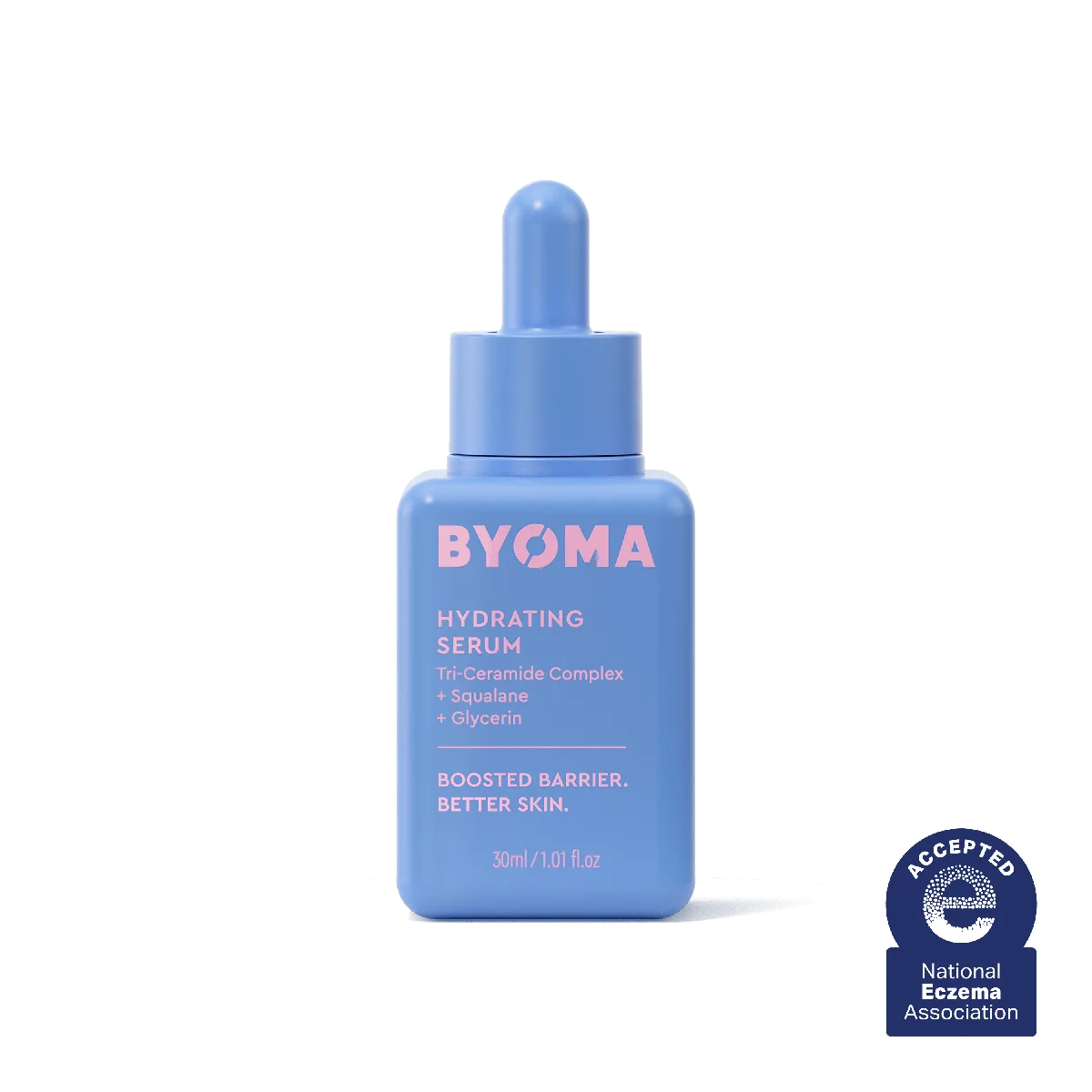
Hydrating Serum
Budget Barrier Builder
 Verified reviewer
Pros & cons.
- +Scientifically sound ceramide-cholesterol-phytosphingosine complex mirrors the skin's natural lipid ratio
- +Exceptionally lightweight texture absorbs in seconds and layers under any product
- +Fragrance-free, alcohol-free, and vegan with minimal irritation potential
- +Budget-friendly price point for a genuine barrier-repair formulation
- +Squalane provides emolliency without clogging pores or feeling greasy
- +Anti-inflammatory licorice derivative soothes reactive and compromised skin
- +Works well as a buffer layer under retinoids to reduce irritation
- −Dropper mechanism is inconsistent and wastes product — a pump would be better
- −30 mL bottle only lasts about a month with recommended twice-daily use
- −Too lightweight on its own for very dry skin — requires a follow-up moisturizer
- −Single-focus hydration formula does not address pigmentation, acne, or aging
- −Limited availability outside major US and UK retailers
The full review.
There is something refreshing about a brand that exists because its founder got bored during a pandemic and decided to actually read the dermatology literature. Marc Elrick launched Byoma in 2022 out of Glasgow, not with a celebrity endorsement or a viral TikTok moment, but with a simple thesis: most people are wrecking their skin barriers with trendy acids and need something to fix the damage. The Hydrating Serum was part of that original lineup, and it remains one of the most honest budget serums on the market.
The formula centers on what Byoma calls its Tri-Ceramide Complex — ceramide NP, cholesterol, and phytosphingosine arranged to approximate the lipid ratio found in healthy stratum corneum. This is not marketing theater. Decades of research, including work published in the International Journal of Cosmetic Science, have established that ceramides alone are insufficient for barrier repair; they need cholesterol and free fatty acids in roughly a 3:1:1 molar ratio to form the lamellar structures that actually prevent water loss. Byoma includes all three. At this price point, that is genuinely noteworthy.
Glycerin sits high in the ingredient list — second position — doing the heavy lifting as the primary humectant. It pulls moisture into the epidermis while the ceramide complex works to seal it there. Squalane adds lightweight emolliency without tipping the formula into territory that would clog pores or feel heavy. The result is a serum that hydrates in two directions: drawing water in and preventing it from escaping. Dipotassium glycyrrhizate, a licorice derivative, rounds out the formula with anti-inflammatory properties that calm the redness and reactivity often associated with damaged barriers.
The texture is almost water-like — a clear, slightly viscous liquid that absorbs in seconds and leaves behind nothing but a subtle dewy finish. You will not feel this on your skin five minutes after application. That disappearing act is both the product’s greatest strength and its most common point of confusion. People accustomed to richer serums sometimes mistake the lightweight feel for ineffectiveness. But barrier repair is not about what you feel on the surface; it is about what is happening in the lipid matrix underneath.
Application is straightforward: four to six drops on damp skin, pressed gently rather than rubbed. It layers beautifully under virtually anything — moisturizers, sunscreens, retinoids. In fact, using this under retinol is one of its smartest applications. The ceramide complex helps buffer the irritation that retinoids cause by reinforcing the very barrier they temporarily compromise.
The packaging deserves an honest critique. The small glass bottle with its dropper cap looks clean and photogenic, but the dropper mechanism is genuinely frustrating. It does not draw up product consistently, forcing you to tilt the bottle and fiddle with the mechanism. For a 30 mL bottle that will last perhaps a month with twice-daily use, every wasted drop matters. Byoma would benefit from switching to a pump or squeeze tube format.
At $15.99 for 30 mL, the per-ounce cost is reasonable but not extraordinary for a serum at this tier. The value proposition lies entirely in the formulation quality. You are getting a scientifically sound lipid complex — the same fundamental approach used in products costing three to five times as much — without the elegant packaging or luxurious textures that premium brands charge for. Whether that trade-off works for you depends on whether you are buying skincare to fix a problem or to enjoy an experience.
The honest limitation is scope. This is a barrier hydration serum, full stop. It does not address hyperpigmentation, acne, aging, or texture beyond what improved barrier function incidentally provides. If your skin is dehydrated and reactive, it is a targeted and effective solution. If you are looking for a multitasking treatment, you will need additional products in your routine.
Byoma has only been on the market since 2022, which means the long-term track record is still being written. The ingredients themselves have deep clinical backing — ceramide NP and its lipid partners are some of the most studied molecules in dermatology — but the specific Byoma formulation does not yet have the decades of independent validation that legacy barrier creams enjoy. That is worth noting, though it is not a reason to avoid the product.
For anyone dealing with dryness, dehydration, post-procedure sensitivity, or the aftermath of overzealous exfoliation, the Byoma Hydrating Serum is a sensible, affordable starting point. It does one thing well, it does it for a fair price, and it does not pretend to be anything more than what it is. In a market crowded with serums promising miracles, that kind of restraint is its own form of luxury.
Formula
 ### Texture


 The texture is almost water-like — a clear, slightly viscous liquid that absorbs in seconds and leaves behind nothing but a subtle dewy finish. You will not feel this on your skin five minutes after application. That disappearing act is both the product's greatest strength and its most common point of confusion. People accustomed to richer serums sometimes mistake the lightweight feel for ineffectiveness. But barrier repair is not about what you feel on the surface; it is about what is happening in the lipid matrix underneath.

 ### Packaging


 The packaging deserves an honest critique. The small glass bottle with its dropper cap looks clean and photogenic, but the dropper mechanism is genuinely frustrating. It does not draw up product consistently, forcing you to tilt the bottle and fiddle with the mechanism. For a 30 mL bottle that will last perhaps a month with twice-daily use, every wasted drop matters. Byoma would benefit from switching to a pump or squeeze tube format.

 ### Best for


 For anyone dealing with dryness, dehydration, post-procedure sensitivity, or the aftermath of overzealous exfoliation, the Byoma Hydrating Serum is a sensible, affordable starting point. It does one thing well, it does it for a fair price, and it does not pretend to be anything more than what it is. In a market crowded with serums promising miracles, that kind of restraint is its own form of luxury.

 ### Not ideal for


 The honest limitation is scope. This is a barrier hydration serum, full stop. It does not address hyperpigmentation, acne, aging, or texture beyond what improved barrier function incidentally provides. If your skin is dehydrated and reactive, it is a targeted and effective solution. If you are looking for a multitasking treatment, you will need additional products in your routine.

 ### AM routine


 Application is straightforward: four to six drops on damp skin, pressed gently rather than rubbed. It layers beautifully under virtually anything — moisturizers, sunscreens, retinoids. In fact, using this under retinol is one of its smartest applications. The ceramide complex helps buffer the irritation that retinoids cause by reinforcing the very barrier they temporarily compromise.

 ### PM routine
Ingredient analysis.
Full INCI list
Aqua, Glycerin, Butylene Glycol, Squalane, Sodium Stearoyl Glutamate, Ammonium Acryloyldimethyltaurate/VP Copolymer, Dipropylene Glycol, Ceramide NP, Caprylic/Capric Triglyceride, Cholesterol, Phytosphingosine, Stearic Acid, Oleic Acid, Hydroxyacetophenone, Polyglyceryl-4 Oleate, Hydroxyethyl Acrylate/Sodium Acryloyldimethyl Taurate Copolymer, Hydrogenated Lecithin, Caprylyl Glycol, Glyceryl Oleate, Lactic Acid, Ethylhexylglycerin, Hydrogenated Rapeseed Alcohol, Sorbitan Isostearate, Sodium Phytate, Xanthan Gum, Dipotassium Glycyrrhizate, Tocopherol, Caprylhydroxamic Acid
Skin match.
The science.
The Science
The Byoma Hydrating Serum relies on a basic skin science principle: effective barrier repair needs the full lipid triad of ceramides, cholesterol, and free fatty acids in a physiological ratio, not just ceramides. A 2024 review in the International Journal of Cosmetic Science examined how ceramides affect skin barrier function. It confirmed that formulations combining ceramides with cholesterol and fatty acids repair the barrier better than ceramide-only products. This works by forming lamellar structures—the organized lipid layers that defend the stratum corneum against water loss.
Ceramide NP, the specific ceramide in the Byoma Hydrating Serum formula, is a common ceramide subclass in human skin and has extensive research regarding barrier homeostasis. A 2023 study in the Journal of Lipid Research examined how sphingosine and phytosphingosine ceramide ratios affect barrier function. It found that the ratio between these lipids impacts the formation of the short periodicity phase—the crystalline lipid structure essential for barrier integrity. Phytosphingosine, in the Byoma Hydrating Serum formula, acts as a barrier lipid and a precursor for ceramide synthesis, while also providing antimicrobial properties for skin microbiome health.
The glycerin backbone also has strong evidence. As the second ingredient, it provides immediate humectant hydration while the ceramide complex handles long-term structural repair. Squalane acts as a biocompatible emollient that integrates with the skin's lipid environment without disrupting ceramide lamellar organization. Dipotassium glycyrrhizate, from licorice root, has documented anti-inflammatory activity by inhibiting the cyclooxygenase and lipoxygenase pathways, which addresses inflammation from barrier compromise.
References
- The role of ceramides in skin barrier function and the importance of their correct formulation for skincare applications — International Journal of Cosmetic Science (2024)
- Effect of sphingosine and phytosphingosine ceramide ratio on lipid arrangement and barrier function in skin lipid models — Journal of Lipid Research (2023)
Dermatologist Perspective
Dermatologists often recommend ceramide-based products for patients with eczema-prone skin, compromised skin barriers, and post-procedure recovery. Including ceramide NP with cholesterol and phytosphingosine in a physiological lipid ratio follows dermatological principles for barrier restoration. Board-certified dermatologists note this formulation works well as a supportive layer when patients use irritating actives like chemical exfoliants or retinoids. The fragrance-free, minimal-irritant profile suits sensitive skin, including those with contact dermatitis or rosacea.
Where it fits in your routine.
Apply 4-6 drops to damp, freshly cleansed skin; moisture helps the humectants work better. Press the serum into your face and neck instead of rubbing. Use double the drops for drier skin. Wait a few seconds for absorption, then apply your moisturizer. Use morning and evening. This serum works well before retinoids at night to buffer irritation. Layer it over toner and under any cream or SPF without pilling.
At $15.99 for 30 mL, the Byoma Hydrating Serum provides high-quality formulation at a drugstore price. The ceramide-cholesterol-phytosphingosine triad matches the approach used in $40-$80 per ounce products. The smaller bottle lasts about a month, making the annual cost of daily use around $190—still affordable for a treatment serum. The brand lacks a larger size to improve per-unit economics. For its performance, the Byoma Hydrating Serum is a top value in the barrier-repair serum category, especially for budget-conscious consumers seeking evidence-backed ingredients without the markup.
This affordable barrier-repair serum works for dry, dehydrated, or sensitive skin. It suits people recovering from over-exfoliation, retinoid users needing a soothing buffer layer, and skincare beginners wanting a simple, effective hydrating step.
People with oily skin who produce enough lipids may find this unnecessary. This hydration-only formula does not treat acne, hyperpigmentation, or aging; you need additional actives in your routine for those concerns.
Product details.
This lightweight, slightly viscous serum is clear to slightly translucent. It glides on smoothly and absorbs within seconds without leaving tacky or greasy residue.
Unscented — no detectable fragrance.
Small glass bottle uses a dropper cap. The minimalist white and pastel design matches the Byoma brand aesthetic. The 30 mL size works for travel, though some users find the dropper mechanism frustrating.
The serum feels plump and dewy on first application. It sinks in fast and leaves skin soft and lightly moisturized. You won't experience an adjustment period, tingling, or purging. Results are cumulative; the barrier-strengthening benefits show more clearly after several weeks of consistent use.
4-6 weeks with twice-daily facial application using 4-6 drops per use
12 months
All Year
The backstory.
Born from founder Marc Elrick's deep dive into skin science during COVID lockdowns, Byoma launched in 2022 specifically to address the barrier damage epidemic caused by people over-exfoliating with trendy acids. The Hydrating Serum was part of the original lineup, designed to deliver ceramide-based barrier repair in a format that Gen Z consumers would actually use — lightweight, fast, and affordable.
About Byoma
Emerging Brand (2–5 years)Byoma was founded in 2022 by Marc Elrick in Glasgow, UK, with a focus on barrier-first skincare at accessible prices. The brand's products are dermatologist-tested and clinically validated, and it rapidly gained traction through social media, reaching $30–50 million in sales by 2023. While the formulations use well-studied ingredients, the brand's independent clinical portfolio is still developing.
Common myths.
Ceramide serums work just as well without cholesterol and fatty acids
Research shows ceramides require cholesterol and free fatty acids in a 3:1:1 ratio to form proper lamellar structures. Byoma's Tri-Ceramide Complex contains all three components, making it more effective at barrier repair than serums with ceramides alone.
Barrier repair requires a thick cream; serums are too lightweight.
Barrier repair requires the right lipids (ceramides, cholesterol, fatty acids), not product thickness. This serum delivers those lipids in a lightweight vehicle. It works for layering and skin types that cannot tolerate heavy creams.
FAQ.
Can I use Byoma Hydrating Serum with retinol?
The ceramide-based formula buffers retinol irritation by reinforcing the skin barrier. Apply the Byoma serum to damp skin first, let it absorb, then apply your retinol. The squalane and ceramide complex reduces the dryness and flaking retinol causes.
How does Byoma Hydrating Serum compare to more expensive ceramide products?
Byoma's formula uses the same key barrier lipids — ceramide NP, cholesterol, and phytosphingosine — found in premium ceramide products. At under $16, it provides a scientifically sound lipid ratio without the high price. The trade-off is a smaller bottle size and simpler supporting ingredient list.
Is Byoma Hydrating Serum enough on its own for dry skin?
For most people with dry skin, this serum works best as a hydrating layer before a moisturizer. The lightweight texture delivers ceramides and humectants effectively, but very dry skin needs a cream or occlusive on top to seal those ingredients in.
What does the Tri-Ceramide Complex in Byoma actually do?
The Tri-Ceramide Complex uses ceramide NP, cholesterol, and fatty acids to mimic the skin's natural lipid barrier. Research shows these three components must work in a specific ratio to form proper lamellar structures in the stratum corneum. This reduces water loss, strengthens the barrier, and improves skin resilience over time.
What the community says.
"Lightweight texture absorbs quickly without greasiness"
"Noticeable hydration boost, especially on dry and sensitive skin"
"Clean, minimal ingredient list that rarely causes reactions"
"Excellent value for a ceramide-based serum"
"Works well layered under other products"
"Dropper dispenser is difficult to use and wastes product"
"Small bottle size doesn't last long with daily use"
"Some users find it too lightweight for very dry skin without a follow-up moisturizer"
"Limited availability in some regions"
People also looked at.