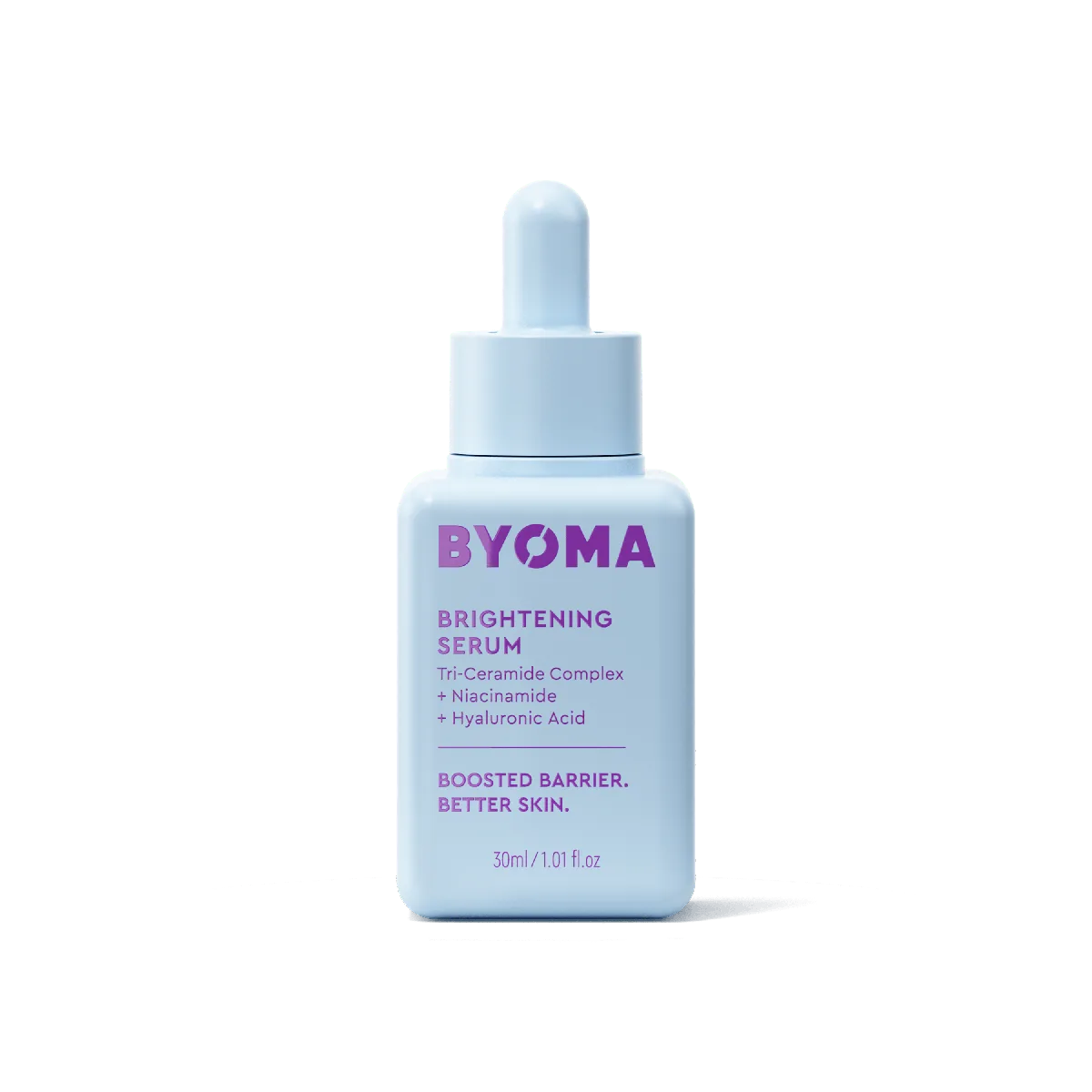
Brightening Serum
Barrier-Smart Brightener
 Verified reviewer
Pros & cons.
- +Dual-pathway brightening through niacinamide and ascorbic acid simultaneously
- +Tri-ceramide complex protects barrier while actives address pigmentation
- +Completely fragrance-free, alcohol-free, and allergen-free formula
- +Moderate niacinamide concentration avoids flush and irritation common with high doses
- +Exceptional value at $16 for clinical-quality multi-active brightening serum
- +Lightweight, invisible texture layers perfectly under other products
- +Refill pouches available for eco-conscious repurchase
- −Brightening results are gradual — expect 4-8 weeks for visible improvement
- −Not a high-potency vitamin C serum for those seeking aggressive pigmentation treatment
- −Some users report more hydration benefit than brightening
- −Emerging brand with limited long-term track record
- −Contains methylpropanediol which can cause sensitivity in rare cases
The full review.
The brightening serum category has a violence problem. Fifteen percent vitamin C at pH 3.5. Twenty percent niacinamide. Glycolic acid at concentrations that make a dermatologist wince. The logic assumes more brightening actives always mean better results—and that the resulting redness, peeling, and barrier damage are just the price of luminous skin. Byoma chose not to participate in this arms race.
The Brightening Serum takes a moderate approach. It uses niacinamide at roughly four to five percent—not ten, not fifteen, and not the aggressively high concentrations some brands use as a badge of honor. Ascorbic acid is at a supporting concentration, enough for tyrosinase inhibition without the pH-driven irritation of high-dose L-ascorbic acid serums. Lactic acid acts as a gentle exfoliating aid rather than a resurfacing treatment. The signature tri-ceramide complex underlies the formula to keep the barrier intact while the brightening actives work.
This approach addresses what the brightening category often ignores: a compromised barrier makes hyperpigmentation worse. When harsh products, UV exposure, or inflammatory conditions damage the skin barrier, post-inflammatory hyperpigmentation becomes more likely and persistent. Treating pigmentation by further stressing the barrier creates a vicious cycle. Byoma breaks that cycle by delivering brightening actives alongside genuine barrier-repair ingredients.
Niacinamide is the workhorse. At four to five percent, it hits the sweet spot identified by dermatological research—the concentration range where clinical studies show significant improvements in uneven skin tone, hyperpigmentation, and barrier function. Higher doses do not proportionally improve results but do increase the risk of niacinamide flush—the temporary redness and tingling high-concentration niacinamide serums produce. Byoma’s restraint reflects an understanding of the dose-response curve that many brands disregard.
Ascorbic acid plays a supporting but meaningful role. As a tyrosinase inhibitor, it attacks pigmentation production at the enzymatic level, while niacinamide works downstream to block melanosome transfer. These two mechanisms are complementary; targeting different stages of the melanin pathway yields better results at lower individual concentrations. Squalane and tocopherol in the formula provide antioxidant stabilization for the ascorbic acid, extending its efficacy beyond what pure L-ascorbic acid in water achieves.
The ceramide complex in a brightening serum is Byoma’s signature philosophical statement. Ceramide NP, cholesterol, and phytosphingosine—the same trio in the mist, the cleanser, and every product in the line—provide structural lipid support to keep the barrier functional while the actives penetrate. Hydrogenated lecithin helps deliver these lipids into the stratum corneum instead of leaving them on the surface. The result is a serum that treats and protects the skin simultaneously.
Sodium hyaluronate adds hydration. A hydrated stratum corneum is more permeable to active ingredients and less prone to the micro-inflammation that drives post-inflammatory hyperpigmentation. The HA ensures niacinamide and ascorbic acid have optimal conditions for absorption and activity.
The texture is nearly invisible—a watery gel that disappears into skin within seconds. It has no stickiness, no film, and no residue. It layers well under moisturizer, sunscreen, and makeup. For a serum with this many active ingredients, the minimal feel is impressive. You can use it twice daily without feeling like you are wearing a product.
Results are gradual, which is the honest truth and the price of gentleness. Immediate radiance is visible from the first application—niacinamide and hyaluronic acid create a light-reflecting hydration effect that makes skin look healthier right away. Actual pigmentation reduction starts at four to six weeks, with meaningful improvement in dark spots and overall evenness developing over eight to twelve weeks. This product will not dramatically transform your skin in a week. It will meaningfully improve it over a season without damaging anything.
The formula is clean from an irritation standpoint. No fragrance. No alcohol. No essential oils. No common allergens. Twenty-five ingredients each serve a clear purpose in the active, delivery, or stabilization system. For people with sensitive skin told they cannot use brightening products, this serum is a quiet revelation.
At sixteen dollars for roughly two to three months of supply, the value is exceptional. Comparable multi-active brightening serums with ceramide technology from established brands cost forty to sixty dollars. The refill option reduces ongoing costs further. Byoma has less track record than legacy options due to its emerging-brand status, but the formulation science is sound and clinical testing supports the brightening claims.
This serum is for people who learned that more is not always better. For those who burned their face with high-dose vitamin C, flushed from concentrated niacinamide, or stripped their barrier chasing brightness—this is the gentler, smarter path to the same destination. It takes a little longer, and your barrier arrives intact.
Ingredient analysis.
Full INCI list
Aqua, Methylpropanediol, Niacinamide, 1,2-Hexanediol, Glycerin, Polyglyceryl-10 Laurate, Sodium Hyaluronate, Ceramide NP, Cholesterol, Caprylic/Capric Triglyceride, Phytosphingosine, Sodium Phytate, Ascorbic Acid, Stearic Acid, Oleic Acid, Hydrogenated Lecithin, Ethylhexylglycerin, Xanthan Gum, Squalane, Tocopherol, Lactic Acid, Carbomer, Tromethamine, Caprylyl Glycol, Caprylhydroxamic Acid
Skin match.
The science.
The Science
Dermatological literature documents how niacinamide brightens skin. A 2002 British Journal of Dermatology study shows 5% niacinamide reduces hyperpigmentation and increases skin lightness more than a vehicle alone over 8 weeks. Niacinamide works by inhibiting melanosome transfer from melanocytes to keratinocytes instead of suppressing melanin synthesis directly. This distinction makes niacinamide effective and gentle.
Combining niacinamide with ascorbic acid targets two points in the melanin pathway. Niacinamide blocks melanosome transfer, while ascorbic acid inhibits tyrosinase, the enzyme that produces melanin. A 2013 Journal of Cosmetic Dermatology study confirms multi-target hyperpigmentation approaches produce better outcomes than single-active treatments, supporting the dual-active strategy in this formulation.
Barrier repair affects brightening results. Research in the Journal of Investigative Dermatology shows barrier disruption triggers inflammatory cascades that stimulate melanogenesis; a damaged barrier directly contributes to pigmentation. This serum uses the tri-ceramide complex to maintain barrier integrity while actives treat existing pigmentation, addressing both the symptom (dark spots) and the cause (barrier dysfunction).
Dermatologist Perspective
Dermatologists favor moderate-concentration, multi-active hyperpigmentation approaches over high-dose single-ingredient treatments. Board-certified dermatologists note the 4-5% niacinamide range in this serum matches clinical evidence while minimizing irritation risk. This matters for patients with sensitive skin or skin of color, where aggressive treatments can worsen pigmentation through post-inflammatory hyperpigmentation. Including barrier-repair ingredients with brightening actives reflects the dermatological view that barrier health and pigmentation management are interconnected.
Where it fits in your routine.
Apply 2-3 drops to clean, damp skin after toner or face mist. Press the serum into your face and neck; do not rub. Wait 30-60 seconds for absorption before you apply moisturizer. Use morning and evening. In the morning, always use SPF 30+ sunscreen, as brightening without sun protection is counterproductive. In the PM, layer with retinol by applying this serum first, waiting 5 minutes, then applying retinol.
At $15.99 for 1.01 fluid ounces, this serum offers high value. The multi-active formula — niacinamide, ascorbic acid, hyaluronic acid, tri-ceramide complex, squalane — uses ingredients found in $40-60 serums. The refill option lowers the cost. Byoma lacks the decades-long track record of legacy brands, but the science is well-established and clinical testing supports the brightening claims. The per-application cost is low for a product lasting two to three months.
Use this for dullness, uneven skin tone, or dark spots if you want brightening without barrier damage. It works for sensitive skin types that cannot tolerate high-dose vitamin C or aggressive brightening products. It also works as a barrier-supportive layer for users of retinol or exfoliants.
Prescription hydroquinone or high-dose retinoids work faster for rapid, dramatic pigmentation correction, but cause more side effects. Patch-test first if you reacted to methylpropanediol or niacinamide in previous products. This clinical-minimalist approach lacks the fragrant, luxurious serum textures some prefer.
Product details.
Lightweight, watery-gel serum absorbs fast without residue or stickiness
Completely fragrance-free — no detectable scent
1. 01 fl oz pump bottle; refill pouches available
The serum applies like water with a slight gel-like slip. It absorbs in seconds and leaves skin hydrated without a coating. It has no tingling, no irritation, and no fragrance. Skin shows an immediate subtle glow, but true brightening takes weeks of consistent use.
2-3 months with twice-daily use of 2-3 drops
12 months
All Year
The backstory.
Part of Byoma's 2022 launch lineup, this serum addresses the common scenario where people damage their barriers with high-concentration vitamin C and exfoliants while chasing brightness. Founder Marc Elrick designed it to prove that effective brightening doesn't require aggressive formulations — a moderate niacinamide concentration with barrier support can deliver visible results without the irritation cycle.
About Byoma
Emerging Brand (2–5 years)Byoma launched in 2022 with a barrier-first philosophy. Every product uses the same tri-ceramide complex. Marc Elrick founded the brand, which is dermatologist-tested and sold at Target, Ulta, Boots, and Space NK. Byoma's formulations use well-established, clinically validated ingredients despite the brand's recent start.
Common myths.
Use high-concentration vitamin C (15-20%) for visible brightening.
This serum uses ascorbic acid and niacinamide. This dual-pathway approach targets pigmentation by inhibiting melanin transfer (niacinamide) and tyrosinase (vitamin C) at the same time. Research shows moderate concentrations of multiple brightening actives match the efficacy of high-dose single-active formulas with less irritation risk.
Niacinamide and vitamin C shouldn't be used together.
This skincare myth stems from misinterpreted chemistry. Modern formulations like this one combine niacinamide and ascorbic acid. The interaction that concerned early researchers only occurs at extreme pH levels and temperatures not found in skincare products.
FAQ.
Does Byoma Brightening Serum really work for dark spots?
Clinical testing shows skin tone improves by up to 114% with consistent use. The niacinamide and ascorbic acid target pigmentation via two mechanisms: melanosome transfer inhibition and tyrosinase inhibition. Results are gradual and show after 4-6 weeks. For deep or hormonal pigmentation, this serum works best in a routine that includes sunscreen.
Can I use Byoma Brightening Serum with retinol?
Yes — the tri-ceramide complex in this serum makes it an excellent retinol companion. Apply the brightening serum first, let it absorb, then follow with retinol. The ceramides, cholesterol, and phytosphingosine maintain the barrier while the retinol works, reducing the irritation and dryness that often accompany retinoid use.
What percentage of niacinamide is in Byoma Brightening Serum?
The niacinamide concentration is about 3.6-5.5%, as it is the third ingredient. This range is well-studied and effective; research shows 4-5% niacinamide brightens skin and improves barrier function. Higher concentrations (10%+) do not improve results and increase irritation risk.
Is Byoma Brightening Serum good for sensitive skin?
This is an excellent option for sensitive skin that needs brightening. The formula is fragrance-free, alcohol-free, and has zero common irritants or allergens. The tri-ceramide complex supports the barrier, and most sensitive skin types tolerate the moderate niacinamide concentration. The ascorbic acid and lactic acid are at low supporting concentrations.
Does Byoma Brightening Serum contain vitamin C?
Yes — it contains ascorbic acid (pure L-ascorbic acid, the most potent form of vitamin C) at a supporting concentration. This is not a high-dose vitamin C serum, but the ascorbic acid works with niacinamide to target pigmentation via two different biochemical pathways. Squalane and tocopherol in the formula stabilize the vitamin C.
What the community says.
"Lightweight, non-sticky texture absorbs quickly"
"Skin looks noticeably brighter after consistent use"
"Fragrance-free with zero irritation"
"Great value for a multi-active brightening serum"
"Works well under makeup and sunscreen"
"Brightening results are subtle — not a dramatic transformation"
"Some users see more hydration than brightening benefit"
"Contains methylpropanediol which some users are sensitive to"
"Frequently sold out"
People also looked at.