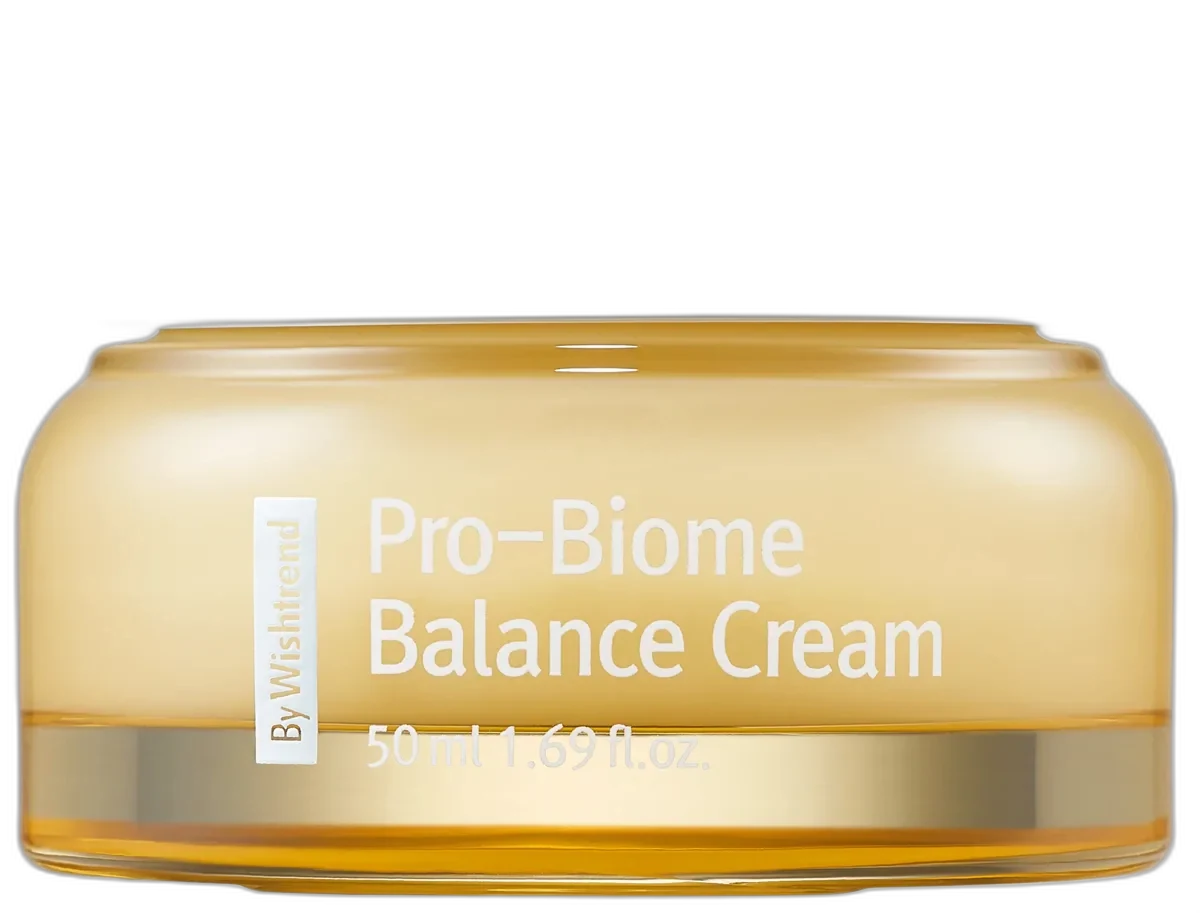
Pro-Biome Balance Cream
Microbiome Moisturizer Pick
 Verified reviewer
Pros & cons.
- +70% Lactobacillus ferment lysate in the water position is rare and substantive
- +10% propolis brings real anti-inflammatory support into a moisturizer format
- +Stack of four postbiotic ferments compounds the microbiome logic
- +Genuinely featherweight texture absorbs in under 15 seconds
- +Layers cleanly under sunscreen without pilling
- +Fragrance-free, alcohol-free, essential-oil-free
- +Pairs seamlessly with the brand's propolis ampoule as a system
- +Pregnancy-safe option for sensitive, reactive skin
- −Not fungal-acne safe due to sunflower seed oil and caprylic acid
- −Too lightweight to be a sole moisturizer for very dry skin
- −50ml jar runs out in about two months with twice-daily use
- −Faint honey-resin natural smell isn't universally loved
- −Not vegan due to propolis and honey ferment content
The full review.
Skincare’s ‘microbiome’ shelf is mostly a vibe. A glycerin-and-water moisturizer with 0.5% Lactobacillus ferment near the bottom of the INCI claims ‘postbiotic’ status to reassure consumers about skin flora. By Wishtrend’s Pro-Biome Balance Cream is the rare case where marketing and formula align. The first ingredient in the INCI is not water; it is Lactobacillus ferment lysate at 70%. The second is propolis extract at 10%. Water—the standard position-one humectant base—sits low on the list, after the squalane and the sunflower oil. Here, the postbiotic ferment is the actual base, not a guest star.
This changes the physical nature of the cream. Most moisturizers use a water-and-emulsifier scaffold with ‘actives’ floating on top. This feels like a ferment because it is one. It has a faint, honey-adjacent natural smell from the lactobacillus and propolis that no marketer would add on purpose. The texture has a slip-and-melt quality closer to a thick essence than a traditional emulsion. A small dab on cleansed cheeks disappears in under fifteen seconds, leaving a satin finish that layers under sunscreen without pilling.
This lightweight finish defines the cream and its audience. Combination, oily, and normal-leaning skin will find it hydrates without suffocating and can use it daily under SPF. Very dry skin will find it behaves like a serum from the wrong category and needs a richer cream layered on top, especially in winter. Both views are correct. This is a featherweight by design, not by underdosing.
The supporting cast prevents the cream from being one-note. The 10% propolis brings the brand’s signature anti-inflammatory polyphenol load into a moisturizer—the same active in the 15% Polyphenols ampoule, but at a concentration for a leave-on cream. Bifida ferment lysate (the ingredient in Estée Lauder’s Advanced Night Repair) sits a few slots down. Lactococcus ferment and Saccharomyces/honey ferment join the stack. Squalane and caprylic/capric triglyceride provide the lipid layer that locks the postbiotic-rich water phase into the skin. Tocopherol adds an antioxidant finish. The formula is fragrance-free, alcohol-free, and free of essential oils, which suits the sensitive and reactive skin it targets.
Results show up fast for the right users. Skin in a low-level inflammatory state from over-active routines or a compromised barrier feels calmer within a few days. Slight redness after acne treatments fades over two to four weeks of consistent use. The cream pairs well with the brand’s own propolis ampoule; the two work as a system where the postbiotic-plus-propolis logic compounds. It also works as a soothing closer for routines with retinol, vitamin C, or acids: apply your active, wait one minute, then seal with this cream to feel less raw the next morning.
The limitations are clear. Sunflower seed oil is high enough on the INCI that this is not a fungal-acne-safe option, which is unfortunate since the target audience overlaps with Malassezia-prone users. The 50ml jar is small for twice-daily use; a tub lasts about two months. Very dry skin will not find this sufficient alone and must layer it or use it as a daytime base only. Finally, the mild, natural honey-resin smell lacks a fragrance-mask and may not suit everyone.
For combination, sensitive, normal, and oily skin seeking a calm-barrier, microbiome-friendly moisturizer that doesn’t feel heavy, this is one of the more honest K-beauty formulations available. The price is fair for the ingredients. The texture is a pleasure to apply. Unlike most ‘microbiome’ products, the formula actually backs up the postbiotic label.
Ingredient analysis.
Full INCI list · pH 5.5
Lactobacillus Ferment Lysate, Propolis Extract, Butylene Glycol, Glycerin, 1,2-Hexanediol, Caprylic/Capric Triglyceride, Squalane, Helianthus Annuus (Sunflower) Seed Oil, Saccharomyces/Honey Ferment Filtrate, Bifida Ferment Lysate, Lactococcus Ferment Lysate, Asparagus Officinalis Extract, Allium Sativum (Garlic) Bulb Extract, Pisum Sativum (Pea) Seed Extract, Malva Sylvestris (Mallow) Extract, Glycine Max (Soybean) Seed Extract, Solanum Tuberosum (Potato) Pulp Extract, Tocopherol, Betaine, Aqua (Water), Glyceryl Stearate, Xylitol, Caprylic Acid, Xanthan Gum, Sodium Polyacrylate, Disodium EDTA
Skin match.
The science.
The Science
The skin microbiome consists of resident bacteria, fungi and viruses that inhabit the stratum corneum and influence barrier function, immune signaling and inflammation. A growing body of research, including work published in the Journal of Investigative Dermatology and the British Journal of Dermatology, has linked microbiome dysbiosis — the disruption of the normal balance of skin flora — to conditions like atopic dermatitis, acne and rosacea. Topical postbiotics are the metabolic byproducts of bacterial fermentation: lysates, ferment filtrates and individual molecules like short-chain fatty acids, peptides and lipoteichoic acids. Unlike live probiotics (which cannot survive in a typical skincare formulation), postbiotic ferments deliver the immunomodulatory and barrier-support molecules that beneficial bacteria produce, in a stable, shelf-friendly form. Lactobacillus ferment lysate specifically has been studied for its effects on stratum corneum hydration and inflammatory cytokine modulation, and a 2019 paper in Beneficial Microbes summarized in vitro evidence that lactobacillus-derived ferments can support barrier integrity in keratinocyte models. Bifida ferment lysate has been the subject of several small clinical studies showing improvement in barrier function and reduction in trans-epidermal water loss after consistent topical use. Propolis polyphenols — particularly caffeic acid phenethyl ester — have well-documented antibacterial activity against Cutibacterium acnes alongside anti-inflammatory effects, providing a complementary mechanism: the postbiotics support commensal flora while the propolis selectively discourages problematic strains. The squalane and triglyceride components round out the formula by providing the lipid scaffolding the stratum corneum needs to retain water, ensuring that the postbiotic effects translate into measurable hydration rather than evaporating off the surface. The combination is what matters here: most postbiotic creams use a single ferment as a marketing flag, while this formula stacks four different ferments in a high-fraction base and pairs them with an evidence-backed botanical antibacterial.
References
- The skin microbiome and its role in barrier function and inflammation — Journal of Investigative Dermatology (2018)
Dermatologist Perspective
Dermatologists increasingly view the skin microbiome as a meaningful contributor to barrier health and inflammatory skin conditions, and postbiotic ingredients have been gaining cautious acceptance in clinical conversations. Board-certified dermatologists generally recommend microbiome-focused moisturizers as supportive rather than primary treatment for conditions like sensitivity, mild rosacea and post-procedure recovery, where supporting the existing flora is preferable to using harsher antimicrobials. The lightweight texture and fragrance-free profile of this cream make it appropriate for the sensitive and reactive patients who are most likely to benefit from a microbiome-supportive approach. Dermatologists typically note that postbiotic products are not a replacement for prescription treatment in active disease but can complement a routine that includes retinoids, azelaic acid or other prescribed actives by softening their irritation potential. The cream is generally considered appropriate for use during pregnancy.
Where it fits in your routine.
Apply a small dab to cleansed skin after toners and serums. Press the gel-cream into the face and neck instead of rubbing; patting helps it absorb quickly. Use morning and evening. It layers cleanly under sunscreen in AM. For very dry skin, layer a thicker cream on top or use it as a daytime base with a heavier night cream. It pairs well with the brand's Polyphenols in Propolis 15% Ampoule applied first. Use it after retinoids, acids or vitamin C as a soothing final layer.
At around twenty-five dollars for 50ml, this sits in the K-beauty mid-range. It costs more than basic ceramide moisturizers but less than clinical or luxury options, similar to other microbiome and postbiotic creams. The single 50ml size is the only option; one jar lasts about two months if you apply it to your face and neck twice daily. The formulation justifies the price: the 70% ferment fraction and 10% propolis are not boilerplate, and the fragrance-free, well-preserved formula works for sensitive skin. Cheaper postbiotic creams exist, but most use a generic glycerin base and a token ferment near the bottom of the INCI. This is the version worth buying if you want genuine microbiome support.
Combination, normal, sensitive, and oily skin types seeking a lightweight, microbiome-friendly moisturizer. Users of the brand's propolis ampoule wanting the matching system. People disappointed by common postbiotic moisturizers on the market.
Very dry skin types needing a thick primary moisturizer. Fungal-acne-prone users who cannot tolerate sunflower oil. Vegan shoppers avoiding propolis and honey-derived ingredients.
Product details.
This light gel-cream turns into a watery emulsion on contact and absorbs in seconds.
Propolis and ferment create a faint honey-and-resin natural smell; there is no added fragrance.
Flat frosted jar with screw cap.
The first few uses feel too light for a 'moisturizer' — the gel-cream absorbs without a perceptible film. This feels insufficient for dry skin types but prevents suffocation for oily and combination types. Most users experience no purging or stinging.
About 8-10 weeks with twice-daily use across face and neck.
12 months
All Year
The backstory.
By Wishtrend launched the Pro-Biome line in 2021 as a microbiome-focused expansion of the propolis collection, betting on the growing consumer interest in skin barrier and microbiome research. The unusually high ferment fraction was a deliberate choice to avoid the 'token postbiotic in a glycerin base' approach that had become the category default.
About By Wishtrend
Established Brand (5–20 years)By Wishtrend launched in 2013 as Korean retailer Wishtrend's in-house brand. The Pro-Biome Balance Cream is part of the brand's microbiome-focused expansion and pairs with the wider propolis line.
Common myths.
Microbiome creams are marketing fluff.
Postbiotic ferments show real evidence for barrier support and inflammation modulation. While some products use them as token ingredients, a formula with 70% ferment in the water position is not a token gesture.
If a cream is this light, it can't be moisturizing enough.
Moisturization depends on the water-to-lipid balance, not how heavy a cream feels. The squalane and triglyceride content hydrates combination and oily skin fully. Very dry skin types need a thicker follow-up.
FAQ.
Is this fungal acne safe?
No — sunflower seed oil and a small amount of caprylic acid in the formula can feed Malassezia. Users prone to fungal-acne should use the brand's other lighter formulas instead.
Is it moisturizing enough for dry skin?
It works for normal-to-combination dry skin. Very dry skin types — winter dryness, true xerosis, mature dry skin — need a thicker cream layered on top or used at night. It works as a base hydrator under SPF for most skin types.
What does 'pro-biome' actually mean here?
The formula uses postbiotic ferment lysates — the metabolic byproducts of Lactobacillus, Bifida and Lactococcus — instead of live probiotic organisms (which cannot survive in skincare). It uses the molecules friendly bacteria produce to support the existing skin microbiome.
Can I layer it over the propolis ampoule?
Yes — these two products work as a system. The ampoule delivers 15% propolis, and this cream locks it in with a 10% propolis layer and the postbiotic stack. They pair seamlessly.
Does it work under sunscreen?
Yes — this is one of its strongest use cases. The lightweight texture spreads SPF cleanly without pilling or heaviness, and the postbiotic hydration makes the sunscreen layer comfortable on sensitive skin.
Is it safe in pregnancy?
Yes. The formula lacks retinoids, salicylic acid, or other common pregnancy-restricted ingredients.
What the community says.
"genuinely featherweight"
"calmed sensitive reactive skin"
"works well under sunscreen"
"soothes post-active routines"
"no fragrance, no sting"
"not occlusive enough for very dry skin"
"sunflower oil disqualifies for fungal acne"
"50ml runs out quickly with twice-daily use"