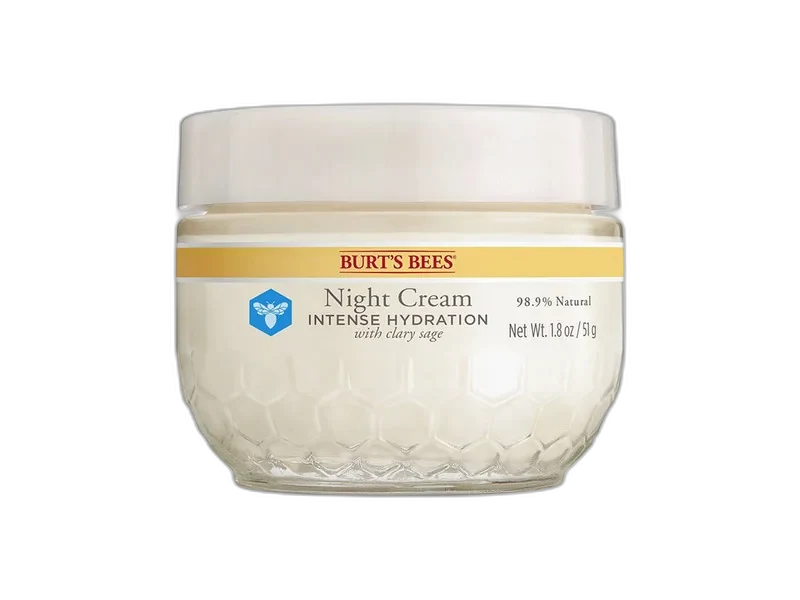
Intense Hydration Night Cream
Natural Night Nourisher
 Verified reviewer
Pros & cons.
- +Triple-butter system from three continents provides diverse fatty acid coverage
- +Genuine probiotic-prebiotic synbiotic combination supports skin microbiome overnight
- +Sodium PCA and Zinc PCA provide NMF-boosting hydration with mild sebum regulation
- +Absorbs surprisingly quickly for a rich cream without greasy residue
- +Outstanding value with exotic butters at a drugstore price point
- +Silicone-free and 98.9% natural origin formula
- +Works well as a buffering layer over retinol treatments
- −Four identified fragrance allergens in a leave-on overnight product
- −No anti-aging actives beyond basic hydration and plumping
- −Jar packaging exposes product to air and bacterial contamination
- −Clary sage extract has limited clinical evidence as a skincare active
- −Too rich for oily skin types, especially in warmer months
The full review.
Most night creams pick a butter and call it a day. Shea, usually. Maybe mango if they are feeling adventurous. Burt’s Bees went a different route entirely, sourcing tucumã from the Brazilian Amazon, kokum from the Western Ghats of India, and mafura from sub-Saharan Africa, then blending them into a formula that reads like a botanical geography lesson. It is an unexpectedly ambitious approach from a brand best known for lip balm and honey-scented hand cream.
The Intense Hydration Night Cream launched in 2012 as part of a hydration-focused line built around clary sage extract, a Mediterranean herb that Burt’s Bees positions as a natural moisture-trapping powerhouse. The clary sage gets the marketing spotlight, but the real story here is those three butters and what happens when you combine their distinct fatty acid profiles into a single overnight formula.
Tucumã butter (Astrocaryum tucuma) is rich in lauric and myristic acids — the same saturated fats that give coconut oil its solid texture and occlusive properties, but in a format that spreads more elegantly and absorbs more gracefully. Kokum butter (Garcinia indica) is the secret weapon: it melts precisely at skin temperature, transitions from solid to liquid upon contact, and is genuinely non-comedogenic — a rarity among rich tropical fats. Mafura butter (Trichilia emetica) brings oleic and palmitic acids to the mix, creating the kind of fatty acid diversity that a single-source butter simply cannot achieve. Together, they form an emollient system that addresses overnight moisture loss from three different biochemical angles.
Built around this butter trinity is a formula that shows more thought than its drugstore shelf placement might suggest. Olive oil provides a moisturizing base rich in oleic acid and squalene. Glycerin handles the humectant duties, drawing water into the stratum corneum. Jojoba seed oil and jojoba esters contribute wax-like emollience that mirrors the skin’s own lipid composition. Sodium PCA — a natural component of the skin’s own moisturizing factor — pairs with zinc PCA to provide both hydration and mild sebum regulation, a clever combination that prevents the butters from overwhelming oilier areas while still delivering for dry patches.
The probiotic element is genuine, not performative. Lactobacillus is paired with alpha-glucan oligosaccharide, a prebiotic that serves as a food source for beneficial skin bacteria. This synbiotic approach — providing both the organism and its substrate — is more sophisticated than the token ferment lysate many brands add to check the microbiome marketing box. Whether the probiotic survives in meaningful quantities in a preserved cream formula is a fair question, but the prebiotic component provides documented skin-soothing benefits regardless.
The texture strikes a satisfying balance between richness and wearability. It is undeniably a cream — thick, lush, and obviously nourishing — but it absorbs with surprising speed, leaving a velvety finish that does not transfer to your pillowcase within the first few minutes. There is no greasy slick, no waxy barrier feel, just soft, well-fed skin that feels like it has been given something substantial to work with overnight. By morning, skin that typically wakes up tight and parched should feel noticeably more comfortable and supple.
Scent
The scent is subtle botanical — clary sage and soft florals that fade within minutes of application. It is pleasant enough, and therein lies the formula’s most significant limitation. The natural fragrance delivers four identified allergens: amyl cinnamal, eugenol, hydroxycitronellal, and linalool. For a product designed to sit on the face for eight hours overnight — the longest continuous exposure in any skincare routine — that allergen load is particularly relevant. Sensitization reactions are cumulative and can develop suddenly after months or years of uneventful use, which makes the fragrance in a leave-on night cream a less forgivable choice than in a rinse-off cleanser.
Performance
Performance is solid within its hydration mandate. This is not an anti-aging night cream in the clinical sense — there are no retinoids, no peptides, no acid-based resurfacing ingredients. It will not turn back the clock or dramatically improve texture. What it will do, and does well, is provide overnight moisture replenishment that prevents the dry, tight, flaky morning face that plagued you before. Fine lines look softer because well-hydrated skin is plumper skin, but the mechanism is hydration, not cell turnover.
Price
For the roughly fifteen dollars it costs, the ingredient quality is impressive. Tucumã, kokum, and mafura butters are not cheap raw materials, and their presence at this price point speaks to Burt’s Bees’ supply chain advantages as a Clorox-owned brand with global sourcing capability. A small indie brand would need to charge thirty to forty dollars for a comparable butter blend. The 1.8-ounce jar lasts two to three months with nightly use, making the per-application cost genuinely minimal.
Packaging
The jar packaging is the functional compromise — open-pot containers expose the product to air and bacteria with each use, and the tocopherol (vitamin E) antioxidant in the formula will gradually degrade with repeated exposure to oxygen. A tube or pump would better preserve both the ingredients and the user’s hygiene, though the jar does allow for satisfying scooping access to that rich cream texture.
Who Should Buy
This is a night cream for people who believe skincare should come from nature and who do not have fragrance sensitivities. It delivers genuine overnight nourishment through a creative, multi-continental butter blend that is more interesting and more effective than the single-butter approach most natural brands default to. Its limitations are specific: it is not an anti-aging treatment, it contains fragrance allergens, and it comes in a jar. If none of those are dealbreakers, it is a quietly excellent addition to a dry skin evening routine.
Ingredient analysis.
Full INCI list
Aqua (Water), Olea Europaea (Olive) Fruit Oil, Cetyl Alcohol, Stearyl Alcohol, Glycerin, Ricinus Communis (Castor) Seed Oil, Tapioca Starch, Parfum (Natural Fragrance), Propanediol, Salvia Sclarea (Clary) Extract, Lactobacillus, Astrocaryum Tucuma Seed Butter, Garcinia Indica Seed Butter, Trichilia Emetica Seed Butter, Cera Alba (Beeswax, Cire D'Abeille), Simmondsia Chinensis (Jojoba) Seed Oil, Candelilla/Jojoba/Rice Bran Polyglyceryl-3 Esters, Jojoba Esters, Hydrolyzed Jojoba Esters, Chondrus Crispus (Carrageenan), Polymnia Sonchifolia Root Juice, Alpha-Glucan Oligosaccharide, Maltodextrin, Zea Mays (Corn) Starch, Sucrose, Tocopherol, Xanthan Gum, Glycine Soja (Soybean) Oil, Glyceryl Stearate, Cetearyl Alcohol, Sodium Stearoyl Lactylate, Sodium PCA, Zinc PCA, Potassium Sorbate, Sodium Benzoate, Phenoxyethanol, Amyl Cinnamal, Eugenol, Hydroxycitronellal, Linalool
Skin match.
The science.
The Science
The triple-butter system in this night cream uses the different fatty acid profiles of three tropical butter sources. Tucumã (Astrocaryum tucuma) butter has about 47% lauric acid and 24% myristic acid. Brazilian ethnobotanical research shows these provide strong occlusive and antimicrobial properties. Kokum (Garcinia indica) butter has high stearic acid (56-58%) and a melting point near 39°C. This causes it to liquefy at skin temperature. The Journal of the American Oil Chemists' Society documents this property, making it an elegant emollient for cosmetic applications.
Sodium PCA is a major component of the skin's natural moisturizing factor (NMF), making up about 12% of NMF by weight. NMF levels drop with age and environmental damage, so adding exogenous sodium PCA provides a rational way to hydrate overnight. Zinc PCA adds mild antimicrobial and sebum-regulating properties, according to studies in the International Journal of Cosmetic Science, which helps balance the thick occlusive butter base.
The probiotic-prebiotic combination is an emerging area of dermatological research. A 2020 review in the Journal of Clinical Medicine shows topical probiotics can modulate skin immune function, strengthen barrier integrity, and produce antimicrobial peptides. The alpha-glucan oligosaccharide prebiotic selectively promotes beneficial skin bacteria growth. This creates a better microbiome environment during the overnight repair window when skin permeability increases naturally.
Dermatologist Perspective
Dermatologists value occlusive nighttime moisturizers for patients with chronic dry skin because extended overnight contact maximizes ingredient absorption. Board-certified dermatologists note the triple-butter approach in this formula provides a more complete fatty acid profile than single-source emollients, addressing more lipid barrier deficiencies. The probiotic-prebiotic component aligns with dermatological interest in the skin microbiome, though most clinical evidence comes from leave-on products with higher concentrations. Dermatologists typically caution patients with eczema or contact dermatitis histories about the four fragrance allergens, especially in an overnight product with maximum skin contact time.
Where it fits in your routine.
Apply a pea-sized amount to clean, slightly damp skin after your evening routine. Press and pat the product into your face and neck; do not rub. Wait 2-3 minutes for absorption before laying on a pillow. This works well over hydrating serums, retinol products, or facial oils. For dry skin, apply over a hyaluronic acid serum on damp skin to increase overnight moisture retention. Use a clean spatula or freshly washed hands to scoop product from the jar to keep it hygienic.
At roughly $15 for 1.8 ounces, this night cream offers high value. The three exotic butters — tucumã, kokum, and mafura — are premium raw materials usually found in products priced two to three times higher. The formulation combines genuine probiotic technology and NMF-boosting ingredients to exceed its price point. Burt's Bees' legacy and Clorox-backed supply chain create sourcing efficiencies smaller brands cannot match. One jar lasts two to three months with nightly use, making the per-application cost well under twenty cents.
Dry to normal skin types want a thick, nature-based night cream. This formula uses probiotic technology and an exotic butter blend to do more than basic moisturizing. It suits people who value natural-origin formulas and lack fragrance sensitivities.
People with fragrance allergies or contact dermatitis history should avoid this product because the overnight formula contains four allergens. The triple-butter formula is too thick for oily or acne-prone skin, especially in warm weather. Users wanting anti-aging results from retinoids or peptides need a dedicated treatment, not this hydration-focused cream.
Product details.
Thick, creamy texture melts into skin and absorbs without a greasy film — thicker than a lotion but lighter than typical night creams
Clary sage and floral notes create a subtle herbal-botanical fragrance that fades fast after application
1.8 oz jar with screw-top lid
The cream feels thick on first use but absorbs faster than expected. Skin feels softer and more comfortable immediately. By morning, skin feels hydrated instead of dry or tight. There is no adjustment period; benefits are cumulative and do not require adaptation.
2-3 months with nightly use
12 months
fall winter
The backstory.
Part of Burt's Bees' 2012 Intense Hydration line, this night cream was designed as the overnight anchor for skin that needs deep, sustained moisture. The formula draws on the brand's nature-first philosophy by sourcing exotic butters from tropical regions rather than relying on petrochemical emollients, creating a 98.9% natural-origin cream that performs the heavy lifting while you sleep.
About Burt's Bees
Legacy Brand (20+ years)Burt's Bees started in Maine in 1984 and is the number-one dermatologist-recommended natural skincare brand. Clorox acquired the brand in 2007. Burt's Bees has over four decades of natural personal care expertise and uses dermatologist-tested formulations.
Common myths.
Night creams are just thicker day moisturizers and offer no specific overnight benefit.
This formula targets the skin's nocturnal repair cycle. The triple-butter occlusive system stops transepidermal water loss during sleep, and the probiotic-prebiotic complex supports overnight microbiome shifts. Skin permeability increases during sleep, which makes the active botanicals more effective.
Natural ingredients can't provide serious overnight hydration.
Tucumã butter and kokum butter have documented emollient and moisturizing properties similar to synthetic alternatives. Combining sodium PCA (a natural moisturizing factor component) with plant-derived butters uses a biomimetic approach for overnight hydration that works with the skin's chemistry.
FAQ.
Is Burt's Bees Intense Hydration Night Cream good for wrinkles?
This night cream focuses on hydration instead of targeted anti-aging. Hydrated skin looks plumper, which temporarily reduces fine lines. It lacks retinoids, peptides, or other proven anti-aging actives. To reduce wrinkles, apply it over a retinol serum — the thick butter base works as an excellent buffering layer.
Can I use this night cream during the day?
The triple-butter formula is not harmful during the day, but it is heavier than most people prefer under sunscreen and makeup. The olive oil and beeswax base feels too occlusive for daytime use. Burt's Bees makes lighter day moisturizers in the same Intense Hydration line that work better for AM use.
Is this night cream good for sensitive skin?
The silicone-free formula uses probiotic technology and suits sensitive skin. However, four fragrance allergens — amyl cinnamal, eugenol, hydroxycitronellal, and linalool — can trigger reactions in sensitized individuals. Patch-test on your inner forearm for 48 hours before full facial use.
What are the exotic butters in this night cream?
The formula uses three uncommon butters: tucumã from the Amazon (high in lauric and oleic acids), kokum from India (non-comedogenic, melts at skin temperature), and mafura from Africa (Trichilia emetica, high in oleic and palmitic acids). These create a diverse fatty acid profile for overnight emollience.
Does Burt's Bees Night Cream contain probiotics?
Yes — it contains Lactobacillus (a probiotic) and alpha-glucan oligosaccharide (a prebiotic that feeds beneficial bacteria). This synbiotic combination supports the skin's microbiome during overnight repair. Research into probiotic skincare is growing and shows results for barrier function and skin health.
What the community says.
"Absorbs quickly without feeling greasy"
"Skin feels noticeably softer by morning"
"Pleasant natural scent"
"Good value for a night cream"
"Rich without being heavy"
"Not moisturizing enough for very dry skin in some reviews"
"Fragrance may irritate sensitive skin"
"Some users report no visible anti-aging results"
"Jar packaging is less hygienic than pump or tube"