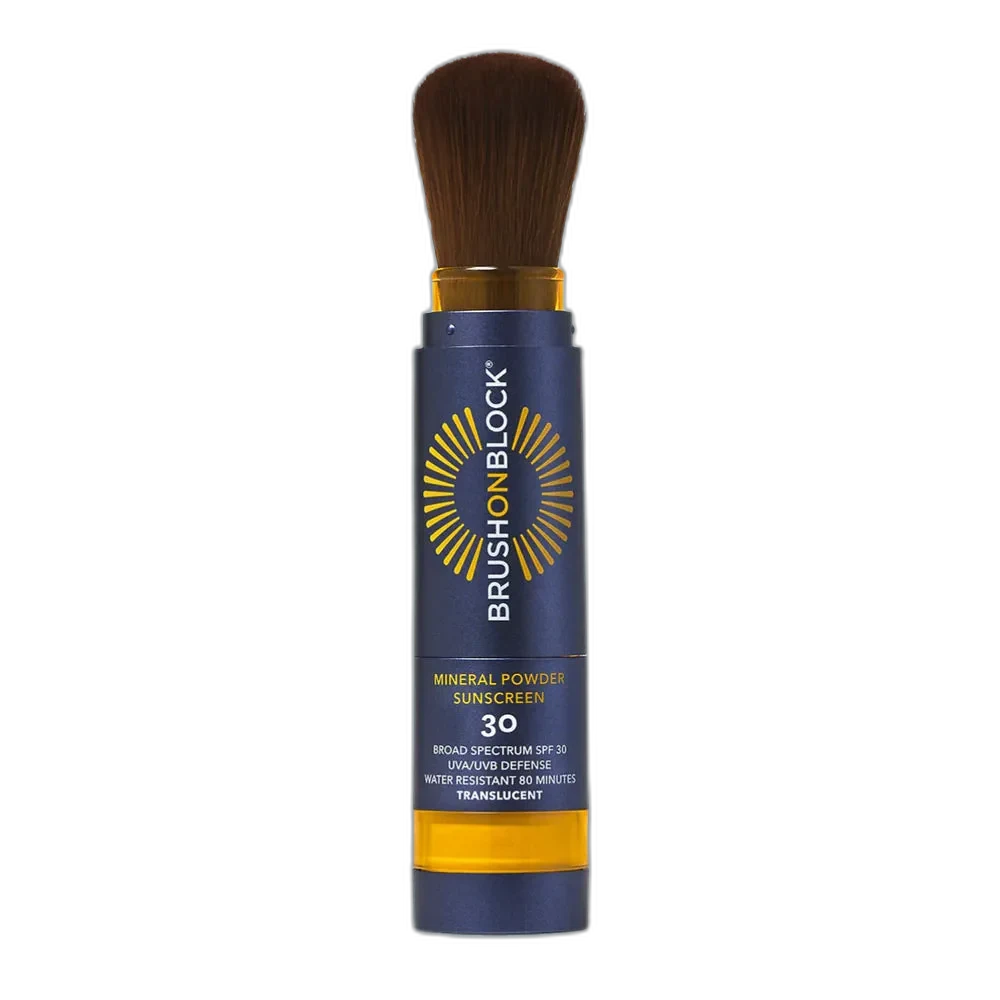
Mineral Sunscreen Powder SPF 30
Reapplication MVP
 Verified reviewer
Pros & cons.
- +24% total mineral filter load for genuine SPF 30
- +Self-contained brush applicator is purse-friendly and elegant
- +Iron oxide tint adds visible-light protection for melasma
- +Fragrance-free, alcohol-free, talc-free formulation
- +Skin Cancer Foundation seal of recommendation
- +Works over makeup without disturbing foundation
- +Refills available for long-term savings
- −Expensive at thirty-five dollars for 12 grams
- −Under-applied powder may not deliver full SPF 30
- −Brush sheds hairs over extended use
- −Best used as a reapplication tool, not a primary sunscreen
- −Powder can drift on windy days before it sets
The full review.
Here’s a depressing fact about sunscreen compliance: most people who apply SPF in the morning never reapply it during the day. Dermatologists know this. Sunscreen companies know this. The whole industry quietly accepts it as a reality, and the honest explanation is simple — most sunscreens are liquids or creams that disturb makeup, leave greasy residues, or require you to wash your face and start over. If you’re in an office at 2pm wearing foundation and mascara, you’re not going to rinse your face and reapply SPF. So you don’t. And over years of that compromise, your face accumulates the UV damage your morning routine was supposed to prevent.
Brush On Block was built specifically to solve that gap. Founded in 2012 by makeup artist Susan Posnick, the entire product exists because she wanted a way to reapply SPF during outdoor film shoots without ruining her models’ carefully applied makeup. The brand never diversified into creams or liquids — it stayed focused on one thing: making a powder mineral sunscreen elegant enough to use over makeup and strong enough to actually protect. That decade-plus of specialization shows in the way this powder is engineered.
Inside the brush applicator is 24% total mineral filters — 12% titanium dioxide and 12% zinc oxide, which together provide broad-spectrum UVA and UVB coverage. Those are legitimate SPF 30 numbers, not a marketing approximation. The mineral filters are suspended in a base of mica, kaolin, boron nitride, silica, and iron oxides, which handle the texture and color-matching. Boron nitride is the ingredient responsible for the soft-focus finish — it’s the same silky blurring powder used in high-end setting powders — and the iron oxides give the tint that helps the powder disappear on a wider range of skin tones and offers additional visible-light protection relevant for melasma management.
The brush applicator itself is a clever piece of design. A self-contained twist mechanism dispenses a small amount of powder into the brush head, and you tap off excess before applying. This prevents the oversaturated, cakey deposit that happens when you press a dense powder brush into a compact. Applied in circular motions over makeup, it deposits a light, even layer that sets the underlying foundation while adding SPF coverage. It doesn’t disturb eye makeup, it doesn’t require mirror time, and it packs down into a purse without leaking.
On actual performance, this powder does what it promises — but with one honest caveat. FDA sunscreen testing is done at 2mg per square centimeter, and most users don’t apply anywhere near that amount of powder. In practice, this means the powder is best thought of as a reapplication tool over a liquid sunscreen base, not as your only SPF for the day. If you apply your morning liquid sunscreen at the recommended amount and then use this powder to reapply midday, you’re getting the benefit the product was designed to deliver. If you’re trying to use this as your only sunscreen on a beach day, you’re under-protected.
The powder shines as a workday reapplication tool, a travel SPF, and a makeup-friendly option for anyone with oily or combination skin who can’t tolerate reapplying liquid sunscreens. It’s also an excellent pick for sensitive and rosacea-prone skin because the filter system is pure mineral with no added chemical UV absorbers or fragrances. For melasma users, the iron oxide tint adds visible-light protection that pure clear sunscreens lack.
The honest limitations are the price and the application learning curve. At thirty-five dollars for 12 grams, this is not a cheap sunscreen by per-gram measure. The refill options bring down long-term costs, but the initial investment is real. The brush also sheds a few hairs over extended use, and the powder can drift on windy days before it settles into makeup. None of these are deal-breakers for the use case the product serves, but they’re real tradeoffs for anyone considering whether it fits their routine.
Value is the subjective part. If you currently don’t reapply SPF during the day, buying this to start doing so is a high-value move — you’re trading thirty-five dollars for actual sun protection you weren’t getting before. If you already reapply a liquid sunscreen diligently and don’t wear makeup, the powder doesn’t add much beyond what you’re already doing. The Skin Cancer Foundation seal of recommendation and decade-plus of dermatologist endorsement put this in the category of specialty tools worth paying for — but only if the specialty it addresses is one you actually need.
Ingredient analysis.
Full INCI list
Active: Titanium Dioxide 12%, Zinc Oxide 12%. Inactive: Mica, Kaolin, Boron Nitride, Silica, Iron Oxides, Tocopheryl Acetate, Zea Mays (Corn) Starch
Skin match.
The science.
The Science
Zinc oxide and titanium dioxide mineral sunscreens are some of the most studied and recommended SPF actives in dermatology. A 2020 review in the Journal of the American Academy of Dermatology confirmed the safety and efficacy of mineral filters, especially for patients with sensitive skin, rosacea, and melasma. Recent research shows iron oxides provide meaningful defense against the 400-500nm blue light range that causes melasma pigmentation—protection pure transparent zinc oxide formulations lack. Consequently, clinicians increasingly recommend tinted mineral sunscreens over untinted alternatives for melasma patients. The powder format also improves compliance: studies on sunscreen reapplication behavior show users reapply SPF more often during the day when the method does not disturb makeup or require a mirror. However, powder formats cannot reliably deliver primary SPF protection at labeled values, as real-world application amounts typically fall below the 2mg/cm² testing standard. The formulation science is solid; the issue lies in user behavior, not the product.
References
- Visible light and skin: roles and protection — Journal of the American Academy of Dermatology (2020)
Dermatologist Perspective
Dermatologists often recommend powder mineral sunscreens as reapplication tools for patients who wear makeup and struggle with midday SPF reapplication. Board-certified dermatologists note that reapplication compliance is a major gap in sun protection behavior, and powder formats improve real-world reapplication rates. Brush On Block has the Skin Cancer Foundation seal of recommendation, which reflects the brand's decade-plus track record and third-party testing. Dermatologists caution that powder sunscreens work best as a layered reapplication tool rather than a primary SPF; patients should still apply a liquid or cream sunscreen in the morning before layering the powder.
Guidance
Where it fits in your routine.
Twist the brush base to release a small amount of powder into the bristles. Tap excess onto a tissue or the back of your hand. Apply using small circular motions over clean skin or makeup. Focus on high-exposure areas: the forehead, nose, cheeks, and tops of ears. Reapply every two hours during sun exposure. For office use, reapply at least once midday. This is not a primary standalone sunscreen — use it with a liquid SPF in the morning for reliable coverage.
At $35 for 12 grams, this specialty product is premium-priced, not a budget SPF. Comparable powder sunscreens cost $20 to $45 depending on brand and formulation. The Brush On Block price reflects ten years of brand specialization, the Skin Cancer Foundation endorsement, and the refillable applicator design. Refill cartridges lower long-term ownership costs, which improves value for consistent users. This is worth the money if you use it as designed — daily midday reapplication over makeup — but overpriced if you already reapply liquid sunscreen diligently. It works as a compliance tool more than a protection tool; value it accordingly.
This works for anyone wearing makeup who wants an elegant way to reapply SPF during the day. It suits oily and combination skin, sensitive users who cannot tolerate liquid sunscreens, melasma patients needing iron oxide visible-light protection, and frequent travelers needing a purse-friendly SPF.
Budget-conscious shoppers needing a primary sunscreen instead of a reapplication tool, people who skip makeup and reapply liquid SPF diligently, and those with very dry skin who find powders drying or texture-accentuating.
Product details.
Ultra-fine powder that deposits a light layer without cakey buildup
None
Self-contained brush applicator with twist-lock and clear cap, 12g
The first use feels like any setting powder. It causes no tingling or discomfort. Most users find circular motions over makeup easier than back-and-forth strokes.
4-6 months with daily midday reapplication
24 months
All Year
The backstory.
Brush On Block was founded in 2012 by Susan Posnick, a makeup artist who wanted an elegant way to reapply sunscreen during outdoor filming without ruining her models' makeup. The brand never expanded beyond the powder sunscreen category — a rare example of a single-product specialty brand that earned dermatologist recommendations through decade-plus consistency.
About Brush On Block
Established Brand (5–20 years)Brush On Block launched in 2012 to focus only on powder sunscreen delivery. Dermatologists have recommended the brand for over a decade as a reapplication tool. It builds its reputation on a single-format specialization instead of a broad skincare line.
Common myths.
A powder can't give real SPF protection
A 24% mineral filter powder provides measurable SPF 30 protection when applied evenly and in the right amount. Most users under-apply compared to the FDA testing amount, so use it for reapplication over a liquid SPF.
Mineral powder sunscreens leave a white cast
This specific product uses iron oxides to match more skin tones. This reduces white cast on medium and deep skin. It is not invisible on the deepest skin tones, but it shows less than untinted mineral powders.
FAQ.
Can I use Brush On Block as my only sunscreen?
Use this as a reapplication tool over a liquid sunscreen instead of your only SPF. Most users apply too little powder to reach the FDA testing thickness for full SPF 30 protection. Pairing it with a liquid base ensures reliable coverage.
How often should I reapply?
Reapply every two hours during sun exposure or when your makeup needs a touch-up. The brush applicator allows quick reapplication during a workday or outdoor event.
Does it work over makeup?
Yes — this is its exact purpose. The powder sits over foundation without moving it, and the tinted version color-matches better than untinted setting powders.
Is it safe for sensitive skin?
Yes — the formula is fragrance-free, talc-free, and uses only mineral filters that sensitive and rosacea-prone skin tolerates well. It has no chemical UV filters to sensitize reactive users.
How long does one brush last?
One 12g brush lasts roughly 4-6 months with daily midday reapplication. Refills are available if you keep the original brush handle.
Does it help with melasma?
The iron oxide tint provides documented protection against visible light. This helps manage melasma alongside the UV protection from the mineral filters. It adds value to a melasma routine but does not replace a dedicated tinted liquid SPF.
What the community says.
"Easy to reapply over makeup"
"No white cast in iron oxide tints"
"Sets makeup nicely"
"Expensive for the amount of product"
"Brush can shed hairs over time"
"Powder can travel on windy days"
Featured in.
People also looked at.