Remedies Skin Salve Restoring Treatment
Luxury Skin Rescue Balm
 Verified reviewer
Pros & cons.
- +Ceramide NG, cholesterol, and linoleic acid provide genuine barrier lipid repair beyond simple occlusion
- +Centella asiatica and licorice derivative add proven anti-inflammatory and soothing properties
- +Concise 22-ingredient formula is refreshingly minimal for a luxury skincare product
- +Non-greasy finish despite petrolatum-beeswax base — creates protective barrier without shine
- +Oil-soluble vitamin C provides stable antioxidant support in the anhydrous base
- +Effective as a targeted "skin bandage" for specific areas of irritation or damage
- −Fragrance listed 6th in a product for damaged skin is a genuine formulation contradiction
- −Very expensive at 6 per ounce for a petrolatum and beeswax base
- −Discontinued — no longer available through authorized retailers
- −Tiny 0.59 oz size with no larger option made the price feel even steeper
- −Waxy texture requires warming and patience that not all users appreciated
- −Not vegan — contains beeswax, limiting its appeal for some consumers
The full review.
In a world where luxury skincare brands compete to make their products feel as ethereal and weightless as possible, Bobbi Brown’s Remedies Skin Salve No. 57 walked into the room with petrolatum as its first ingredient, beeswax as its second, and the approximate texture of a artisanal lip balm. This was either a brave formulation choice or a marketing miscalculation, and the product’s brief lifespan — launched in 2017, discontinued by approximately 2020 — suggests the market voted for the latter. Which is a shame, because underneath the waxy texture and the polarizing price tag, this was a genuinely thoughtful formulation.
The Remedies collection was Bobbi Brown’s most conceptually ambitious skincare venture: a set of seven numbered products modeled on the apothecary tradition, each targeting a specific skin concern. The Skin Salve No. 57 was the collection’s emergency responder — a concentrated balm designed to function as a “skin bandage” for areas of severe dryness, irritation, or damage. Where the other Remedies were liquid serums in dropper bottles, No. 57 was the dense, substantive outlier: a thick pot of greenish-tinted balm that you pressed into and warmed between your fingers before patting onto distressed skin.
The ingredient list, at just 22 ingredients, is refreshingly concise for a luxury product. Petrolatum creates the primary occlusive barrier, beeswax provides structure, and hydrogenated polyisobutene adds slip. But here is where the formula gets interesting: layered within that practical base are genuine barrier repair ingredients that elevate the salve above a fancy Vaseline. Ceramide NG is one of the skin’s own barrier lipids, directly replenishing the ceramide layer that damaged skin loses. Cholesterol — the second of the three essential barrier lipids — works alongside ceramide NG and linoleic acid to reconstruct the intercellular lipid matrix that healthy skin produces naturally.
Centella asiatica extract adds proven anti-inflammatory and wound-healing properties. Stearyl glycyrrhetinate, a lipid-soluble licorice derivative, provides additional soothing that is particularly effective in this anhydrous (water-free) base because it dissolves directly in the oil phase for intimate skin contact. Tetrahexyldecyl ascorbate delivers oil-soluble vitamin C for antioxidant support and collagen stimulation. The carrot root extract contributes beta-carotene and additional antioxidant protection.
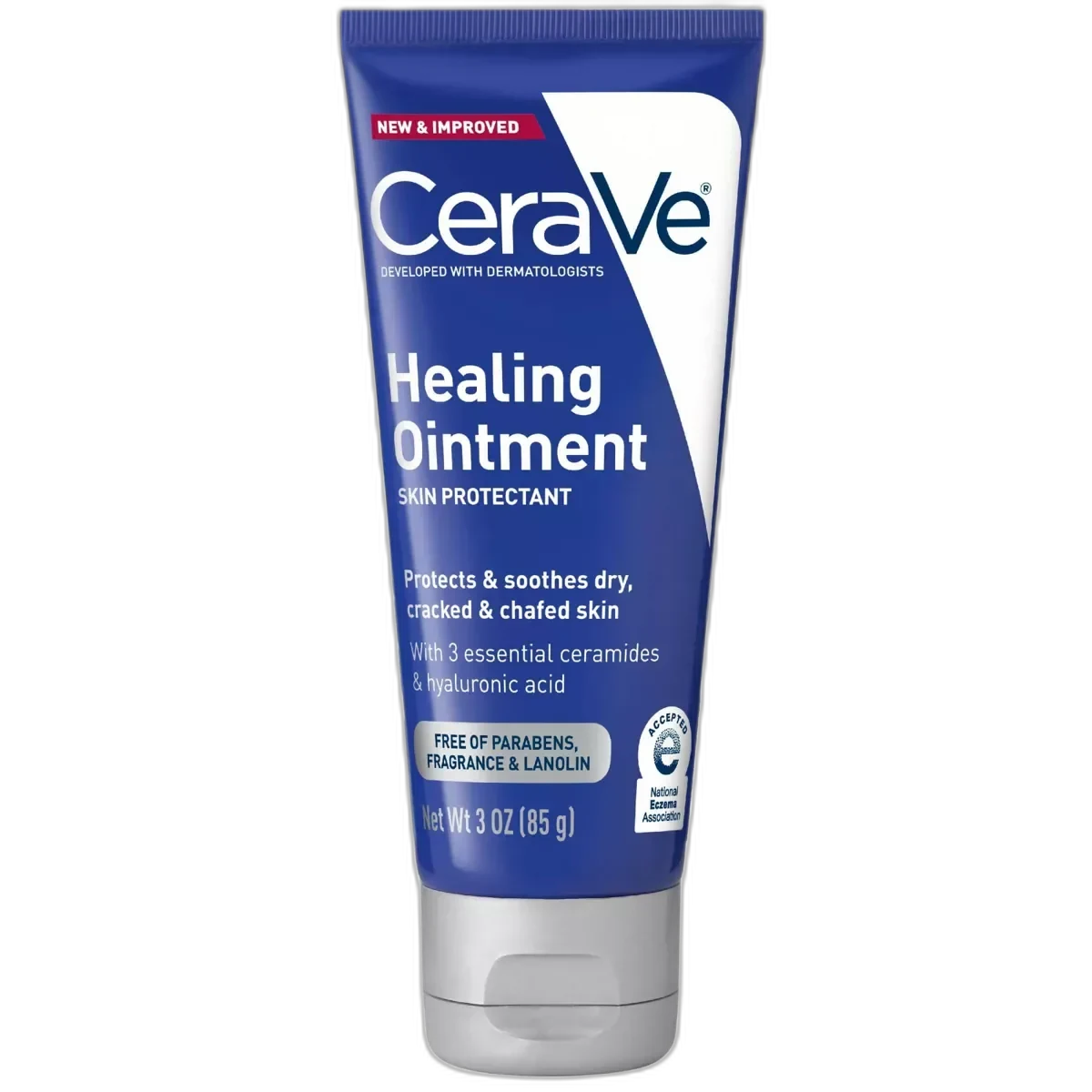
This is, by any reasonable measure, a well-constructed barrier repair balm. The combination of a structured occlusive base with physiologically relevant barrier lipids and anti-inflammatory botanicals follows the same logic that dermatologists recommend for compromised skin care. If CeraVe’s Healing Ointment and La Roche-Posay’s Cicaplast Baume had a luxury baby with a better ingredient education, it might look something like this.
And then there is the fragrance. Listed sixth — sixth — in a 22-ingredient formula marketed as a “restoring treatment” for damaged skin. The irony is almost painful. Here is a product that correctly identifies compromised skin as its target audience and correctly formulates with barrier repair lipids and anti-inflammatory botanicals, then introduces a known sensitization risk in the form of parfum, limonene, and benzyl salicylate. It is as if the formulation chemist and the fragrance department had a disagreement, and the fragrance department won. For most users, the fragrance was well-tolerated and even pleasant. But for a product designed specifically for damaged, irritated skin — where the barrier is compromised and allergen penetration is increased — the presence of fragrance is a genuine contradiction.
The value question is where this product truly struggled. At 5 for 0.59 oz, you are paying 6 per ounce. The first two ingredients — petrolatum and beeswax — are among the least expensive raw materials in cosmetics. Yes, the ceramide NG, cholesterol, centella, and oil-soluble vitamin C add meaningful value, but the markup from raw materials to retail is substantial even by luxury standards. A chemically-minded consumer could look at this formula and see worth of ingredients in a 5 jar. That is not unusual in luxury beauty, but it is more visible when the lead ingredients are ones your grandmother kept in her medicine cabinet.
In practice, the product worked. Users who found it consistently praised its ability to soothe dry, cracked, irritated patches — wind-chapped cheeks, retinoid-ravaged jawlines, winter-stripped hands. The non-greasy finish was genuinely impressive given the petrolatum-beeswax base; unlike plain Vaseline, this balm created a protective layer without leaving skin looking like a glazed donut. The brand’s consumer study claimed 89% of users experienced instant comfort from irritation, and user reviews broadly confirmed this experience.
The Remedies line’s discontinuation around 2019-2020 likely reflects the challenge of selling a petrolatum-based product at luxury prices more than any failure of the formula itself. The product was too clinical for luxury shoppers who expect sensorial elegance, and too expensive for clinically-minded consumers who recognize that similar barrier repair ingredients are available from CeraVe and La Roche-Posay for under 0. It occupied a no-man’s-land between efficacy and aspiration, and the market — in the end — chose sides.
For anyone who still has a pot of No. 57 in their medicine cabinet, know that what you have is a genuinely good barrier repair balm. For everyone else, its brief existence serves as a reminder that the best skincare formulations are not always the ones that survive the market.
Ingredient analysis.
Full INCI list
Petrolatum, Beeswax/Cera Alba/Cire d'Abeille, Hydrogenated Polyisobutene, Caprylic/Capric Triglyceride, Caprylic/Capric/Myristic/Stearic Triglyceride, Parfum/Fragrance, Daucus Carota Sativa (Carrot) Root Extract, Centella Asiatica (Hydrocotyl) Extract, Butyrospermum Parkii (Shea Butter), Cholesterol, Ceramide NG, Tocopheryl Acetate, Stearyl Glycyrrhetinate, Octyldodecanol, Linoleic Acid, Lecithin, Tetrahexyldecyl Ascorbate, Simethicone, Limonene, Benzyl Salicylate, Chromium Oxide Greens (CI 77288), Iron Oxides (CI 77492, CI 77499)
Skin match.
The science.
The Science
This formula uses a barrier repair strategy based on the three-component lipid model of the stratum corneum. Healthy skin barrier function requires an organized matrix of ceramides, cholesterol, and free fatty acids in a roughly equimolar ratio. Physical damage, environmental aggression, or inflammatory conditions deplete these lipids, which increases transepidermal water loss and irritant vulnerability.
Ceramide NG (one of the most abundant ceramide species in human skin) replenishes the ceramide fraction. Cholesterol restores the sterol component. Linoleic acid, an essential omega-6 fatty acid, provides the free fatty acid contribution. Together, these three ingredients mimic the skin's own lipid repair mechanism. Research in the Journal of Investigative Dermatology shows this strategy works better than occlusion alone or lipid supplementation alone.
The petrolatum-beeswax base provides the occlusive component. This prevents the newly supplemented barrier lipids from evaporating before they integrate into the stratum corneum. A 2016 JACI study shows petrolatum actively upregulates genes involved in barrier repair instead of just passively blocking water loss. Beeswax adds structural integrity to the balm, creating a more persistent film than petrolatum alone.
Decades of research support the anti-inflammatory and wound-healing properties of centella asiatica. Its active components — asiaticoside and madecassoside — stimulate collagen synthesis and modulate the inflammatory cascade in damaged tissue. Stearyl glycyrrhetinate, a lipophilic licorice derivative, inhibits 11-beta-hydroxysteroid dehydrogenase. This reduces local cortisol metabolism and provides anti-inflammatory effects through a mechanism distinct from centella. Combining two complementary anti-inflammatory pathways — centella's triterpene-mediated effects and licorice's steroid-metabolism modulation — creates a more robust soothing effect than either ingredient alone.
References
- Petrolatum: Barrier repair and antimicrobial responses underlying this "inert" moisturizer — The Journal of Allergy and Clinical Immunology (2016)
Dermatologist Perspective
Dermatologists recognize the barrier repair logic here. Combining ceramide, cholesterol, and fatty acid supplementation under an occlusive petrolatum seal follows established principles of compromised skin care. Board-certified dermatologists frequently recommend this approach for patients with eczema, contact dermatitis, and barrier damage. The centella asiatica and licorice derivative add clinically validated anti-inflammatory mechanisms. However, dermatologists would flag the fragrance inclusion as counterproductive. Patients seeking barrier repair typically have compromised skin with increased allergen penetration, so fragrance is a risk factor. For pure efficacy, less expensive products like CeraVe Healing Ointment or La Roche-Posay Cicaplast Baume B5 offer similar barrier repair mechanisms without fragrance and at a fraction of the price.
Where it fits in your routine.
Apply this as the final step in your evening routine to target irritation, dryness, or damage. Press fingertips into the balm surface to collect a small amount, then warm it for 5-10 seconds until it softens. Pat and press onto wind-chapped cheeks, retinoid-irritated patches, dry cuticles, cracked heels, or chapped lips. Do not rub vigorously. The balm creates a protective seal that works overnight. Layer it over other skincare products as an occlusive final step.
At 5 for 0.59 oz (6/oz), this was among the most expensive barrier repair products available. The price is high for a formula based on petrolatum and beeswax. Supporting ingredients (ceramide NG, cholesterol, centella, licorice, oil-soluble vitamin C) add value, but CeraVe (5-18 for 3-12 oz), La Roche-Posay Cicaplast (5-17 for 1.35 oz), and Dr. Jart+ Ceramidin (4-48 for 1.69 oz) offer similar barrier repair strategies at much better price-to-volume ratios. The luxury premium lacks justification based on ingredients, and its discontinuation suggests the market agreed.
Use this if you have remaining stock and need a targeted rescue treatment for localized skin damage, severe dryness, or barrier compromise. The formula works for its intended purpose. Skincare enthusiasts and collectors who like the conceptual ambition of the Remedies collection will also find it interesting.
The product is discontinued, so authorized retailers no longer sell it. People with fragrance sensitivity should avoid it. Budget-conscious consumers can find similar barrier repair ingredients from clinical brands for much lower prices. Oily and acne-prone skin types should also pass.
Product details.
This thick, waxy concentrated balm has a slight greenish-olive tint from chromium oxide and iron oxide colorants. Warm it between your fingers before application. It creates a protective, non-greasy barrier layer on the skin without a shiny residue.
Fragrance (parfum) is the 6th ingredient. Users describe the scent as "clean" and pleasant with a subtle herbal quality. It contains limonene and benzyl salicylate fragrance allergens.
A small 0.59 oz glass pot uses an apothecary design that matches the Remedies collection's clean, pharmaceutical aesthetic. The product carries the "No. 57" label from the collection's numbered system. The presentation is minimalist and premium.
The balm is a greenish-tinted solid in the pot. It has a thick, waxy texture that softens with body heat. Applied to dry or damaged areas, it creates an immediate protective layer that feels like a "skin bandage" — the barrier is palpable but leaves no greasy or shiny film. Users report instant soothing on irritated patches.
2-4 months with targeted spot use
12 months
fall winter
The backstory.
The Remedies collection launched in early 2017 as Bobbi Brown's most conceptually ambitious skincare line — a set of numbered, targeted treatments inspired by the apothecary tradition. Each product addressed a specific skin concern, and the Skin Salve No. 57 was the collection's emergency responder: a concentrated balm for skin that needed rescuing. The entire Remedies line was discontinued around 2019-2020, a casualty of the brand's post-founder strategy shifts under Estee Lauder's direction.
About Bobbi Brown
Established Brand (5–20 years)Estee Lauder acquired Bobbi Brown Cosmetics in 1995, following its 1991 founding. The Remedies collection launched in 2017 as a targeted treatment line based on Bobbi Brown's holistic wellness philosophy. The line is now discontinued. The brand is not dermatologist-developed, but it uses Estee Lauder's extensive R&D resources.
Common myths.
Petrolatum-based products are "cheap" and lack skincare efficacy.
Petrolatum is the most effective occlusive agent in dermatology; it reduces transepidermal water loss by up to 98%. Its low raw material cost does not lower its clinical effectiveness. This formula uses a petrolatum-beeswax base as a deliberate choice to create a "skin bandage" barrier repair mechanism. The value question is if the 5 price justifies the supporting actives, not if petrolatum belongs in a luxury product.
Products for damaged or irritated skin must be fragrance-free.
This is fact, not myth. Dermatologists recommend fragrance-free products for compromised skin. Including fragrance as the 6th ingredient in a "restoring treatment" is a valid concern. Most users in available reviews well-tolerated the specific fragrance in this product, but the principle remains: fragrance-free formulations have less sensitization risk for damaged skin.
FAQ.
Is Bobbi Brown Remedies Skin Salve discontinued?
Yes — the Skin Salve No. 57 and the entire Remedies collection are discontinued, likely around 2019-2020. The brand has no direct replacement. Third-party sellers may have remaining stock, but authorized retailers no longer carry it.
What can I use instead of Bobbi Brown Skin Salve?
For a similar barrier-repair balm approach, use products with ceramides, cholesterol, and petrolatum from brands like CeraVe (Healing Ointment), Eucerin (Aquaphor), or Dr. Jart+ (Ceramidin Cream). For a luxury alternative, find balms with centella asiatica and ceramides. No product is an exact dupe, but the functional approach — an occlusive base with barrier lipids — exists at multiple price points.
Is Bobbi Brown Skin Salve fragrance-free?
No — although marketed as a restoring treatment for damaged skin, the product contains fragrance (parfum) as the 6th ingredient, plus limonene and benzyl salicylate as fragrance allergens. This concerns users with compromised skin barriers or fragrance sensitivity.
What was the Bobbi Brown Remedies collection?
The Remedies collection launched in early 2017 as a targeted skincare treatment line. It includes 6-7 numbered products for specific skin concerns: Skin Salve No. 57 (barrier repair), Skin Clarifier No. 75 (pore control), Skin Relief No. 80 (calming), Skin Moisture No. 86 (hydration), Skin Reviver No. 91 (brightening), Skin Fortifier No. 93 (firming), and Wrinkle Treatment No. 25 (anti-aging). The entire line is discontinued.
Is the Skin Salve worth the price?
At 5 for 0.59 oz (6/oz), the price is hard to justify. The first two ingredients — petrolatum and beeswax — are some of the cheapest raw materials in skincare. The supporting actives (ceramide NG, cholesterol, centella, licorice derivative, oil-soluble vitamin C) add value, but clinical brands offer similar ingredient combinations for much less. The premium pays for the luxury brand experience and this specific formulation combination.
What the community says.
"Excellent at soothing and restoring severely dry, irritated, or damaged skin"
"Works as an effective "skin bandage" for targeted problem areas"
"Clean, non-greasy texture despite the petrolatum and beeswax base"
"Pleasant scent that reviewers describe as clean and subtle"
"A small amount provides effective coverage on damaged patches"
"Very expensive at 5 for only 0.59 oz — petrolatum and beeswax are cheap ingredients"
"Now discontinued with no direct replacement in the brand's current lineup"
"Contains fragrance as the 6th ingredient — contradictory for a "restoring" treatment"
"Waxy texture that some users found difficult to work with"
"Limited availability even when in production — niche product in a small collection"
People also looked at.