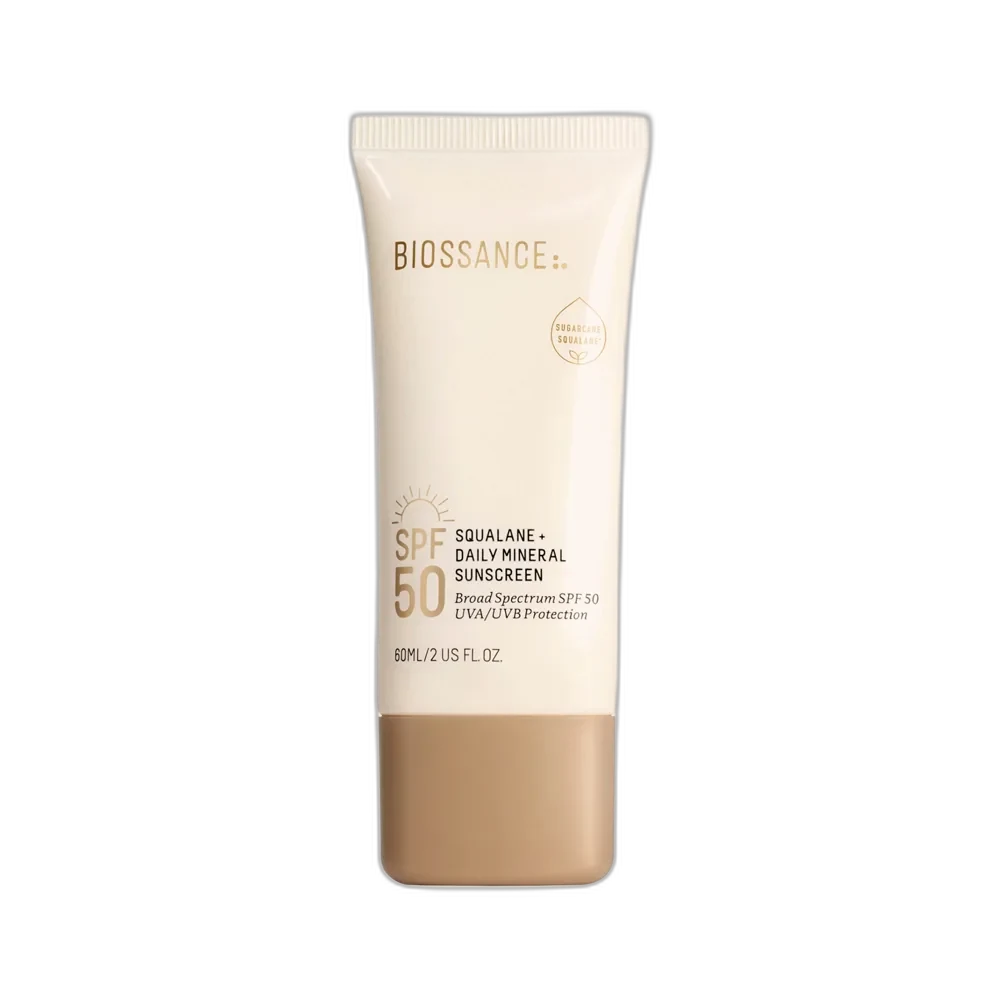
Squalane + Zinc Sheer Mineral Sunscreen SPF 30
Clean Beauty SPF Pick
 Verified reviewer
Pros & cons.
- +Remarkably low white cast for a 14% zinc oxide mineral sunscreen
- +Squalane-rich formula provides genuine all-day hydration without heavy silicones
- +Excellent for sensitive and reactive skin with no stinging or irritation
- +Works beautifully as a makeup primer with a luminous, dewy base
- +Clean ingredient list — no chemical UV filters, fragrance, or silicones
- +EWG Verified and reef-safe, exceeding Hawaii sunscreen regulations
- +Ethyl ferulate provides antioxidant backup against free radical damage
- −Dewy finish is too moisturizing for oily skin, especially in humid conditions
- −At $34 for 1.7 oz, cost adds up quickly with proper daily use and reapplication
- −SPF 30 may not satisfy users who prefer higher protection numbers
- −Some residual white cast may appear on deeper skin tones despite improvements
- −Contains caprylic/capric triglyceride which is not fungal acne safe
The full review.
Biossance began in an unexpected place: a laboratory developing anti-malaria drugs. Amyris, the biotech company behind Biossance, used $42.5 million from the Bill and Melinda Gates Foundation to create affordable malaria treatments. During this process, they learned to produce squalane — a molecule naturally found in human skin — via sugarcane fermentation. Biossance launched in 2016 once the skincare potential became clear. This sunscreen represents the culmination of that specific technology.
Mineral sunscreens have a reputation problem. They are the vegetables of sun protection — known to be good, but unpleasant to use. They often leave a white cast, have a thick, paste-like texture, and can dry out skin like a coat of paint. For years, choosing mineral meant choosing discomfort, leaving the clean beauty movement with a tension: the most skin-friendly UV filter felt the least pleasant to wear.
Biossance uses squalane to solve this. Their sugarcane-derived squalane sits high in the ingredient list, acting as both a moisturizer and a texture modifier for the zinc oxide. It works. The texture is fluid and serum-like, blending into skin easily without the heavy rubbing many zinc oxide formulations require. The white cast — the main barrier to mineral sunscreen use — is remarkably restrained. It is essentially invisible on light to medium skin tones. Deeper skin tones may see some residual cast, but it is a dramatic improvement over older mineral formulations.
The zinc oxide concentration is 14%, which provides solid SPF 30 broad-spectrum protection. While some purists want higher SPF, the difference between SPF 30 (blocking 97% of UVB) and SPF 50 (blocking 98%) is minimal — application technique and reapplication matter more than that extra percentage point. The formula also includes ethyl ferulate, a stabilized form of ferulic acid, for antioxidant support. Because UV radiation generates free radicals even when sunscreen blocks most rays, this antioxidant addresses that secondary damage pathway. It shows formulation logic beyond the SPF number.
The finish is dewy. This is the sunscreen’s strength and its most divisive trait. For dry skin, the luminous glow looks healthy, hydrated, and radiant. Many users use it as a makeup primer to create a smooth, hydrated canvas for foundation. However, for oily skin in warm weather, this dewiness can look greasy by midday. Biossance does not claim this is a universal sunscreen.
The ingredient list fits clean beauty standards. It has no chemical UV filters, no fragrance, no silicones, and no parabens. The emulsifier system uses gentle glucoside-based surfactants. Nymphaea alba (white water lily) extract provides mild soothing, and sodium palmitoyl proline has evidence for calming reactive skin. The formulation is EWG Verified and reef-safe, exceeding Hawaii’s sunscreen regulations.
This sunscreen distinguishes itself through skin comfort. It causes no stinging, tightness, or drying — even on reactive skin. The squalane provides all-day moisturization that leaves skin feeling better in the evening than in the morning. Most sunscreens cannot claim this.
Price is a factor. At $34 for 1.7 ounces, this is an expensive daily sunscreen if you reapply every two hours. A tube may last two to three months with one morning application, but heavy use during beach or outdoor activities will use it up quickly. A travel size is available for testing.
Biossance also offers a newer SPF 50 version with ectoin for higher protection. However, this original SPF 30 formula remains the brand’s most popular sun care product. It proved mineral sunscreen can be pleasant to wear, not just tolerable. For dry and sensitive skin types seeking a mineral sunscreen that isn’t punishing, this is one of the best options. The biotech squalane is functional, not just a marketing story. You can feel it working.
Ingredient analysis.
Full INCI list
Active Ingredient: Zinc Oxide 14%. Inactive Ingredients: Water, Caprylic/Capric Triglyceride, Squalane, Glycerin, Cetearyl Alcohol, Methyl Dihydroabietate, Sorbitan Olivate, Coco-Glucoside, Cetyl Palmitate, Polyglyceryl-3 Polyricinoleate, Caprylyl/Capryl Glucoside, Nymphaea Alba Flower Extract, Acacia Senegal Gum, Ethyl Ferulate, Xanthan Gum, Sodium Gluconate, Lecithin, Sodium Palmitoyl Proline, Polyhydroxystearic Acid, Ethylhexylglycerin, Phenoxyethanol, Isostearic Acid
Skin match.
The science.
The Science
Zinc oxide is one of two UV filters (alongside titanium dioxide) the FDA recognizes as GRASE (Generally Recognized as Safe and Effective). It provides broad-spectrum protection by reflecting and absorbing UVA and UVB radiation. Zinc oxide is more photostable than chemical filters; it does not degrade under UV exposure, so its protection stays consistent during wear.
The 14% concentration in this formula reaches SPF 30, which the American Academy of Dermatology calls adequate for daily use. Research shows real-world protection differences between SPF 30 and higher numbers are minimal if applied correctly. A 2019 study in the Journal of the American Academy of Dermatology found the average consumer applies only 25-50% of the recommended amount, so application technique matters more than the SPF number.
Squalane (C30H62) is a fully saturated, stable hydrocarbon that mimics skin lipids. Research in the International Journal of Pharmaceutics shows squalane improves the penetration and distribution of topical formulations while maintaining skin barrier integrity. In this sunscreen, squalane works as a moisturizer and a formulation aid that helps zinc oxide particles disperse more uniformly across the skin, which improves the evenness of UV protection.
Ethyl ferulate, the ferulic acid derivative in this formula, has UV-absorptive and antioxidant properties. Research shows ferulic acid derivatives absorb UV radiation in the 290-330nm range, supplementing physical UV blockers. Ferulic acid also stabilizes and enhances other antioxidants, providing a secondary defense against oxidative stress from UV exposure that penetrates the mineral barrier.
References
- Sunscreen application, safety, and sun protection: Evidence-based update — Journal of the American Academy of Dermatology (2019)
Dermatologist Perspective
Board-certified dermatologists recommend zinc oxide-based mineral sunscreens as the gold standard for sensitive, reactive, and post-procedure skin. While chemical UV filters absorb into the stratum corneum, zinc oxide particles sit on the skin surface, reducing the risk of contact sensitization or irritation. Dermatologists note the squalane in this formula solves a common patient complaint about mineral sunscreens—the drying, uncomfortable feel—which improves compliance. For patients with rosacea, eczema, or recently treated skin, dermatologists frequently recommend this type of gentle mineral formulation with added moisturizing ingredients for daily photoprotection.
Guidance
Where it fits in your routine.
Apply a generous amount to your face and neck as the final step of your morning skincare routine, after moisturizer and any treatment serums. Use about a nickel-sized amount for the face. Let the formula set for 1-2 minutes before applying makeup. Reapply every 2 hours during direct sun exposure, or immediately after swimming or heavy sweating. You can apply it directly over vitamin C serum for enhanced photoprotection.
At $34 for 1.7 oz (about $20 per ounce), this sunscreen is a premium product. The price covers Biossance's patented sugarcane-derived squalane, clean formulation standards (EWG Verified, reef-safe), and Sephora retail. One tube lasts 2-3 months for daily facial use, keeping costs manageable. But using it as a body sunscreen or reapplying often outdoors makes the cost prohibitive. A travel size (0.67 oz) lets you test the formula before committing. Biossance launched in 2016 and uses biotech credibility to justify its premium over drugstore mineral sunscreens.
This sunscreen works for dry, normal, or sensitive skin types seeking a mineral sunscreen that feels like skincare. It suits clean beauty enthusiasts, reactive or post-procedure skin, and anyone who avoids mineral sunscreens due to white cast and dryness.
Oily skin types may find the dewy finish too moisturizing, particularly in warm or humid climates. People seeking a matte, oil-controlling sunscreen should look elsewhere. Budget-conscious shoppers may find the price-per-ounce hard to justify for a daily-use product that needs regular reapplication.
Product details.
Unscented — no detectable fragrance
Squeeze tube with a flip-top cap. The clean, modern white design uses green accents to match Biossance's branding.
It applies smoothly with little white cast — a clear upgrade from many zinc oxide sunscreens. The squalane makes it slippery and hydrating during application, then sets to a dewy glow within a minute. It causes no stinging, burning, or irritation on first use, even on sensitive or freshly treated skin.
2-3 months with daily facial application
12 months
All Year
The backstory.
Biossance was born from Amyris, a biotech company that developed sustainable squalane as a byproduct of their anti-malaria drug research. This sunscreen represents the brand's core philosophy — proving that clean, sustainable ingredients can perform as well as conventional alternatives. It was designed specifically to address the number one complaint about mineral sunscreens: that they feel heavy, leave white casts, and dry out the skin.
About Biossance
Established Brand (5–20 years)Biossance launched in 2016 as the consumer skincare arm of Amyris, a biotechnology company first funded by the Bill & Melinda Gates Foundation. The brand pioneered sustainable sugarcane-derived squalane and has support from dermatologists and clean beauty advocates. Biossance products sell at Sephora and have passed independent dermatologist testing, though the brand targets the clean beauty space instead of clinical skincare.
Common myths.
Mineral sunscreens always leave a visible white cast on skin.
Modern formulation techniques — like the polyhydroxystearic acid coating on the zinc oxide particles in this sunscreen — reduce white cast. Some residual tint may show on deeper skin tones, but the effect is less pronounced than older mineral formulations.
SPF 30 doesn't provide enough protection.
SPF 30 blocks about 97% of UVB radiation with correct application. The gap between SPF 30 and SPF 50 (98%) is small. Application amount and reapplication frequency matter more than the SPF number.
FAQ.
Does the Biossance Squalane + Zinc Sunscreen leave a white cast?
This sunscreen has less white cast than most mineral sunscreens because it uses polyhydroxystearic acid-coated zinc oxide particles and a squalane-rich formula. Light to medium skin tones see minimal to nonexistent white cast. Deeper skin tones may see a slight cast that thorough application blends out.
Is this sunscreen good for oily skin?
This sunscreen works best for dry, normal, and sensitive skin. The squalane-rich formula leaves a dewy, luminous finish. Oily skin types may find this too moisturizing, especially in humid conditions. If you have oily skin and want a matte finish, this is not the best match.
Can I use this sunscreen as a makeup primer?
Yes — the dewy finish and smooth texture work as a primer for light to medium makeup. The squalane creates a hydrated base for more even foundation application. However, heavy or matte makeup users may find the dewy finish interferes with their look.
Is the Biossance sunscreen reef safe?
Yes — this sunscreen uses zinc oxide as its only UV filter, which does not damage coral reefs. It contains no oxybenzone or octinoxate, the chemical filters most linked to coral bleaching, and exceeds Hawaii's sunscreen ingredient regulations.
Is this sunscreen safe during pregnancy?
Yes — zinc oxide mineral sunscreens are generally safe during pregnancy because the particles stay on the skin's surface and do not enter the bloodstream. This formulation has no chemical UV filters, retinoids, or other ingredients of concern during pregnancy.
What the community says.
"Minimal white cast for a mineral sunscreen"
"Hydrating dewy finish that works as a primer"
"Gentle enough for sensitive and reactive skin"
"Clean ingredient list with no chemical UV filters"
"Squalane keeps skin moisturized all day"
"Too dewy and moisturizing for oily skin types"
"Price is high for a daily-use sunscreen"
"Dewy finish can look greasy under heavy makeup"
"SPF 30 may not be enough for extended outdoor exposure"
"Can feel heavy in hot, humid conditions"
People also looked at.