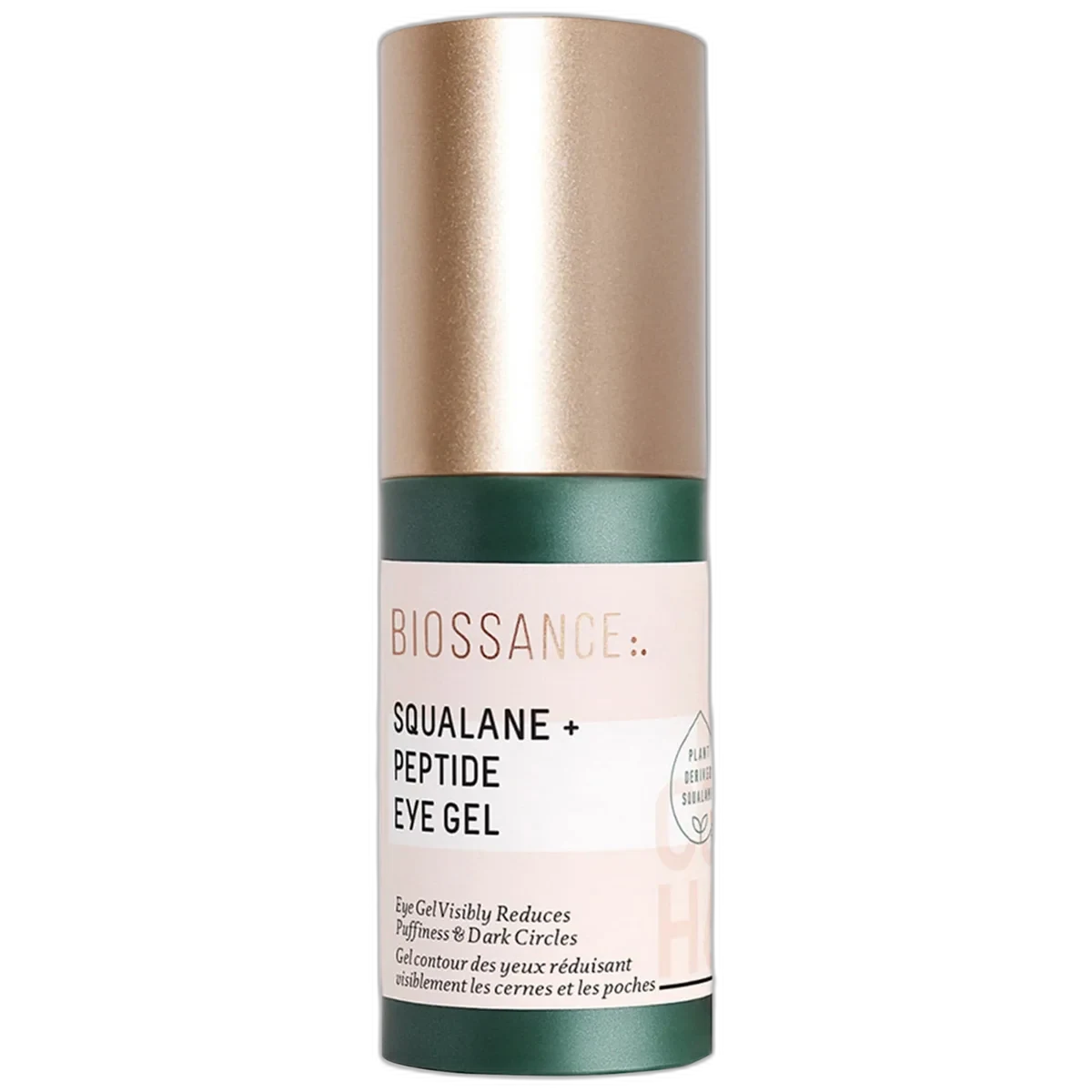
Squalane + Peptide Eye Gel
Clean De-Puffing Pioneer
 Verified reviewer
Pros & cons.
- +Dual-peptide system targets both puffiness (Eyeseryl) and expression lines (Argireline) independently
- +Completely fragrance-free — no essential oils, no botanical waters, truly unscented
- +Pregnancy-safe, fungal-acne-safe, and EWG Verified — one of the safest eye treatments available
- +Lightweight gel absorbs instantly and layers perfectly under makeup
- +Niacinamide and stable vitamin C provide brightening without irritation
- +Airless pump packaging protects actives from oxidation and contamination
- −$54 for 0.5 fl oz is expensive — comparable ingredients available at lower price points
- −Appears to be phased out from Biossance's main lineup — long-term availability uncertain
- −Limited effectiveness on dark circles caused by structural or vascular factors
- −Red algae extract can cause dried residue around eyes upon waking for some users
- −Not hydrating enough for very dry eyelids — may need a richer cream layered on top
- −Plastic packaging feels inexpensive for a premium-priced product
The full review.
It is ironic that Biossance’s most historically significant product is leaving the lineup. The Squalane + Peptide Eye Gel launched in February 2017 and sold out at Sephora four times in its first few months. This debut proved Biossance was more than a niche biotech curiosity and showed clean beauty products could drive consumer excitement in the competitive eye care category. Nearly a decade later, newer products have nudged the gel aside, but the formula remains one of the most thoughtfully constructed eye treatments in the clean beauty space.
The ingredient architecture uses mechanisms instead of marketing hooks. Two peptides handle different aspects of eye-area aging: acetyl tetrapeptide-5 (Eyeseryl) targets fluid dynamics to reduce under-eye puffiness by lowering vascular permeability and promoting lymphatic drainage, while acetyl hexapeptide-8 (Argireline) addresses expression-driven fine lines by modulating neurotransmitter release at the muscular junction. These are complementary systems targeting distinct problems in the same skin patch.
Niacinamide is fourth in the INCI at a meaningful concentration; it brightens by inhibiting melanin transfer and strengthens the barrier by supporting ceramide synthesis. Both functions matter where the skin is thinnest and the barrier is weakest. Tetrahexyldecyl ascorbate—a stable, oil-soluble vitamin C—provides antioxidant protection and supports collagen synthesis without the instability or stinging of L-ascorbic acid. Caffeine adds to the de-puffing strategy through vasoconstriction while the Eyeseryl peptide handles long-term fluid dynamics.
Biossance’s signature squalane is third in the INCI, providing a lightweight moisture layer so the gel hydrates without heaviness. Sugarcane-derived squalane is structurally identical to the squalene in human sebum, so it integrates into the skin’s lipid matrix without the occlusive feel of petrolatum or the greasiness of plant oils. In a gel for daytime and under-makeup use, this ingredient makes the formula feel effortless rather than medicinal.
The supporting cast includes aloe for soothing, sodium hyaluronate for humectant hydration, panthenol for barrier conditioning, green tea for antioxidant reinforcement, and goji berry and grape skin extracts for antioxidant diversity. It also contains Malus domestica fruit cell culture extract—the Swiss apple stem cells popular in the late 2000s. Evidence for this ingredient’s anti-aging efficacy is limited to a few brand-funded studies; it feels more like a legacy marketing inclusion than a science-forward choice. It does no harm, but it lacks the research pedigree of the peptides and niacinamide.
The gel feels pleasant on the skin. The texture is between a water and a cream—substantial enough to feel like a treatment, but light enough to absorb in under ten seconds without residue, stickiness, or pilling. The airless pump protects the vitamin C and peptides from oxidation and provides hygienic, controlled dispensing. The complete absence of scent—no fragrance, no essential oils, no botanical waters—is refreshing in a category where ‘clean’ products often include lavender or rosemary.
Results vary by concern. De-puffing is the fastest: caffeine and the Eyeseryl peptide reduce morning puffiness within the first week, especially if the gel is stored in the refrigerator and applied cold. Brightening takes three to four weeks as niacinamide and vitamin C affect melanin dynamics. Fine line softening from Argireline is the slowest—expect eight to twelve weeks for visible improvement in expression lines. The gel does not dramatically improve dark circles caused by deep-set bone structure or prominent blood vessels. The niacinamide and vitamin C target pigmentation rather than structural causes.
One quirk: some users report dried, crusty residue around their eyes. This likely comes from the Chondrus crispus (red algae) extract, which forms a thin film that can dry and flake overnight. Using less at night or blotting after application resolves this for most.
The $54 price for 15 milliliters is a significant investment. The formula justifies a premium, but comparable peptide and niacinamide eye treatments cost $20-35, and the packaging feels inexpensive for the price. Since Biossance is phasing this product out for newer offerings, buyers should consider if they want to commit to a product that may not be repurchasable long-term.
As a 2017 document of clean beauty’s direction, this gel is forward-looking. Dual peptides, stable vitamin C, niacinamide as a featured active, no fragrance, pregnancy-safe, and fungal-acne-safe were not standard eye product checkboxes a decade ago. Biossance got the formula right early; the market just needed time to catch up.
Ingredient analysis.
Full INCI list
Water/Aqua, Aloe Barbadensis Leaf Juice, Squalane, Niacinamide, Glycerin, Panthenol, Chondrus Crispus Extract, Malus Domestica Fruit Cell Culture Extract, Acetyl Tetrapeptide-5, Acetyl Hexapeptide-8, Tocopherol, Pentylene Glycol, Cucumis Sativus (Cucumber) Fruit Extract, Tetrahexyldecyl Ascorbate, Camellia Sinensis Leaf Extract, Lycium Barbarum (Goji) Fruit Extract, Lycopene, Vitis Vinifera (Grape) Skin Extract, Sodium Hyaluronate, Caffeine, Acacia Senegal Gum, Dimethicone Crosspolymer, Xanthan Gum, Carbomer, Ethyl Lauroyl Arginate HCl, Lecithin, Ammonium Acryloyldimethyltaurate/VP Copolymer, Silica, Phenoxyethanol, Potassium Sorbate, Citric Acid, Caprylyl Glycol
Skin match.
The science.
The Science
Acetyl tetrapeptide-5 (Eyeseryl) targets the periorbital area. Published studies show it reduces under-eye puffiness by decreasing vascular permeability and inhibiting glycation of the vascular basement membrane—two mechanisms that cause fluid to accumulate beneath the eyes. In clinical trials, subjects using Eyeseryl showed measurable reduction in under-eye bag volume after 60 days of use. Improvements were most significant in subjects with edema-related puffiness rather than fat pad herniation.
Acetyl hexapeptide-8 (Argireline) modulates SNARE complex assembly at the neuromuscular junction, reducing the facial muscle contractions that create expression lines. A study in the International Journal of Cosmetic Science (2002) showed a 30% reduction in wrinkle depth over 30 days with 10% topical application. Commercial products use lower concentrations than this study, but the mechanism is well-documented and multiple published trials support the cumulative effect of consistent use.
Tetrahexyldecyl ascorbate provides vitamin C antioxidant benefits via a delivery mechanism better suited to the periorbital area. L-ascorbic acid requires a low pH (around 3.5) to penetrate and can sting thin skin; this ester form penetrates the lipid bilayer at physiological pH and converts to ascorbic acid intracellularly. Research in Skin Pharmacology and Physiology (2008) confirmed it stimulates collagen synthesis and provides photoprotection comparable to L-ascorbic acid without the irritation.
Caffeine's vasoconstrictive properties work well for topical periorbital use. It temporarily tightens blood vessels beneath the thin under-eye skin, reducing the visible vasculature that causes dark circles. It also promotes lymphatic drainage to reduce puffiness—a dual action that complements the Eyeseryl peptide's longer-term anti-edema mechanism.
References
- Anti-wrinkle activity of Argireline (acetyl hexapeptide-8) — International Journal of Cosmetic Science (2002)
Dermatologist Perspective
Dermatologists favor this eye gel for its multi-targeted approach and clean safety profile. Board-certified dermatologists note that the dual-peptide combination (Eyeseryl for puffiness, Argireline for expression lines) addresses distinct periorbital concerns through evidence-supported mechanisms. Meanwhile, niacinamide and vitamin C brighten skin without the irritation risk of hydroquinone or retinoids. The EWG Verification and pregnancy safety make this a common recommendation for patients who are pregnant, breastfeeding, or have reactive periorbital skin that cannot tolerate retinoids. Dermatologists typically position this as a maintenance and prevention product rather than a treatment for advanced periorbital aging, where retinoids or injectable treatments may be necessary.
Where it fits in your routine.
Pump a small amount onto your ring finger. Dot the gel around the orbital bone — under the eye, at the outer corner, and along the brow bone. Tap (don't drag) the gel into the skin with light motions until it absorbs. Use morning and evening after serums but before moisturizer. Store the gel in the refrigerator and apply cold in the morning to de-puff. If you see morning residue, use less at night.
At $54 for 15 ml, this eye gel has a premium price. The dual peptides, niacinamide, stable vitamin C, and caffeine form a sophisticated active ingredient roster, but K-beauty and mid-tier brands offer comparable multi-peptide eye products for $18-35. The clean beauty certifications (EWG Verified, Leaping Bunny, PETA) add value for consumers who prioritize these attributes. Because Biossance is phasing out the product, the value calculation shifts — buying a product you cannot consistently repurchase is poor long-term value regardless of the formula quality. For those who love it, a 4 ml trial size was available for sampling before committing to the full size.
This fragrance-free, lightweight eye treatment addresses puffiness, mild dark circles, and early fine lines without retinoids. It works for pregnant and breastfeeding individuals, sensitive skin, and those with fungal acne. It suits people who prefer gel textures over heavy creams and prioritize clean beauty certifications.
People with very dry eyelids needing more moisture may find this gel insufficient alone. Those seeking dramatic improvement in deep wrinkles or structural dark circles need stronger treatments. Budget-conscious shoppers can find comparable multi-peptide eye products for half the price. Those needing a long-term product commitment should note Biossance is phasing this out of its lineup.
Product details.
Fragrance-free and has no scent. It contains no essential oils or botanical fragrances. It is unscented.
White airless pump bottle (0.5 oz). The pump dispenses hygienically and in controlled amounts to protect the vitamin C and peptide actives from oxidation. Some reviewers say the plastic packaging feels cheap for the $54 price point.
The gel applies smoothly and absorbs in seconds, leaving the eye area lightly hydrated and refreshed. It causes no tingling, stinging, or adjustment period. The immediate effect is subtle plumping and slight brightening. Consistent morning application shows more noticeable de-puffing results. ***
2-3 months with twice-daily use. ***
12 months ***
All Year ***
The backstory.
This eye gel was Biossance's breakout product when it launched in 2017, selling out four times at Sephora in its first months and establishing the brand as a legitimate clean beauty contender in the eye care space. It helped prove that clean formulations could compete with conventional products on efficacy. As Biossance's lineup evolved and expanded — adding the Marine Algae Eye Cream and later a Niacinamide Eye Serum — this original gel appears to be transitioning out of the core range, though remaining stock is still available at select retailers.
About Biossance
Established Brand (5–20 years)Amyris, a biotechnology company, launched Biossance in 2016. This eye gel became Sephora's best-selling eye cream after debuting in 2017. The brand is Leaping Bunny and PETA certified, EWG Verified, and THG acquired it in 2023. Note: Biossance phased out or discontinued this product from its main lineup as of late 2025.
Common myths.
Cream eye products work better than gel eye products.
The gel format is not a limitation. It includes water-soluble peptides, caffeine, and niacinamide at effective concentrations without a heavy emollient cream base. Squalane provides enough lipid content to retain moisture. For puffiness and dark circles, a gel's light texture works better because it does not weigh down the delicate under-eye skin.
Swiss apple stem cells are a proven anti-aging ingredient.
Malus domestica fruit cell culture extract (Swiss apple stem cells) has been a popular marketing ingredient since the late 2000s, but only a few brand-funded studies show anti-aging efficacy. The peptides, niacinamide, and vitamin C derivative are the real anti-aging workhorses in this formula; these ingredients have broader independent research supporting their mechanisms.
FAQ.
Is this eye gel being discontinued?
Biossance phased this product out of its main lineup as of late 2025. biossance.com no longer lists it, but Kohl's and Amazon still sell 'Peptide Brightening & De-Puffing Eye Gel.' If you use this product, stock up now or switch to Biossance's Marine Algae Eye Cream or Niacinamide Brightening Eye Serum.
Is this safe during pregnancy?
Yes. Biossance includes this product in their pregnancy-safe skincare lineup. It has no retinoids, no salicylic acid, and no ingredients flagged as concerning during pregnancy or breastfeeding.
Can I use this if I have fungal acne around my eyes?
Yes. This formula is fungal-acne-safe. The sugarcane-derived squalane and other ingredients do not feed Malassezia yeast. The green tea extract and antimicrobial preservative system also provide antifungal benefits.
Why do I get crusty residue around my eyes in the morning?
Some users report this issue, likely caused by the Chondrus Crispus (red algae) extract, which forms a thin film on the skin. This film can dry and flake during sleep. Try using a slightly smaller amount at night, or gently blot excess after application.
How does this compare to the Biossance Marine Algae Eye Cream?
The Peptide Eye Gel is lighter in texture (gel vs. cream), focuses more on de-puffing and brightening (with caffeine, Eyeseryl peptide, and niacinamide), and is better suited for daytime and oily skin. The Marine Algae Eye Cream is richer, focuses more on anti-aging (with paracress and astaxanthin), and is better for dry skin and nighttime use. They address different primary concerns.
Does the vitamin C in this product cause sun sensitivity?
No. Tetrahexyldecyl ascorbate is a stable, oil-soluble vitamin C derivative that does not increase photosensitivity. Unlike L-ascorbic acid, which light destabilizes, this form stays stable under UV. Wear sunscreen daily, but this ingredient does not require extra sun precautions.
What the community says.
"Lightweight gel texture absorbs quickly without residue"
"Effective at reducing morning puffiness"
"Hydrating without feeling heavy or greasy"
"Works well under makeup without pilling"
"Gentle enough for very sensitive eyes"
"Fragrance-free and clean formula"
"Price is high relative to results — $54 for 0.5 oz"
"Minimal visible improvement in dark circles for some users"
"Limited effect on deeper wrinkles compared to expectations"
"Can cause crusty residue around eyes upon waking"
"Not hydrating enough for very dry eyelids"
"Being phased out — harder to find"
People also looked at.