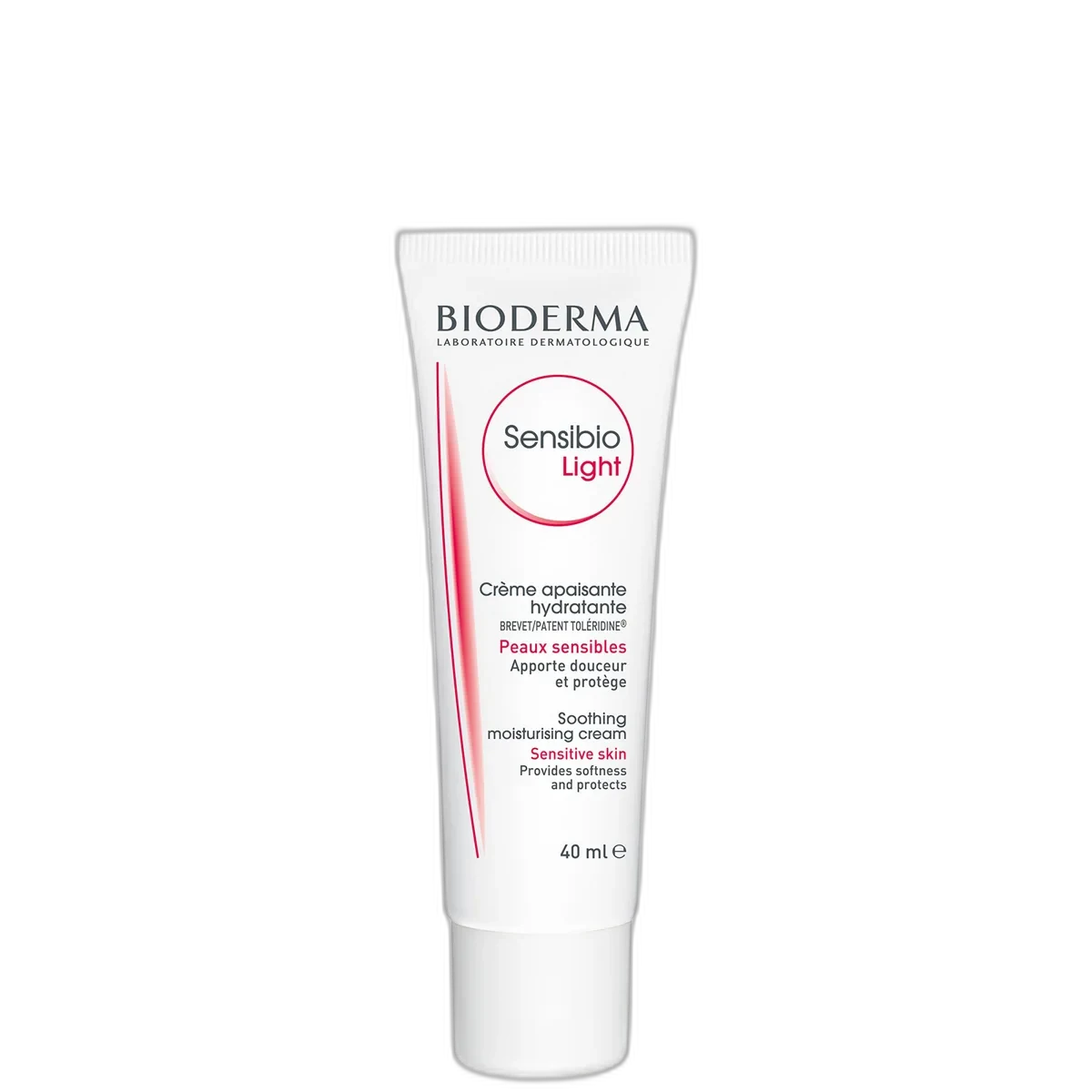
Sensibio Light Cream
Cult-Favorite Sensitive Skin Minimalist
 Verified reviewer
Pros & cons.
- +Fragrance-free, oil-free, silicone-free — the trifecta for acne-prone sensitive skin
- +Glycyrrhetinic acid provides clinically demonstrated anti-inflammatory and anti-redness activity
- +Ultra-minimal 22-ingredient formula with zero common irritants or comedogenic ingredients
- +Lightweight texture absorbs in seconds and works beautifully as a makeup primer
- +D.A.F. patent and prebiotics work to increase the skin's tolerance threshold over time
- +Layers perfectly with active serums like retinol and vitamin C without pilling
- −Not moisturizing enough for dry or very dry skin types
- −Small 40 ml tube at $29 means high per-unit cost for a daily-use moisturizer
- −Product availability declining as Bioderma phases toward Sensibio Defensive line
- −6-month PAO is short for a product that may be harder to repurchase
- −No larger economy size available
The full review.
Marketing creates some cult products. Others earn it by working when everything else fails. Bioderma’s Sensibio Light Cream is the latter, built on the frustration of a sensitive-skin community that loved it.
When Bioderma launched the Sensibio Defensive line around 2021—reformulating and replacing the Sensibio Light—the reaction was clear. A Change.org petition appeared. Skincare forums filled with users trying to stockpile the original formula. Third-party retailers became the last source for a product its own brand abandoned. That devotion happens when a product fills a gap nothing else can.
That gap is acne-prone sensitive skin. The skincare industry often treats this combination as impossible. Sensitive skin products are usually thick and emollient, using oils and butters that soothe reactivity but clog pores. Acne-focused products are often stripped and astringent—clearing breakouts but damaging a compromised barrier. The Sensibio Light Cream balances both, staying gentle for sensitivity and clean for acne.
The ingredient list proves it. Twenty-two ingredients comprise this cream, which is few for a formula with genuine anti-inflammatory technology. It has no fragrance, no silicones, no oils, no parabens, and no sulfates. The base uses glycerin with lightweight emollients like cetearyl isononanoate and caprylic/capric triglyceride to deliver moisture without the comedogenic risk of heavier oils. No silicones means no occlusive film traps bacteria and no pilling under makeup or sunscreen.
The active ingredients center on glycyrrhetinic acid, a licorice root derivative and an underrated anti-inflammatory. This is not just a soothing agent; it actively inhibits pro-inflammatory cytokine production and intervenes in the inflammatory cascade. A 2020 clinical evaluation showed significant erythema reduction in rosacea patients after 10 days of treatment with glycyrrhetinic acid. This single ingredient provides the clinical activity that calms redness.
Laminaria ochroleuca extract, a brown algae, provides a second anti-inflammatory pathway. A 2007 study showed it increases innate immune proteins and downregulates IL-1α and IL-6, the pro-inflammatory cytokines causing redness and irritation in sensitive skin. Using two anti-inflammatory ingredients through different mechanisms is more effective than using one.
The D.A.F. patent (mannitol, xylitol, rhamnose) is Bioderma’s signature tolerance-threshold technology. Rhamnose is notable: a 2019 study in the International Journal of Cosmetic Science showed its effects on collagen IV and procollagen I production, plus anti-glycation properties and reduction of pro-inflammatory interleukins. In this cream, it works beneath the surface to improve skin resilience.
Fructooligosaccharides add prebiotic microbiome support. Research in Scientific Reports in 2022 confirmed these prebiotics selectively feed beneficial bacteria while suppressing pathogenic strains. This is a meaningful addition for sensitive skin, where microbiome imbalance contributes to reactivity.
Texture
The texture built its reputation. It is lightweight and vanishes into the skin in seconds, leaving a satin-smooth finish that works under makeup. Bioderma’s testing showed 100% of subjects reported instant hydration and a 68% reduction in tightness sensation. For such a minimal cream, the immediate comfort is high. It feels like nothing, which is the goal for reactive skin.
The limitation is clear: this is not a cream for dry skin. If you need heavy emolliency, this is insufficient. It targets the normal-to-combination-sensitive spectrum for hydration without excess. For very dry sensitive skin, Bioderma’s Sensibio Defensive Rich is the choice, though it has the comedogenic trade-offs that drove Sensibio Light users away.
Availability is an issue. It is no longer on Bioderma’s US website. Third-party retailers still stock it, but availability is uncertain. The petition exists because the replacement did not solve the problem the same way. The Sensibio Defensive is a fine product, but adding soybean oil to a line for acne-prone users cost Bioderma a community.
For now, the Sensibio Light Cream remains available if you find it. It is one of the most thoughtfully formulated lightweight moisturizers for sensitive skin from a pharmacy brand—22 ingredients, all justified, none superfluous.
Ingredient analysis.
Full INCI list
Aqua/Water/Eau, Glycerin, Cetearyl Isononanoate, Isohexadecane, Glycol Palmitate, Caprylic/Capric Triglyceride, Triceteareth-4 Phosphate, Fructooligosaccharides, Mannitol, Xylitol, Glycyrrhetinic Acid, Rhamnose, Laminaria Ochroleuca Extract, Glycol Stearate, PEG-2 Stearate, Pentylene Glycol, Acrylates/C10-30 Alkyl Acrylate Crosspolymer, 1,2-Hexanediol, Caprylyl Glycol, Disodium EDTA, Xanthan Gum, Sodium Hydroxide
Skin match.
The science.
The Science
The Sensibio Light Cream uses two complementary pathways for its anti-inflammatory strategy. Glycyrrhetinic acid (18β-glycyrrhetinic acid), the primary active, is a licorice root-derived triterpenoid with documented anti-inflammatory properties. It inhibits 11β-hydroxysteroid dehydrogenase and directly reduces pro-inflammatory cytokine production. A 2020 clinical evaluation (PubMed: 32833275) shows significant erythema reduction in rosacea patients after 10 days of topical glycyrrhetinic acid treatment. The CIR safety assessment (PubMed: 17613133) confirms safety at concentrations up to 6% without irritation or sensitization.
Laminaria ochroleuca extract provides the second anti-inflammatory pathway. A 2007 study (PubMed: 17714147) used transcriptomic analysis to show this brown algae extract increases innate immune protein expression and downregulates pro-inflammatory IL-1α and IL-6. This mechanism differs from glycyrrhetinic acid, explaining why the formula works against multiple types of skin reactivity.
The D.A.F. complex component rhamnose has independent research support. Pageon et al. (2019, International Journal of Cosmetic Science, PubMed: 30845349) showed rhamnose affects the papillary dermis by increasing collagen IV and procollagen I production, inhibiting elastase and collagenase, and providing anti-glycation activity that reduced pro-inflammatory interleukin levels.
Prebiotic fructooligosaccharides support microbiome health, a factor vital for sensitive skin management. Research in Scientific Reports (2022, PMC9188601) confirmed that short-chain FOS selectively enhances beneficial S. epidermidis growth while suppressing pathogenic C. acnes and S. aureus, supporting the skin's natural microbial defense.
References
- Clinical evaluation of glycyrrhetinic acid cream for treatment of erythema in rosacea — Journal of Cosmetic Dermatology (2020)
- Laminaria ochroleuca extract reduces skin inflammation — Journal of Investigative Dermatology (2007)
- Potentially beneficial effects of rhamnose on skin ageing — International Journal of Cosmetic Science (2019)
- Effects of short chain fructo-oligosaccharides on selected skin bacteria — Scientific Reports (2022)
Dermatologist Perspective
Dermatologists view glycyrrhetinic acid as one of the most effective topical anti-inflammatory ingredients available without a prescription. Board-certified dermatologists note that combining glycyrrhetinic acid with laminaria ochroleuca extract provides dual-pathway inflammation control for chronic sensitive skin conditions like rosacea. Dermatologists frequently recommend this oil-free, silicone-free formulation for patients with both sensitivity and acne-proneness—a group often underserved by moisturizers that only address one concern. Dermatologists advise that while this cream is gentle for most reactive skin, very dry skin patients should layer a hydrating serum underneath.
Where it fits in your routine.
Apply a small amount to clean skin morning and evening. The thin texture means a little goes far — half a pea-sized amount covers the full face. Pat gently into skin instead of rubbing. In the AM, apply after serums and before sunscreen. In the PM, apply as the final step after treatment serums. Wait 1-2 minutes to absorb before applying makeup for best results.
At $29 for 40 ml, the per-unit cost is high for a daily moisturizer; twice-daily use costs $145-$175 annually. But the formulation quality justifies the premium: glycyrrhetinic acid, D.A.F. patent, and prebiotic technology in an oil-free, silicone-free, fragrance-free base is hard to replicate for less. Availability is a bigger value concern than price. As Bioderma phases toward the Sensibio Defensive line, the original formula is harder to find and may cost more through third-party sellers. For users who rely on this formula, value depends on access rather than cost.
This works for normal-to-combination sensitive skin, especially acne-prone types who struggle to find a moisturizer that does not trigger breakouts. It suits those with redness, reactivity, and post-procedure sensitivity who want active anti-inflammatory ingredients in a minimal, non-comedogenic formula.
This product feels insufficient for dry or very dry skin needing heavier emolliency. Skip it if you want guaranteed long-term availability; Bioderma is transitioning this formula toward the Sensibio Defensive line.
Product details.
This lightweight, silky cream absorbs quickly and vanishes into the skin within seconds. The consistency is soft and barely-there, neither thick nor watery.
Fragrance-free — no detectable scent whatsoever
White 40 ml squeeze tube with pink Sensibio branding. 100% recyclable plastic with sustainably sourced cardboard packaging.
Bioderma's testing shows 100% of subjects report instant hydration and a 68% reduction in tightness sensation upon first application. The cream absorbs fast and feels like it disappears. It has no tingling or adjustment period. It works as a makeup base from day one.
Apply to face twice daily for 2-3 months. The 40 ml tube size limits its use as a daily moisturizer.
6 months
All Year
The backstory.
The Sensibio Light Cream emerged from Bioderma's Sensibio line — the same range that produced the world's first micellar water in 1995. It built a quiet but devoted following among people with combination-sensitive and acne-prone sensitive skin who struggled to find moisturizers that were gentle enough for reactivity but light enough to avoid breakouts. When Bioderma reformulated the line into Sensibio Defensive around 2021, adding heavier emollients like soybean oil, the original formula became a cult product sought out through third-party retailers.
About Bioderma
Established Brand (5–20 years)Pharmacist-biologist Jean-Noël Thorel founded Bioderma in 1977 in Aix-en-Provence, France. The brand belongs to the NAOS group and has over 80 patent families, such as the D.A.F. and Toleridine complexes. Bioderma is a top pharmacy brand in France; pharmacists dispense its products and dermatologists recommend them internationally.
Common myths.
Lightweight moisturizers lack meaningful anti-inflammatory benefits
This cream contains glycyrrhetinic acid, a licorice derivative. Clinical evidence shows glycyrrhetinic acid reduces erythema in rosacea patients after 10 days. The Toleridine complex adds a second anti-inflammatory mechanism. Efficacy needs the right actives at effective concentrations, not a heavy texture.
Oil-free moisturizers don't provide enough hydration
This formula uses glycerin, caprylic/capric triglyceride, and cetearyl isononanoate to hydrate and soften skin without traditional oils. Bioderma's testing showed 100% of subjects reported instant hydration. Oil-free formulations provide enough moisture for normal-to-combination skin.
FAQ.
Is Bioderma Sensibio Light Cream being discontinued?
Bioderma replaced The Sensibio Light with Sensibio Defensive and Sensibio Defensive Rich in its current lineup. The official Bioderma US website no longer lists it, but third-party retailers like Dermstore and Amazon still sell it. The reformulated Defensive line uses different emollients, including soybean oil, which some original Sensibio Light users find comedogenic.
What is the difference between Bioderma Sensibio Light and Sensibio Defensive?
The Sensibio Light uses glycyrrhetinic acid and Toleridine as anti-inflammatory actives in an oil-free, silicone-free base. The Sensibio Defensive adds carnosine, palmitoyl tetrapeptide-10, Salvia miltiorrhiza extract, squalane, and soybean oil. The Sensibio Defensive is more nourishing but may cause comedones in acne-prone skin. The Sensibio Light is more minimal and works better for breakout-prone users.
Is Bioderma Sensibio Light Cream good for acne-prone sensitive skin?
Yes — this explains its cult following. The oil-free, silicone-free, non-comedogenic formula lacks the common emollients that cause breakouts in acne-prone skin. The glycyrrhetinic acid offers anti-inflammatory benefits without clogging pores. It is a rare moisturizer that is gentle for sensitivity and clean for acne concerns.
Can you use Bioderma Sensibio Light with retinol?
Yes — its soothing, anti-inflammatory properties work well with retinol. Apply retinol to clean, dry skin, wait a few minutes, then layer the Sensibio Light on top. The glycyrrhetinic acid and D.A.F. complex buffer retinol irritation, while the lightweight texture avoids the heavy feeling some thicker moisturizers create over retinol.
Is Bioderma Sensibio Light Cream moisturizing enough for dry skin?
For dry skin, this cream may not provide sufficient moisture as a standalone moisturizer — it's designed for normal-to-combination sensitive skin. If you have dry-sensitive skin, consider the Sensibio Defensive Rich instead, or layer a hydrating serum (hyaluronic acid) underneath the Sensibio Light for additional moisture.
Community
What the community says.
"Soothes redness and irritation almost instantly on application"
"Lightweight texture absorbs quickly without leaving any greasy residue"
"Works beautifully as a makeup primer with a smooth, natural finish"
"Fragrance-free, oil-free, silicone-free — the complete gentle formula checklist"
"Pairs well with active serums like retinol and vitamin C without pilling"
"Not moisturizing enough for very dry or flaky skin as a standalone moisturizer"
"Small 40 ml tube empties quickly with twice-daily use"
"Increasingly difficult to find as Bioderma phases it out for Sensibio Defensive"
"Premium price point for the amount of product received"
"Replacement Sensibio Defensive formula added comedogenic ingredients, frustrating loyal users"