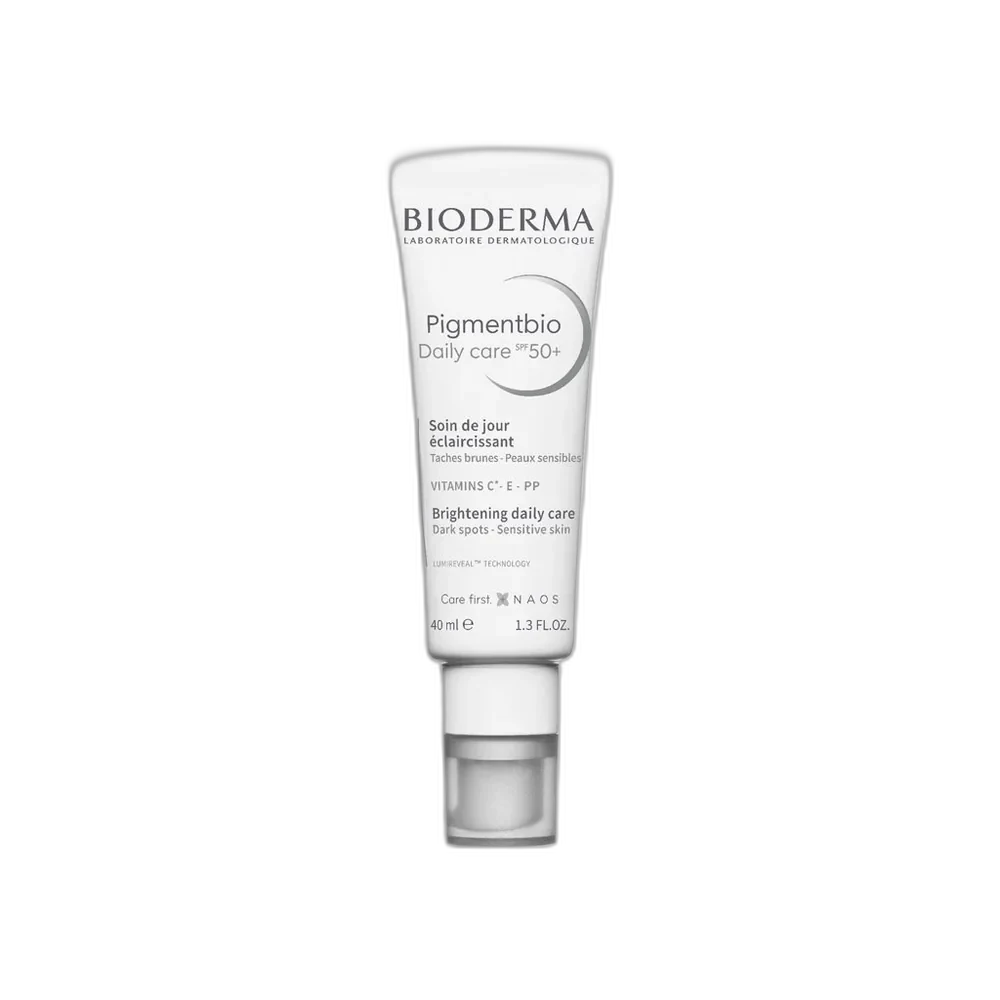
Pigmentbio Daily Care SPF 50+
Brightening SPF Multi-Tasker
 Verified reviewer
Pros & cons.
- +Excellent four-filter UV system with Tinosorb M and S provides crucial protection for pigmentation-prone skin
- +Multi-pathway brightening approach targets inflammation, melanin production, and melanin elimination simultaneously
- +Immediate luminous pearly glow that works beautifully as a makeup primer
- +Rich enough to replace moisturizer for normal and combination skin types
- +Pump dispenser provides hygienic and controlled product dispensing
- +Combines daily sun protection with gradual brightening in a single morning step
- −Key brightening actives at sub-therapeutic concentrations — niacinamide ~0.7% and azelaic acid ~0.3%
- −Contains Fragrance (Parfum) unlike most Bioderma products in the Photoderm range
- −White cast reported on medium to dark skin tones from Tinosorb M and pearly finish
- −Premium price for 40ml with no larger size option for better per-unit value
- −Dewy finish can become overly shiny on oily skin types in warm weather
The full review.
About Bioderma
Skincare brands often reference the classic combination of tretinoin, hydroquinone, and a corticosteroid that dermatologists use to treat stubborn hyperpigmentation. Bioderma’s Pigmentbio Daily Care SPF 50+ does not claim to be Kligman’s Trio, but it follows the same philosophy: attacking pigmentation from multiple angles. The question is whether six gentle actives at cosmetic concentrations match three potent prescription-strength ingredients.
Myth
N/A
Reality
LumiReveal technology uses a three-stage approach to the hyperpigmentation pathway. Stage one targets inflammation, the trigger that tells melanocytes to increase production. Glabridin from licorice root extract handles this; it is a documented tyrosinase inhibitor that also scavenges reactive oxygen species that provoke inflammatory cascades. Stage two blocks melanin synthesis directly. Ascorbyl glucoside (a stable vitamin C derivative), azelaic acid, and andrographolide from Andrographis paniculata all inhibit the enzymatic machinery that produces pigment. Stage three accelerates the removal of existing pigmentation. Salicylic acid and rhamnose promote cellular turnover to shed the melanin-laden keratinocytes that create visible dark spots.
How to Use
The logic is elegant, but concentrations matter. Niacinamide sits at roughly 0.7%, while clinical studies showing depigmenting effects typically use 2-5%. Azelaic acid is at approximately 0.3%, compared to the 15-20% in prescription formulations. Ascorbyl glucoside is estimated at around 1%. These are cosmetically active amounts, not trace amounts, but users expecting results like a dermatologist-prescribed depigmenting regimen should adjust their expectations.
Who Should Buy
Bioderma’s Pigmentbio Daily Care SPF 50+ excels at sun protection. The four-filter system—Tinosorb M, Tinosorb S, Avobenzone, and Octocrylene—matches the robust European filter combination in the Bioderma Photoderm range. For hyperpigmentation, this is the most important feature: without UV defense, brightening actives cannot work effectively. UV exposure triggers melanin overproduction, and an SPF 50+ with strong UVA coverage from Tinosorb M and S addresses the root cause better than any brightening serum concentration.
Texture
The texture is a pearly, medium-weight cream that gives an immediate luminous glow. This cosmetic brightening effect is separate from, and faster than, the actual depigmenting action. A silicone base with dimethicone and polymethylsilsesquioxane ensures a smooth, velvety application, while shea oil adds moisturizing power. It works as a combined moisturizer and sunscreen for normal and combination skin, simplifying a morning routine to cleanser-toner-this.
Scent
This product departs from Bioderma’s usual fragrance-free standards because it contains Fragrance (Parfum). It is the last ingredient on the INCI list, suggesting a low concentration, and the scent is light. However, users choosing Bioderma for its fragrance-free reputation should note this. If fragrance is a dealbreaker, the Photoderm Aquafluid or MAX Cream offer the same UV filter quality without it.
Packaging
N/A
Best Season
N/A
Common Praise
The finish is dewy and glowy rather than matte. This makes it an effective makeup base; the pearly luminosity creates a lit-from-within canvas that works under sheer or medium-coverage foundations.
Common Complaints
Oily skin types in humid conditions may find the dewiness turns to shine, and some users report pilling if they apply makeup too quickly after the cream.
White cast is another factor. Tinosorb M has inherent scattering properties, and combined with the pearly finish, users with medium to dark skin tones report a cast that does not fully blend. Clinical trials tested this product on phototypes III-IV, but real-world feedback suggests deeper skin tones should patch-test before use.
Pairs Well With
N/A
Conflicts With
N/A
Best for
The value proposition is complex. At $30-45 for 40ml with no larger size, the cost per use is premium. You pay for a sophisticated multi-active formula and an excellent UV filter system from a legacy pharmacy brand. However, a gap exists between these active concentrations and the levels clinical evidence supports for significant depigmenting results. This is not a treatment product, but the best possible SPF for someone with pigmentation concerns—it protects against further darkening while providing gentle, gradual brightening support through daily use.
Works for
N/A
Not ideal for
N/A
AM routine
N/A
PM routine
N/A
Ingredient analysis.
Full INCI list
Aqua/Water/Eau, Dicaprylyl Carbonate, Octocrylene, Methylene Bis-Benzotriazolyl Tetramethylbutylphenol \[Nano\], Glycerin, Butyl Methoxydibenzoylmethane, Dipropylene Glycol, Bis-Ethylhexyloxyphenol Methoxyphenyl Triazine, Dimethicone, Ascorbyl Glucoside, Butyrospermum Parkii (Shea) Oil, Niacinamide, Silica, Polymethylsilsesquioxane, Jojoba Esters, HDI/Trimethylol Hexyllactone Crosspolymer, Decyl Glucoside, C20-22 Alkyl Phosphate, C20-22 Alcohols, Xanthan Gum, Helianthus Annuus (Sunflower) Seed Wax, Dimethicone/Vinyl Dimethicone Crosspolymer, Pentylene Glycol, Tocopheryl Acetate, Sodium Hydroxide, Hydrogenated Castor Oil, Salicylic Acid, Sodium Citrate, Lysine, Azelaic Acid, Mannitol, Polyglycerin-3, Xylitol, Andrographis Paniculata Leaf Extract, Rhamnose, Propylene Glycol, Acacia Decurrens Flower Wax, Saccharide Isomerate, Glycyrrhiza Glabra (Licorice) Root Extract, Tocopherol, Fructooligosaccharides, Caprylic/Capric Triglyceride, Laminaria Ochroleuca Extract, Fragrance (Parfum)
Skin match.
The science.
The Science
LumiReveal technology targets three stages of the melanogenesis pathway. During the inflammation stage, glabridin — the primary bioactive in Glycyrrhiza glabra (licorice) root extract — inhibits tyrosinase activity and reactive oxygen species formation according to systematic reviews. This addresses the inflammatory triggers that start pigment overproduction. A 2018 review in the Journal of Cosmetic and Aesthetic Dermatology documented glabridin's dual mechanism of tyrosinase inhibition and antioxidant activity.
At the melanin synthesis stage, ascorbyl glucoside (a stable vitamin C derivative), azelaic acid, and niacinamide use distinct mechanisms. Azelaic acid at prescription concentrations (15-20%) has robust evidence for hyperpigmentation treatment. A study by Balina and Graupe in Clinical Therapeutics (1991) showed that 20% azelaic acid cream performs similarly to 4% hydroquinone for facial hyperpigmentation in darker skin. Niacinamide inhibits melanosome transfer from melanocytes to keratinocytes, which differs from tyrosinase inhibition.
Concentration is the critical caveat. The estimated concentrations in this product — niacinamide at approximately 0.7% and azelaic acid at approximately 0.3% — sit significantly below levels used in clinical research. Combining multiple low-concentration actives theoretically uses additive or synergistic effects to approach the efficacy of fewer, higher-concentration actives with less irritation, but independent peer-reviewed research has not validated this specific combination at these specific concentrations.
The SPF 50+ filter system provides the foundation for any depigmenting approach. UV radiation upregulates tyrosinase and melanocyte activity; without adequate photoprotection, brightening actives fight a constantly replenished stimulus.
References
- Treatment of melasma with azelaic acid versus hydroquinone: a comparative study — Clinical Therapeutics (1991)
Dermatologist Perspective
Dermatologists generally view products like the Pigmentbio Daily Care as useful adjuncts rather than standalone hyperpigmentation treatments. Board-certified dermatologists recommend patients with moderate to severe melasma or hyperpigmentation use this type of product as their daily SPF while using prescription-strength actives (tretinoin, hydroquinone, or higher-concentration azelaic acid) for treatment. The product's value in a dermatological context is its excellent UV filter system — dermatologists consistently emphasize that sun protection is the most important step in any depigmenting protocol, and this product delivers that protection reliably.
Where it fits in your routine.
Apply two finger-lengths to the face as the last step of your morning skincare routine. The cream works as both moisturizer and sunscreen for normal and combination skin types. Wait 2-3 minutes for full absorption before applying makeup. Pat foundation on top instead of rubbing to prevent pilling. Reapply every two hours during prolonged sun exposure. For better results, use a dedicated brightening serum (vitamin C or retinoid) in your evening routine.
At $30-45 for 40ml with no larger size option, the per-milliliter cost is premium even for European pharmacy brands. The price covers the complex, multi-active formulation and excellent UV filter system. However, sub-therapeutic concentrations of the brightening actives mean you pay for a high-quality sunscreen with gentle brightening benefits, not a clinical-strength treatment. For pigmentation-prone skin that needs daily SPF, the brightening ingredients are a bonus. Users expecting treatment-level results should buy a separate dedicated serum instead of relying on this alone.
Pigmentation-prone skin needing daily SPF protection gets the most value here. The excellent UV filters prevent further darkening and the gentle brightening cocktail provides gradual improvement. This works well for those who want fewer steps in their morning routine.
This works for moderate to severe hyperpigmentation expecting prescription-level results. It contains Parfum, so fragrance-sensitive users should be aware. The dewy cream feels too heavy for oily skin in warm weather. Users with deeper skin tones should patch-test for a potential white cast.
Product details.
Pearly, lightweight-to-medium cream with a velvety feel. It is slightly thicker than a fluid but spreads easily. The silicone base makes application smooth and silky.
Light, slightly sweet fragrance. Parfum is the last ingredient on the INCI list. It is noticeable on application but not overpowering.
White 40ml pump tube uses the Pigmentbio range's peach and coral colors with Bioderma branding. The pump dispenser gives hygienic, controlled doses. Packaging uses 100% recyclable plastic and cardboard.
The pearly cream gives an immediate, luminous, lit-from-within glow on first application. The silicone-based texture glides on smoothly and feels velvety. Medium-to-dark skin tones may see a slight white cast. The brightening effect on skin tone is cosmetic and instant; actual depigmenting results take 4-12 weeks of daily use.
6-8 weeks with daily face application
12 months
All Year
The backstory.
The Pigmentbio range launched in 2019 as Bioderma's answer to the growing demand for daily-use products that address hyperpigmentation without the irritation of prescription-strength treatments. The Daily Care SPF 50+ was designed as the cornerstone of the range — a product that prevents new pigmentation (via SPF) while treating existing spots (via LumiReveal technology), reflecting Bioderma's ecobiology philosophy of working with the skin's natural processes rather than overriding them.
About Bioderma
Legacy Brand (20+ years)Pharmacist-biologist Jean-Noël Thorel founded Bioderma in 1977 in Aix-en-Provence, France. The brand belongs to the NAOS Group. Bioderma develops products with dermatologists, allergologists, and toxicologists, and conducts all R&D and manufacturing at its French facility.
Common myths.
One product with brightening ingredients and SPF replaces a dedicated depigmenting treatment.
The brightening actives in this product use cosmetic concentrations (niacinamide ~0.7%, azelaic acid ~0.3%). These levels sit below the therapeutic doses in clinical studies (niacinamide 2-5%, azelaic acid 15-20%). This product works as a preventive daily SPF with gentle brightening support. It does not replace prescription-strength treatments for moderate to severe hyperpigmentation.
Using brightening products without SPF does not fade dark spots.
UV exposure triggers melanin overproduction. Brightening actives fail without adequate SPF protection. This product's SPF 50+ with Tinosorb M and S provides the UV defense that lets the brightening ingredients work effectively.
FAQ.
Does Bioderma Pigmentbio Daily Care actually fade dark spots?
The product contains six depigmenting actives through the LumiReveal technology, and Bioderma's clinical data shows 96% improvement in brown spots after 3 months. However, the key actives (niacinamide ~0.7%, azelaic acid ~0.3%) are at cosmetic rather than clinical concentrations. Expect gradual, mild improvement in skin tone evenness with daily use — for moderate to severe hyperpigmentation, a dedicated treatment serum may be needed alongside this SPF.
Can I use Bioderma Pigmentbio Daily Care as my only moisturizer?
Normal and combination skin types get enough hydration and SPF protection from the cream texture with shea oil, glycerin, and silicones. Very dry skin may need a hydrating serum underneath, but oily skin types may find it too thick.
Does Bioderma Pigmentbio Daily Care leave a white cast?
The pearly cream creates a luminous glow, but users with medium to dark skin tones report a white cast that does not blend. The Tinosorb M filter has mild scattering properties that cause this. Patch-test if you have deeper skin tones.
Is Bioderma Pigmentbio Daily Care fragrance-free?
No — unlike most Bioderma products, this one has Fragrance (Parfum) as the last ingredient in the INCI list. The scent is light and slightly sweet. People with fragrance sensitivities should use the fragrance-free Photoderm Aquafluid or MAX Cream instead.
How does Bioderma Pigmentbio compare to prescription depigmenting treatments?
LumiReveal technology adapts dermatological protocols like Kligman's Trio for daily cosmetic use with lower active concentrations. The azelaic acid is approximately 0.3%, compared to 15-20% in prescription products. Use it as a preventive daily SPF for gentle brightening instead of a substitute for prescription-strength hyperpigmentation treatment. ---
What the community says.
"Provides a noticeable luminous glow that works beautifully as a makeup base"
"Visible improvement in skin tone evenness and dark spots over consistent use"
"Dual-purpose product combines brightening treatment with high SPF protection"
"Lightweight cream texture that absorbs without feeling too heavy on most skin types"
"Well-tolerated by most sensitive skin types despite the complex ingredient list"
"Effective sun protection prevents further darkening of existing hyperpigmentation"
"Active brightening ingredients are at sub-therapeutic concentrations for significant results"
"Can pill under certain foundations if not given adequate time to absorb"
"Contains fragrance which some sensitive or reactive skin types prefer to avoid"
"White cast reported on medium to dark skin tones despite brightening claims"
"Premium price for a small 40ml tube with no larger size option available"
Featured in.
People also looked at.