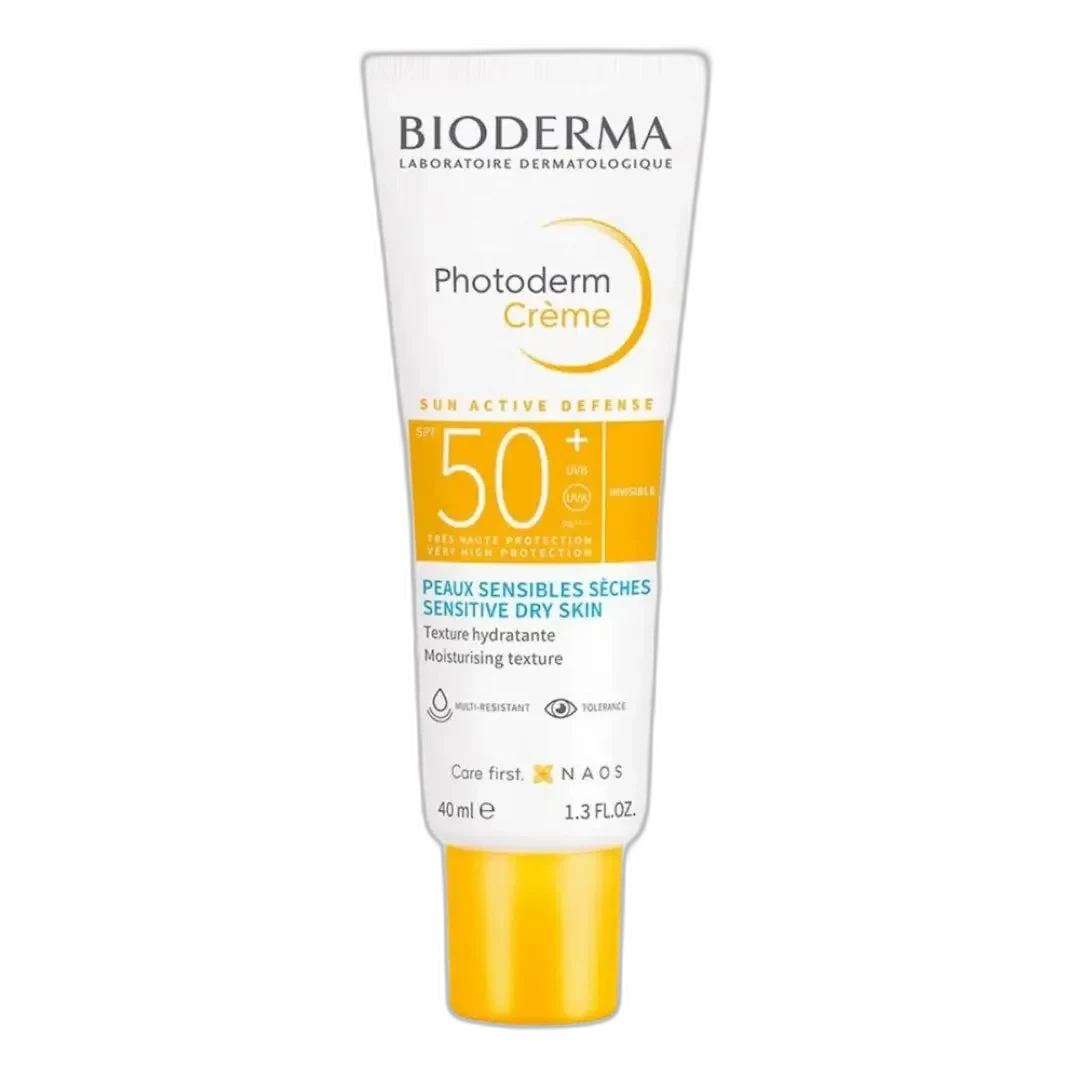
Photoderm MAX Cream SPF 50+
UVA Protection Powerhouse
 Verified reviewer
Pros & cons.
- +PPD 42 delivers one of the highest UVA protection levels available in any commercial sunscreen
- +Rich moisturizing cream texture that hydrates dry and normal skin while protecting
- +Fragrance-free formulation well-tolerated by sensitive and reactive skin types
- +Triple-stabilized Avobenzone system maintains protective capacity throughout the day
- +Cellular BIOprotection with ectoin and mannitol adds biological defense beyond UV filtration
- +Water, heat, and humidity resistant for reliable outdoor protection
- +Minimal white cast that fades within minutes and no reported eye stinging
- −Dewy satin finish feels too heavy and shiny for oily skin especially in warm weather
- −40ml tube is small for the price and depletes in 6-8 weeks with daily use
- −Contains Octocrylene which some individuals with contact allergies prefer to avoid
- −Can pill under certain foundations if insufficient absorption time is given
- −Limited availability in US retail — primarily available through online importers
The full review.
Most people know their SPF but rarely their PPD. This matters because SPF measures UVB protection—how long until skin turns red—while PPD measures UVA shielding. UVA wavelengths penetrate the dermis, break down collagen, drive photoaging, and link strongly to melanoma risk. The Bioderma Photoderm MAX Cream has a PPD of 42. For context, the EU UVA seal only requires a minimum PPD of one-third the SPF value; an SPF 50+ product needs only about 17 PPD to qualify. Most commercial sunscreens range from 20 to 30. This one nearly doubles that standard.
A four-filter chemical system achieves this. Tinosorb M, a hybrid filter that absorbs and scatters UV radiation across the 280-400nm spectrum, does the heavy lifting. Tinosorb S adds broad-spectrum coverage and photostabilizes the Avobenzone, which targets the UVA-I band. Octocrylene rounds out UVB defense and stabilizes the Avobenzone from another angle. This creates a triple-stabilized Avobenzone system that stays protective all day instead of degrading under sun exposure, a common issue in many high-SPF formulas.
Beneath the filters, Bioderma’s Cellular BIOprotection system—ectoin, mannitol, and Laminaria ochroleuca extract—acts as a biological safety net. Even robust filters let some UV energy through. Ectoin preserves intracellular glutathione and Langerhans cell functionality so cellular defense mechanisms work when needed. This is a sophisticated approach from a brand that has developed sun protection science for nearly five decades.
Texture
The cream texture makes this the Photoderm for dry and normal skin. It is thicker than the Aquafluid and melts into the skin for a moisturizing feel. A cyclomethicone base allows smooth spreading without dragging, while glyceryl stearate adds emollient heft. If a matte SPF 50+ usually leaves your skin feeling tight or parched, this is the antidote. The finish is a satin-dewy sheen that looks like hydrated skin rather than a visible sunscreen layer.
Best for
The dewy finish is either a strength or a limitation depending on skin type. It looks natural, plumping, and never chalky on dry and normal skin. On oily or combination skin, especially in heat, it can look shiny within hours and may need a mattifying powder. This sunscreen targets a specific audience, and that audience is not oily-skinned users.
Common Praise
The fragrance-free formulation works well for sensitive skin, and the water/heat/humidity resistance suits outdoor activities. White cast is minimal; Tinosorb M causes slight opacity that fades within minutes. Most users report no eye stinging, which is a benefit over many chemical sunscreens.
Common Complaints
The 40ml tube is small for the price. Octocrylene is one of the UV filters; while it has a strong safety profile with worldwide regulatory approval, some people avoid it due to rare contact allergy concerns. Those users should use the Aquafluid, which uses a different filter system. The cream can pill under certain foundations if it does not absorb fully; patting makeup on top instead of rubbing helps.
Works for
This cream asks for a premium price for protection metrics most sunscreens cannot match. The PPD 42 is a measured, quantified protection level reflecting formulation sophistication from a brand with nearly fifty years of dermatological research. Whether the premium is worth it depends on your goals. If daily UVA defense is a clinical priority—for hyperpigmentation, post-procedure care, photosensitive conditions, or aggressive anti-aging—this delivers more than almost anything else on the shelf.
Not ideal for
The Photoderm MAX Cream prioritizes efficacy over elegance. For its intended skin types and conditions, that is the correct priority.
Ingredient analysis.
Full INCI list
Aqua/Water/Eau, Dicaprylyl Carbonate, Octocrylene, Methylene Bis-Benzotriazolyl Tetramethylbutylphenol \[Nano\], Butyl Methoxydibenzoylmethane, Bis-Ethylhexyloxyphenol Methoxyphenyl Triazine, Cyclomethicone, C20-22 Alkyl Phosphate, Glyceryl Stearate, PEG-100 Stearate, Ectoin, Mannitol, Xylitol, Rhamnose, Fructooligosaccharides, Laminaria Ochroleuca Extract, C20-22 Alcohols, Decyl Glucoside, Hydroxyethyl Acrylate/Sodium Acryloyldimethyl Taurate Copolymer, Pentylene Glycol, Xanthan Gum, Propylene Glycol, Citric Acid, Caprylic/Capric Triglyceride, Disodium EDTA, Sodium Hydroxide, Chlorphenesin, Phenoxyethanol
Skin match.
The science.
The Science
The Photoderm MAX Cream's four-filter system uses a synergistic combination to reach its PPD 42 rating and maximize photostability. Tinosorb M (Methylene Bis-Benzotriazolyl Tetramethylbutylphenol) is a hybrid filter. Unlike purely chemical filters that only absorb UV, Tinosorb M also reflects and scatters UV radiation across the 280-400nm range. It has high photostability because it converts absorbed UV energy into harmless heat without degrading.
Tinosorb S adds broad-spectrum coverage and photostabilizes the Avobenzone via an energy-transfer mechanism. Avobenzone is the most effective UVA-I filter available but is photolabile; it degrades under the UV radiation it absorbs. In this formula, Tinosorb S and Octocrylene stabilize Avobenzone through different chemical pathways. This redundant stabilization system keeps the Avobenzone working much longer than it would alone.
The Cellular BIOprotection complex adds biological protection. Ectoin is an extremolyte produced by bacteria in extreme environments; it preserves Langerhans cell populations in UV-exposed skin. A 2024 study in the Journal of Cosmetic Dermatology by Fontbonne et al. shows that ectoin combined with mannitol significantly preserved intracellular glutathione, reduced DNA strand breaks, and maintained catalase activity in UV-exposed skin—effects UV filters alone did not achieve. The Laminaria ochroleuca extract adds antioxidant capacity to neutralize reactive oxygen species generated by UV exposure that penetrates the filter layer.
References
- Positive and ecobiological contribution in skin photoprotection of ectoine and mannitol combined in vivo with UV filters — Journal of Cosmetic Dermatology (2024)
Dermatologist Perspective
Dermatologists often recommend the Photoderm MAX Cream for patients with sun-intolerant skin, photosensitive conditions, or those recovering from dermatological procedures where maximum UVA protection is clinically important. The PPD 42 rating makes this one of the most frequently cited sunscreens in European dermatological practice for post-laser care, melasma management, and hyperpigmentation treatment protocols. Board-certified dermatologists also note the cream texture adheres to the skin surface better than lighter fluids, which can provide more consistent real-world protection for patients who do not reapply as frequently as recommended.
Where it fits in your routine.
Apply a generous amount (about two finger-lengths for the face) as the last step of your morning skincare routine. For dry skin, this cream is thick enough to act as both moisturizer and sunscreen. For very dry skin, layer it over a hydrating serum. Wait 2-3 minutes for full absorption before applying makeup — pat foundation on top instead of rubbing to prevent pilling. Reapply every two hours during prolonged sun exposure or after swimming, toweling, or heavy sweating.
At roughly $20-30 for 40ml, Photoderm MAX Cream has a high per-milliliter cost. The Photoderm range offers other sizes, but Photoderm MAX Cream only comes in 40ml, so no larger format lowers the unit price. This price covers Bioderma's nearly five decades of dermatological research and a UV filter system with superior UVA protection. The PPD 42 is a quantified performance metric, not a marketing claim, that most brands cannot match. For patients using sunscreen for hyperpigmentation or post-procedure care clinical protocols, this price buys medical-grade protection at cosmetic-grade pricing.
This is for anyone prioritizing maximum UVA protection—especially those with hyperpigmentation, melasma, or post-procedure skin. It works for dry-to-normal skin types wanting a sunscreen that feels like moisturizer and provides PPD protection well above the industry standard.
Oily skin types will find the dewy cream texture too heavy, especially in warm or humid conditions. People with a known contact allergy to Octocrylene should use an alternative formula. The Aquafluid variant works better for those who prefer a matte, invisible finish.
Product details.
Thick, creamy texture melts and glides smoothly over skin. It is heavier than a fluid but lighter than a traditional cream sunscreen. It absorbs in 2-3 minutes to a satin-dewy finish.
Fragrance-free with no added perfume. A faint, neutral sunscreen base scent exists during application but vanishes within seconds.
White 40ml squeeze tube with screw cap uses Bioderma's Photoderm blue and orange colors. The 100% recyclable plastic tube comes in an outer cardboard box from sustainably managed forests.
The cream feels thick and moisturizing on first application—a change from lightweight fluids for dry skin. A slight sheen or dewiness lasts for the first few minutes before settling into a satin finish. Most users experience no stinging, no strong scent, and no immediate irritation.
6-8 weeks with daily face application using the recommended amount
12 months
All Year
The backstory.
The Photoderm MAX line was designed specifically for sun-intolerant skin — people who burn quickly, have photosensitive conditions, or are medically advised to maximize sun protection. While the Aquafluid serves the cosmetic-elegance crowd, the MAX Cream prioritizes sheer protective power, delivering one of the highest independently measured PPD ratings available in a consumer sunscreen.
About Bioderma
Legacy Brand (20+ years)Pharmacist-biologist Jean-Noël Thorel founded Bioderma in 1977 in Aix-en-Provence, France. The brand belongs to the NAOS Group. Bioderma develops products with dermatologists, allergologists, and toxicologists, and conducts all R&D and manufacturing at its French facility.
Common myths.
SPF 50+ is overkill and provides no meaningful extra protection over SPF 30.
The UVB protection gap between SPF 30 (97%) and SPF 50 (98%) is small, but this product's PPD 42 UVA rating exceeds most SPF 30 products. This difference matters for UVA protection, the wavelength that drives photoaging and melanoma risk.
Avoid chemical sunscreen filters like Octocrylene because they are unsafe.
Regulatory bodies worldwide approve Octocrylene, which has been in sunscreens for decades. Large-scale safety reviews show no evidence of systemic harm at cosmetic-use concentrations, though some people have contact allergies to it. In this formula, Octocrylene works as a UVB filter and stabilizes the Avobenzone.
FAQ.
What is the PPD rating of Bioderma Photoderm MAX Cream?
The PPD rating is 42, which equals PA++++. This provides high UVA protection — the UV radiation that causes photoaging, hyperpigmentation, and melanoma risk. Most SPF 50+ sunscreens have PPD ratings between 20 and 30.
Is Bioderma Photoderm MAX Cream good for dry skin?
This is a top sunscreen option for dry skin. The cream texture uses cyclomethicone and glyceryl stearate to feel moisturizing and hydrating. It works as both moisturizer and sunscreen for normal-to-dry skin types, but very dry skin may still need a hydrating serum underneath.
Does Bioderma Photoderm MAX Cream leave a white cast?
Tinosorb M has mild scattering properties, so a slight white cast appears immediately upon application. This fades within a few minutes as the cream absorbs. The finish is satin-dewy, not a chalky white residue.
Can I wear makeup over Bioderma Photoderm MAX Cream?
Yes, but wait 2-3 minutes for full absorption before applying foundation. Some users report occasional pilling with certain makeup products; patting foundation on top works better than rubbing. The dewy finish works as a natural primer for dry skin.
Is Bioderma Photoderm MAX Cream safe during pregnancy?
This product uses chemical UV filters generally considered safe during pregnancy. It lacks retinoids, hydroquinone, and other ingredients often flagged as pregnancy concerns. Always consult your healthcare provider for personalized guidance during pregnancy.
What is the difference between Bioderma Photoderm MAX Cream and Aquafluid?
The MAX Cream has a thick, moisturizing texture for dry and normal skin and leaves a dewy satin finish. The Aquafluid is ultra-light and water-like for oily and combination skin with a matte finish. The Cream uses a different filter system with Tinosorb M and has a higher PPD of 42, while the Aquafluid has a PPD of 26.
Does Bioderma Photoderm MAX Cream contain Octocrylene?
Yes, Octocrylene is one of the four UV filters in this formula. It works as a UVB filter and stabilizes the Avobenzone. Octocrylene is approved by regulatory bodies worldwide and has a strong safety profile. People with known contact allergies to Octocrylene should use the Aquafluid variant, which uses a different filter system.
What the community says.
"Exceptionally high UVA protection with PPD 42 rating — among the highest available"
"Moisturizing cream texture that hydrates while protecting from sun damage"
"Fragrance-free and well-tolerated by sensitive and reactive skin types"
"Smooth and easy to spread with minimal white cast that fades quickly"
"Water, heat, and humidity resistant for reliable outdoor protection"
"No eye stinging reported by most users unlike many chemical sunscreens"
"Cream texture feels too heavy and rich for oily skin especially in humid weather"
"Can leave a dewy or shiny finish that requires powder to mattify"
"40ml tube runs out quickly with daily use at a premium price point"
"Potential pilling when layered under certain foundations or makeup products"
"Contains Octocrylene which some users with sensitive skin prefer to avoid"
Featured in.
People also looked at.