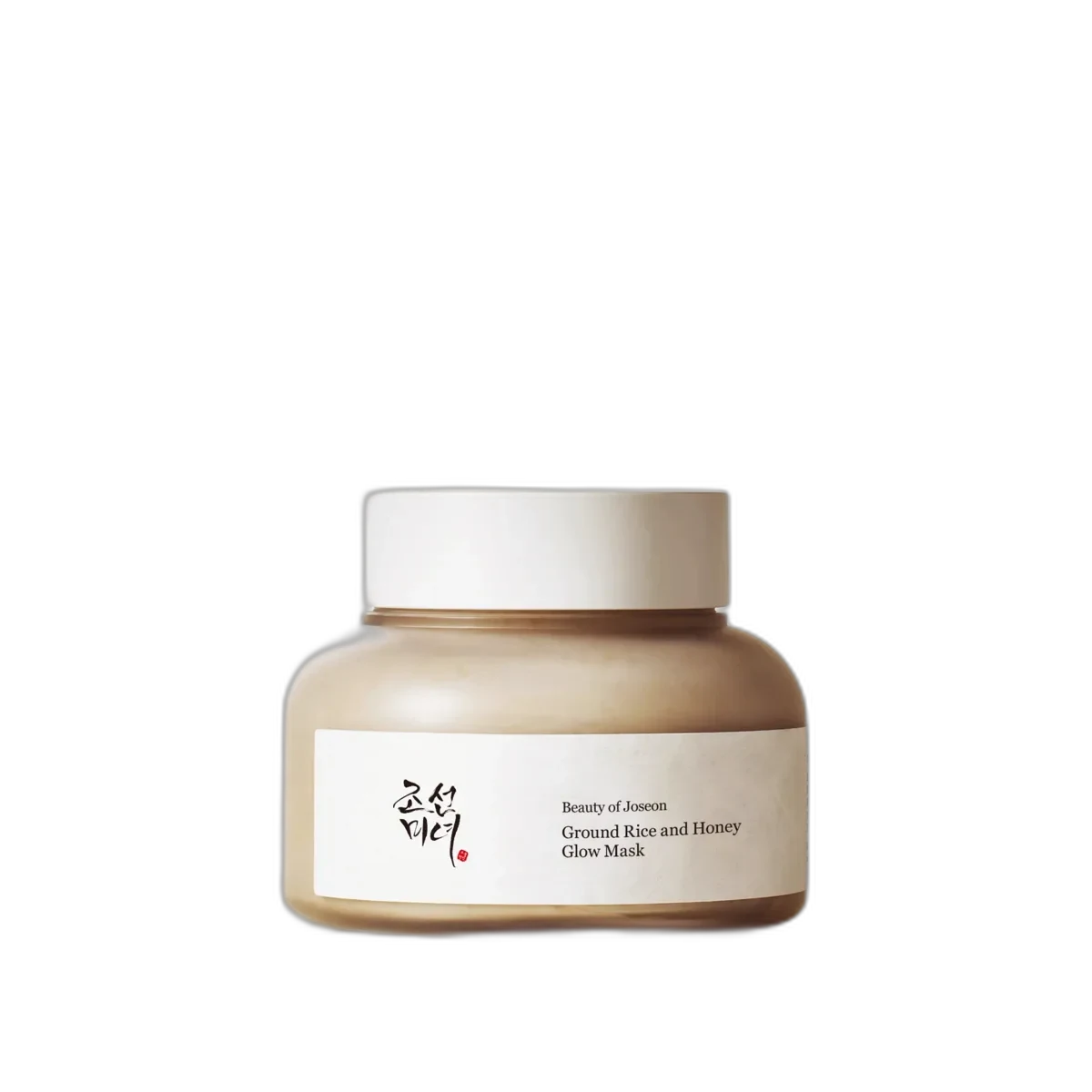
Ground Rice and Honey Glow Mask
Hanbang Glow Ritual
 Verified reviewer
Pros & cons.
- +Triple-action formula purifies pores, exfoliates, and hydrates in a single masking step
- +Honey content prevents the tight, dehydrated feeling typical of clay masks
- +Finely ground rice hull particles provide satisfying physical exfoliation without being harsh
- +Immediate visible glow and smoother texture after just one use
- +Exceptional value — 150ml lasts 4-6 months at 1-2 weekly uses for $14.40
- +Rice lees extract adds unique fermentation-derived brightening not found in Western clay masks
- −Rice hull particles and menthyl lactate make this unsuitable for very sensitive or reactive skin
- −Thick texture requires thorough rinsing to fully remove all clay and rice residue
- −Not appropriate for use on inflamed acne or compromised skin barriers
- −Contains menthyl lactate cooling agent that may irritate sensitive users
- −Not vegan due to honey content
The full review.
A specific Korean beauty tradition involves grinding rice into fine powder, mixing it with honey, and applying the paste as a brightening mask. This isn’t a Pinterest-era invention. Women in the Joseon Dynasty used leftover cooking rice and wild honey to achieve the era’s prized porcelain complexion. Beauty of Joseon builds its identity on excavating these traditions for modern packaging, turning this ritual into a product that feels both ancient and engineered.
The Ground Rice and Honey Glow Mask is a wash-off formula that combines three functions: clay purification, physical exfoliation, and hydrating masking. Most triple-duty products perform mediocrely at all three. This one works well on each count because the formula understands the chemistry of compromise.
Kaolin clay is the primary purifying agent and is gentler than bentonite. It absorbs oil and draws out impurities without the aggressive suction of stronger clays. Bentonite appears further down the INCI list in a supporting role. This is a deliberate choice: enough clay power to decongest pores without making skin feel power-washed.
The honey, at approximately 5%, acts as the formula’s diplomatic envoy. While clays pull oil out, the honey pulls moisture in as a natural humectant with antibacterial and anti-inflammatory properties. This dual action prevents the mask from drying into a tight, cracking shell like most clay masks. It stays slightly moist during the 10-15 minute application. This isn’t a design flaw; it’s the point. The honey keeps skin hydrated while the clay purifies.
Finely ground rice hull powder and rice bran particles provide physical exfoliation; these appear as tiny, pale grains. They are small enough to avoid a sandpaper feel and rounded enough to avoid the microtear concerns of the walnut scrub era. Adding water and massaging before rinsing provides a polish that smooths surface texture and dislodges dulling dead skin cells.
The rice lees extract buried deeper in the formula is the most interesting ingredient. This is the sediment from brewing makgeolli, Korea’s traditional rice wine. The fermentation process generates natural kojic acid and galactomyces byproducts, both recognized for skin-brightening properties. This adds a fermentation-derived brightening boost without a separate active ingredient line item.
Using this mask is pleasant. The thick, creamy texture spreads evenly and does not drip. After one minute, menthyl lactate provides a very mild cooling sensation—noticeable but not aggressive. After 10-15 minutes, the mask hasn’t fully dried; add water and massage to activate the rice particles before rinsing.
Immediate results are the mask’s strongest point. Skin looks brighter and feels smooth after the first use. Pores appear temporarily refined, and a healthy glow lasts into the next day. These aren’t filter-level results, but the natural luminosity makes people ask if you slept more.
Menthyl lactate can trigger irritation in reactive skin despite its low concentration. Combined with physical exfoliation from the rice hull powder, this mask suits those who can handle moderate stimulation. If you have rosacea, active eczema, or a compromised barrier, skip this mask.
At 150ml and used once or twice weekly, this mask lasts four to six months. The $14.40 price point is generous. The formula isn’t a luxury product with a luxury price; it is a reliable weekly ritual that delivers consistent, visible results.
The Ground Rice and Honey Glow Mask succeeds as a clay mask with manners. It purifies without punishing, exfoliates without aggression, and hydrates while it cleans. In a category where products often suggest skincare must hurt to work, this offers a more civilized approach.
Formula
Ingredient analysis.
Full INCI list
Water, Kaolin, Honey, Glycerin, Propanediol, Dipropylene Glycol, Oryza Sativa (Rice) Hull Powder, Isononyl Isononanoate, 1,2-Hexanediol, Cetyl Alcohol, Caprylic/Capric Triglyceride, Polyglyceryl-3 Methylglucose Distearate, Butylene Glycol, Glyceryl Stearate, Oryza Sativa (Rice) Bran, Bentonite, Palmitic Acid, Stearic Acid, Hydroxyacetophenone, Behenyl Alcohol, Cellulose, Zea Mays (Corn) Starch, Ethylhexylglycerin, Xanthan Gum, Potassium Cetyl Phosphate, Oryza Sativa (Rice) Lees Extract, Polyacrylate-13, Hydrogenated Polyisobutene, Sodium Phytate, Polyglyceryl-10 Laurate, Ethylhexyl Palmitate, Sorbitan Isostearate, Oryza Sativa (Rice) Extract, Menthyl Lactate, Honey Extract
Skin match.
The science.
The Science
This mask works through the synergy of two clay minerals and the counterbalancing humectant properties of honey.
Kaolin clay is a standard cosmetic ingredient that absorbs sebum. Its layered silicate structure provides a large surface area to physically adsorb oil and impurities from the skin surface. Research in the Journal of Cosmetic Science shows kaolin is one of the mildest clays for cosmetic use, so it works for regular application without significant barrier disruption.
Bentonite is the stronger clay in the formula and adds deeper drawing action. Its montmorillonite mineral content gives it a higher cation exchange capacity than kaolin, so it binds more effectively to charged particles in sebum and pore debris. Because its concentration is lower in this formula (based on its INCI position), it supplements rather than dominates the purifying action.
Honey does more than provide humectancy. A 2013 review in the Journal of Cosmetic Dermatology documented honey's antimicrobial activity (from hydrogen peroxide production and low pH), anti-inflammatory properties, and wound-healing promotion. The natural sugars in honey attract water to the skin surface to counteract the dehydrating tendency of the clay components.
The rice hull powder provides mechanical exfoliation using particles that are finer and more uniformly shaped than many natural scrub ingredients. The rice bran contains gamma-oryzanol, a compound with antioxidant and UV-protective properties studied in multiple publications. The rice lees extract (makgeolli byproduct) contains naturally occurring kojic acid, a tyrosinase inhibitor that helps the mask brighten skin. Clinical studies show kojic acid's depigmenting efficacy, though the concentration from rice lees extract is likely modest compared to dedicated kojic acid formulations.
Dermatologist Perspective
Dermatologists often recommend clay masks as a weekly maintenance step for oily and combination skin, noting that a well-formulated clay mask needs adequate humectant content to prevent over-drying. Board-certified dermatologists see that including honey and glycerin alongside the kaolin and bentonite in this formula follows sound formulation logic—the clays address excess sebum while the humectants prevent the compensatory oil production that follows aggressive stripping. Dermatologists caution that the physical rice hull exfoliation makes this mask inappropriate for patients with active inflammatory conditions or compromised barriers, but for healthy skin, the gentle mechanical action effectively complements chemical exfoliation programs.
Where it fits in your routine.
Apply an even layer to clean, dry skin. Avoid the eye area and lips. Leave on for 10-15 minutes; the honey content keeps the mask slightly moist. Do not let the mask fully dry or crack. After 10-15 minutes, wet your fingers and massage in circular motions to activate the rice hull exfoliation. Rinse thoroughly with lukewarm water. Ensure no clay residue remains, especially around the hairline and jawline. Follow with hydrating toner, serum, and moisturizer. Use 1-2 times per week.
At $14.40 for 150ml, this multi-functional mask offers outstanding value. Use it once weekly to last six months, or twice weekly for four months. This costs roughly $2.40-3.60 per month. The formula uses meaningful concentrations of honey (5%), dual clays, and rice-derived exfoliants—ingredients that alone justify a higher price. For comparison, prestige brand single-function clay masks often cost $30-50 for smaller amounts. This affordable product combines three skincare functions, making it one of the best value masks in the K-beauty category.
Oily and combination skin types want a weekly pore-purifying ritual that avoids a stripped feeling. This product works for anyone with dullness, enlarged pores, or surface texture issues who wants clay purification and gentle physical exfoliation in one step. K-beauty enthusiasts who value traditional ingredients will like the hanbang heritage.
People with very sensitive, reactive, or rosacea-prone skin may find the physical rice hull exfoliation and menthyl lactate trigger irritation. Avoid this if you have active eczema, a compromised skin barrier, or inflamed breakouts. This contains honey, so vegans should note that.
Product details.
This thick, creamy clay mask has visible fine rice hull particles suspended throughout. It stays on the face without dripping, but spreads and removes easily.
No added fragrance. It has a mild, pleasant, natural honey-and-grain aroma.
A 150ml tube uses traditional Korean design elements. The squeeze tube format makes dispensing easy and hygienic, but the thick texture requires effort to push through the opening.
The mask spreads smoothly with a thick clay-cream texture on first application. Tiny rice hull particles feel substantial but not scratchy. Menthyl lactate creates a mild cooling sensation after one minute. After 10-15 minutes, the mask stays slightly moist because of the honey and glycerin. This prevents the mask from drying down like pure clay masks and keeps it from feeling stripping upon removal.
4-6 months with 1-2 uses per week
12 months
All Year
The backstory.
The concept behind this mask draws from two Korean beauty traditions: the use of ground rice as a gentle physical polish, and the application of honey as a soothing, hydrating mask. In Korean herbal medicine, rice lees — the sediment left from making makgeolli rice wine — have been used for centuries to brighten and soften the skin. Beauty of Joseon combined all three traditions into a single modern formulation.
About Beauty of Joseon
Beauty of Joseon launched in 2016 and updated its approach in 2019. It combines traditional Korean hanbang ingredients with modern formulation science. The brand has a large global following and sells at Sephora. Its products earn high user ratings on many retail platforms.
Common myths.
Clay masks work best when they dry completely and crack before you wash them off.
Fully dried clay masks pull moisture from your skin, which causes dehydration and irritation. This mask stays slightly moist because of the honey and glycerin content — this is a feature, not a defect. The clay purifies by contacting sebum, not by drying out your face.
Physical exfoliation is bad for your skin.
Aggressive scrubs with jagged or oversized particles cause microtears. Finely ground rice hull powder provides gentle, rounded-particle exfoliation that dermatologists consider safe if used correctly. Particle size and frequency matter—using fine rice powder 1-2 times weekly stays within safe limits.
FAQ.
How often should I use the Ground Rice and Honey Glow Mask?
Use 1-2 times per week. The combination of clay purification and physical rice hull exfoliation works well but is not for daily use. Skip other physical or chemical exfoliants on days you use this mask to avoid over-exfoliating.
Can I use this mask if I have sensitive skin?
Use caution. Honey and glycerin make this gentler than most clay masks, but rice hull particles provide physical exfoliation that can overstimulate very sensitive or reactive skin. The menthyl lactate also creates a mild cooling sensation that some sensitive skin types find irritating. Patch test on your jawline first.
Should I let this mask dry completely before rinsing?
No — 5% honey and glycerin keep this mask slightly moist during use. Leave it on for 10-15 minutes, then add water and massage in circular motions to activate the rice hull exfoliation before rinsing thoroughly. Do not wait for it to crack and dry.
Does this mask help with blackheads?
Yes. The dual clay system (kaolin and bentonite) pulls oil and debris from pores, while rice hull powder physically dislodges surface-level blackheads. For stubborn blackheads, apply a BHA toner before masking to loosen plugs, then let the clay draw them out. Weekly use shows the best results.
Is this mask suitable for dry skin?
Dry skin types can use this mask less often—once every 1-2 weeks—because honey and glycerin prevent the clay from dehydrating skin. Apply a hydrating toner and thick moisturizer immediately after. However, physical exfoliation may not suit dry and sensitive skin.
What the community says.
"Skin looks visibly glowy and brighter after just one use"
"Doesn't dry out skin like typical clay masks"
"Rice grains provide satisfying gentle exfoliation"
"Generous 150ml size lasts a long time"
"Physical rice particles may be too abrasive for very sensitive skin"
"Mild cooling sensation from menthyl lactate may irritate some users"
"Not suitable for inflamed or broken-out skin"
"Texture is thick and requires thorough rinsing"
People also looked at.