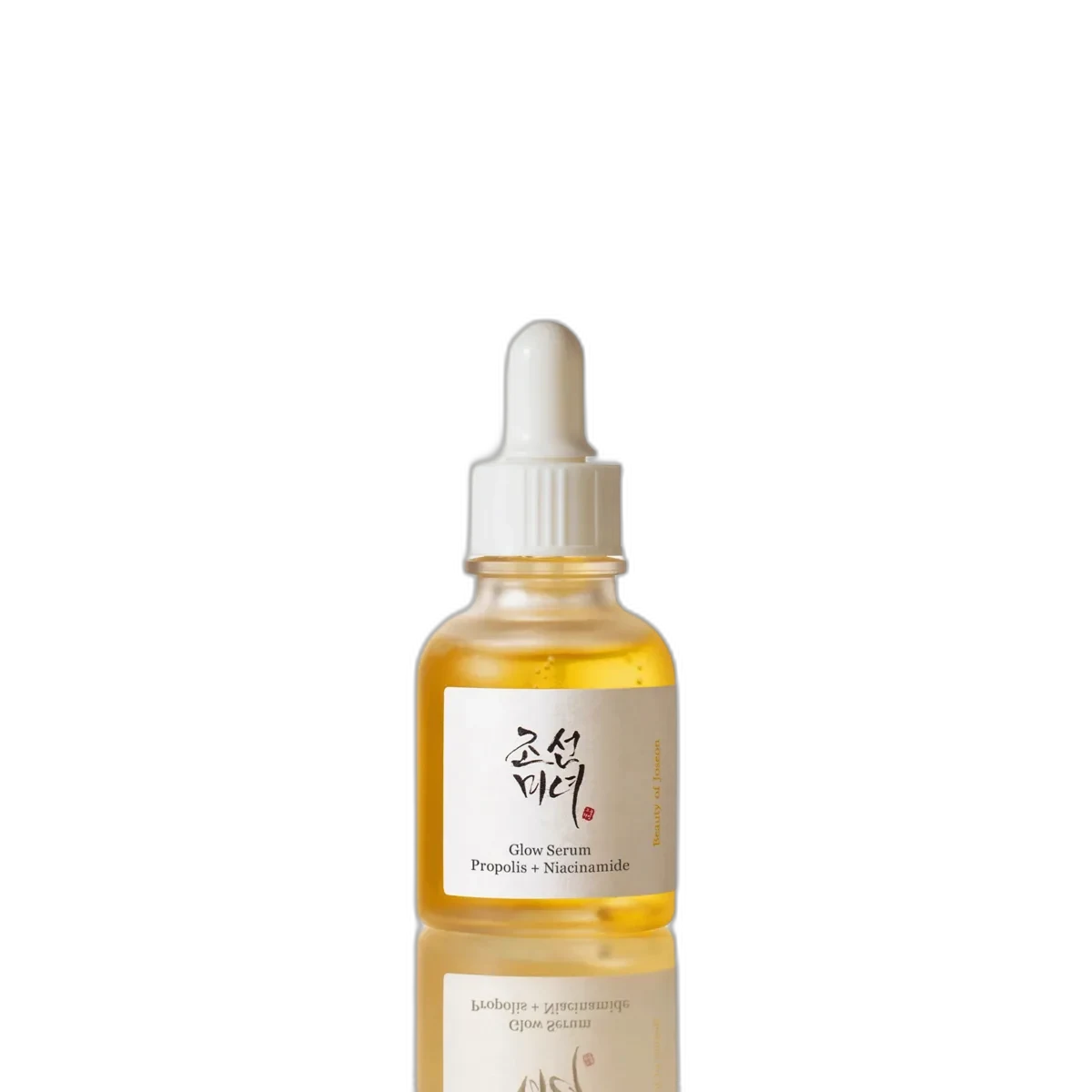
Glow Serum: Propolis + Niacinamide
K-Beauty Propolis Glow Icon
 Verified reviewer
Pros & cons.
- +60% propolis extract — an exceptionally high concentration that delivers genuine calming and antibacterial benefits
- +Triple-action blemish approach: propolis (antibacterial), niacinamide (oil control), BHA (pore clearing)
- +Noticeable skin calming and glow improvement within the first week of consistent use
- +Fragrance-free formula with no essential oils or synthetic scents
- +Excellent value at $17 for 30ml with a 60ml option for even better per-unit cost
- +Complementary botanical actives (centella, tea tree, turmeric) reinforce the anti-inflammatory profile
- +Available at Sephora alongside K-beauty specialty retailers for easy access
- −Slight tackiness during absorption that may bother those who prefer instantly-absorbing serums
- −Propolis can cause allergic reactions in those sensitive to bee products
- −2% niacinamide is lower than many competing niacinamide serums for those wanting higher concentrations
- −Contains tamanu oil which is comedogenic for some acne-prone users despite the formula's blemish-targeting positioning
- −Small 30ml bottle lasts only 6-8 weeks with twice-daily use
The full review.
Propolis doesn’t have the glamorous reputation of retinol or the TikTok virality of niacinamide. It’s a resinous substance that bees produce to seal and protect their hives — essentially bee glue. But in Korean herbal medicine, propolis has been valued for centuries for its healing and protective properties. Beauty of Joseon’s Glow Serum takes this unglamorous ingredient and puts it front and center at 60% — a concentration that most brands wouldn’t dare attempt because propolis is expensive and, frankly, not sexy enough for marketing.
The 60% propolis concentration is what makes this serum worth discussing. Most propolis skincare products use 5-20% for label appeal. At 60%, propolis isn’t a supporting player — it’s the entire foundation. The extract provides a complex of over 300 bioactive compounds, including flavonoids (chrysin, pinocembrin), phenolic acids, and CAPE (caffeic acid phenethyl ester), each contributing to the anti-inflammatory, antibacterial, and wound-healing profile that makes propolis genuinely interesting as a skincare active.
In practice, the high propolis content manifests as a serum that calms irritated skin noticeably within the first few applications. Active blemishes seem to resolve faster. Redness diminishes. The skin develops a subtle, healthy luminosity — not the sparkly, reflective glow of products loaded with mica, but a deeper, from-within radiance that suggests well-nourished skin. This is the ‘glow’ the product name promises, and it delivers.
The niacinamide at 2% is a deliberate choice that deserves defense. In a market where 10% niacinamide is common, 2% might look timid. But research demonstrates efficacy at concentrations as low as 2%, and in the context of a 60% propolis base, a lower niacinamide percentage reduces the risk of irritation from ingredient interactions. The niacinamide’s role here is targeted — pore refinement, mild oil regulation, and a subtle brightening effect — rather than the aggressive multi-tasking that high-dose niacinamide attempts.
Betaine salicylate at 0.5% adds a layer of gentle chemical exfoliation that most glow serums omit. Betaine salicylate is a BHA derivative with similar pore-clearing properties to salicylic acid but with reduced irritation potential. It dissolves the oil and dead skin cells inside pores, complementing the niacinamide’s oil regulation and the propolis’s antibacterial action. The three-way combination — propolis (antibacterial/healing), niacinamide (oil control/pore refinement), and BHA (exfoliation/pore clearing) — creates a surprisingly comprehensive anti-blemish strategy in what’s marketed simply as a ‘glow serum.’
The botanical supporting cast reinforces the anti-inflammatory theme. Centella asiatica extract provides calming triterpenes. Tea tree extract adds documented antibacterial activity. Turmeric root extract contributes curcumin-based anti-inflammatory support. These aren’t token inclusions — they’re thoughtfully chosen botanicals that complement the propolis’s mechanism of action.
Texture-wise, the serum is slightly viscous with a warm, honey-like tint. There’s a brief tackiness on application — inherent to high-propolis formulas — that resolves within thirty seconds to a minute. The trick is applying to slightly damp skin and using no more than two to three drops; over-application amplifies the sticky phase. Once absorbed, the finish is luminous without being greasy — it looks like healthy skin, not like you’re wearing a serum.
The scent is worth mentioning: a faint, natural honey-like aroma from the propolis itself. No fragrance is added. If you dislike the smell of honey, you’ll notice it; most people find it either pleasant or neutral.
At $17 for 30ml (with a 60ml option at $23.80 for better per-unit value), this serum’s pricing borders on absurd for what it delivers. Comparable propolis serums — COSRX Propolis Synergy Toner at $23/150ml uses a lower propolis concentration, and premium options like the iUNIK Propolis Vitamin Synergy Serum at $19/50ml use 70% propolis extract but at higher per-ml cost. The Beauty of Joseon formulation matches or exceeds these competitors in both concentration and supporting ingredients while remaining accessible.
The limitation worth noting: propolis is a bee product, and for a small percentage of users, it can trigger allergic or sensitivity reactions. If you have known allergies to bee products, patch test carefully. The tamanu oil (Calophyllum inophyllum) is also a known comedogenic ingredient, which is a curious inclusion in a formula otherwise well-suited for acne-prone skin.
For the vast majority of users — particularly those with oily, combination, or acne-prone skin seeking calmer, clearer, more luminous skin — this serum delivers a remarkable amount of value. It’s the product that made ‘propolis’ a word in the average K-beauty consumer’s vocabulary, and it earned that influence honestly.
Formula
Ingredient analysis.
Full INCI list
Propolis Extract, Dipropylene Glycol, Glycerin, Butylene Glycol, Water, Niacinamide, 1,2-Hexanediol, Melia Azadirachta Flower Extract, Melia Azadirachta Leaf Extract, Sodium Hyaluronate, Curcuma Longa (Turmeric) Root Extract, Ocimum Sanctum Leaf Extract, Theobroma Cacao (Cocoa) Seed Extract, Melaleuca Alternifolia (Tea Tree) Extract, Centella Asiatica Extract, Corallina Officinalis Extract, Lotus Corniculatus Seed Extract, Calophyllum Inophyllum Seed Oil, Betaine Salicylate, Sodium Polyacryloyldimethyl Taurate, Tromethamine, Polyglyceryl-10 Laurate, Caprylyl Glycol, Ethylhexylglycerin, Dextrin, Pentylene Glycol, Octanediol, Tocopherol, Xanthan Gum, Carbomer
Skin match.
The science.
The Science
Propolis benefits come from its complex phytochemical profile. This profile varies by geography but always includes flavonoids, phenolic acids, and CAPE (caffeic acid phenethyl ester). A 2013 study in Evidence-Based Complementary and Alternative Medicine shows propolis extract has antimicrobial activity against Cutibacterium acnes (formerly Propionibacterium acnes), the main bacterium in inflammatory acne. The study found propolis inhibited bacterial growth at concentrations that did not kill skin cells—unlike harsher antibacterial agents.
Propolis uses the inhibition of the NF-κB pathway to fight inflammation. A 2018 review in the Journal of Functional Foods shows that CAPE and chrysin (a propolis flavonoid) both suppress pro-inflammatory cytokines like TNF-α, IL-1β, and IL-6—the same mediators in acne, rosacea, and skin irritation.
Niacinamide at 2% is within the effective range found in clinical studies. A 2003 study by Hakozaki and colleagues in the British Journal of Dermatology shows topical niacinamide at 2% reduces hyperpigmentation and improves skin barrier function. A 2006 study in the International Journal of Cosmetic Science confirms niacinamide regulates sebum, showing lower sebum excretion rates after 4 weeks of topical application.
Betaine salicylate is a lipophilic hydroxy acid derivative. It exfoliates like salicylic acid but is easier on the skin. It penetrates the oil-filled pore lining to dissolve sebum and keratin plugs—the same mechanism as salicylic acid—but the betaine modification reduces irritation. This makes the 0.5% concentration in this formula safe for daily use with propolis and niacinamide.
Dermatologist Perspective
Dermatologists often recommend propolis-based products to patients with mild-to-moderate inflammatory acne seeking non-prescription options. Board-certified dermatologists note that propolis's antibacterial and anti-inflammatory properties make it a useful active for acne management; it targets both the bacterial trigger and the inflammatory response. The 2% niacinamide and 0.5% betaine salicylate complement this by targeting oil production and pore congestion. Dermatologists advise patients with bee product allergies to avoid this serum. While effective for mild acne and skin clarity, it does not replace prescription treatments for moderate-to-severe cystic acne.
Where it fits in your routine.
Cleanse and tone, then dispense 2-3 drops onto clean fingertips. Press into the face, targeting blemishes, visible pores, and redness. Wait 30-60 seconds for absorption before applying moisturizer. Use this serum morning and evening. When using retinol, apply this serum first and wait 2-3 minutes before the retinol. Always use sunscreen in the morning.
At $17 for 30ml, this serum provides high value for a 60% propolis formulation with niacinamide and BHA. The 60ml option at $23.80 is better — it costs less than $0.40 per ml for a serum with these ingredients. For comparison, COSRX Full Fit Propolis Light Ampoule ($24/30ml) has a similar propolis concentration but costs more and lacks BHA. The dropper allows precise dispensing — 2-3 drops per use makes the 30ml bottle last 6-8 weeks with twice-daily use, costing about $9-12 per month.
Oily, combination, and acne-prone skin types want a serum that calms breakouts, refines pores, and improves skin luminosity. It works for anyone needing a gentle daily treatment serum for blemishes, pores, and dullness without high-strength active irritation. K-beauty enthusiasts can find a hero serum at an accessible price.
People allergic to bee products face propolis sensitivity and contact dermatitis. Very dry skin types may need a thicker moisturizer alongside this serum. Those seeking high-concentration niacinamide (5-10%) for aggressive brightening or oil control should look elsewhere.
Product details.
Faint, natural honey-like scent from the propolis extract — no added fragrance
An amber glass dropper bottle protects the formula from light degradation. The dropper dispenses 2-3 drops, which covers the full face. The design uses the brand's signature Joseon aesthetic. Finish glowydewylightweight What to Expect on First Use The serum feels slightly tacky during absorption — this is normal for high-propolis formulas. The tackiness resolves within a minute, leaving skin hydrated with a subtle luminous sheen. The honey-like scent is barely noticeable. Consistent use for a few days can lead to calmer skin and fewer active breakouts. The glow effect builds over weeks of regular use. How Long It Lasts 6-8 weeks with twice-daily use (30ml); 12-16 weeks with the 60ml size Period After Opening 12 months
All Year Background
The backstory.
The Glow Serum was one of Beauty of Joseon's early hits that helped establish the brand beyond its Dynasty Cream. Propolis — the resinous substance bees produce to seal and protect their hives — has been used in traditional Korean medicine for centuries, and its inclusion at 60% reflects the brand's commitment to using traditional ingredients at functional concentrations rather than token levels. The serum's success was driven largely by K-beauty YouTube and Reddit communities who validated its calming and glow-boosting claims.
About Beauty of Joseon
Established Brand (5–20 years)Sumin Lee founded Beauty of Joseon in 2016 in South Korea. The brand uses hanbang ingredients and Joseon dynasty beauty traditions. The Glow Serum is a flagship product that built the brand's reputation in global K-beauty serum markets.
Common myths.
Propolis is just fancy honey and lacks real skincare benefits
Propolis has a different composition than honey. It contains over 300 bioactive compounds, including flavonoids, phenolic acids, and CAPE (caffeic acid phenethyl ester). These compounds have documented anti-inflammatory, antibacterial, and wound-healing properties. Multiple studies show propolis promotes skin healing and reduces acne-related inflammation.
Higher niacinamide percentages are always better
Research shows niacinamide works at concentrations as low as 2%, the amount used in this serum. Higher concentrations (5-10%) cause flushing, irritation, and redness in sensitive individuals. The 2% in this formula provides pore-refining and brightening benefits with almost no irritation risk — a choice made to ensure this serum is gentle enough for daily use alongside its 60% propolis base.
FAQ.
Can I use the Glow Serum if I'm allergic to bee stings?
Use caution. Propolis is a bee product. Propolis allergy is separate from bee venom allergy, but sensitization overlaps. If you have known allergies to bee products (honey, beeswax, bee pollen), patch test this serum on a small skin area for 48 hours before full face application. Stop use if you see redness, itching, or swelling.
Is the Glow Serum good for acne?
This works for acne-prone skin. The 60% propolis extract has antibacterial properties that target acne-causing bacteria, the 2% niacinamide regulates oil and refines pores, and the 0.5% betaine salicylate provides gentle BHA exfoliation to keep pores clear. Tea tree extract adds more antibacterial support. It does not replace prescription acne treatments for severe cases, but it is an effective daily serum for mild-to-moderate acne.
What's the difference between the Glow Serum and the Glow Deep Serum?
The Glow Serum (Propolis + Niacinamide) targets calming, anti-blemish, and pore-refining needs—ideal for oily, acne-prone, and combination skin. The Glow Deep Serum (Rice + Alpha-Arbutin) targets brightening and evening skin tone—ideal for hyperpigmentation, dullness, and dark spots. Pick based on your main concern: clarity and pores vs. brightness and tone.
Can I use this serum with retinol?
Yes. The 2% niacinamide and 0.5% betaine salicylate are gentle enough to use with retinol. Apply this serum first, wait a few minutes for absorption, then apply your retinol. The niacinamide buffers retinol irritation, so they work well together. If you feel sensitivity, use them on alternate nights instead of layering.
Why does the serum feel sticky?
The 60% propolis extract is naturally viscous and resinous, causing slight tackiness. This feeling goes away in 30-60 seconds as the serum absorbs. Apply to slightly damp skin and use only 2-3 drops to minimize tackiness. Pat gently instead of rubbing to speed up absorption.
Community
What the community says.
"Visibly calms redness and active breakouts within days of use"
"Gives skin a natural luminous glow without greasiness"
"Lightweight texture absorbs quickly and layers perfectly under makeup"
"Affordable price point for a 60% propolis serum"
"Helps reduce the appearance of pores with consistent use"
"Slightly sticky texture that takes a minute to fully absorb"
"Can cause allergic reactions in those with bee product sensitivities"
"2% niacinamide is lower than many competing niacinamide serums"
"Contains tamanu oil which some acne-prone users find comedogenic"
"Small 30ml size doesn't last long — the 60ml is better value"
People also looked at.