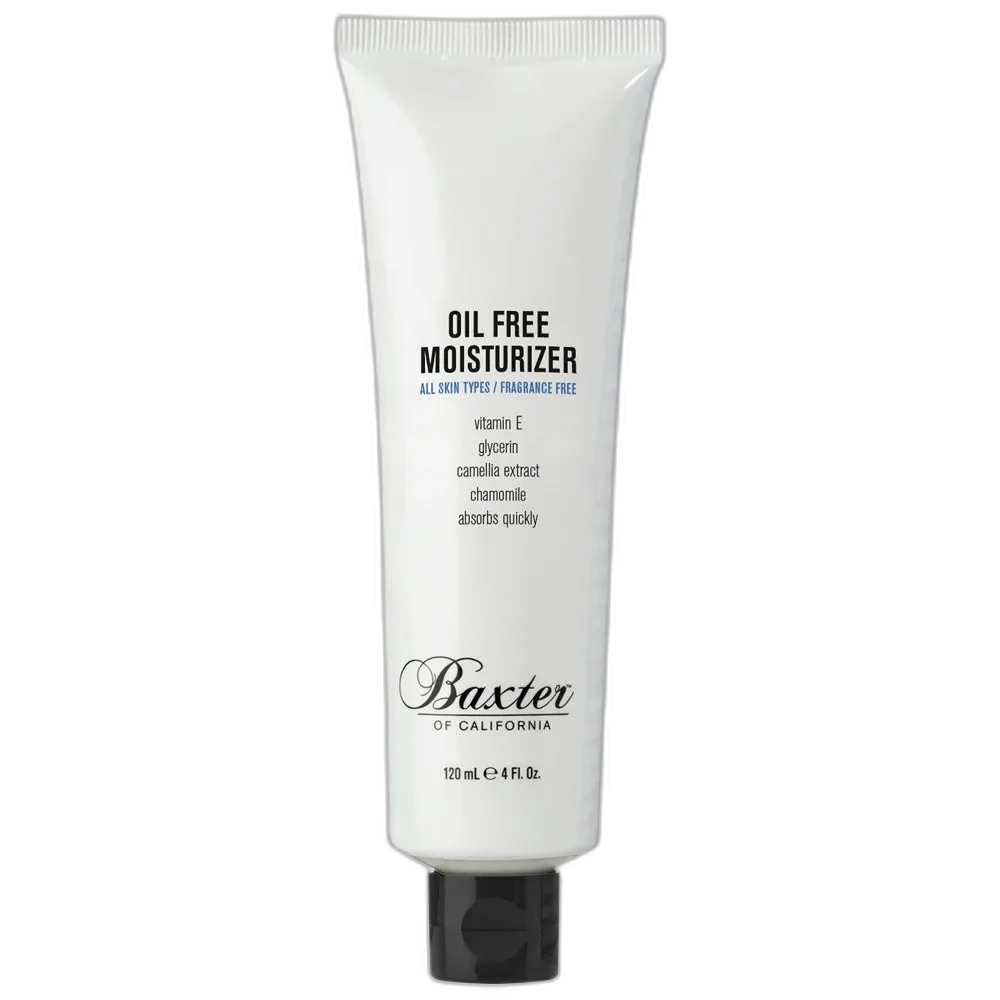
Oil Free Moisturizer SPF 15
Men's Grooming Gateway Product
 Verified reviewer
Pros & cons.
- +Genuinely matte finish that controls oil and shine for 3-4 hours thanks to aluminum starch
- +Lightweight texture absorbs in under a minute with zero greasy residue
- +Fragrance-free formula appeals to those sensitive to scented skincare products
- +Avobenzone-octocrylene pairing provides stable broad-spectrum UVA and UVB coverage
- +Oil-free base works well under additional products and serves as a subtle primer
- +Minimal ingredient list reduces the chance of sensitivity reactions for most users
- −SPF 15 falls well below the dermatologist-recommended minimum of SPF 30 for daily use
- −Premium $31 price tag for a basic formula with no meaningful active ingredients beyond UV filters
- −Contains chlorhexidine digluconate, a preservative with increasing contact allergy rates
- −Insufficient hydration for dry or dehydrated skin — glycerin alone can't compensate in dry climates
- −No antioxidants, peptides, or barrier-repair ingredients to justify the premium positioning
The full review.
Baxter Finley opened his Venice Beach shop in 1965 because he couldn’t find a single skincare product designed for men. Sixty-one years later, the brand he founded still carries that pioneering DNA — but pioneering in the 1960s and keeping pace with modern dermatology are two very different things. This oil-free moisturizer with SPF 15 is a case study in a product that was ahead of its time when it launched and is now, quietly, behind it.
The formula reads like a competent, no-nonsense moisturizer for oily and combination skin. Four chemical UV filters — avobenzone at 3%, octocrylene at 7%, octisalate at 5%, and homosalate at 2% — provide broad-spectrum protection, with the octocrylene pulling double duty as both a UVB absorber and a stabilizer for the photoliable avobenzone. The pairing is smart chemistry. The SPF rating it achieves with that chemistry, however, is the product’s fundamental weakness.
SPF 15 blocks roughly 93% of UVB radiation in lab conditions. SPF 30 blocks about 97%. That 4% gap sounds trivial until you consider how people actually apply sunscreen: most use about half the tested amount, which can reduce real-world SPF 15 protection to roughly SPF 5-7. Every major dermatological organization — AAD, Skin Cancer Foundation, the lot — has moved to recommending SPF 30 as the bare minimum for daily use. Launching or maintaining an SPF 15 product in 2026 feels like selling a car without airbags: technically legal, functionally inadequate.
Setting the SPF aside, the moisturizer itself performs well within its narrow lane. The oil-free base relies on glycerin at an estimated 5-6% for humectant moisture, dimethicone for silicone-smooth emolliency, and aluminum starch octenylsuccinate as a mattifying agent. That aluminum starch is the secret to the finish — it absorbs sebum throughout the day, giving skin a powdery-matte look that most SPF products can’t achieve. If you’ve ever struggled with sunscreen making your face look like a glazed donut by noon, this product solves that specific problem admirably.
The texture confirms the oil-free promise. It’s lightweight, slightly chalky on application, and absorbs within a minute. The faint chemical sunscreen smell — that sweet, plasticky note common to avobenzone formulas — dissipates quickly. The matte finish holds for a solid three to four hours on most skin types before any shine breakthrough, which is genuinely impressive for a moisturizer.
What the formula lacks is depth. Beyond the UV filters, glycerin, and dimethicone, there’s almost nothing here. A trace of tocopheryl acetate (vitamin E) provides minimal antioxidant support. No ceramides, no niacinamide, no peptides, no meaningful botanical extracts. In 2026, when a $15 CeraVe moisturizer packs ceramides, niacinamide, and hyaluronic acid into its formula, the spartan ingredient list at $31 feels less like minimalism and more like paying a brand tax.
The inclusion of chlorhexidine digluconate as a preservative warrants mention. Chlorhexidine is an effective antimicrobial, but it’s also a known contact allergen — one that sensitization rates have been increasing for over the past decade. It’s an unusual choice for a facial product marketed to sensitive skin, and anyone with a history of contact dermatitis should patch test before committing.
The honest assessment is that this product exists for a specific person: the man who wants exactly one bottle on his bathroom counter, who will not layer products, and who needs his face to look matte and feel moisturized when he walks out the door. For that man, the Baxter of California Oil Free Moisturizer delivers a pleasant daily experience. But it delivers that experience at a premium price with substandard sun protection, and that’s a trade-off that gets harder to justify with each passing year.
Formula
 ### Texture


 The texture confirms the oil-free promise. It's lightweight, slightly chalky on application, and absorbs within a minute.

 ### Scent


 The faint chemical sunscreen smell — that sweet, plasticky note common to avobenzone formulas — dissipates quickly.

 ### Best for


 The man who wants exactly one bottle on his bathroom counter, who will not layer products, and who needs his face to look matte and feel moisturized when he walks out the door.

 ### Works for


 Oily and combination skin.

 ### Not ideal for


 Anyone with a history of contact dermatitis.

 ### Common Complaints


Substandard sun protection.Ingredient analysis.
Full INCI list
Active Ingredients: Avobenzone 3%, Homosalate 2%, Octisalate 5%, Octocrylene 7%. Inactive Ingredients: Water, Aluminum Starch Octenylsuccinate, Glycerin, Glyceryl Stearate, Behenyl Alcohol, Dimethicone, Polymethylsilsesquioxane, Glyceryl Stearate Citrate, Disodium Ethylene Dicocamide PEG-15 Disulfate, Phenoxyethanol, Ammonium Polyacryloyldimethyl Taurate, Caprylyl Glycol, Xanthan Gum, Disodium EDTA, Tocopheryl Acetate, Chlorhexidine Digluconate, Sodium Hydroxide, T-Butyl Alcohol
Skin match.
The science.
The Science
This product uses a four-filter UV system — avobenzone, octocrylene, homosalate, and octisalate — a classic chemical sunscreen combination used in cosmetics for decades. Avobenzone (butyl methoxydibenzoylmethane) is the only widely available FDA-approved chemical UVA filter in US formulations, absorbing from 310-400nm. Its main limit is photolability: without stabilization, avobenzone loses about 50-90% of its protection within one hour of UV exposure.
Octocrylene fixes this by acting as a triplet-state quencher, absorbing the energy that degrades avobenzone. A 2006 study in the Journal of the American Academy of Dermatology by Lim and colleagues shows that octocrylene improves avobenzone photostability in commercial formulations. The 7% concentration used here — the highest active in this product — shows its role as both a UVB filter and a stabilizer.
The SPF rating is the critical limitation. The FDA's 2011 final rule on sunscreen labeling says only products with SPF 15 or higher can claim to reduce skin cancer and early skin aging risks when used as directed with other sun protection. However, the American Academy of Dermatology recommends SPF 30 as the minimum. A 2017 study in the Journal of the American Academy of Dermatology by Ou-Yang and colleagues shows that under real-world application, the gap between SPF 15 and SPF 30 grows because consumers typically apply only 25-50% of the recommended 2mg/cm² density.
Glycerin, the primary humectant, is one of the most studied moisturizing ingredients in dermatology. At the estimated 5-6% concentration in this formula, it reduces transepidermal water loss (TEWL), though moisture retention depends entirely on the dimethicone's barrier-forming properties because the formula lacks occlusive agents.
References
- Sunscreen photostability and the role of octocrylene as a photostabilizer — Journal of the American Academy of Dermatology (2006)
Dermatologist Perspective
Dermatologists generally advise that SPF 15 is inadequate for daily facial protection; SPF 30 is the widely accepted minimum. Board-certified dermatologists note that while this product provides UV defense, patients need a dedicated SPF 30+ sunscreen for meaningful sun exposure. The oil-free, matte formulation works for acne-prone and oily skin types. Dermatologists acknowledge that cosmetic elegance improves compliance — users apply products that feel good more consistently. However, the presence of chlorhexidine digluconate as a preservative requires discussion with patients who have contact sensitivities, as dermatology clinics see increasing rates of chlorhexidine allergy.
Where it fits in your routine.
Apply a nickel-sized amount to clean, dry skin after your morning routine. Spread it evenly over the face and neck, but avoid the eye area. Wait 30-60 seconds for absorption before adding other products. This product alone does not provide enough protection for extended outdoor exposure — layer a dedicated SPF 30+ sunscreen on top. Reapply every 2 hours if this is your primary sun protection during prolonged outdoor activity.
At $31 for 4 ounces, the price is awkward. The formula — glycerin, dimethicone, chemical UV filters, and minimal supporting ingredients — works the same as $10-15 mass-market brands, many with SPF 30 or higher. The Baxter of California premium pays for brand heritage and packaging, not ingredient innovation. A 3.4-ounce size is also available, but the per-ounce value stays the same. Consumers wanting the matte finish and the brand's aesthetic may justify the price. For those shopping for ingredient quality and sun protection efficacy, better options cost half as much.
Men with oily or combination skin want a single-step morning moisturizer with a matte finish and stay indoors most of the day. It also suits anyone who values the Baxter of California brand experience and prioritizes texture over maximum sun protection.
SPF 15 is inadequate for anyone using moisturizer as primary sun protection. This formula lacks enough coverage for dry skin types. The chlorhexidine preservative makes it a poor choice for reactive skin or known contact allergies.
Product details.
This lightweight, slightly chalky lotion absorbs quickly. The aluminum starch and silicone base create a matte, velvety finish that controls shine.
Fragrance-free, though a faint chemical sunscreen smell lasts for minutes after application
Sleek white tube with minimalist branding matches Baxter of California's clean, masculine aesthetic. A flip-top cap allows easy one-handed dispensing.
The lotion spreads easily and absorbs in 30-60 seconds on first application. The aluminum starch absorbs oil to leave a matte, slightly powdery finish. It causes no stinging, tingling, or warmth. The finish feels drier than most moisturizers; oily skin types will appreciate this, but dry skin types may find it insufficient.
3-4 months with once-daily facial application
12 months
All Year
The backstory.
Baxter of California has been making men's grooming products since 1965, back when the idea of a man using moisturizer was genuinely countercultural. This oil-free SPF moisturizer represents the brand's core philosophy: make skincare simple enough that men will actually use it. The SPF 15 made more sense when the product was first formulated — today's dermatological consensus has moved to SPF 30 as the minimum, leaving this product somewhat behind the times.
About Baxter of California
Legacy Brand (20+ years)Baxter of California launched in 1965 in Venice Beach by Baxter Finley. It is an original pioneer of men's grooming. L'Oréal acquired the brand in 2013. Baxter of California has decades of men's skincare expertise, but its formulations lack the dermatological research found in clinical brands.
Common myths.
SPF 15 is enough for daily protection if you work indoors
Dermatologists now recommend SPF 30 as the daily minimum, even for indoor workers. UVA rays penetrate windows. Most people apply less sunscreen than the tested amount, so real-world protection from SPF 15 is closer to SPF 5-7. This product provides some protection, but it is not your only line of UV defense.
Oil-free moisturizers hydrate less effectively than oil-based ones
This formula uses 5-6% glycerin as its main humectant and dimethicone as an emollient — both hydrate without oils. This oil-free approach works better for oily and combination skin because it hydrates without adding shine-inducing lipids that increase oiliness.
FAQ.
Is SPF 15 enough for daily sun protection?
Most dermatologists recommend SPF 30 as the daily minimum. SPF 15 blocks about 93% of UVB rays, while SPF 30 blocks 97%. Application is the main problem: most people use half the tested amount, which drops SPF 15 protection to about SPF 5-7. This moisturizer provides baseline protection for incidental exposure, but layer a dedicated SPF 30+ sunscreen on top for meaningful time outdoors.
Can women use Baxter of California Oil Free Moisturizer?
This is a straightforward oil-free SPF moisturizer with no gender-specific ingredients, despite the men's branding. The fragrance-free formula and matte, shine-free finish work for anyone with oily or combination skin who wants a no-fuss morning moisturizer. You only need to decide if SPF 15 meets your sun protection needs.
Does this moisturizer leave a white cast?
No. This product uses chemical UV filters (avobenzone, homosalate, octisalate, octocrylene) instead of mineral sunscreens with zinc oxide or titanium dioxide. These filters absorb into the skin and leave no visible white residue. The minimal chalkiness some users report comes from the aluminum starch oil-absorbing ingredient, not the sunscreen actives.
Is Baxter of California Oil Free Moisturizer good for acne-prone skin?
The oil-free, non-comedogenic formula has a matte finish and works for acne-prone skin. Aluminum starch absorbs excess oil during the day. However, chlorhexidine digluconate can cause contact dermatitis in some people; patch test first if you have reactive skin.
Why is this moisturizer so expensive for SPF 15?
At $31 for 4 ounces, you pay for Baxter of California brand heritage and the L'Oréal distribution network, not premium ingredients. The formula is functional but basic, using glycerin, dimethicone, and standard chemical UV filters. CeraVe or Neutrogena offer comparable or superior oil-free SPF moisturizers at a fraction of the price with higher SPF ratings.
Does Baxter of California test on animals?
L'Oréal owns Baxter of California, and L'Oréal has committed to ending global animal testing. Baxter of California lacks independent cruelty-free certification from organizations like Leaping Bunny or PETA. Products sold in mainland China may undergo mandatory animal testing under local regulations.
Can I use this under makeup or other products?
Yes. The matte, silicone-based finish creates a smooth canvas for additional products. The dimethicone and polymethylsilsesquioxane act like a primer, helping subsequent products glide on evenly. Apply this as your last skincare step before color products.
What the community says.
"Lightweight, non-greasy texture ideal for daily use under or without makeup"
"Absorbs quickly and leaves a genuinely matte, shine-free finish"
"Fragrance-free formula that doesn't irritate sensitive noses"
"Simple routine — moisturizer and sun protection in one step"
"Premium feel and packaging that appeals to men new to skincare"
"SPF 15 is well below the dermatologist-recommended minimum of SPF 30"
"Price is steep for a basic formula with limited active ingredients"
"Some users report oily breakthrough within a few hours despite oil-free claim"
"Slightly chalky texture compared to the non-SPF version"
"Contains chlorhexidine which can cause contact dermatitis in sensitive individuals"
People also looked at.