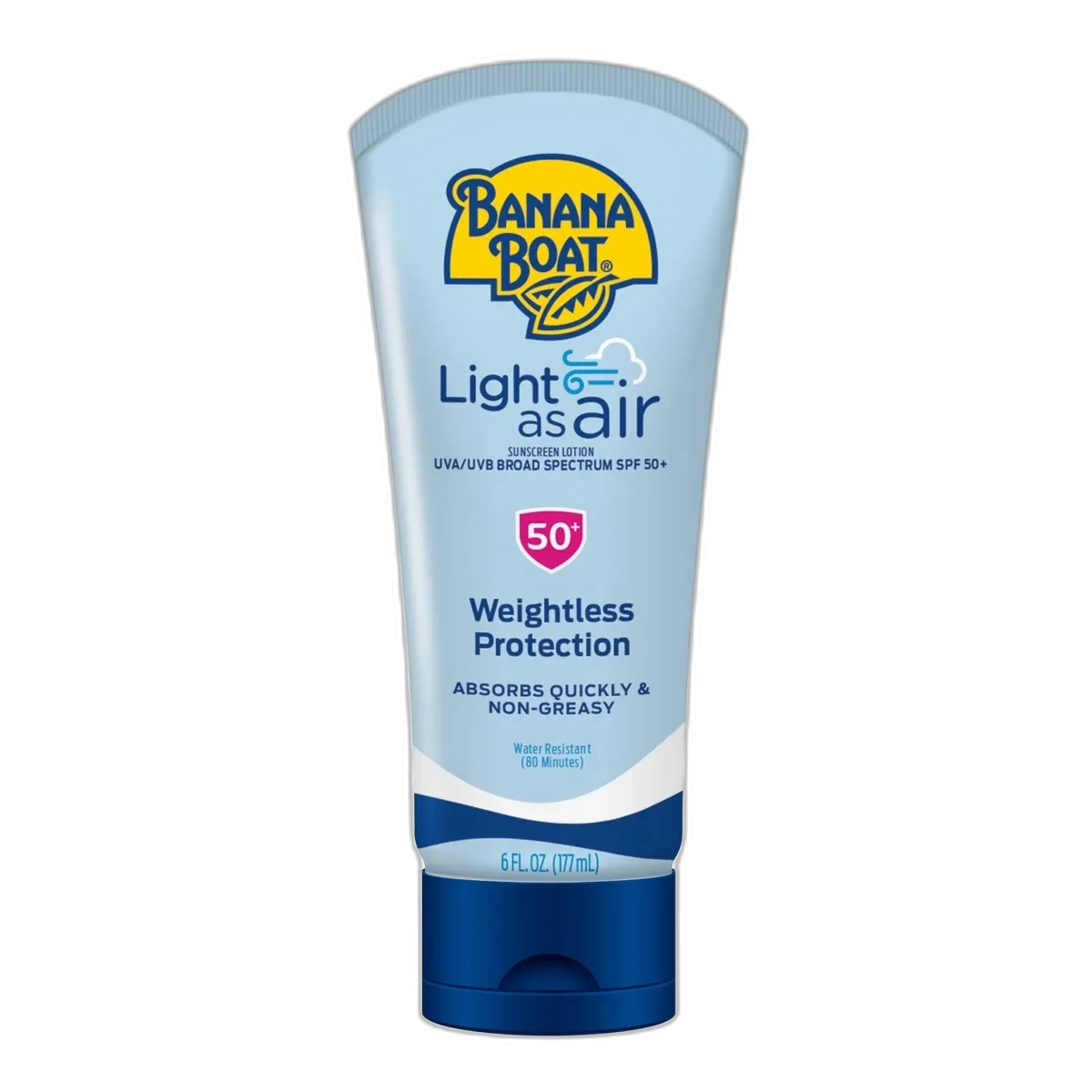
Light As Air Sunscreen Lotion SPF 50
Budget-Friendly Beach Day Essential
 Verified reviewer
Pros & cons.
- +Genuinely lightweight, matte finish that rivals prestige sunscreens costing three times more
- +Oxybenzone-free and octinoxate-free formula meets reef-protection standards
- +SPF 50 broad-spectrum with 80-minute water resistance — a rare combination in elegant formulas
- +Absorbs completely clear with zero white cast on all skin tones
- +Excellent value at approximately .67 per ounce for high-quality UV protection
- +Antioxidant extras (vitamin C, vitamin E, panthenol) add skincare benefits beyond UV filtering
- +Skin Cancer Foundation Recommended seal provides independent validation
- −Contains fragrance, excluding users with sensitive or reactive skin
- −Homosalate at 9% near maximum concentration may concern ingredient-conscious consumers
- −Can cause eye stinging when product migrates near the eye area
- −Marketed as body sunscreen — face-specific use requires extra caution around eyes
- −No fragrance-free option available in the Light As Air body lotion line
The full review.
For most of its existence, Banana Boat was the sunscreen your parents slathered on you at the beach — thick, coconut-scented, and thoroughly indifferent to whether you wanted to look or feel like a glazed ham for the rest of the afternoon. The brand knew it had a problem. By the late 2010s, the sunscreen conversation had shifted. Asian beauty brands proved that high-SPF protection could feel like nothing. Prestige brands like Supergoop turned sunscreen into a skincare step people actually enjoyed. And there was Banana Boat, still associated with the gloopy stuff that turned towels yellow.
Light As Air is the brand’s answer, and to their considerable credit, it’s a genuine answer rather than a marketing rebrand. The formula is built around a four-filter chemical system — avobenzone for UVA, homosalate and octisalate for UVB, and octocrylene pulling double duty as a UVB filter and avobenzone stabilizer — that delivers SPF 50 broad-spectrum protection. Notably absent: oxybenzone, which the brand wisely removed in response to both environmental concerns and growing consumer wariness. The four filters that remain are individually well-studied and collectively provide robust UV coverage.
But the real engineering story here is texture. Banana Boat didn’t just reformulate the UV filters — they built an entirely different sensory experience using tapioca starch, silica, and polymethylsilsesquioxane. This triple-mattifying system absorbs oil, reduces tackiness, and creates the soft, powdery finish that gives the product its name. On application, the lotion spreads smoothly and absorbs within about a minute, leaving behind a matte, breathable film that feels nothing like the greasy sunscreens in the brand’s own Sport line. For oily skin types who have been suffering through heavy SPF formulas, this is a revelation at the price point.
The inactive ingredient list also includes some thoughtful additions beyond mere texture. Sodium ascorbyl phosphate (a stable vitamin C derivative) provides antioxidant support against UV-induced free radicals, adding a photoprotective layer that the UV filters alone cannot provide. Panthenol contributes moisturizing and soothing properties. Aloe vera and glycerin round out the hydration. These aren’t groundbreaking concentrations, but they elevate the formula beyond a bare-minimum sunscreen into something approaching skincare.
In practice, this product delivers exactly what it promises. The texture is genuinely lightweight — not “lightweight for a sunscreen” but legitimately lightweight. It sinks in fast, leaves no white cast on any skin tone, and creates a finish that works well under makeup or on its own. The 80-minute water resistance is a significant advantage over many elegant-feeling competitors that sacrifice water resistance for cosmetic elegance. If you’re at the beach or the pool, this holds up during activity in a way that some 5 prestige sunscreens simply do not.
The scent is a mild, clean tropical fragrance — far more subtle than legacy Banana Boat products, but still present. This is worth noting because it means this product is not appropriate for fragrance-sensitive users or those with reactive skin conditions like rosacea. It’s a real limitation in a market that increasingly expects fragrance-free options, and the brand does not offer a fragrance-free variant in the Light As Air body line.
The other ingredient that warrants honest discussion is homosalate at 9%, which is near the FDA maximum of 15%. The 2020 JAMA study demonstrated that homosalate and other organic UV filters are systemically absorbed above the FDA’s threshold for further safety data. This does not mean homosalate is proven harmful — dermatological consensus still strongly favors daily sunscreen use — but ingredient-conscious consumers should be aware that the FDA has requested additional safety studies on this filter.
Some users report eye stinging when this product migrates into the eye area, which is common for chemical sunscreens and not unique to this formula. If you plan to use it on your face, be mindful of application near the eyes, or consider the separate Light As Air Face product that Banana Boat offers.
The value proposition is where this product genuinely shines. At approximately 0 for 6 fl oz, you’re getting cosmetically elegant SPF 50 protection with water resistance for less than many competitors charge for 2 oz of face sunscreen. The per-ounce cost is roughly .67, which is exceptional for this level of formulation sophistication. Twin packs bring it down even further. For daily body sunscreen use in summer — where you should be applying generously and reapplying often — the affordable price actively encourages proper usage rather than the stingy application that plagues expensive sunscreens.
Banana Boat Light As Air won’t replace a dedicated face sunscreen for sensitive skin, and it doesn’t pretend to. What it does remarkably well is deliver a comfortable, modern sunscreen experience for everyday outdoor protection at a price that removes any excuse not to wear it. The brand that built its reputation on the beach has finally made a sunscreen you’d wear to brunch.
Formula
Ingredient analysis.
Full INCI list
Active Ingredients: Avobenzone 3.0%, Homosalate 9.0%, Octisalate 4.0%, Octocrylene 5.0%. Inactive Ingredients: Water, Diisopropyl Adipate, Silica, Cetearyl Alcohol, Glycerin, Phenoxyethanol, Tapioca Starch, Acrylates/C12-22 Alkyl Methacrylate Copolymer, Caprylyl Glycol, Acrylates/C10-30 Alkyl Acrylate Crosspolymer, Ethylhexylglycerin, Ceteth-10 Phosphate, Dicetyl Phosphate, Coco-Glucoside, Chlorphenesin, Xanthan Gum, Sodium Hydroxide, Disodium EDTA, Fragrance, Polymethylsilsesquioxane, Tocopheryl Acetate, Sodium Ascorbyl Phosphate, Panthenol, Aloe Barbadensis Leaf Juice
Skin match.
The science.
The Science
This formula uses a four-filter UV system for broad-spectrum protection. Avobenzone at 3% absorbs UVA rays (310-400 nm), which cause photoaging and indirect DNA damage. Avobenzone is photolabile and degrades under UV light. This formula uses octocrylene at 5% to fix this; octocrylene works as a UVB filter and an avobenzone photostabilizer. A 2009 study in AAPS PharmSciTech shows octocrylene prevents avobenzone photodegradation by absorbing the triplet-state energy that causes molecular breakdown (Iannuccelli et al., 2009).
Homosalate at 9% and octisalate at 4% cover the UVB range (280-320 nm) and provide most of the SPF 50 protection. A 2020 JAMA randomized clinical trial under FDA-funded conditions shows sunscreen active ingredients like homosalate reach plasma concentrations above the FDA's 0.5 ng/mL threshold after maximal-use application (Matta et al., JAMA, 2020). This finding led the FDA to request more safety data, but the agency did not recommend stopping use of these filters and explicitly told consumers to continue using sunscreen.
Sodium ascorbyl phosphate adds an antioxidant layer. A 2003 study in the Journal of Cosmetic Science shows bioconvertible vitamin C derivatives improve sunscreen photoprotection against UV-induced reactive oxygen species—the free radicals UV filters alone cannot fully neutralize (Lin et al., 2003). The concentration here is likely modest, but it adds protection against oxidative damage that causes photoaging.
The texture technology also matters for formulation science. Tapioca starch, silica, and polymethylsilsesquioxane form a triple system that absorbs oil, reduces tackiness, and creates a smooth film. This engineering addresses the compliance issues of high-SPF sunscreens. A 2025 review in Carbohydrate Polymers shows how natural starches like tapioca improve sensory properties and skin feel in cosmetic matrices, supporting their use as texture-modifying agents in sunscreen formulations.
References
- Incorporation in lipid microparticles of the UVA filter, butyl methoxydibenzoylmethane combined with the UVB filter, octocrylene: effect on photostability — AAPS PharmSciTech (2009)
- Effect of Sunscreen Application on Plasma Concentration of Sunscreen Active Ingredients: A Randomized Clinical Trial — JAMA (2020)
- Bioconvertible vitamin antioxidants improve sunscreen photoprotection against UV-induced reactive oxygen species — Journal of Cosmetic Science (2003)
Dermatologist Perspective
Dermatologists say the best sunscreen is the one patients actually wear, so cosmetic elegance affects compliance. Board-certified dermatologists note that high-SPF chemical sunscreens with pleasant textures—like this lightweight formula—improve daily sunscreen adherence more than thick, greasy alternatives. The oxybenzone-free formulation matches the dermatological preference for sunscreens that minimize sensitization risk. While the fragrance is a drawback dermatologically, the SPF 50 broad-spectrum rating and 80-minute water resistance provide the protection dermatologists recommend for extended outdoor exposure. For body application in non-sensitive patients, this is a solid option at an accessible price point.
Where it fits in your routine.
Apply liberally to all exposed skin 15 minutes before sun exposure. Use about one ounce (a shot glass full) for full body coverage. Reapply every two hours, or immediately after swimming, sweating, or toweling off. The 80-minute water resistance works during activity, but toweling resets the clock. For facial use, apply carefully and avoid the immediate eye area to prevent stinging. Apply over moisturizer and under makeup — the matte finish works as a primer for oily skin.
At roughly .99 for 6 fl oz (.67/oz), this offers top value in the cosmetically elegant sunscreen category. Twin packs lower the per-unit cost. Similarly textured prestige sunscreens usually cost 5-20 per ounce. This low price does more than save money — it helps users reapply generously and frequently as dermatologists recommend, whereas expensive sunscreens discourage this. For a family beach day or daily summer body application, this formula provides protection and comfort without the financial guilt of using half a bottle in an afternoon.
This high-SPF body sunscreen feels unlike traditional sunscreens. It works for oily skin, active outdoor enthusiasts, beach and pool regulars, and budget-conscious families who apply sunscreen generously without cost concerns.
Users with fragrance sensitivity or reactive skin conditions like rosacea should use a fragrance-free alternative. This product is not for those who avoid chemical UV filters and prefer mineral-only sunscreens. Do not use it directly around the eyes because it may sting.
Product details.
Light, clean tropical fragrance. It is subtler than traditional Banana Boat sunscreens and fades within minutes of application.
Banana Boat uses blue and white branding for this standard 6 fl oz squeeze bottle with a "Light As Air" designation. It fits in a beach bag but not a pocket. Twin packs are also available.
The first application feels pleasant for a drugstore SPF 50. The lotion spreads easily and absorbs in 30-60 seconds. It leaves a soft matte finish instead of a greasy sunscreen sheen. There is no white cast. Some users feel mild tingling on first use, especially on freshly shaved or sensitive areas, but this subsides quickly.
2-3 months with daily face and body application during summer use
12 months
spring summer
The backstory.
Banana Boat launched Light As Air in 2020 to answer a growing consumer demand: high-SPF protection that doesn't feel like sunscreen. After decades of being associated with thick, coconut-scented beach products, the brand needed a modern entry that could compete with the "invisible sunscreen" trend driven by Asian beauty and prestige brands — but at a drugstore price point.
About Banana Boat
Established Brand (5–20 years)Robert Bell, a Miami Beach lifeguard, founded Banana Boat in 1976. Edgewell Personal Care owns the brand now. Banana Boat has nearly five decades of sunscreen expertise. It is one of the most widely distributed sun care brands in the US. Consumer Reports frequently tests its products, and the Skin Cancer Foundation recommends them.
Common myths.
Lightweight sunscreens offer less protection than thick, greasy ones.
Standardized testing determines the SPF rating, not product weight. This lightweight lotion tested at SPF 50 broad spectrum with 80-minute water resistance—matching the protection of much heavier formulas. Texture-engineering ingredients like tapioca starch and silica create the light feel, not a lower UV filter concentration.
Chemical sunscreens are unsafe because they enter the bloodstream.
The 2020 JAMA study shows some chemical UV filters, including homosalate, absorb systemically above the FDA's threshold for further study. This does NOT mean they are unsafe — it means the FDA wants more data. Current dermatological consensus supports daily sunscreen use, as known UV damage risks outweigh theoretical risks from UV filter absorption.
FAQ.
Is Banana Boat Light As Air SPF 50 reef safe?
This sunscreen is oxybenzone-free and octinoxate-free, so it meets Hawaii and other jurisdiction reef-protection requirements. It does contain octocrylene, which emerging research flags as an environmental concern. It carries the "Reef Friendly" label but lacks certification from specific marine conservation organizations.
Does Banana Boat Light As Air leave a white cast?
No. This 100% chemical sunscreen lacks mineral UV filters like zinc oxide or titanium dioxide, so it absorbs completely clear on all skin tones. The tapioca starch leaves a slight matte powdery finish but no visible white residue.
Can I use Banana Boat Light As Air on my face?
Many users apply this body sunscreen to their face successfully. However, it contains fragrance and some users report eye stinging near the eye area. Banana Boat offers a separate "Light As Air Face" product formulated for facial skin if you want a face-specific version.
Is Banana Boat Light As Air water resistant?
Yes — it offers 80 minutes of water resistance, which is the maximum allowed by FDA regulations. This makes it suitable for swimming and active outdoor use, though you should reapply immediately after toweling off or after 80 minutes in water.
Does Banana Boat Light As Air contain oxybenzone?
No. This formula uses a four-filter system of avobenzone, homosalate, octisalate, and octocrylene. This product line no longer contains Oxybenzone. It does contain 9% homosalate, which the FDA requested additional safety data on.
What the community says.
"Remarkably lightweight and non-greasy for a high-SPF sunscreen"
"Absorbs quickly and leaves no white cast on any skin tone"
"Excellent matte finish that works well under makeup"
"Strong SPF 50 protection at a fraction of prestige sunscreen prices"
"Pleasant, subtle tropical scent that fades quickly"
"Can cause eye stinging when applied near the eye area"
"Contains fragrance, which some sensitive skin users prefer to avoid"
"Slightly thicker than the name suggests — not quite as thin as water"
"Requires frequent reapplication for adequate protection"
"Homosalate at 9% may concern ingredient-conscious consumers"
Featured in.
People also looked at.