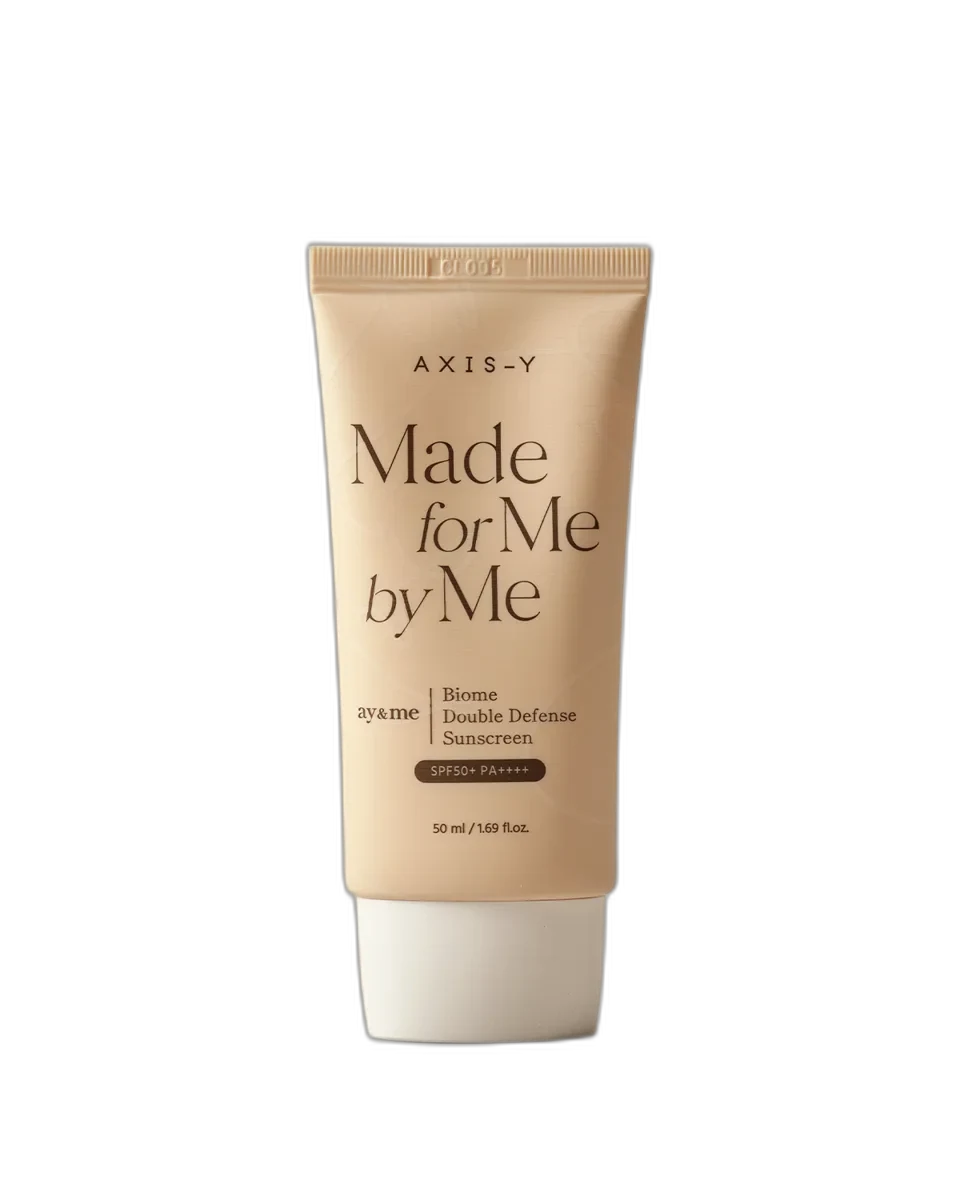
Biome Double Defense Sunscreen
K-Beauty SPF Standout
 Verified reviewer
Pros & cons.
- +Uses three modern photostable UV filters unavailable in the US market
- +No white cast across the full range of skin tones
- +Lightweight essence-like texture absorbs quickly without tackiness
- +High-position niacinamide adds genuine brightening and barrier benefits
- +Probiotic ferment blend provides additional skin comfort under the SPF layer
- +Layers cleanly under makeup without pilling or oxidizing
- +Strong PA++++ rating delivers robust UVA defense for daily use
- −Contains cedar, patchouli, and other essential oils that some sensitive skin won't tolerate
- −50ml tube empties in 6-8 weeks at proper application amounts
- −Mild herbal scent that some fragrance-averse users will prefer to avoid
- −Contains homosalate, which some users prefer to avoid on regulatory-precaution grounds
The full review.
Here’s a quick lesson in international skincare regulation that explains a lot about why K-beauty sunscreens have the cult status they do. In 2014, the United States Food and Drug Administration began reviewing eight new sunscreen filters that had been approved in Asia and Europe for years — including Tinosorb S, Tinosorb M, and Uvinul A Plus. As of this review, more than a decade later, the FDA still has not approved them. American formulators are stuck working with avobenzone (photo-unstable, requires stabilizers) and a handful of older filters, while Korean and European chemists have been building sunscreens around photostable, broad-spectrum, cosmetically elegant filters the entire time. The Axis-Y Biome Double Defense Sunscreen is what happens when you give modern formulators the modern toolbox: an SPF50+ PA++++ formula that has no white cast, layers cleanly under makeup, and provides UVA protection that meaningfully exceeds what most US-market chemical sunscreens can deliver.
The filter system is the headline. Tinosorb S sits seventh on the INCI, paired with Tinosorb M and Uvinul A Plus further down — the three together form a layered photostable defense that covers both UVA and UVB without the trade-offs older chemical sunscreens made. Tinosorb M is particularly interesting because it’s a hybrid organic-inorganic filter that both absorbs and scatters UV, which is genuinely unique in the modern filter landscape. Then come homosalate, ethylhexyl salicylate, and butyloctyl salicylate as supporting filters to round out the SPF coverage. This is, by every available measure, a more sophisticated UV filter system than you can buy in a US drugstore in 2026.
What elevates this beyond ‘just another good Korean SPF’ is what Axis-Y stacks on top of the filter base. Niacinamide sits eighth on the INCI — unusually high for a sunscreen — meaning this product is doing meaningful brightening and barrier-support work in addition to SPF. There’s a probiotic ferment blend (Lactobacillus, Saccharomyces, Galactomyces, Bifida) that carries the brand’s Biome line positioning into the sunscreen format. There’s cranberry extract and tocopherol for a small antioxidant boost. The result is a sunscreen that genuinely works as a treatment step, not just a protective coat.
The sensory experience earns its reputation. The texture is essence-like — much lighter than the heavier ‘cosmetically elegant’ chemical sunscreens you’ll find in Western markets — and it absorbs into skin within thirty seconds without leaving the tackiness that some chemical sunscreens cause. Critically, there is no white cast. This is the single biggest reason K-beauty sunscreens have become so popular with users with deeper skin tones — and this one is no exception. It sits invisibly across a wide range of skin tones, layers under makeup without pilling, and doesn’t oxidize into orange or gray over the day.
The friendly skepticism here is mild but worth flagging. The formula contains cedar, patchouli, juniper, and amyris essential oils — the same ones that appear in the rest of the Biome line. They give the product a subtle herbal-woody scent that fades within minutes of application, but if you have a documented essential oil reactivity or severe rosacea, this is the part to watch. There’s also homosalate, which has been the subject of ongoing EU regulatory scrutiny over endocrine-disruption concerns at high concentrations; current dermatology consensus is that the concentrations used in cosmetic sunscreens are within safe parameters, but some users prefer to avoid it on principle. Neither concern dramatically changes the overall calculus — for most users, this is one of the best mid-priced K-beauty sunscreens currently in the market.
Value is solid. At roughly $28 for 50ml, the per-ml price is in line with comparable Korean SPF50+ products, and you’re getting a formula with three modern filters, a probiotic blend, and a high-position niacinamide active layer. A 50ml tube lasts about 6-8 weeks at proper application amounts, which is the realistic timeline you should plan for. Final read: a strong recommend for anyone who wants modern UV protection without the white cast, with the small asterisk for essential-oil-reactive users.
Ingredient analysis.
Full INCI list
Water, Glycerin, Ethylhexyl Salicylate, Homosalate, Butyloctyl Salicylate, Dibutyl Adipate, Bis-Ethylhexyloxyphenol Methoxyphenyl Triazine, Niacinamide, Methylene Bis-Benzotriazolyl Tetramethylbutylphenol, Polysilicone-15, Caprylyl Methicone, Diethylamino Hydroxybenzoyl Hexyl Benzoate, Polymethylsilsesquioxane, Propanediol, Adenosine, Vaccinium Macrocarpon (Cranberry) Fruit Extract, Lactobacillus Ferment, Saccharomyces Ferment Filtrate, Galactomyces Ferment Filtrate, Saccharomyces/Xylinum/Black Tea Ferment, Caprylyl Glycol, Tocopherol, Bifida Ferment Lysate, Pentylene Glycol, 1,2-Hexanediol, VP/Eicosene Copolymer, Polyglyceryl-3 Methylglucose Distearate, Silica, Behenyl Alcohol, Tromethamine, Decyl Glucoside, Carbomer, Acrylates/C10-30 Alkyl Acrylate Crosspolymer, Sodium Stearoyl Glutamate, Polyacrylate Crosspolymer-6, Ethylhexylglycerin, Juniperus Virginiana Oil, Sodium Polyacrylate, Cedrus Atlantica Bark Oil, Amyris Balsamifera Bark Oil, Propylene Glycol, Copaifera Officinalis (Balsam Copaiba) Resin, Pogostemon Cablin Oil, Xanthan Gum, Polyether-1
Skin match.
The science.
The Science
The UV filter trio in this sunscreen uses state-of-the-art topical sun protection chemistry. Bis-Ethylhexyloxyphenol Methoxyphenyl Triazine (Tinosorb S) is a photostable broad-spectrum filter that absorbs UVA and UVB; it has been in European and Asian markets since the early 2000s, with substantial safety and efficacy data in dermatology and photochemistry literature. Methylene Bis-Benzotriazolyl Tetramethylbutylphenol (Tinosorb M) uses a hybrid absorption-and-scattering mechanism, providing broad-spectrum coverage and strong UVA-1 efficacy. Diethylamino Hydroxybenzoyl Hexyl Benzoate (Uvinul A Plus) is a photostable, pure UVA filter—strong in the UVA-1 range linked to photoaging—that fixes the main weakness of avobenzone-based sunscreens.
Niacinamide at the concentration implied by its eighth position on the INCI has benefits for hyperpigmentation, skin barrier function, and tone evenness in multiple peer-reviewed studies (Hakozaki et al., British Journal of Dermatology, 2002, and many subsequent studies). Including it in a daily sunscreen provides cumulative niacinamide benefit alongside a daily SPF habit.
The probiotic ferment ingredients (Lactobacillus, Saccharomyces, Galactomyces, Bifida) match the evidence in the rest of the Biome line: research shows promise for skin barrier and microbiome support, with the strongest data on Bifida and Galactomyces ferments. Tocopherol and cranberry extract add an antioxidant layer, consistent with combining UV protection and antioxidants to neutralize reactive oxygen species from residual UV exposure.
Dermatologist Perspective
Dermatologists like the modern Korean filter system this sunscreen uses, noting that Tinosorb S, Tinosorb M, and Uvinul A Plus upgrade the older filters US formulators must use. Board-certified dermatologists recommend K-beauty sunscreens for their cosmetic elegance, broad-spectrum performance, and lack of white cast—factors that help patients wear sunscreen daily. High-position niacinamide is a bonus, not a concern. The essential oil inclusion is the main caveat for sensitive-skin patients, but this sunscreen is a strong everyday choice for most people. Dermatologists treating hyperpigmentation often use K-beauty SPFs in effective regimens because the UVA defense is more robust than typical US-market formulas.
Where it fits in your routine.
Apply this as your last morning skincare step, after moisturizer and treatments. Use a quarter-teaspoon (about two finger-lengths) for the face, plus more for the neck and ears. Reapply every 2 hours of sun exposure, or after swimming or heavy sweating. It layers under makeup after 30-60 seconds of absorption. This is the SPF layer, not a base for SPF makeup.
At about $28 for 50ml, this sunscreen offers strong value. The filter system—three modern photostable filters with full UVA coverage—costs more in equivalent European or US-prestige formulations. With high-position niacinamide and a probiotic blend, the per-ml price is honest. A 50ml tube lasts 6-8 weeks with proper application. This makes the monthly cost around $14, which is reasonable for a daily SPF that also brightens and supports the barrier. It is one of the better value K-beauty sunscreen picks currently available.
This sunscreen works for anyone wanting a modern, broad-spectrum, cosmetically elegant formula with no white cast. It suits deeper skin tones that struggle with US-formulated chemical sunscreens. It also works for users with hyperpigmentation concerns who want niacinamide benefit built into their daily SPF.
Avoid this if you have documented essential oil sensitivities or severe rosacea reactive to fragrance components. Skip this if you prefer mineral (zinc/titanium) sunscreens or want to avoid homosalate on regulatory-precaution grounds.
Product details.
This lightweight, essence-like emulsion spreads easily and absorbs without heaviness.
Cedar and patchouli essential oils give it a mild herbal-woody scent — this fades within minutes
Soft squeeze tube with screw cap — practical for daily use, modest 50ml size
On first use, the emulsion spreads like a lightweight serum and absorbs without the tackiness common to chemical sunscreens. No white cast across most skin tones, no stinging, no immediate dryness. The herbal scent is most noticeable on application and fades within minutes.
Apply a quarter-teaspoon daily to the face and neck for 6-8 weeks.
12 months
All Year
The backstory.
Axis-Y added the Biome Double Defense Sunscreen to its lineup in 2023, after the success of the Biome essence and toner that launched the year prior. The sunscreen was developed to give the Biome line an SPF anchor that used Korea's next-generation filter system rather than older filters available globally. Korean cosmetic regulation allows Tinosorb and Uvinul filters that the US FDA has not yet approved, which is part of why K-beauty sunscreens have a reputation for cosmetic elegance and broad-spectrum protection that's hard to match in the US market.
About Axis-Y
Emerging Brand (2–5 years)Axis-Y started in 2019 as a Korean indie brand and added the Biome microbiome-focused line in 2022. This sunscreen joined the lineup in 2023. It uses Korea-approved next-generation chemical filters (Tinosorb S, Tinosorb M, Uvinul A Plus). These filters are not yet FDA-approved in the US, but they have strong safety records in Asian and European markets.
Common myths.
Korean chemical sunscreens are unsafe because they use filters not approved in the US.
Tinosorb S, Tinosorb M, and Uvinul A Plus have decades of safety data from Asian and European regulatory approvals. The US FDA has not reviewed them under the current sunscreen monograph process; this is a regulatory backlog, not a safety concern.
Probiotics in a sunscreen don't survive the formulation.
The ferment lysates and filtrates in this formula are not live cultures. They are stable probiotic fermentation byproducts that work without viability to deliver skin benefits.
FAQ.
What UV filters does this sunscreen use?
It uses three modern organic filters: Tinosorb S (Bis-Ethylhexyloxyphenol Methoxyphenyl Triazine), Tinosorb M (Methylene Bis-Benzotriazolyl Tetramethylbutylphenol), and Uvinul A Plus (Diethylamino Hydroxybenzoyl Hexyl Benzoate), plus Ethylhexyl Salicylate and Homosalate. This combination is photostable and covers UVA and UVB at SPF50+ PA++++.
Does this leave a white cast?
No. Because this formula uses only chemical filters without zinc or titanium, it leaves no white cast on deeper skin tones. This is a practical advantage of the Tinosorb-based Korean filter system.
Why isn't this sunscreen sold in the US through major retailers?
The Tinosorb and Uvinul filters in this product are not US FDA approved for sunscreen use. This is due to a regulatory backlog, not safety concerns. K-beauty retailers like YesStyle, Soko Glam, and Amazon sell the product widely.
Can I wear this under makeup?
Yes. The lightweight emulsion absorbs fast and creates a smooth makeup base without pilling. Many users choose this sunscreen because it sits well under foundation.
Does it sting in the eyes?
Most users report no stinging. However, like any chemical sunscreen, very sensitive eye areas may feel mild irritation if applied too close. Use a separate eye-area sunscreen or stick formula for that zone if needed.
Is it fungal acne safe?
Not strictly. The formula lacks common fungal acne triggers, but includes several ferment ingredients and extracts that may not suit fungal acne-prone skin. Patch test if you manage fungal acne.
How long does the 50ml tube last?
One tube lasts 6-8 weeks at a proper face-and-neck application amount (about a quarter teaspoon). Reapplying on full sun exposure days shortens that time.
Community
What the community says.
"No white cast even on deeper skin tones"
"Lightweight, hydrating texture"
"Modern UV filters not available in US sunscreens"
"Layers well under makeup"
"Contains essential oils some users prefer to avoid"
"Mild herbal scent isn't universal"
"Niacinamide can be too much for niacinamide-sensitive users"
"50ml goes fast at proper application amounts"
Featured in.
People also looked at.