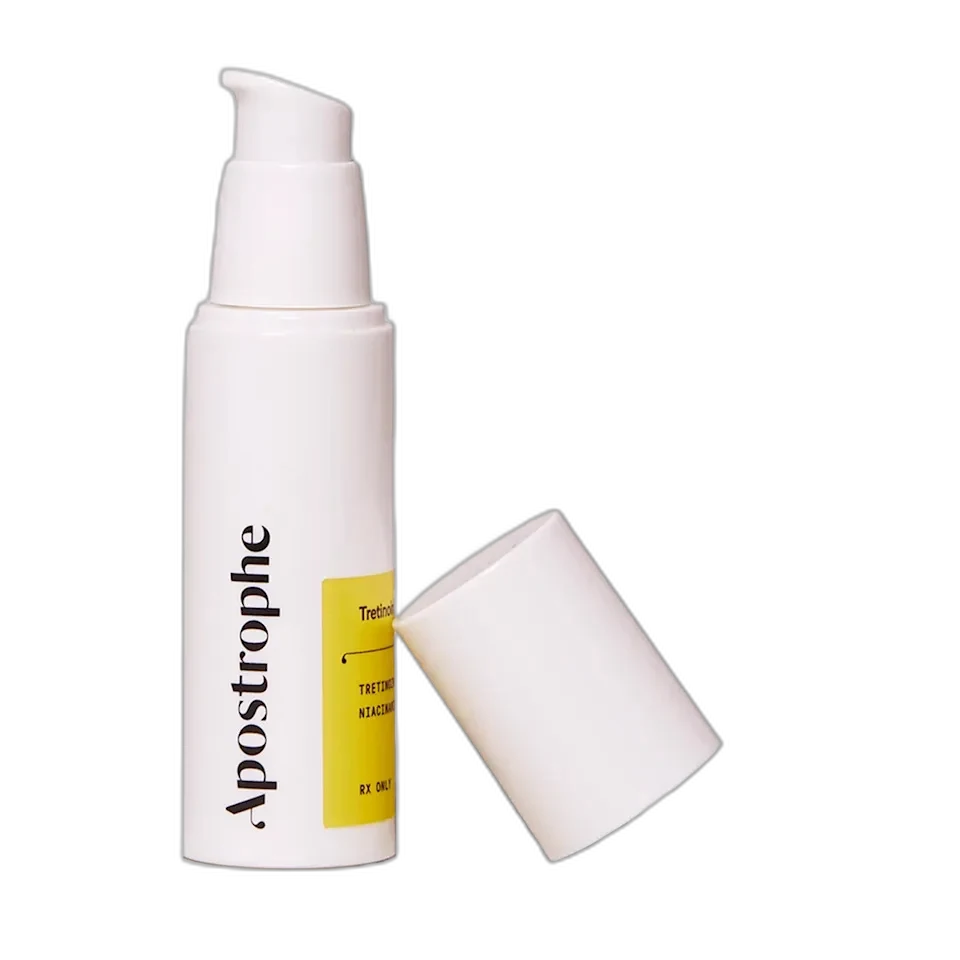
Azelaic Acid 15%
Prescription-Strength Multitasker
 Verified reviewer
Pros & cons.
- +Prescription-strength 15% azelaic acid with proven efficacy across acne, rosacea, and hyperpigmentation
- +Smart niacinamide 4% pairing provides complementary barrier support and additional brightening
- +Pregnancy and breastfeeding safe — one of the few prescription-strength options available
- +Clean minimal vehicle with no fragrance, parabens, or unnecessary irritants
- +Addresses multiple skin concerns simultaneously in a single product step
- +Matte lightweight finish layers well under moisturizer and sunscreen without pilling
- +Airless pump packaging maintains formula integrity and ensures hygienic dispensing
- −Brand was discontinued in March 2025, making this product no longer available
- −Slow onset of visible results — meaningful acne clearing requires 8-12 weeks minimum
- −Premium teledermatology pricing made this significantly more expensive than generic alternatives
- −Initial tingling and warmth during the first two weeks can be uncomfortable for sensitive skin
- −Compounded formulation lacks the independent clinical data that FDA-approved branded azelaic acids have
The full review.
There is a particular kind of frustration that comes with finding a skincare product that genuinely works for you, only to have it yanked away. For the patients who relied on Apostrophe’s Azelaic Acid 15% cream, March 2025 delivered exactly that gut punch when Hims & Hers — the parent company that had acquired Apostrophe for a cool $190 million in 2021 — decided to shutter the entire platform to focus on its booming weight loss business. The prescription skincare equivalent of your favorite restaurant closing to become a juice bar.
But before the obituary, the formula itself deserves its due. Apostrophe’s Azelaic Acid 15% was a compounded prescription cream that combined two dermatological heavyweights: azelaic acid at full prescription strength and niacinamide at a clinically relevant 4%. The pairing was smart. Azelaic acid does the heavy lifting — killing acne-causing bacteria, normalizing the rate at which skin cells shed inside pores, and inhibiting tyrosinase to fade dark spots. Niacinamide reinforces from the flanks, calming inflammation, reducing sebum production, and strengthening the moisture barrier so the azelaic acid can do its work without leaving the skin compromised.
The vehicle was deliberately minimal. Aloe vera juice as the primary soothing agent, caprylic/capric triglycerides for a touch of emollience, tocopheryl acetate for antioxidant backup, and phenoxyethanol as the sole preservative. No fragrance, no unnecessary botanical extracts, no Instagram-friendly but dermatologically questionable additions. This was a formula designed by dermatologists who wanted their patients to use it consistently without their skin throwing a fit.
Application was straightforward. The white cream dispensed from an airless pump — a thoughtful packaging choice that prevented contamination and ensured consistent dosing. It spread easily without dragging and absorbed within about a minute, leaving behind a matte, barely-there finish that layered well under moisturizer and sunscreen. The initial tingling that most azelaic acid users experience was present but manageable, typically subsiding within the first two weeks of use.
Where this product truly earned its following was in the combination of conditions it could address simultaneously. A patient dealing with hormonal acne along the jawline and lingering dark spots from previous breakouts could treat both with a single product, applied once or twice daily. Someone with mild rosacea and occasional breakouts found that the dual anti-inflammatory action of azelaic acid and niacinamide calmed both concerns without the irritation that retinoids or benzoyl peroxide might trigger. And critically, this was one of the few prescription-strength options safe for use during pregnancy — a gap that few other actives could fill.
The clinical evidence supporting 15% azelaic acid is robust and spans decades. Studies have demonstrated comparable efficacy to adapalene 0.1% for acne with significantly less irritation, meaningful improvements in papulopustular rosacea rivaling metronidazole, and measurable lightening of post-inflammatory hyperpigmentation. The addition of niacinamide at 4% was not merely trendy; multiple controlled trials have shown niacinamide’s ability to reduce sebum excretion, improve skin barrier function, and provide its own independent brightening effect through inhibition of melanosome transfer.
The limitations were real, however. Azelaic acid at any concentration is not a fast worker. Users expecting the rapid visible peeling of a retinoid or the overnight bacterial knockout of benzoyl peroxide found azelaic acid’s gradual, steady approach frustrating. Eight to twelve weeks for meaningful acne improvement, potentially sixteen or more for significant pigmentation fading — that is a long time to wait, especially when you are paying a subscription premium for the privilege.
And the cost was the elephant in the room. Apostrophe’s teledermatology model — consultation fee plus ongoing prescription costs — placed this compounded cream at a significant markup over what a patient might pay for generic azelaic acid gel through traditional channels with insurance. The convenience of skipping the dermatologist’s office was genuine, but convenience has always been an expensive luxury in healthcare.
The texture and user experience, while pleasant, were nothing remarkable. This was a workmanlike cream that did its job without fanfare. It did not have the elegant sensory profile of a Korean beauty serum or the satisfying slip of a high-end treatment. It was clinical in the best and most literal sense — effective, unembellished, and focused entirely on outcomes.
For the patients who found their rhythm with this product — who had navigated the initial tingling, waited through the slow weeks, and finally arrived at clearer, more even-toned skin — the brand’s closure was a genuine loss. The good news is that azelaic acid at 15% is available through other channels, and the niacinamide can easily be added as a separate step. The formula was excellent, but the ingredients are not proprietary. What Apostrophe provided was the combination and the convenience, and while both are replaceable, the sudden disappearance reminded patients that in DTC healthcare, your prescription is only as stable as the parent company’s quarterly earnings call.
Formula
Ingredient analysis.
Full INCI list
Active Ingredients: Azelaic Acid (15%), Niacinamide (4%). Inactive Ingredients: Aloe Barbadensis Leaf Juice, C13-14 Isoparaffin, Caprylic/Capric Triglyceride, Water, Laureth-7, Phenoxyethanol, Polyacrylamide, Tocopheryl Acetate, Triethylene Glycol.
Skin match.
The science.
The Science
Azelaic acid at 15% concentration is a versatile prescription active with decades of clinical evidence. A 2023 systematic review by King et al. in the Journal of Cosmetic Dermatology evaluated azelaic acid for acne, rosacea, melasma, and skin aging. The review found 15-20% concentrations produce clinically meaningful improvements for all four indications with a favorable safety profile.
Azelaic acid treats acne via three mechanisms: antimicrobial activity against Cutibacterium acnes, normalization of follicular keratinization to prevent clogged pores, and anti-inflammatory effects that reduce redness and swelling. One comparative study showed azelaic acid 15% gel reduced acne lesions as effectively as adapalene 0.1% gel over nine months, but with significantly lower irritation scores — a clear benefit for patients who cannot tolerate retinoids.
Combining this with niacinamide at 4% is pharmacologically rational. Niacinamide reduces sebum production by modulating lipid synthesis in sebocytes, strengthens the skin barrier via increased ceramide production, and inhibits melanosome transfer from melanocytes to keratinocytes. This provides a brightening mechanism that complements azelaic acid's direct tyrosinase inhibition. No published trial has evaluated this specific Apostrophe formulation, but the individual actives at these concentrations have robust evidence for efficacy.
For rosacea, multiple randomized controlled trials establish 15% azelaic acid as a first-line treatment for the papulopustular subtype, with efficacy matching or exceeding metronidazole 0.75% gel. A 2024 study in the Journal of Dermatological Treatment confirmed azelaic acid 15% significantly reduced melanin content and post-acne hyperpigmentation indices compared to vehicle control, proving the ingredient works on both active lesions and their aftermath.
References
- A systematic review to evaluate the efficacy of azelaic acid in the management of acne, rosacea, melasma and skin aging — Journal of Cosmetic Dermatology (2023)
- Effects of 15% Azelaic Acid Gel in the Management of Post-Inflammatory Erythema and Hyperpigmentation — Journal of Dermatological Treatment (2024)
- Azelaic acid 15% gel in the treatment of rosacea — Expert Opinion on Pharmacotherapy (2008)
Dermatologist Perspective
Dermatologists value azelaic acid as a versatile, well-tolerated option, especially for patients who cannot use retinoids due to pregnancy, breastfeeding, or sensitivity. Board-certified dermatologists note that 15% azelaic acid fills a unique therapeutic niche by addressing acne, rosacea, and hyperpigmentation at once. The 4% niacinamide combination in this formulation follows evidence-based practice because both ingredients have complementary mechanisms. Dermatologists often suggest starting with once-daily evening application and increasing to twice daily as tolerance improves. The pregnancy safety profile makes this product category valuable in clinical practice, where hormonal acne and family planning often overlap.
Where it fits in your routine.
Cleanse your face with a gentle, pH-balanced cleanser and pat dry. Apply a pea-sized amount of the cream in a thin, even layer over affected areas. Wait 1-2 minutes for absorption before you apply moisturizer. Use the cream once daily in the evening for the first 2 weeks to test tolerance. Increase to twice daily (morning and evening) if no significant irritation occurs. Always use broad-spectrum sunscreen SPF 30 or higher during the day. Do not apply to broken skin, and stop use temporarily if significant peeling or burning occurs.
Apostrophe's pricing model was the product's biggest drawback. The teledermatology consultation fee and ongoing prescription costs made this compounded cream much more expensive than FDA-approved azelaic acid products like Finacea via traditional dermatology with insurance. For uninsured patients, at-home consultation and doorstep delivery offered value, but the monthly cost is hard to justify against generic azelaic acid prescriptions. The single 30 g size lacks larger options, so long-term users get no economies of scale. Since the brand is now discontinued, the value proposition is moot — but it shows that convenience-based healthcare pricing does not always match ingredient quality.
This product works for acne, rosacea, or post-inflammatory hyperpigmentation. It offers prescription-strength results without retinoid irritation. It is a safe, effective acne treatment for pregnant or breastfeeding individuals.
People on tight budgets have better options via traditional prescriptions with insurance. Those needing rapid visible results will find the slow onset frustrating compared to retinoids or benzoyl peroxide. Since the brand is now discontinued, everyone must look elsewhere.
Product details.
Lightweight white cream has a smooth, non-greasy consistency. It spreads easily and absorbs within a minute.
Essentially unscented with a very faint clinical/pharmaceutical note
30 g white pump bottle with Apostrophe branding, airless pump design for hygienic dispensing
Expect mild tingling or warmth for the first 1-2 weeks. This is normal for prescription strength azelaic acid. The cream applies smoothly and leaves no white cast. Most users report the tingling stops as the skin acclimates. Using it twice daily from the start may cause initial dryness.
2-3 months with once to twice daily facial application
6 months
All Year
The backstory.
Apostrophe built its reputation on making prescription-strength actives accessible through teledermatology, bypassing traditional dermatologist wait times. This azelaic acid formula became popular among patients seeking a pregnancy-safe alternative to retinoids for acne and pigmentation. The brand was acquired by Hims & Hers in 2021 for $190 million, but was abruptly shut down in March 2025 as the parent company shifted focus to weight loss offerings.
About Apostrophe
Emerging Brand (2–5 years)Apostrophe launched in 2019, rebranding YoDerm (founded 2012). YoDerm was a teledermatology platform that connected patients with board-certified dermatologists to prescribe customized compounded formulations. Hims & Hers acquired the brand for $190 million in 2021, and it shut down in March 2025.
Common myths.
Azelaic acid is too weak for real acne; use benzoyl peroxide or retinoids instead.
Clinical trials show 15% azelaic acid reduces acne as well as adapalene 0.1% but causes less irritation. It works via antimicrobial activity and keratolysis.
Prescription azelaic acid from teledermatology platforms is identical to pharmacy-compounded generics.
Apostrophe's formulation uses niacinamide 4% and aloe vera as a vehicle. This differs from generic azelaic acid gels like Finacea, which use different inactive ingredients and lack the niacinamide boost.
FAQ.
Is Apostrophe Azelaic Acid 15% still available?
No. Hims & Hers shut down Apostrophe in March 2025. Patients using this formula received advice to move prescriptions to other providers. Other teledermatology platforms and branded products like Finacea offer similar azelaic acid 15% formulations.
Can you use azelaic acid 15% during pregnancy?
Yes — azelaic acid is classified as Category B for pregnancy and is one of the few prescription-strength acne treatments considered safe during pregnancy and breastfeeding. This Apostrophe formulation's niacinamide is also pregnancy-safe, making the entire formula suitable for expectant mothers dealing with hormonal acne.
How long does azelaic acid 15% take to show results?
With this formulation's 15% azelaic acid and 4% niacinamide combination, early improvements in skin texture and redness typically appear within 2-4 weeks. Significant acne clearing usually requires 8-12 weeks, and meaningful fading of post-inflammatory hyperpigmentation can take 16-24 weeks of consistent use.
Can you use azelaic acid with retinol or tretinoin?
Yes, many dermatologists recommend this combination. Azelaic acid and retinoids use different mechanisms and complement each other. Apostrophe even offers combination formulations with tretinoin and azelaic acid together. When using them separately, apply them at different times of day to minimize irritation.
Does azelaic acid 15% cause purging?
Mild purging can occur during the first 2-4 weeks. Azelaic acid's keratolytic action brings existing microcomedones to the surface faster. This is usually less severe than retinoid purging. The niacinamide in this Apostrophe formula helps reduce inflammation during any adjustment period.
What are alternatives to Apostrophe Azelaic Acid 15% now that it's discontinued?
Finacea (azelaic acid 15% gel) is the most common branded prescription alternative. Teledermatology platforms like Curology and Dermatica also provide custom azelaic acid formulations. For OTC options, The Ordinary Azelaic Acid Suspension 10% offers a lower concentration without a prescription.
What the community says.
"Effective for stubborn acne and post-acne marks"
"Gentle enough for sensitive skin"
"Noticeable texture improvement within weeks"
"Pregnancy-safe prescription option"
"Tingling and warmth on initial application"
"Subscription pricing felt expensive"
"Slower results compared to tretinoin for acne"
"Brand was abruptly discontinued"
People also looked at.