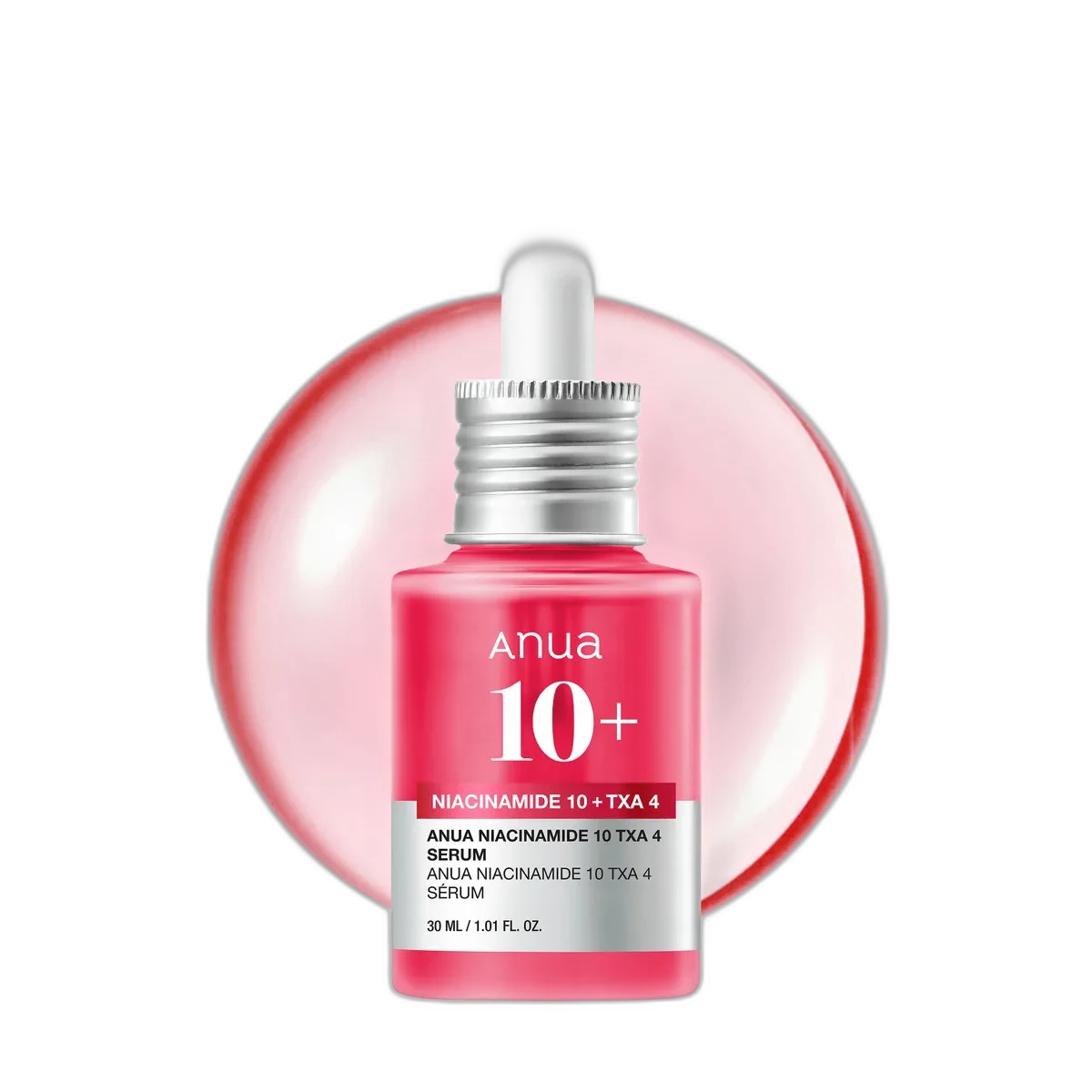
Niacinamide 10% + TXA 4% Dark Spot Correcting Serum
Multi-Pathway Brightening Powerhouse
 Verified reviewer
Pros & cons.
- +Four complementary brightening actives targeting different stages of the melanin pathway
- +10% niacinamide and 4% tranexamic acid at clinically relevant concentrations
- +Fragrance-free, gentle formula suitable for twice-daily use
- +Lightweight watery texture absorbs quickly and layers well under other products
- +Over 14,000 reviews provide exceptional real-world validation
- +Centella triterpenes and ceramide NP add anti-inflammatory and barrier support
- +Pink-tinted formula from vitamin B12 — no skin staining
- −Only 30ml for $24 — runs out in 1-2 months with twice-daily use
- −10% niacinamide causes initial flushing or tingling in some users
- −Contains olive oil which may concern acne-prone or comedone-prone skin
- −Glass dropper bottle is fragile and less travel-friendly than pump packaging
- −Results on deep or established hyperpigmentation require months of patience
The full review.
Dark spots persist because melanin production is a cascade, not a single event. UV exposure triggers inflammatory signals that activate melanocytes. These cells produce melanin via tyrosinase, package it into melanosomes, transfer it to surrounding keratinocytes, and carry the pigment to the surface. Targeting one step helps, but targeting four steps simultaneously yields results.
The Anua Niacinamide 10% + TXA 4% Dark Spot Correcting Serum uses this multi-checkpoint philosophy, executing the concept better than most serums at this price point. Each of the four primary actives intercepts the melanin pathway at a different stage, creating a brightening relay system with fewer escape routes for pigmentation.
Tranexamic acid at 4% works at the earliest stage: the inflammatory trigger. When UV exposure or acne inflammation stimulates melanocytes through plasminogen activation, TXA blocks that signal. This makes tranexamic acid the gold standard for melasma management; it targets the chronic inflammatory loop that keeps melasma-prone skin overproducing melanin regardless of other brightening ingredients. At 4%, this serum delivers TXA in the range studied for topical efficacy, and its fourth position in the INCI list confirms a significant concentration.
Niacinamide at 10% intercepts further down the chain. Rather than reducing melanin production, niacinamide inhibits the transfer of melanosomes from melanocytes to keratinocytes. You can reduce melanin production, but if the transfer mechanism runs at full speed, pigment still reaches the surface. The 10% concentration is at the high end of validated studies and provides extra benefits: barrier strengthening, sebum regulation, and pore refinement.
Arbutin and alpha-arbutin target the production enzyme. Both forms inhibit tyrosinase—the enzyme that catalyzes melanin synthesis—with alpha-arbutin being the more potent isomer. At an estimated 2% combined concentration, they provide sustained enzyme inhibition that compounds over time. This dual-form approach uses alpha-arbutin for faster binding kinetics and standard arbutin for slower, more sustained inhibition.
Ethyl ascorbic acid adds a fourth mechanism as a stable vitamin C derivative. It provides antioxidant neutralization of free radicals that trigger melanocyte activation, acting as a preventive layer to reduce new pigmentation while the other three actives work on existing spots.
The serum is a pleasant daily product. The texture is watery and lightweight with a pink tint from cyanocobalamin (vitamin B12); this is cosmetic in the bottle and invisible on the skin. Two to three drops spread easily and absorb within a minute, leaving a barely perceptible dewy finish. It is fragrance-free and essentially unscented, with only a faint grain-like note from botanical extracts. It layers under moisturizer and sunscreen without pilling.
The supporting ingredients round out the formula. Centella asiatica extract with three isolated triterpenes provides anti-inflammatory support to help prevent new post-inflammatory hyperpigmentation. Polyglutamic acid and multiple hyaluronic acid forms maintain hydration, which helps because concentrated niacinamide can feel drying. Ceramide NP supports barrier integrity, and yeast ferment extract adds brightening support. These players create an environment where the four primary actives work effectively.
With over 14,000 reviews across platforms, user consensus is consistent. Most users report visible brightening within one to two weeks and noticeable dark spot fading within four to six weeks of consistent twice-daily use. Results are more pronounced for recent post-inflammatory hyperpigmentation (from acne or irritation) than for deep, established melasma, which responds more gradually and needs dermatologist supervision. The most common complaint is that the 30ml bottle runs out quickly with twice-daily application, lasting roughly one to two months.
The 10% niacinamide concentration causes mild flushing or tingling in some users during the first week. This is a known niacinamide side effect at higher concentrations and typically resolves as the skin acclimates. If it persists, using it once daily or every other day helps. The olive oil in the formula may concern acne-prone users, though its position in the middle of the INCI list suggests a modest concentration.
At twenty-four dollars for 30ml, this serum delivers brightening actives at meaningful concentrations for a reasonable price. The cost per active percentage point is competitive with Western alternatives, and the multi-pathway approach offers more corrective firepower than most single-active serums. The glass dropper bottle is elegant but fragile, and the single-size-only offering means no bulk value discount.
For anyone dealing with post-acne marks, sun spots, melasma, or general unevenness, this serum is one of the most complete topical brightening approaches available without a prescription. It is not a miracle worker—consistent use and diligent sunscreen are non-negotiable—but it gives your skin an arsenal to address dark spots from every angle.
Formula
Ingredient analysis.
Full INCI list
Water, Glycerin, Niacinamide, Tranexamic Acid, Butylene Glycol, Diethoxyethyl Succinate, 1,2-Hexanediol, Arbutin, Sodium Hyaluronate, Alpha-Arbutin, Coccinia Indica Fruit Extract, Eclipta Prostrata Extract, Macadamia Integrifolia Seed Oil, Olea Europaea (Olive) Fruit Oil, Simmondsia Chinensis (Jojoba) Seed Oil, Vitis Vinifera (Grape) Seed Oil, Theobroma Cacao (Cocoa) Extract, Hydrolyzed Hyaluronic Acid, Chamaecyparis Obtusa Leaf Extract, Prunus Persica (Peach) Flower Extract, Camellia Sinensis Seed Oil, Yeast Ferment Extract, Centella Asiatica Extract, Artemisia Princeps Leaf Extract, Candida Bombicola/Glucose/Methyl Rapeseedate Ferment, Hyaluronic Acid, Pentylene Glycol, Betaine Salicylate, Sucrose Palmitate, Hydrogenated Lecithin, Gellan Gum, Sodium Phytate, Cellulose, Caprylic/Capric Triglyceride, Panthenol, Cyanocobalamin, Polyglutamic Acid, 3-O-Ethyl Ascorbic Acid, Ceramide NP, Dextrin, Asiaticoside, Madecassic Acid, Asiatic Acid, Dimethylsilanol Hyaluronate, Hydrolyzed Sodium Hyaluronate
Skin match.
The science.
The Science
Tranexamic acid has emerged as one of the most compelling topical brightening ingredients in recent dermatological research. A 2020 randomized controlled trial published in the Journal of the American Academy of Dermatology demonstrated that 5% topical tranexamic acid significantly reduced melasma severity after 12 weeks compared to vehicle, with a mechanism involving inhibition of UV-induced plasminogen activator activity in keratinocytes. At 4%, this serum falls within the studied concentration range. TXA's unique value lies in targeting the inflammatory trigger of pigmentation rather than the production machinery — making it particularly effective for melasma and post-inflammatory hyperpigmentation.
Niacinamide's melanosome transfer inhibition was demonstrated in a pivotal study by Hakozaki et al. published in the British Journal of Dermatology (2002), which showed that 5% topical niacinamide significantly reduced hyperpigmentation and increased skin lightness over 8 weeks. The 10% concentration in this serum provides additional barrier-strengthening and sebum-regulating benefits, though the incremental brightening improvement over 5% is modest based on available dose-response data.
Alpha-arbutin has been shown to inhibit tyrosinase activity more effectively than beta-arbutin or hydroquinone at equivalent concentrations, without the cytotoxicity concerns of hydroquinone. A study in the Journal of Biomedical Science (2007) demonstrated that alpha-arbutin inhibited human tyrosinase activity in a dose-dependent manner. The combination of alpha-arbutin with standard arbutin provides dual-kinetic tyrosinase inhibition.
3-O-Ethyl Ascorbic Acid is a stable, amphiphilic derivative of ascorbic acid that has demonstrated melanin synthesis inhibition in cell culture studies. Research published in Biological and Pharmaceutical Bulletin showed that ethyl ascorbic acid maintained stability in aqueous formulations significantly better than pure L-ascorbic acid while retaining antioxidant and depigmenting activity.
References
- Topical tranexamic acid for melasma treatment — Journal of the American Academy of Dermatology (2020)
- The effect of niacinamide on reducing cutaneous pigmentation and suppression of melanosome transfer — British Journal of Dermatology (2002)
Dermatologist Perspective
Dermatologists increasingly recognize the value of multi-active brightening formulations that target different stages of the melanin pathway simultaneously. Board-certified dermatologists would note that the niacinamide-tranexamic acid combination in this serum addresses both the inflammatory trigger (TXA) and the melanosome transfer mechanism (niacinamide) — a dual approach that is particularly relevant for melasma and post-inflammatory hyperpigmentation. The 4% tranexamic acid concentration falls within the topical range studied in clinical trials. Dermatologists would emphasize that no brightening serum replaces diligent daily broad-spectrum sunscreen use — sun protection is the foundation that makes all topical brightening actives work. For moderate to severe melasma, this serum is best used as part of a comprehensive treatment plan supervised by a dermatologist.
Where it fits in your routine.
Apply 2-3 drops to clean skin after toner, targeting hyperpigmentation. Press gently into the skin instead of rubbing vigorously. Use AM and PM for fastest results. In the AM, always follow with broad-spectrum SPF 30+ sunscreen to ensure brightening efficacy. Layer under moisturizer. If the 10% niacinamide causes flushing, use it once daily (PM) and increase to twice daily as skin acclimates.
At $24 for 30ml, this serum is a good value because it contains four primary actives at high concentrations: 10% niacinamide, 4% tranexamic acid, arbutin/alpha-arbutin, and ethyl ascorbic acid. Buying these actives as separate serums costs more. The small bottle is the main limitation; twice-daily use lasts only 1-2 months, making the monthly cost $12-24. Only one size exists, with no bulk or value-size option. Given the active concentrations and the supporting ingredient list, the price is fair for K-beauty brightening serums.
This works for anyone with post-inflammatory hyperpigmentation from acne, sun spots, melasma, or uneven skin tone seeking an affordable, comprehensive brightening approach. It suits people who want to combine multiple brightening actives in one step instead of layering separate serums.
Users sensitive to high concentrations of niacinamide may experience persistent flushing. People with severe melasma should use a dermatologist-led treatment plan instead of relying only on an OTC serum. The olive oil content may concern those with comedone-prone skin.
Product details.
This lightweight, watery serum has a slight pink tint from cyanocobalamin (vitamin B12). It is thicker than water but thinner than a milky serum. It absorbs in under a minute.
Fragrance-free. Botanical extracts leave a faint, grain-like herbal scent. It is essentially unscented.
Pink-tinted glass dropper bottle (30ml) has a screw-top dropper applicator. The design is clean and minimalist. The glass shows how much product remains. Outer cardboard box.
The serum feels like lightweight, slightly viscous water on first application. The vitamin B12 creates a pink tint in the dropper but does not color the skin. It absorbs quickly. The 10% niacinamide causes mild tingling or warmth for some users, but this usually subsides after the first few uses as the skin acclimates. These actives do not cause purging.
1-2 months with twice-daily facial application
12 months
All Year
The backstory.
Anua launched this serum in 2023 as part of the brand's expansion beyond its heartleaf core line into targeted treatment serums. The combination of 10% niacinamide with 4% tranexamic acid taps into two of K-beauty's most talked-about brightening trends, and the product quickly became one of Anua's highest-reviewed products. It was repackaged in 2024 with the 'Dark Spot Correcting' descriptor to better communicate its primary use case, with the formula remaining unchanged.
About Anua
Emerging Brand (2–5 years)Anua launched in 2020 and is now a top-selling K-beauty brand globally, with retail sales exceeding $500 million by 2025. This serum has over 14,000 reviews across platforms, providing real-world validation despite the brand's short history.
Common myths.
10% niacinamide is better than 5% for brightening.
Research shows 5% niacinamide provides most brightening and barrier benefits. 10% offers incremental improvement but increases the risk of flushing and irritation. The 10% concentration in this serum works but causes initial tingling in sensitive individuals. If flushing persists, using it every other day may help.
Tranexamic acid works for melasma only when taken orally.
Oral tranexamic acid has stronger clinical evidence for melasma, but topical application at 2-5% concentrations works for hyperpigmentation in multiple studies. The 4% concentration in this serum stays within the clinically studied topical range and provides localized benefit without the systemic risks of oral administration.
FAQ.
Does the Anua Niacinamide + TXA serum actually fade dark spots?
Yes — the four-active brightening approach (10% niacinamide, 4% tranexamic acid, arbutin/alpha-arbutin, and ethyl ascorbic acid) targets melanin production and transfer via multiple pathways. Users report visible fading of post-inflammatory marks within 4-6 weeks. Deep or established hyperpigmentation needs 8-12 weeks of consistent use and diligent sun protection.
Can I use this serum with vitamin C?
Yes. This serum contains 3-O-ethyl ascorbic acid (a stable vitamin C derivative), but you can use a separate vitamin C serum too. Apply the vitamin C in the AM for antioxidant protection and this serum in both AM and PM. If layering both, apply the vitamin C first, let it absorb, then apply this serum.
Why does this serum have a pink color?
Cyanocobalamin (vitamin B12) creates the pink tint because it is naturally pink-red in solution. It does not stain or color the skin when applied. Vitamin B12 also provides anti-inflammatory and skin-conditioning benefits.
Is the Anua Niacinamide + TXA serum good for melasma?
The 4% tranexamic acid targets inflammatory pathways in melasma, while niacinamide blocks melanosome transfer. This combination works for melasma management. Melasma is a chronic condition. This serum manages appearance, but use it with strict daily sunscreen and dermatologist-prescribed treatments for best results.
Is this serum safe during pregnancy?
The primary actives (niacinamide, tranexamic acid, arbutin) are generally safe for topical use during pregnancy. Topical tranexamic acid has minimal systemic absorption. The formula also contains betaine salicylate (a mild BHA derivative). Consult your healthcare provider for personalized guidance.
What's the difference between the Dark Spot Correcting version and the original serum?
The formulas are identical. In 2024, Anua repackaged the original 'Niacinamide 10% + TXA 4% Serum' with new packaging and the 'Dark Spot Correcting' descriptor. The ingredient list and concentrations are the same.
Community
What the community says.
"Effectively fades dark spots and post-inflammatory hyperpigmentation"
"Lightweight watery texture absorbs quickly into skin"
"Visible brightening and more even skin tone within 1-2 weeks"
"Fragrance-free and gentle enough for daily twice-daily use"
"Hydrating despite being a treatment serum thanks to multi-HA complex"
"Four complementary brightening actives at meaningful concentrations"
"Can feel sticky or tacky if too many drops are applied at once"
"Small 30ml bottle runs out quickly with twice-daily use"
"Some users with oily skin report closed comedones with extended use"
"Results on deep or old scarring require months of patience"
"10% niacinamide causes mild flushing or tingling in some users initially"
Featured in.
People also looked at.