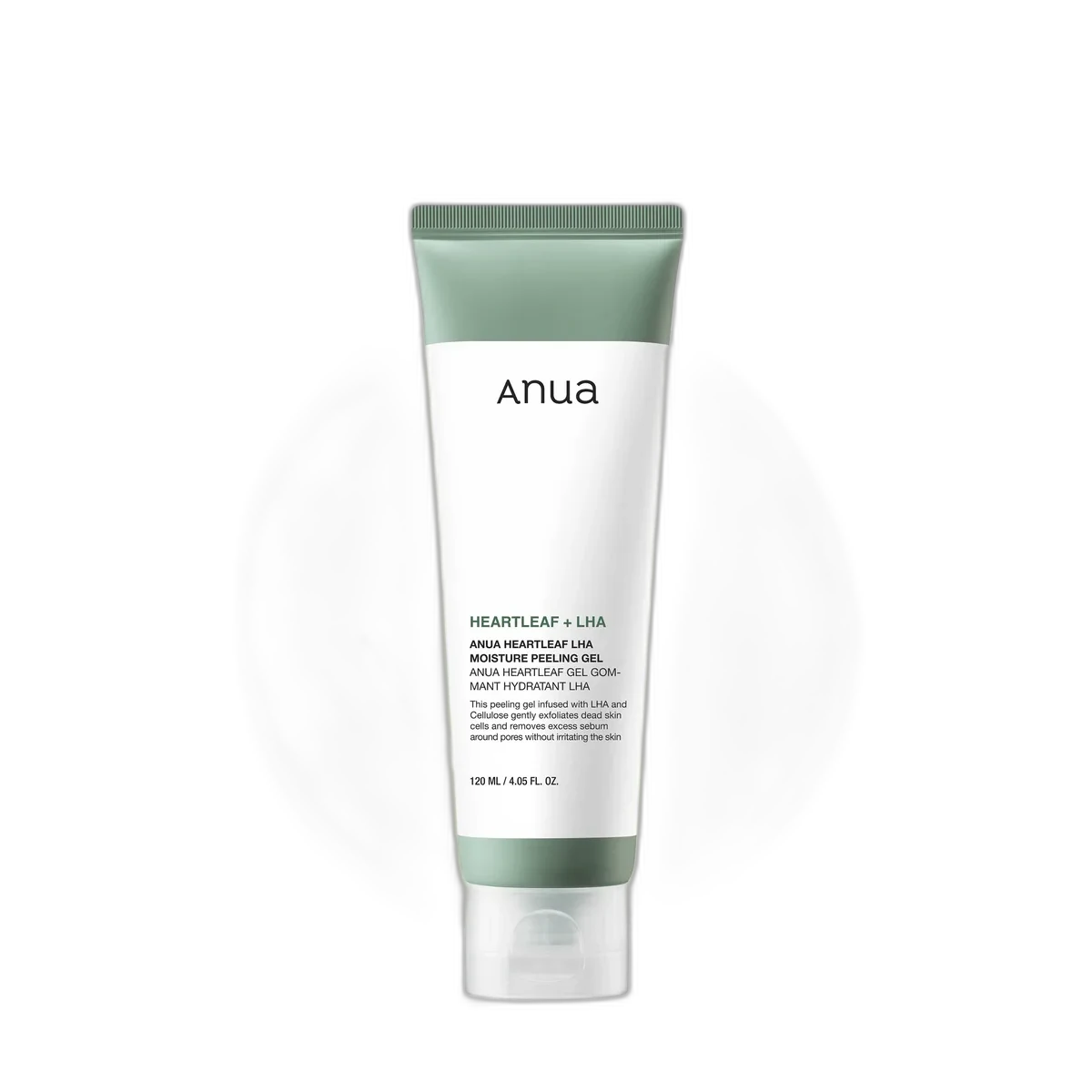
Heartleaf LHA Moisture Peeling Gel
Gentlest Exfoliation Entry Point
 Verified reviewer
Pros & cons.
- +Extremely gentle exfoliation suitable for even the most sensitive skin types
- +Clean formula — fragrance-free, oil-free, silicone-free, and vegan
- +Satisfying gommage texture provides immediate visible and tactile smoothness
- +Heartleaf extract at 1% provides anti-inflammatory support during exfoliation
- +200ml size offers good value for 3-4 months of weekly use
- +Hydrating rather than stripping — leaves skin moisturized after rinsing
- −LHA concentration is negligibly low — provides minimal chemical exfoliation
- −Visible cellulose balls are mostly the product, not dead skin — can feel misleading
- −Too gentle for users who need meaningful exfoliation for congestion or acne
- −Slightly sticky during the massage phase before rinsing
- −Results are subtle — experienced exfoliant users may find it underwhelming
The full review.
The peeling gel occupies a peculiar corner of the skincare market. It is simultaneously one of the most satisfying products to use and one of the most misunderstood. You massage a gel on your face, tiny balls form under your fingertips, and you feel the primal satisfaction of believing you have just scrubbed away a week’s worth of dead skin. The reality is more nuanced, and Anua’s Heartleaf LHA Moisture Peeling Gel is a useful case study in what peeling gels actually do versus what they appear to do.
The primary exfoliating mechanism here is cellulose — a plant-derived fiber that sits third in the ingredient list. When you massage this gel on dry skin, the cellulose fibers roll up into soft balls through friction. This is the gommage effect that K-beauty has popularized, and it would happen whether you applied this gel to your face or to a glass tabletop. The balls are not predominantly dead skin cells being liberated from your pores. They are the product’s own texture transforming under pressure.
This is not a scam. The gentle friction does lift loose dead skin cells and surface debris, which get incorporated into those cellulose rolls. The mechanical action genuinely smooths the skin surface and reveals a brighter complexion underneath. It is just that the visual drama — all those satisfying little balls — overstates the magnitude of what is actually happening. Think of it as a gentle sweeping of the skin surface rather than a deep exfoliation.
The LHA in the name deserves scrutiny. Capryloyl Salicylic Acid is a lipophilic derivative of salicylic acid developed by L’Oreal, known for gentler, more gradual pore penetration than standard BHA. In this formula, it appears twentieth out of twenty-two ingredients, suggesting a concentration so low that its contribution to actual chemical exfoliation is negligible. The LHA is here for the label, not for your pores. If you need meaningful chemical exfoliation, you will need a dedicated acid product.
What the formula does well is be gentle. Houttuynia cordata extract at 1% provides anti-inflammatory support during the physical manipulation of your skin. Allantoin soothes and promotes cell renewal. Sodium hyaluronate and glycerin maintain hydration so you finish the process with moisturized rather than stripped skin. The ingredient list is remarkably clean — no fragrance, no oils, no silicones, no sulfates, no parabens. For a product category that often includes unnecessary additives, this simplicity is refreshing.
The experience is undeniably pleasant. The gel is a light green, slightly watery formulation that you apply to dry, clean skin. Within a few seconds of gentle circular massage, the balling begins, and there is something meditative about working your way across your face, watching the little rolls form. After about a minute, you rinse with lukewarm water, and the immediate payoff is skin that feels notably smoother to the touch and looks visibly brighter. It is the kind of instant gratification that makes you want to use it more often than the recommended once or twice per week.
The scent is a mild herbal note from the botanical extracts — nothing that would bother fragrance-sensitive users, and nothing artificial. The finish after rinsing is clean, slightly dewy, and completely comfortable. No tightness, no dryness, no residue. Your skin is ready for the next step in your routine.
At twenty-two dollars for 200ml, the value is reasonable. The larger size is a welcome upgrade from the original 120ml version, and with once or twice weekly use, a tube will last three to four months. Given that the ingredient list is this clean and the product genuinely delivers smoother skin after each use, the per-use cost is modest.
The honest assessment is this: the Anua Heartleaf LHA Moisture Peeling Gel is not a replacement for chemical exfoliation. It will not unclog pores, fade hyperpigmentation, or address acne. What it will do is gently smooth your skin’s surface, remove loose dead cells and debris, and leave your face feeling softer and looking brighter without any risk of irritation. For sensitive skin types who have been burned by acids, for exfoliation beginners who want to start somewhere safe, or for anyone who simply enjoys the tactile ritual of a gommage, this product delivers exactly what it should. Just calibrate your expectations to what it is — a gentle surface polish, not a deep exfoliation — and you will not be disappointed.
Ingredient analysis.
Full INCI list
Water, Dipropylene Glycol, Cellulose, 1,2-Hexanediol, Houttuynia Cordata Extract, Arginine, Acrylates/C10-30 Alkyl Acrylate Crosspolymer, Propanediol, Allantoin, Carthamus Tinctorius (Safflower) Flower Extract, Dextrin, Polyglyceryl-10 Laurate, Gardenia Jasminoides Fruit Extract, Disodium EDTA, Theobroma Cacao (Cocoa) Extract, Glycerin, Aloe Ferox Leaf Extract, Bioflavonoids, Sodium Hyaluronate, Caprylyl Glycol, Capryloyl Salicylic Acid, Brassica Oleracea Italica (Broccoli) Extract, Ethylhexylglycerin
Skin match.
The science.
The Science
Capryloyl Salicylic Acid (LHA) is a lipophilic derivative of salicylic acid patented by L'Oreal. Research published in the Journal of the European Academy of Dermatology and Venereology has demonstrated that LHA provides targeted exfoliation with a slower, more progressive penetration into the stratum corneum compared to standard salicylic acid. LHA has shown efficacy for comedolytic activity and promoting cell turnover at concentrations of 0.1-1% in clinical studies. However, in this formula, the INCI position suggests a concentration well below the clinically studied range.
The primary exfoliation mechanism is mechanical — cellulose fiber balling through friction. While this lacks the rigorous clinical evidence base of chemical exfoliants, physical exfoliation has been shown to remove corneocytes from the skin surface, temporarily improving smoothness and light reflectivity. A study in the Journal of Cosmetic Dermatology noted that gentle physical exfoliation can improve transepidermal penetration of subsequently applied actives by reducing the dead cell layer thickness.
Houttuynia cordata (heartleaf) has been studied for its anti-inflammatory properties, with research in the Journal of Ethnopharmacology demonstrating inhibition of pro-inflammatory cytokines and antibacterial activity against common skin pathogens. At 1% extract concentration, the anti-inflammatory contribution is present but modest.
Allantoin, a botanical extract from comfrey, has well-documented keratolytic and cell-proliferative properties. Research has shown that allantoin promotes wound healing by stimulating fibroblast activity and extracellular matrix synthesis, supporting skin recovery after the mechanical stress of peeling gel application.
References
- Capryloyl salicylic acid: a new active for skin care — Journal of the European Academy of Dermatology and Venereology (2009)
Dermatologist Perspective
Dermatologists recognize peeling gels as the gentlest category of exfoliant, suitable for patients who cannot tolerate alpha or beta hydroxy acids. Board-certified dermatologists would note that the primary benefit of this product is gentle surface-level desquamation through mechanical action, not chemical exfoliation — the LHA concentration is too low to provide meaningful keratolytic activity. For patients with sensitive skin, rosacea, or those undergoing active treatments like retinoids, a gentle peeling gel like this can provide mild exfoliation without compromising the barrier. Dermatologists would caution against using it as a replacement for evidence-based chemical exfoliants when treating conditions like acne, hyperpigmentation, or photodamage.
Where it fits in your routine.
Apply a large amount to clean, dry skin. Do not use on wet skin; the gommage effect needs friction on a dry surface. Massage the face in gentle, circular motions, but avoid the eye area. Cellulose balls form within 10-15 seconds. Massage for 30-60 seconds, then rinse well with lukewarm water. Use 1-2 times per week. Do not use on the same day as chemical exfoliants or retinoids. Follow with your regular toner, serum, and moisturizer routine.
At $22 for 200ml, this peeling gel is a good value for a gentle exfoliant. The 200ml tube lasts 3-4 months with once or twice weekly use, so each use costs about $1.50-$2.00. Some retailers sell a 120ml version for around $20. The clean ingredient list and lack of unnecessary additives justify the price. Premium peeling gels from Japanese and Korean brands often cost the same or more for smaller sizes. This value is highest for sensitive skin types with limited exfoliant options — for those who tolerate acids, a dedicated BHA or AHA product may give more results per dollar.
Sensitive skin types who cannot tolerate chemical exfoliants, exfoliation beginners seeking a zero-risk starting point, and anyone who enjoys the tactile ritual of a gommage peeling gel use this. It also works as a weekly addition for those wanting gentle surface smoothing between acid exfoliation sessions.
The LHA concentration is too low to treat acne, congestion, or hyperpigmentation. This product is also unnecessary for users with an effective acid exfoliation routine who do not need extra physical exfoliation.
Product details.
Lightweight, watery gel with a light green tint. Massaging it on skin makes cellulose fibers ball up into soft rolls for gentle physical exfoliation. It is not gritty or abrasive.
Botanical extracts provide a mild, fresh herbal scent. It has no added fragrance and feels pleasant and spa-like.
Anua uses a clean, minimalist squeeze tube with a flip-top cap. The light green tube matches the gel color. It comes in 120ml and 200ml sizes.
Apply a generous amount to dry skin and massage gently on first use. Soft cellulose balls form within seconds, creating a satisfying, spa-like feel. Rinse with lukewarm water for immediately smoother, brighter skin. It causes no stinging, burning, or tightness. Most users can use it immediately without building tolerance.
3-4 months with 1-2x weekly use (200ml size)
12 months
All Year
The backstory.
Peeling gels (gommage) are a beloved K-beauty category that Western markets have been slower to adopt. Anua's version bridges the gap by pairing the satisfying tactile experience of a gommage with their hero heartleaf ingredient and a touch of LHA. Launched in 2023, it became part of the brand's expanding heartleaf lineup that targets the gentle-but-effective skincare philosophy K-beauty is known for.
About Anua
Emerging Brand (2–5 years)Anua launched in 2020 as a South Korean skincare brand centered on heartleaf (Houttuynia Cordata) extract. Social media virality drove the brand's global growth. Anua uses well-studied botanical ingredients, but has limited independent clinical validation and a short track record.
Common myths.
The balls that form during a peeling gel massage are dead skin cells removed from your face.
Most visible balls are cellulose fibers from the gel. These form even if you rub the gel on a clean plate. Some dead skin cells and surface debris get caught in the cellulose rolls, but the visual effect shows the product's texture rather than how much dead skin you had.
Peeling gels lack the strength to exfoliate; they are just a gimmick.
Peeling gels exfoliate more mildly than chemical peels or scrubs, but the gentle friction still removes surface debris and loose dead skin cells. This level of exfoliation works well for sensitive skin that cannot tolerate acids or physical scrubs. Not every skin type needs aggressive exfoliation.
FAQ.
How much LHA is in the Anua Peeling Gel?
Capryloyl Salicylic Acid (LHA) sits near the bottom of the INCI list, so the concentration is low. Cellulose balling provides the main exfoliation, not chemical LHA. For meaningful chemical exfoliation, a dedicated BHA or AHA product works better.
Can I use this peeling gel with retinol or acids?
Yes, but not on the same day. Use this peeling gel 1-2 times per week on nights without chemical exfoliants or retinoids. Do not stack this gentle physical exfoliation with other active treatments to avoid compromising your skin barrier.
Is the Anua Peeling Gel safe for sensitive skin?
This is one of the gentlest exfoliating products available. The cellulose-based physical exfoliation is non-abrasive. The formula is fragrance-free, oil-free, and silicone-free, while heartleaf extract provides soothing anti-inflammatory support. It works well for sensitive skin that cannot tolerate acid exfoliants.
Should I use this on wet or dry skin?
Apply to clean, dry skin for the best gommage effect. Cellulose balls form better on dry skin. Massage in gentle circles for 30-60 seconds, then rinse with lukewarm water. Wet skin dilutes the gel and reduces the balling effect.
What the community says.
"Leaves skin noticeably smoother and softer after each use"
"Extremely gentle — does not irritate even sensitive skin"
"Satisfying visible balling of dead skin and cellulose during massage"
"Skin looks brighter and more radiant immediately after use"
"Hydrating rather than stripping — no post-exfoliation tightness"
"Good for exfoliation beginners who are nervous about acids"
"The visible balls are primarily cellulose, not actual dead skin — feels misleading"
"LHA concentration is extremely low — minimal chemical exfoliation"
"Results are subtle compared to chemical exfoliants"
"Can feel slightly sticky during the massage phase before rinsing"
"Some users find the gommage texture unpleasant"
Featured in.
People also looked at.