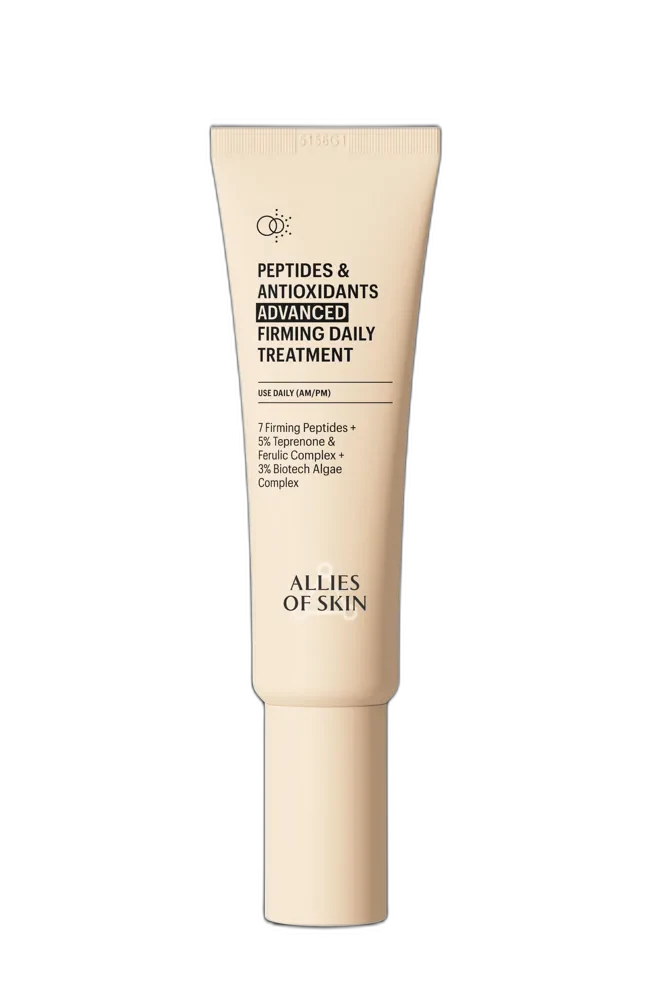
Peptides & Omegas Firming Daily Treatment
Peptide-Omega Barrier Boss
 Verified reviewer
Pros & cons.
- +Rich five-oil omega fatty acid base restores barrier lipids
- +Six peptides including Matrixyl 3000 and copper peptide
- +Fragrance-free and essential-oil-free despite the luxury positioning
- +Powerful antioxidant network with astaxanthin and resveratrol
- +Excellent buffer layer for retinoids and acids
- +Works well for mature, dry, and post-procedure skin
- +Soothing centella complex supports reactive and rosacea-prone skin
- −Jar packaging degrades antioxidants over time
- −$110 for 50ml is steep for a moisturizer
- −Too rich for oily and acne-prone skin
- −Contains oleic acid which can be comedogenic for some
- −Subtle, cumulative results rather than dramatic firming
The full review.
Most peptide moisturizers are thin serums thickened with a few emollients; the oil fraction is usually token. The Peptides & Omegas Firming Daily Treatment uses a different structure. Nicolas Travis built the base using five plant oils—rosehip, argan, camellia, borage, and evening primrose—for their fatty acid profiles. Linoleic and linolenic acids dominate, with borage and evening primrose adding oleic and gamma-linolenic acids. The formula adds the peptide stack and antioxidant cast to this foundation. This moisturizer performs barrier work like a balm or facial oil, then delivers a firming serum’s worth of actives.
The texture matches this design. A pea-sized amount is a dense, slightly oily cream that melts on contact and settles into a satin finish in ninety seconds. It is thicker than a typical moisturizer but not heavy or occlusive; it does not pill under sunscreen or catch foundation. Dry, dehydrated, or mature skin feels immediate relief because the fatty acid base addresses the lipid depletion that causes late-day tightness and flaking. Oily skin will find this too much. This moisturizer has a specific target audience.
The actives justify the price. The formula includes six peptides: the Matrixyl 3000 pair, acetyl hexapeptide-8 (Argireline), palmitoyl tripeptide-38, and copper tripeptide-1, plus sh-oligopeptide-1 and sh-polypeptide-9 as lab-synthesized growth factor mimics. Five percent niacinamide sits high on the INCI list to drive ceramide synthesis alongside the topical omegas. Astaxanthin, resveratrol, glutathione, CoQ10, and tocopherol form an antioxidant network, while centella madecassoside and asiaticoside soothe the barrier. Ectoin protects the system from oxidative degradation. This is a sophisticated formula with high ingredient density, not a cheap drugstore cream with expensive branding.
The jar packaging is a flaw. Antioxidants like astaxanthin and resveratrol oxidize when exposed to air, and a twist-open jar is a poor format for preserving them. Allies of Skin likely chose the jar for the unboxing experience, and Travis says the formula is heavily stabilized with other antioxidants. While partially true, an airless pump is more technically correct; users buying for the astaxanthin content will lose some potency over the jar’s life.
The price also competes with dedicated serum-and-cream routines. At $110 for 50ml, you can buy a Matrixyl serum and a barrier moisturizer for less and get similar results with more control. This cream is for consolidation—if you want one product to do the work of two using an omega-rich base, the math works. If you prefer layering and customizing, it does not.
The cream works well under makeup and in daily use. The satin finish works with mineral and chemical sunscreens, and the soothing quality makes it a good buffering layer over retinoids at night. Users with rosacea, eczema-prone skin, and post-procedure recovery report strong results due to the omega-rich, fragrance-free, centella-supported base. The fragrance-free formulation is important; many luxury peptide creams use essential oils or parfum that counteract the soothing effects.
Peptide firming is real but slow. Most users see immediate hydration and a glow in week one, visible barrier recovery and plumping in weeks two and three, and softening of fine lines and improved firmness in six to eight weeks. Gains plateau after twelve weeks, as with most peptide products. It will not provide dramatic contouring or prescription-retinoid-level resurfacing. It is a considered option for those wanting a peptide moisturizer that maintains firmness and radiance in a barrier-supportive base.
Allies of Skin is an emerging brand—founded 2016, with under a decade of track record and no long-form independent clinical trials on this specific cream. However, the brand’s commitment to ingredient transparency and fragrance-free multitasking formulas earns goodwill from people who read INCI lists. This cream shows the thinking behind every line.
 ### About Allies of Skin

Allies of Skin is an emerging brand—founded 2016, with under a decade of track record and no long-form independent clinical trials on this specific cream. However, the brand's commitment to ingredient transparency and fragrance-free multitasking formulas earns goodwill from people who read INCI lists. This cream shows the thinking behind every line.Ingredient analysis.
Full INCI list · pH 5.8
Water/Aqua/Eau, Glycerin, Caprylic/Capric Triglyceride, Dicaprylyl Ether, Niacinamide, Squalane, Propanediol, Butylene Glycol, Cetearyl Olivate, Sorbitan Olivate, Cetearyl Alcohol, Glyceryl Stearate, Pentylene Glycol, Linoleic Acid, Linolenic Acid, Oleic Acid, Palmitoyl Tripeptide-1, Palmitoyl Tetrapeptide-7, Palmitoyl Tripeptide-38, Acetyl Hexapeptide-8, Copper Tripeptide-1, sh-Oligopeptide-1, sh-Polypeptide-9, Bakuchiol, Ectoin, Sodium Hyaluronate, Hydrolyzed Sodium Hyaluronate, Tocopherol, Ubiquinone, Astaxanthin, Glutathione, Resveratrol, Panthenol, Allantoin, Centella Asiatica Extract, Madecassoside, Asiaticoside, Rosa Canina Fruit Oil, Argania Spinosa Kernel Oil, Camellia Japonica Seed Oil, Borago Officinalis Seed Oil, Oenothera Biennis Oil, Xanthan Gum, Carbomer, Ethylhexylglycerin, Disodium EDTA, Phenoxyethanol
Skin match.
The science.
The Science
This cream relies on two evidence bases: topical omega fatty acids and cosmetic peptides. The omega data is solid. Linoleic acid provides a substrate for ceramide synthesis. Published studies show topical linoleic-rich plant oils improve transepidermal water loss and barrier function, especially in dry and atopic skin. Rosehip, argan, and evening primrose oils provide distinct fatty acid profiles, while borage oil adds gamma-linolenic acid, which has anti-inflammatory data for eczema and rosacea. Combining these with 5% niacinamide is strategic: niacinamide upregulates endogenous ceramide synthesis, creating a dual attack on barrier lipid depletion. The peptide evidence is also reasonable. Human trials show the Matrixyl 3000 pair reduces wrinkle depth at standard serum and moisturizer concentrations, and Argireline softens expression lines. Copper tripeptide-1 has the longest research history of any cosmetic peptide, with decades of wound-healing and collagen-stimulation data. The sh-oligopeptide and sh-polypeptide growth factor mimics are newer and less validated, but they work as signaling adjuncts. The antioxidant network earns extra credit: astaxanthin is a potent lipid-soluble antioxidant, and pairing it with resveratrol, glutathione, CoQ10, and tocopherol creates redundancy against oxidative stress. The jar packaging is a weakness, as it exposes these antioxidants to oxidation after opening.
Dermatologist Perspective
Dermatologists often recommend omega-rich moisturizers for dry, mature, or barrier-compromised skin, and this formula fits that profile. Board-certified dermatologists note that topical linoleic acid and plant-oil-based barrier creams help patients in their forties and beyond, when natural barrier lipid synthesis declines. The peptide and niacinamide content makes this a reasonable single-step option for patients seeking anti-aging benefits without the irritation risk of retinoids, though dermatologists still consider prescription retinoids the gold standard for significant photoaging. Patients with acne, fungal acne, or oily skin usually use lighter, linoleic-dominant options instead of a thick cream base like this one.
Where it fits in your routine.
Apply morning and evening to clean skin after serums and essences. Warm a pea-sized amount between your palms and press it into the face, neck, and décolleté. Pressing, instead of rubbing, helps the omega-rich base absorb evenly without dragging. Wait one to two minutes before applying sunscreen in the AM. In the PM, use this as the final step or over a retinoid as a buffering layer. The jar packaging requires clean fingers or a spatula; replace the lid tightly to slow antioxidant oxidation. Do not decant, and finish the jar within twelve months of opening.
At $110 for 50ml, this cream costs more than most indie moisturizers but less than prestige clinical creams. The value depends on consolidation — the price makes sense if you want a peptide serum and a barrier moisturizer in one step with an omega-rich base. If you layer a $30 Matrixyl serum under a $25 ceramide cream, you get similar benefits for less money. Only the 50ml size exists, so there is no bulk discount. The value improves for dry, mature, or reactive users who need one cream to address both firmness and barrier needs. Cheaper assembly options exist for everyone else.
Dry, normal, combination, or mature skin users want a single-step peptide moisturizer that repairs the barrier. It works well for users recovering from over-exfoliation, winter-related barrier damage, or those seeking a retinoid-free PM option. It also works as a buffer layer for anyone pairing retinoids with sensitive skin.
Oily, acne-prone, or fungal-acne-prone users should choose lighter linoleic-dominant options. Budget-minded users can get similar benefits for less by using separate serum-and-cream routines. Prescription retinoids work better for anyone seeking fast or dramatic anti-aging results.
Product details.
Cushiony cream with a slight oil slip that melts into skin
Fragrance-free with a subtle natural oil scent
Frosted glass jar with a plastic inner seal; not airless, so antioxidants can degrade over time
The first application feels comforting. The omega-rich base nourishes instantly and the cream absorbs to a soft satin finish in about a minute. It causes no tingling or purging. Expect immediate softness and visible dewiness during the first week as the barrier rehydrates.
2. 5 to 3 months with twice-daily face and neck application
12 months
All Year
The backstory.
Nicolas Travis developed this as the moisturizer counterpart to the Allies of Skin serum lineup, specifically for users who wanted peptide firming delivered inside a reparative base rather than as a standalone serum. It has become one of the brand's longest-running and most quietly loved flagships.
About Allies of Skin
Emerging Brand (2–5 years)Nicolas Travis launched Allies Skin in Singapore in 2016. Like many emerging indie skincare houses, Allies Skin relies on ingredient transparency and multitasking formulations instead of decades of published clinical research.
Common myths.
Oil-rich moisturizers clog pores and cause breakouts.
Linoleic acid dominates this omega blend. It is generally non-comedogenic and helps acne-prone skin, but the oleic acid fraction and cream format suit dry-to-normal skin better than truly oily skin.
Peptides lose potency in a moisturizer base.
Peptides stay stable in well-formulated cream bases at pH 5.5-6. The jar packaging is the main issue; it exposes antioxidants like astaxanthin and resveratrol to air over time.
FAQ.
Is this moisturizer good for mature skin?
Yes — peptides, omega fatty acids, and barrier-supporting niacinamide target the firmness loss, dryness, and barrier thinning typical of mature skin.
Can I use this with retinol?
The omega-rich, soothing base buffers retinol irritation. Apply your retinoid first, let it absorb, then press this cream on top to seal it.
Will it break out oily or acne-prone skin?
The formula contains oleic acid, which is comedogenic for some users. Oily and breakout-prone users can patch test or use a lighter peptide treatment instead.
Why is it in a jar and not airless packaging?
The jar format aims for a luxury feel, but antioxidants like astaxanthin and resveratrol oxidize after opening. Use within 12 months for best results.
Can I use this around my eyes?
Yes — the fragrance-free, gentle base is safe for the eye area. Many users skip a dedicated eye cream when using this.
Is a little goes a long way?
Yes. A pea-sized amount covers the full face and neck because the formula has high slip; using too much leaves an oily residue, so start with a small amount.
What the community says.
"restores barrier quickly"
"luxurious feel without heaviness"
"good for mature skin"
"expensive"
"too rich for oily skin"
"tiny jar"