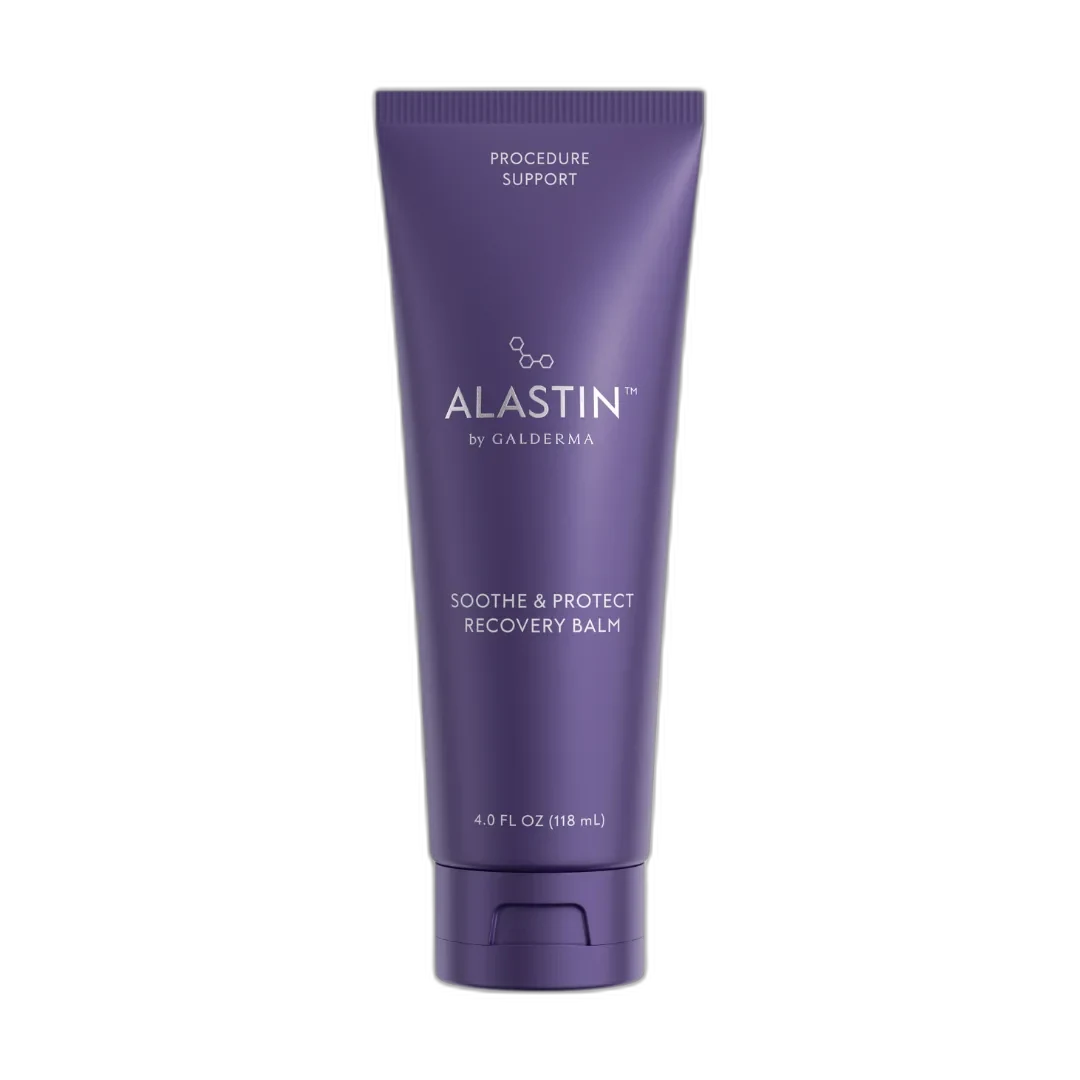
Soothe + Protect Recovery Balm
Minimalist Recovery Shield
 Verified reviewer
Pros & cons.
- +Radically simple 8-ingredient formula minimizes irritation risk on compromised skin
- +Petrolatum base provides gold-standard occlusive protection reducing TEWL by up to 98%
- +Passed formal comedogenicity testing for facial use despite the thick petrolatum base
- +Physalis angulata and bisabolol provide genuine anti-inflammatory activity beyond basic occlusion
- +Most affordable product in Alastin's lineup at $52 for a generous 4 oz jar
- +Versatile — works for post-procedure recovery, eczema flares, chapped lips, and windburn
- −Thick, greasy texture is impractical for daily wear or use under makeup
- −The price premium over Aquaphor or Vaseline may be hard to justify for non-procedure use
- −Not suitable as a daily moisturizer for oily or acne-prone skin types
- −Contains BHT as a preservative, which some users prefer to avoid
- −Simple formula means it provides protection rather than active treatment
The full review.
Eight ingredients. That is it. In an era where even basic moisturizers routinely contain thirty to fifty components, Alastin’s Soothe + Protect Recovery Balm contains eight. And the first one is petrolatum — the same ingredient that has been sitting in medicine cabinets since Robert Chesebrough patented Vaseline in 1872. This is either the most honest product in physician-dispensed skincare or the most audacious, and it might be both.
The philosophy behind this balm is disarmingly simple: when skin is at its most compromised — freshly lasered, peeled, or microneedled — the last thing it needs is complexity. Every additional ingredient is a potential trigger. Every active compound is another variable on skin that is already overwhelmed. What compromised skin needs most is protection. A barrier between its raw, healing surface and everything the world wants to throw at it.
Petrolatum is arguably the most effective occlusive agent ever studied. Research has demonstrated it reduces transepidermal water loss by up to 98% — a performance standard that no plant oil, ceramide blend, or silicone formulation has matched. It is too large molecularly to penetrate pores, which is why this product passed formal comedogenicity testing despite being, essentially, a jar of petroleum-derived wax. Pharmaceutical-grade petrolatum is remarkably pure, biocompatible, and inert — it sits on the surface doing exactly one thing extraordinarily well.
But Alastin did not just put petrolatum in a jar and add a $52 price tag. The three botanical additions are what elevate this from generic occlusive to targeted recovery product. Physalis angulata extract — derived from a plant in the cape gooseberry family — has documented anti-inflammatory and wound-healing properties. It is an unusual botanical choice for skincare, which suggests Alastin specifically sought it out for its post-procedure calming benefits rather than pulling from the standard rotation of chamomile and aloe.
Bisabolol, derived from chamomile, provides its well-documented anti-inflammatory properties. And shea butter extract — specifically the triterpene fraction rather than whole shea butter — adds another layer of soothing activity. The triterpene extraction is a nice detail: it delivers the anti-inflammatory compounds from shea without the full lipid load, keeping the formula focused.
Tocopherol (vitamin E) provides antioxidant protection, and BHT stabilizes the formula. Hydrogenated microcrystalline wax gives the balm its solid structure, and caprylic/capric triglyceride serves as a lightweight carrier for the botanical extracts.
Texture
The texture is exactly what you would expect from a petrolatum-based balm: thick, waxy, and unambiguously greasy. It melts on contact with warm skin and creates a visible, shiny layer over the treated area. This is not a product designed for cosmetic elegance — it is designed for protection. You will not apply this and head to a meeting. You will apply this and let your skin heal underneath it.
How to Use
For post-procedure use, the application experience is genuinely comforting. There is something deeply reassuring about covering raw, sensitive skin with a thick protective layer. No stinging, no tingling, no sensation at all beyond mild warmth and the physical feeling of a barrier forming. It is the skincare equivalent of a warm blanket on a cold day.
Works for
The versatility beyond post-procedure recovery is where this balm earns unexpected loyalty. Users report success with eczema flares, severely chapped lips, windburned skin, and even cracked hands. The minimalist formula means it works anywhere skin needs protection and soothing without the risk of irritation from a complex ingredient list.
Best for
The value proposition is interesting. At $52 for 4 ounces, this is the most affordable product in the Alastin lineup — and the per-ounce cost of $13 is reasonable for the physician-dispensed channel. But the inevitable comparison to Aquaphor ($5-10) and plain Vaseline ($3-5) looms large. The honest assessment: the physalis angulata, bisabolol, and shea triterpenes do add genuine therapeutic value for post-procedure recovery, and the comedogenicity testing provides peace of mind for facial use. Whether those additions are worth the price premium depends on whether you are using this on lasered skin (where every soothing advantage matters) or just chapped lips (where Aquaphor works just fine).
The 4-ounce jar lasts a long time — even with generous post-procedure application, most users get two to four months from a single jar. The simple formula is also incredibly shelf-stable, with no water-based components to harbor microbial growth.
Pairs Well With
In the context of Alastin’s lineup, this balm serves as the foundational layer — the last thing applied, the final protective step over the brand’s more complex serums and treatments. It does not have the peptide technology, the HA-boosting innovation, or the multi-pathway active approach of its siblings. What it has is a clear understanding of what compromised skin actually needs, and the confidence to deliver exactly that without overcomplicating it.
Ingredient analysis.
Full INCI list
Petrolatum, Hydrogenated Microcrystalline Wax, Physalis Angulata Extract, Caprylic/Capric Triglyceride, Butyrospermum Parkii (Shea) Butter Extract, Bisabolol, Tocopherol, BHT
Skin match.
The science.
The Science
Petrolatum is the most effective topical occlusive agent in dermatological literature. A landmark study in the Journal of the Society of Cosmetic Chemists shows petrolatum reduces transepidermal water loss by up to 98%. This outperforms mineral oil (~40% reduction), dimethicone (~20-30%), and plant oils (variable). It is the clinical gold standard for barrier restoration on compromised skin.
George Winter's 1962 research in Nature established the moist wound healing principle: a moist environment accelerates epidermal repair. Petrolatum-based occlusives create this environment without the infection risk of wet dressings. This makes petrolatum-based products the standard of care for post-laser and post-surgical wound management in dermatology.
Research in the Journal of Ethnopharmacology studied Physalis angulata for its wound-healing and anti-inflammatory properties. The plant contains physalins—steroidal lactones with documented anti-inflammatory activity—which add calming properties beyond simple occlusion.
Published research characterizes Bisabolol's anti-inflammatory mechanism as the inhibition of 5-lipoxygenase and cyclooxygenase pathways. This reduces prostaglandin production at the application site, providing clinically relevant soothing during the acute inflammatory phase after dermatologic procedures.
Dermatologist Perspective
Dermatologists use petrolatum-based occlusives as the foundation of post-procedure care protocols. Board-certified dermatologists note the formula's simplicity is its greatest asset. On skin wounded by laser, peel, or microneedling, fewer ingredients reduce the risk of sensitization and irritation. Adding Physalis angulata and Bisabolol upgrades plain petrolatum for procedure recovery, though dermatologists acknowledge plain Vaseline works for patients who cannot access or afford this product. The non-comedogenic testing is particularly valued because many patients worry about applying heavy occlusives to the face.
Where it fits in your routine.
Apply a thick layer as your final skincare step to seal in previous products. For post-procedure use: apply directly over treatment serums (such as Alastin Regenerating Skin Nectar) to create a protective barrier. Reapply when the balm layer thins or is removed. For general barrier repair: apply to affected areas (lips, hands, eczema patches) as needed. Consult your dermatologist for procedure-specific timing and frequency.
At $52 for 4 oz, this is Alastin's most accessible product and a fair price for the physician-dispensed channel. The $13 per-ounce cost is premium compared to Aquaphor ($1-2/oz) but the physalis angulata extract, comedogenicity testing, and brand positioning justify it. The botanical additions provide value for post-procedure recovery where active soothing matters. Less expensive alternatives deliver comparable barrier protection for general occlusive needs (chapped lips, dry patches). The 4 oz jar lasts 2-4 months with typical use.
This works for anyone using skin-rejuvenating procedures (laser, chemical peels, microneedling) who needs a simple, effective occlusive barrier. It is also excellent for eczema sufferers, people with severely compromised barriers, and anyone wanting a minimalist, clinically validated occlusive without the complexity of typical recovery creams.
Oily skin types seeking a daily moisturizer will find this too heavy and greasy for regular use. If your barrier is healthy and you want everyday hydration, a lighter moisturizer works better. Budget-conscious shoppers needing basic occlusion can get comparable protection from Aquaphor for much less.
Product details.
Unscented — no detectable fragrance.
Opaque jar with screw-top lid. The 4 oz size provides enough product for post-procedure recovery.
Provides immediate comfort and protection for compromised skin. The thick balm forms a physical shield over tender areas. It does not sting or irritate — it works for raw, freshly treated skin.
2-4 months depending on area of application and frequency
12 months
All Year
The backstory.
This balm represents Alastin's most stripped-back product philosophy. While the brand's other products feature complex peptide technology, the Soothe + Protect recognizes that sometimes compromised skin just needs protection, not actives. It is the product dermatologists reach for when a patient's skin is too raw for even the gentlest serum — the last line of defense in the recovery toolkit.
About Alastin
Established Brand (5–20 years)Alastin Skincare launched in 2015 and Galderma acquired it in 2022. This recovery balm uses the brand's post-procedure skincare expertise to provide a simple occlusive formula that protects compromised skin.
Common myths.
Petrolatum clogs pores and causes breakouts.
Pharmaceutical-grade petrolatum is non-comedogenic and has undergone extensive testing. This specific product passed formal comedogenicity testing. The molecule is too large to penetrate pores; it sits on the surface to create a barrier. The heavy, greasy texture makes this best for post-procedure use instead of daily wear on oily or acne-prone skin.
A $52 balm made mostly of petrolatum is overpriced.
The 4 oz size sets the per-ounce cost at $13 — the lowest price in the Alastin line. physalis angulata extract, shea triterpenes, and bisabolol add therapeutic value beyond plain petrolatum. Non-comedogenic testing, clinical validation, and physician-dispensed positioning also drive the price. However, plain petrolatum at $5 provides similar occlusive protection without the botanical actives.
FAQ.
Can I use Alastin Soothe + Protect Recovery Balm on my face?
Yes — this balm passed comedogenicity testing and works for facial use after skin-rejuvenating procedures. The petrolatum base forms a protective barrier over treated skin without clogging pores. But the thick, greasy texture makes daily wear under makeup impractical — it works best for post-procedure recovery or overnight use.
Is Alastin Recovery Balm just expensive petrolatum?
Pharmaceutical-grade petrolatum forms the base, but the formula adds three active botanicals: physalis angulata extract calms, shea butter triterpenes soothe, and bisabolol provides anti-inflammatory support. These ingredients offer therapeutic benefits beyond the occlusive function of plain petrolatum. At $52 for 4 oz, it is the cheapest product in Alastin's lineup.
How to Use ---
When should I apply this balm after a procedure?
Follow your dermatologist's specific instructions, as timing varies by procedure type. Generally, this balm is applied as the final step after treatment serums during the recovery period. It creates a protective barrier that locks in previous products and shields compromised skin from environmental irritants.
Works for
Can I use this for eczema?
Several users report success using this balm for eczema management. The simple 8-ingredient formula minimizes potential triggers, and the petrolatum base provides the occlusive barrier eczema-prone skin needs. Anti-inflammatory botanicals add soothing benefits beyond basic petrolatum. However, this is not an eczema treatment — consult your dermatologist for persistent eczema.
How does this compare to Aquaphor or plain Vaseline?
All three provide effective petrolatum-based occlusion. The Alastin balm includes physalis angulata, bisabolol, and shea triterpenes to soothe skin — ingredients Aquaphor and Vaseline lack. It also passed formal comedogenicity testing for facial use. The trade-off is price: $52 vs $5-10 for Aquaphor. The botanical actives add value for post-procedure recovery where minimizing inflammation matters. For basic moisture sealing, the less expensive options work well.
What the community says.
"Excellent post-procedure barrier protection"
"Incredibly soothing on irritated and compromised skin"
"Works well for eczema and severely dry lips"
"Simple formula with no irritating additives"
"Too greasy for daily use on the face"
"Essentially premium petrolatum with a few botanicals"
"Not suitable as an everyday moisturizer"
People also looked at.