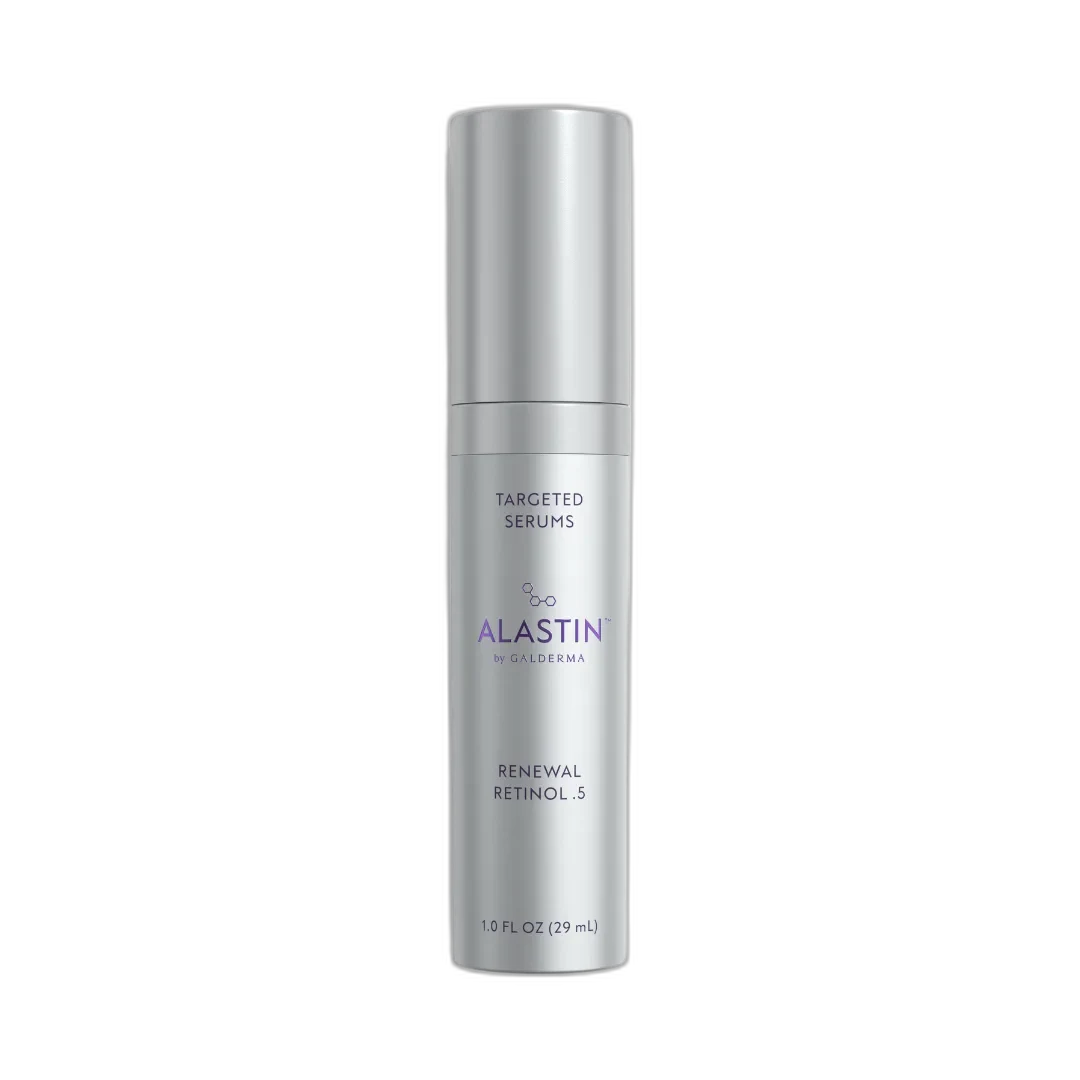
Renewal Retinol 0.5
Step-Up Retinol Pick
 Verified reviewer
Pros & cons.
- +Doubled retinol concentration delivers visibly faster and more dramatic anti-aging results
- +Lipid encapsulation makes 0.5% retinol feel as gentle as most brands' 0.25% formulas
- +Identical barrier-support system with ceramide NP, niacinamide, oat, and CoQ10
- +Seamless transition for users graduating from the 0.25% strength
- +Noticeable improvement in fine lines, texture, and pigmentation by 6-8 weeks
- +Lightweight, elegant texture that layers under any night cream without issues
- −At $96 for 1 oz, it's a significant premium over comparable 0.5% retinol formulations
- −Not suitable for retinol beginners — start with 0.25% or another low-concentration formula
- −Physician-dispensed distribution limits purchasing convenience and price competition
- −Still an OTC retinol — experienced users may want prescription tretinoin for stronger results
- −Initial adjustment period of 1-3 weeks with mild flaking at the higher concentration
The full review.
Every retinol user eventually finds their beginner formula insufficient. Skin adjusts, texture improvements plateau, and fine lines remain. Alastin designed the Renewal Retinol 0.5 for this exact moment—a graduation product for patients whose skin handles vitamin A and needs more.
The formula shares its DNA with the 0.25% variant. It uses the same lipid-encapsulated delivery system. It has the same niacinamide high in the ingredient list for ceramide-boosting barrier support. It includes the same ceramide NP, oat extract, bisabolol, coenzyme Q10, and silver mushroom. Only the retinol concentration doubles, and this change matters.
At 0.5%, the retinol drives more aggressive collagen stimulation and epidermal turnover. Cells renew faster, melanin production regulates more effectively, and structural proteins receive a stronger signal to rebuild. The gap between 0.25% and 0.5% is the difference between maintaining skin quality and actively reversing visible signs of aging.
Encapsulation technology is even more valuable at this concentration. Without time-released delivery, 0.5% retinol causes redness, peeling, and a tight-burning sensation. Alastin’s lipid shell modulates the delivery rate, spreading retinoid activity across hours so the skin processes it without an inflammatory spike. The 0.5% feels like most brands’ 0.25%.
The transition from the lower strength is smooth for most users. Start at two to three nights per week; most skin tolerates nightly application within two to three weeks. Mild flaking during the first week or two is normal as turnover accelerates. Oat extract and bisabolol manage the inflammatory response, while niacinamide and ceramide NP keep the barrier functional.
Results arrive faster and more dramatically at this concentration. By week four, texture refinement is visible; skin feels smoother and more uniform. By week eight, fine lines soften and dullness clears. The 0.5% also delivers more consistent pigmentation improvement, evening out sun spots and post-inflammatory marks better than the lower strength.
Coenzyme Q10 provides necessary support at this concentration. Faster cell turnover increases metabolic activity and oxidative stress. Ubiquinone provides mitochondrial-level antioxidant support to protect newly generated skin cells. This inclusion goes beyond surface-level soothing.
The texture is identical to the 0.25%—lightweight, slightly creamy, absorbs cleanly, and layers under night cream without pilling. The airless pump packaging protects the retinol from degradation, though it can dispense slightly more than a single pump, causing gradual waste.
At $96 for one fluid ounce, this is an investment. It costs $15 more than the 0.25%, which is proportional to the doubled concentration. Annualized at nightly use, you spend roughly $290-385 on retinol. The physician-dispensed distribution model means no Sephora rewards points or Ulta sales—only full retail through a dermatologist’s office or authorized online sellers.
Does the Alastin premium offer more than a well-formulated $30-40 retinol from Paula’s Choice or The Ordinary? For most people with normal, non-reactive skin, the answer is no—the retinol molecule is the same. But for sensitive or reactive skin, the tolerability engineering is the difference between using a retinol and quitting it. The supporting ingredient architecture—ceramide NP, niacinamide, CoQ10, oat, and silver mushroom—is more sophisticated than most mid-range retinols.
This product targets a specific audience: those who have graduated past the beginner phase, value tolerability and potency, and want to stay within a physician-recommended retinoid protocol without moving to prescription tretinoin. For them, the Renewal Retinol 0.5 delivers more results with the same comfort.
Formula
Ingredient analysis.
Full INCI list
Water/Aqua/Eau, Caprylic/Capric Triglyceride, Heptyl Undecylenate, Glycerin, Niacinamide, Polyacrylate-13, Retinol, Ubiquinone, Avena Sativa (Oat) Kernel Extract, Hydroxymethoxyphenyl Decanone, Bisabolol, Ceramide NP, Tremella Fuciformis Sporocarp Extract, Betaine, Tocopheryl Acetate, Caprylyl Glycol, C12-15 Alkyl Benzoate, Cetyl Palmitate, Polysorbate 20, Disodium EDTA, Ethylhexylglycerin, Tocopherol, Caprylhydroxamic Acid, Trideceth-6 Phosphate, Phenoxyethanol, Polyisobutene, Laureth-23, BHA, BHT, Sodium Hydroxide, Sorbitan Isostearate, Potassium Sorbate
Skin match.
The science.
The Science
Moving from 0.25% to 0.5% retinol increases retinoid activity clinically. Retinol converts enzymatically through retinaldehyde to all-trans retinoic acid (tretinoin) to bind nuclear retinoic acid receptors. At 0.5%, more substrate availability leads to greater receptor activation. This drives more collagen I and III synthesis, faster keratinocyte differentiation, and stronger inhibition of the matrix metalloproteinases (specifically MMP-1 and MMP-3) that degrade the dermal extracellular matrix.
A 2016 study in the Journal of Drugs in Dermatology tested a formulation with retinol 0.5% and niacinamide. It found significant improvements in skin brightness, fine lines, and photodamage at 8 weeks. Combining retinol with niacinamide improved tolerability over retinol alone, which supports the formulation strategy Alastin uses in this product.
Barrier support matters more at 0.5%. Retinol speeds epidermal turnover, which can temporarily thin the stratum corneum and increase transepidermal water loss (TEWL). The niacinamide in this formula increases ceramide biosynthesis by 4.1-5.5 fold (Tanno et al., Journal of Investigative Dermatology, 2000), which counteracts retinol's barrier-thinning effect. The exogenous ceramide NP provides immediate lipid supplementation while niacinamide-stimulated endogenous ceramide production increases—a two-pronged approach to barrier maintenance during retinoid therapy.
Ubiquinone's antioxidant role grows at this higher concentration. Faster cellular turnover increases mitochondrial activity and reactive oxygen species generation. As an essential part of the electron transport chain, CoQ10 supports cellular energy production and neutralizes superoxide radicals where they form.
References
- Efficacy and Tolerability of a Skin Brightening/Anti-Aging Cosmeceutical Containing Retinol 0.5%, Niacinamide, Hexylresorcinol, and Resveratrol — Journal of Drugs in Dermatology (2016)
- Nicotinamide increases biosynthesis of ceramides as well as other stratum corneum lipids to improve the epidermal permeability barrier — Journal of Investigative Dermatology (2000)
- Retinoids in the treatment of skin aging: an overview of clinical efficacy and safety — Clinical Interventions in Aging (2006)
Dermatologist Perspective
Board-certified dermatologists use Renewal Retinol 0.5 as an intermediate step in retinoid escalation—after patients tolerate the 0.25% strength and before they use prescription tretinoin. Dermatologists say the encapsulated delivery at this concentration helps patients stay compliant when increasing their retinoid dose. They often recommend this formula for patients in their late 30s to 50s who want aggressive photoaging correction without the adjustment burden of conventional 0.5% retinols. Dermatologists also like that the niacinamide-ceramide support system reduces the need for extra barrier-repair products during the transition.
Where it fits in your routine.
Apply one pump to clean, dry skin every evening. If moving from a lower retinol concentration, use it 2-3 nights per week for the first 2-3 weeks, then every other night, then nightly as tolerated. Wait 1-2 minutes for absorption before applying moisturizer. Do not apply to damp skin. Use a thick, ceramide-based moisturizer on top during the adjustment period. Apply broad-spectrum SPF 30+ every morning. Stop use 5-7 days before any in-office procedures.
At $96 for 1.0 fl oz, this costs about $15 more than the 0.25% variant, which matches the doubled concentration. One bottle lasts 3-4 months with nightly use, costing roughly $290-385 annually. The price covers the encapsulation technology, supporting actives, and physician-dispensed positioning. For sensitive skin types needing barrier support with retinol, this integrated formula may save money compared to buying a separate retinol and ceramide moisturizer. However, users with normal, resilient skin can find well-formulated 0.5% retinols at much lower prices.
Users who tolerate 0.25% retinol and want visible anti-aging results. People with normal to combination skin seeking mid-strength retinoid therapy with barrier protection. Patients in dermatologist-guided retinoid escalation protocols needing a tolerable intermediate step.
Retinol beginners without tolerance use 0.25% or other low-concentration formulas. Budget-conscious users can find effective 0.5% retinol alternatives at lower prices. People with a compromised skin barrier, active eczema, or severe rosacea must stabilize skin first. Pregnant or nursing individuals.
Product details.
This lightweight, smooth serum has a slightly creamy emollient feel. The texture matches the 0.25% variant — it absorbs quickly without tackiness or greasiness. The lipid-encapsulated retinol base feels more nourishing than water-based retinol serums.
Fragrance-free. Botanical extracts leave a neutral scent that disappears immediately upon application.
Opaque airless pump packaging protects the retinol from light and oxidation. This format matches the 0.25% variant and keeps the formula stable during use.
The serum feels smooth and comfortable on first application. Use it 2-3 nights per week for the first 2-3 weeks. You will notice slightly more adjustment than with 0.25% — mild tightness and light flaking are normal, but significantly less than with non-encapsulated 0.5% retinols. The oat extract and ceramide buffer system manages most irritation.
3-4 months with nightly single-pump application
12 months
All Year
The backstory.
Alastin created the 0.5% as the natural next step in their retinoid protocol, recognizing that dermatologists needed a mid-strength option that maintained the tolerability philosophy of the 0.25% while delivering results that would keep patients from jumping straight to prescription retinoids. It fills the gap between gentle introduction and aggressive clinical treatment.
About Alastin
Emerging Brand (2–5 years)Alastin Skincare launched in 2015 in Carlsbad, CA, to focus on post-procedure recovery products. Clinical studies back the brand's patented TriHex Technology. Galderma acquired Alastin Skincare in 2022, adding it to a major global dermatology platform.
Common myths.
Doubling the retinol concentration doubles the irritation risk.
Lipid encapsulation in this formula modulates the delivery rate at any concentration. The 0.5% has more irritation potential than the 0.25%, but time-released delivery and barrier-support ingredients make the skin experience gentler than the concentration jump suggests. Most users who tolerated the 0.25% transition comfortably.
Over-the-counter retinol can't produce results comparable to prescription retinoids.
Prescription tretinoin is the gold standard, but research shows 0.5% retinol improves fine lines, texture, and pigmentation with consistent use. The encapsulated delivery in this formula improves bioavailability compared to free retinol. Better tolerability allows more consistent use, which often yields better real-world results than an inconsistently used prescription.
FAQ.
What's the difference between Alastin Renewal Retinol 0.25 and 0.5?
Both use the same lipid-encapsulated retinol technology and identical supporting ingredients (niacinamide, ceramide NP, oat extract, CoQ10). Concentration is the difference: 0.5% drives more aggressive collagen stimulation and cell turnover for visible anti-aging results, but requires a longer adjustment period. Use 0.25% if you are new to retinol, then move to 0.5% after 3-6 months.
Can I go straight to the 0.5% without starting with the 0.25%?
If your skin tolerates retinol well, start directly with the 0.5%. Use it 2-3 nights per week and increase frequency gradually. If you have sensitive skin or have never used retinol, start with the 0.25% for a smoother transition.
How long until I see anti-aging results from Alastin Retinol 0.5?
Most users see smoother texture and brighter skin within 4-6 weeks. Fine line reduction shows at 8-12 weeks. Firmness, tone evenness, and deeper wrinkle softening improve after 3-6 months of consistent nightly use. The 0.5% shows results faster than the 0.25%.
Is Alastin Retinol 0.5 safe to use with AHA or BHA exfoliants?
Do not use AHA or BHA exfoliants on the same night as this retinol. This combination causes irritation and barrier compromise. You can alternate nights (retinol one evening, exfoliant the next) or use chemical exfoliants in the morning and retinol at night. Monitor your skin's tolerance when combining actives.
Will I experience peeling or flaking with the 0.5% strength?
Mild flaking and tightness during the first 2-3 weeks is normal, especially when transitioning from a lower concentration. The encapsulated delivery and barrier-support ingredients (ceramide NP, niacinamide, oat extract) reduce this more than non-encapsulated retinols. Start at 2-3 nights per week and increase gradually to minimize the adjustment period.
Community
What the community says.
"Effective yet remarkably gentle for a 0.5% retinol"
"Visible smoothing and brightening within 4-6 weeks of consistent use"
"Hydrating formula prevents the dryness and flaking common with mid-strength retinols"
"Elegant, lightweight texture that layers well under night creams"
"Premium price at $96 for 1 oz is higher than many 0.5% retinol alternatives"
"May still cause initial adjustment flaking for those new to this concentration"
"Physician-dispensed availability limits convenient purchasing options"
"Some experienced users may still want a higher concentration for more dramatic results"
People also looked at.