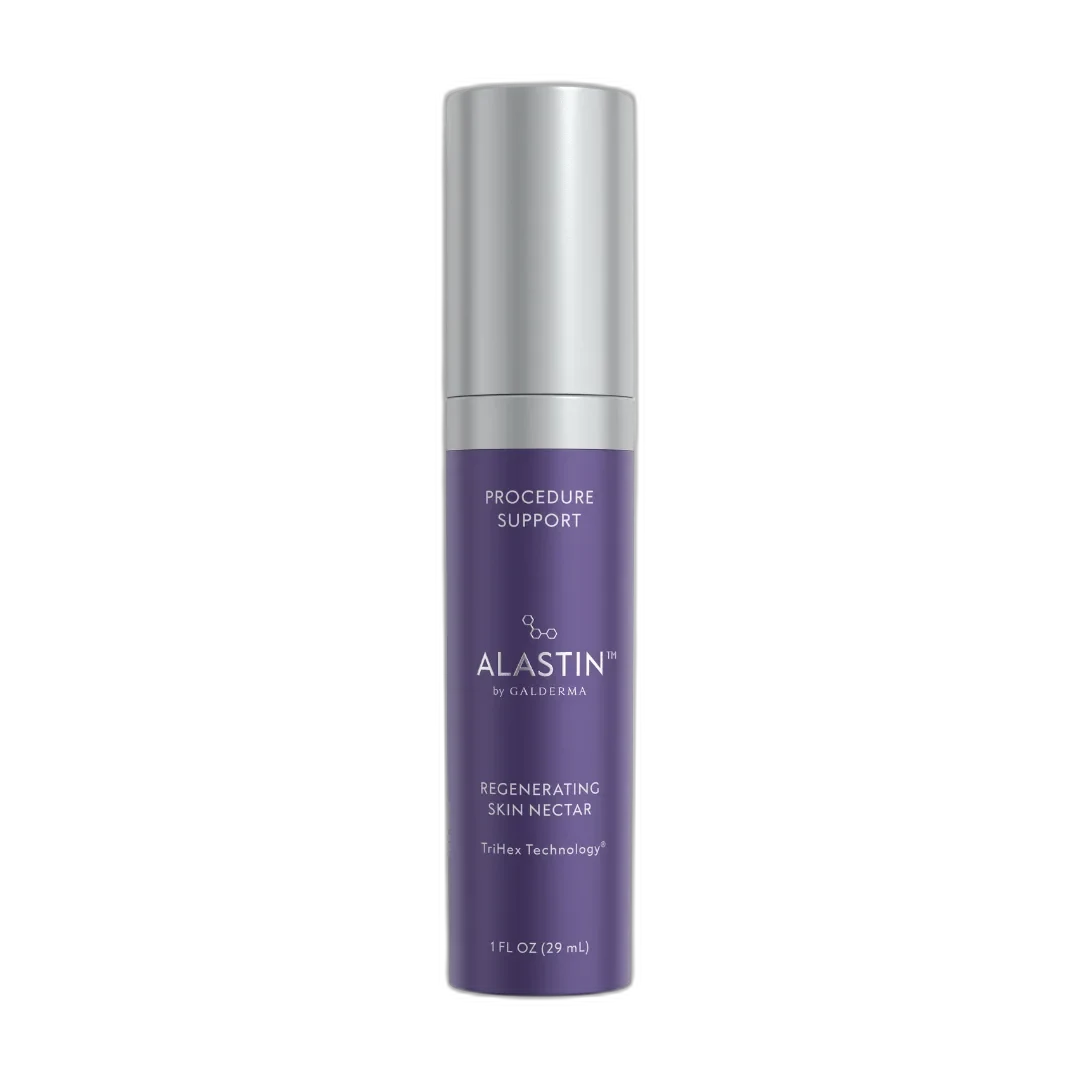
Regenerating Skin Nectar
Derm-Office Recovery Hero
 Verified reviewer
Pros & cons.
- +Water-free, preservative-free formulation specifically engineered for compromised post-procedure skin
- +TriHex Technology peptides target both collagen and elastin regeneration simultaneously
- +Exceptionally gentle silicone base creates zero sting or irritation on raw skin
- +Dunaliella salina extract helps prevent post-inflammatory hyperpigmentation after procedures
- +Lean 22-ingredient formula with no fillers, fragrance, or marketing ingredients
- +225+ reviews with 4.9-star average confirm consistent real-world performance
- −At $258 for 1 oz, this is one of the most expensive serums in the physician-dispensed market
- −Difficult to justify the price as a daily anti-aging serum outside of post-procedure recovery
- −4-6 week lifespan at twice-daily use means significant annual investment for regular users
- −Clinical evidence for TriHex Technology is primarily proprietary rather than independently published
- −Silicone-based formula may not appeal to users who prefer silicone-free skincare
- −Contains ascorbyl palmitate, a vitamin C derivative with questioned stability and conversion
The full review.
Before Alastin had a hydrating serum, a retinol, or an eye cream, it had this. The Regenerating Skin Nectar is the product that justified the brand’s existence — a purpose-built recovery treatment that emerged from a genuine clinical need rather than a market opportunity. When your face has just been resurfaced by a fractional laser or peeled down to fresh, raw skin, standard skincare is either too harsh (anything with active ingredients stings), too inert (petroleum jelly just sits there), or too risky (water-based products can harbor bacteria on a compromised barrier). The Skin Nectar was designed to occupy the narrow space between those inadequate options.
The water-free formulation is the most immediately notable feature, and it is not a marketing gimmick. By building the entire formula on a cyclopentasiloxane and dimethicone crosspolymer base, Alastin eliminates two problems simultaneously: the need for preservatives (no water means no microbial growth vector) and the sting factor (water-based products on raw post-procedure skin can cause significant discomfort). What you get instead is a silky, almost ethereal texture that glides over even the most irritated skin without so much as a twinge.
TriHex Technology — the brand’s patented peptide combination of palmitoyl tripeptide-1 and palmitoyl hexapeptide-12 — is the active core. The mechanism is conceptually elegant: these peptides are designed to stimulate fibroblasts on two fronts. First, they help clear away the damaged collagen and elastin fragments that accumulate in aging and procedure-stressed skin. Second, they signal the production of new structural proteins to replace what was lost. The phospholipid delivery system encapsulates the peptides for improved penetration through the silicone vehicle — a necessary engineering step since peptides do not naturally penetrate silicone-based matrices well.
The anti-inflammatory supporting cast is well-chosen for the recovery context. Naringenin, a citrus flavonoid, provides antioxidant protection and helps reduce the redness cascade that follows skin trauma. Arnica montana adds its traditional anti-bruising properties. Dunaliella salina extract contributes phytoene and phytofluene — colorless carotenoids that are particularly interesting because they help prevent post-inflammatory hyperpigmentation, one of the most frustrating complications of skin-resurfacing procedures, especially for patients with Fitzpatrick skin types III-VI.
The squalane and olive leaf extract round out the formula with additional antioxidant and barrier-support functions. It is a deliberately lean ingredient list — twenty-two ingredients total, compared to the forty or fifty found in many serums — and that restraint is a feature, not a limitation. Every ingredient serves the recovery mission. There are no fillers, no marketing ingredients, no fragrance compounds.
Using this product is a genuinely pleasant experience, which matters more than usual because you are using it on skin that does not feel pleasant at all. The silicone base creates an immediate sensation of smooth, protective comfort. It does not pull, tug, or create friction on tender skin. It absorbs into a velvety finish that other products layer over without pilling. At twice-daily application, the 1 oz bottle lasts approximately four to six weeks — enough for one full post-procedure recovery cycle with some left over for daily maintenance.
The clinical data is encouraging. Alastin’s studies show a 90% increase in elastic fibers after two weeks of use and visible improvement in post-procedure appearance within 4-14 days. Users consistently report that recovery timelines are noticeably shorter — what used to take seven to ten days of visible redness and peeling compresses to four or five. The 225+ reviews and 4.9-star average rating across retail channels corroborate the clinical claims with real-world experience.
Now, the price. There is no way to discuss this product without confronting the $258 elephant in the room. For one fluid ounce of a serum — even a water-free, preservative-free, peptide-loaded serum — this is an extraordinary price point. It costs more than many of the procedures it is designed to help recover from. If you get laser treatments quarterly and use a full bottle for each recovery, you are spending over $1,000 annually on recovery serum alone.
The counterargument is that this product exists in the context of procedures that cost hundreds to thousands of dollars. Adding $258 to a $2,000 laser resurfacing session to optimize the results and reduce downtime is, percentage-wise, a reasonable investment in outcome quality. It is easier to justify as a procedure add-on than as a standalone anti-aging treatment.
And that is the key distinction. As a post-procedure recovery product, the Regenerating Skin Nectar is outstanding — one of the best-designed and most clinically credible products in its narrow category. As a daily anti-aging serum for skin that is not recovering from anything in particular, the TriHex peptides still offer value, but the cost-to-benefit ratio tilts unfavorably compared to excellent peptide serums at a fraction of the price.
This product earned its reputation in the recovery room, and that is where it delivers its most convincing value. If you invest in regular skin-rejuvenating procedures, the Skin Nectar is as close to a necessary companion product as exists. If you are looking for a daily anti-aging serum, the technology is impressive but the price demands more justification than the formula alone provides.
Ingredient analysis.
Full INCI list
Cyclopentasiloxane, Dimethicone Crosspolymer, Pentaerythrityl Tetraisostearate, Heptyl Undecylenate, Glycine Soja (Soybean) Oil, Panthenyl Triacetate, Palmitoyl Tripeptide-1, Palmitoyl Hexapeptide-12, Naringenin, Oleuropein, Olea Europaea (Olive) Leaf Extract, Phosphatidylserine, Arnica Montana Flower Extract, Phospholipids, Dunaliella Salina Extract, Tocopherol, Ascorbyl Palmitate, Squalane, Caprylic/Capric Triglyceride, Caprylyl Methicone, Propylene Carbonate, Stearalkonium Hectorite
Skin match.
The science.
The Science
TriHex Technology works by remodeling the extracellular matrix (ECM), where skin clears damaged structural proteins and replaces them with new ones. Palmitoyl tripeptide-1 is a type I collagen fragment that acts as a matrikine. This signaling molecule tells fibroblasts to start new collagen synthesis. This follows matrikine research in Experimental Gerontology (Laugier et al., 2000), which shows specific collagen fragments stimulate fibroblast activity via a feedback mechanism: degradation products signal the need for replacement.
Palmitoyl hexapeptide-12 targets elastin production, a protein adult skin struggles to regenerate. While elastin production mostly stops after puberty, in-vitro studies show peptide-mediated stimulation of tropoelastin — the elastin precursor. Alastin's internal data claims a 90% increase in elastic fibers after two weeks of application, though independent validation of this specific claim is limited.
Phytoene and phytofluene from Dunaliella salina are part of an emerging area of cosmetic science. These colorless carotenoids have photoprotective and anti-melanogenic properties. Research in the Journal of Agricultural and Food Chemistry characterizes their antioxidant capacity. Their ability to absorb UV radiation in the 280-350 nm range provides photoprotection relevant during post-procedure recovery when skin is photosensitive.
Naringenin's anti-inflammatory properties appear in Pharmacological Research, showing it inhibits NF-kB inflammatory pathways and reduces pro-inflammatory cytokine production. For post-procedure skin, this reduces erythema and speeds the resolution of the acute inflammatory phase following controlled skin injury.
Dermatologist Perspective
Dermatologists performing laser resurfacing, chemical peels, and microneedling frequently recommend the Regenerating Skin Nectar as a standard post-procedure protocol. Board-certified dermatologists note the water-free formulation fills a gap in post-procedure care; most conventional skincare products do not meet the requirements of freshly resurfaced skin. TriHex peptide technology is a meaningful differentiator, and the Mayo Clinic Store carries the product, suggesting institutional endorsement. Dermatologists often recommend starting the Regenerating Skin Nectar 2-4 weeks before planned procedures to optimize skin condition, then continuing through the full recovery period.
Where it fits in your routine.
Apply 1-2 pumps to clean skin every morning and evening. For post-procedure use: start as soon as your dermatologist clears you (often immediately after treatment). For pre-procedure prehab: start 2-4 weeks before your scheduled treatment. The silicone base layers smoothly under moisturizer and sunscreen. Avoid eye contact. Follow your provider's specific instructions on timing and frequency for your procedure type.
At $258 for 1 oz, this ranks among the most expensive serums in the physician-dispensed category. The price makes sense as a post-procedure recovery investment — adding $258 to a $500-3000 procedure is a small percentage increase for potentially faster, better recovery. As a daily anti-aging serum, the cost-benefit analysis is less favorable: $30-80 peptide serums provide similar daily anti-aging benefits. The water-free, preservative-free formulation adds manufacturing complexity and unique benefits for compromised skin. No other sizes or value sets exist.
Patients who regularly undergo skin-rejuvenating procedures (laser resurfacing, chemical peels, microneedling, RF treatments) and want to optimize recovery time and treatment outcomes. Also suitable for anyone with a generous skincare budget seeking a premium anti-aging peptide treatment with an impeccable safety profile.
Budget-conscious shoppers not using this for post-procedure recovery can find effective peptide serums at a fraction of the price for comparable daily anti-aging benefits. This is also not ideal for those who want silicone-free formulations or standalone hydration (this is a treatment, not a moisturizer).
Product details.
This lightweight serum has a water-free silicone base. It glides on easily and absorbs fast. The finish is smooth and velvety, not greasy or heavy.
Unscented — completely fragrance-free, preservative-free formula.
An opaque airless pump bottle protects the water-free formula from oxidation and contamination. The precise pump dispenser allows controlled application.
It soothes on contact. The silicone base creates a protective, calming layer over sensitive skin. It causes no stinging, tingling, or irritation. Post-procedure users report instant relief and comfort.
4-6 weeks with twice-daily face application
12 months
All Year
The backstory.
The Regenerating Skin Nectar is Alastin's flagship product and the reason the brand exists. It was the first product developed using TriHex Technology, specifically to solve the post-procedure recovery problem that Dr. Zein El-Attrache (the brand's scientific advisor) identified: patients undergoing laser resurfacing and chemical peels needed something gentler than standard skincare but more active than petroleum jelly. The product won SHAPE Magazine's Best Healing Skin Treatment award in 2021 and is now sold through channels including the Mayo Clinic Store.
About Alastin
Established Brand (5–20 years)Alastin Skincare launched in 2015 and Galderma acquired it in 2022. The Regenerating Skin Nectar is the flagship product and uses patented TriHex Technology. Dermatologist offices primarily dispense the brand, which has clinical positioning backed by its pharmaceutical parent company.
Common myths.
Water-free products can't hydrate the skin.
This formula lacks water. Its squalane and silicone base creates an occlusive environment that prevents transepidermal water loss and locks in existing skin moisture. Use it with hydrating products rather than as a replacement. The water-free format avoids preservatives and prevents stinging on compromised skin.
This product only works for people who get cosmetic procedures.
TriHex peptides and anti-inflammatory botanicals benefit all skin, even though the formula optimizes for post-procedure recovery. Daily use in anti-aging routines improves texture and firmness over time. The question is not if it works outside the procedure context, but if the $258 price justifies that use case.
FAQ.
When should I start using Alastin Skin Nectar before a procedure?
Alastin recommends using the Nectar for 2-4 weeks before planned procedures to strengthen skin and optimize its starting condition. This pre-procedure 'prehab' approach builds barrier resilience so skin recovers faster after the procedure. Continue use post-procedure as directed by your dermatologist.
Can I use Alastin Skin Nectar as my daily moisturizer?
The Skin Nectar is a treatment serum, not a standalone moisturizer. The silicone and squalane base provides some occlusive moisture protection, but most users need a dedicated moisturizer on top — especially in dry climates. Layer a hydrating moisturizer over The Skin Nectar for complete moisture support.
Is Alastin Regenerating Skin Nectar fragrance-free?
Yes — it is fragrance-free, alcohol-free, and preservative-free. The water-free silicone base removes the need for traditional preservatives. This makes it one of the gentlest treatment serums for skin in its most compromised, sensitive state.
How is this different from Alastin Restorative Skin Complex?
The Regenerating Skin Nectar uses a silicone base and contains no water. It works for immediate post-procedure use on compromised skin. The Restorative Skin Complex is a water-based formula with more ingredients for daily anti-aging use. Many dermatologists recommend the Regenerating Skin Nectar for acute recovery and the Restorative Skin Complex for ongoing maintenance.
What the community says.
"Dramatically reduces post-procedure recovery time"
"Silky smooth texture feels luxurious on irritated skin"
"Noticeably calms redness after laser treatments"
"Improves skin texture and brightness with continued use"
"Extremely expensive at $258 for 1 oz"
"Benefits for non-procedure daily use are hard to justify at this price"
"Small bottle runs through quickly at twice-daily use"
"Results may not be dramatic enough for the investment if not using post-procedure"
People also looked at.