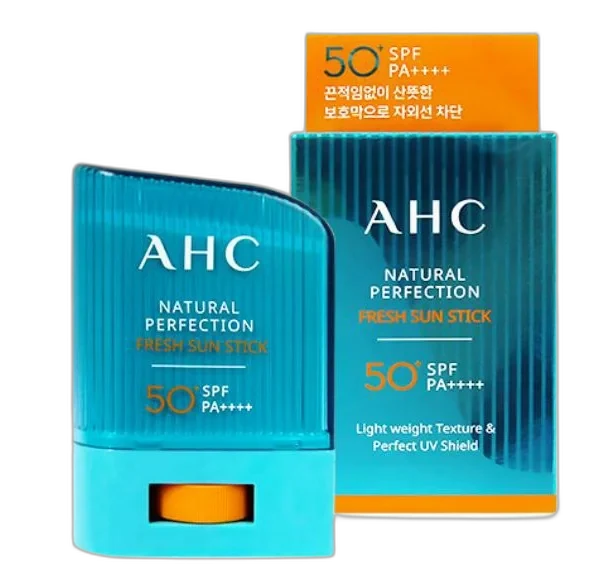
Natural Perfection Fresh Sun Stick SPF 50+
K-Beauty SPF Touchup Hero
 Verified reviewer
Pros & cons.
- +Uses next-generation Tinosorb S and Uvinul A Plus UV filters
- +Genuine PA++++ broad-spectrum UVA protection
- +Invisible finish on all skin tones, no white cast
- +Twist-up stick format makes midday reapplication realistic
- +Centella, green tea, and aloe add supportive soothing
- +Glides smoothly without dragging or pulling on makeup
- −Stick format makes adequate coverage harder to verify
- −Contains octinoxate, restricted in some reef jurisdictions
- −Citrus oils make it unsuitable for sensitive skin
- −Coconut oil can break out acne-prone users
- −Not cruelty-free due to mainland China distribution
- −Should supplement rather than replace morning lotion SPF
The full review.
K-beauty sunscreens often seem ‘better’ than American sunscreens because of regulatory chemistry. The US FDA last approved a new UV filter in 1999. Since then, European and Asian regulators approved next-generation filters — Tinosorb S, Tinosorb M, Uvinul A Plus, Uvinul T 150, Mexoryl SX, and Mexoryl XL — that offer broader UVA coverage, better photostability, and a more elegant cosmetic feel than older US filters. Sunscreens outside the US use these modern ingredients; American sunscreens cannot. AHC’s Natural Perfection Fresh Sun Stick is a small, $18, twist-up tube containing two of these next-generation filters. This makes it a meaningful product rather than just another K-beauty sun stick.
The filter system in this stick uses a modern Korean blend. Homosalate, ethylhexyl methoxycinnamate (octinoxate), and ethylhexyl salicylate provide the UVB backbone; these are familiar global chemical filters used for decades. The interesting ingredients appear lower on the INCI: bis-ethylhexyloxyphenol methoxyphenyl triazine (Tinosorb S) and diethylamino hydroxybenzoyl hexyl benzoate (Uvinul A Plus). Tinosorb S is a broad-spectrum filter that absorbs strongly across UVB, UVA-I, and UVA-II ranges. It is exceptionally photostable and does not degrade with sun exposure like older filters, so protection lasts for hours. Uvinul A Plus is a dedicated UVA filter that covers the longer wavelength UVA range responsible for most photoaging and pigmentation. Together, they provide measurably better UVA coverage than nearly any chemical-filter-only American sunscreen at any price. The PA++++ rating on the package reflects real broad-spectrum performance.
The stick base uses dimethicone, polyethylene, and waxes, with cetyl ethylhexanoate and dicaprylyl carbonate as emollient esters to ensure the stick glides smoothly without dragging. Supportive ingredients further down the list include centella asiatica for soothing, green tea extract and camellia japonica for antioxidants, lavender water and aloe for comfort, and vanilla and dioscorea root for the brand’s signature touches. These do not perform dramatic skin treatment, but they make the formula feel more thoughtful than a basic SPF stick. Citrus oils — orange peel, mandarin peel, and litsea cubeba — provide the fresh scent and a mildly fragrant character, which is a small irritation flag for sensitive users.
Using the stick is easy. The twist-up format dispenses the product in a smooth, even glide with light pressure. Application leaves a barely-perceptible satin finish with no white cast on any skin tone. The chemical filter system ensures an invisible finish even on deep skin tones, a major practical advantage of Korean chemical sunscreens over mineral alternatives. Over makeup, the stick glides without disturbing the base if you apply it gently and press with fingertips instead of rubbing. The citrus scent is moderate and fresh on application, then fades to almost nothing within minutes.
The practical limitation of all sun sticks — including this one — is that real-world coverage is harder to verify than with a lotion. SPF ratings require specific application conditions (about 2 mg per square centimeter of skin). Most users apply less product with a stick than with a lotion because rolling a stick across the face deposits less than squeezing out a quarter teaspoon. To fix this, use the stick correctly: glide across each face section two to three times, press in with fingertips, and use the stick for reapplication rather than your only morning application. For midday touchups over makeup or for areas like cheeks, nose, ears, and around the eyes, sun sticks are useful. For your initial morning SPF, a lotion is generally more reliable for achieving the rated protection.
The limitations beyond format are important. The fragrance from citrus oils makes this product unsuitable for sensitive or rosacea-prone skin and for photosensitive conditions where citrus oils cause issues. The coconut oil in the formula is comedogenic for some, so acne-prone skin should test it cautiously before full-face use. The brand is not cruelty-free due to mainland China retail distribution. Also, octinoxate is restricted in Hawaii and other jurisdictions due to coral reef impact concerns, so this is not the right choice for snorkeling or beach swimming in protected reef areas.
The value case is solid. At $18 for 22g of a stick using Tinosorb S and Uvinul A Plus, AHC delivers a modern broad-spectrum filter system you cannot buy in any American-formulated sunscreen at any price. For consumers wanting UVA protection beyond what US sunscreens offer, K-beauty sunscreens like this provide a genuine functional advantage. The stick format adds convenience for the most common SPF failure point: reapplication during the day. As one tool in a sun protection routine, this stick earns its place. As your only sunscreen, pair it with a lotion application in the morning for maximum reliability.
Formula
Formula
Ingredient analysis.
Full INCI list
Dimethicone, Vinyl Dimethicone/Methicone Silsesquioxane Crosspolymer, Polyethylene, Cetyl Ethylhexanoate, Homosalate, Ethylhexyl Methoxycinnamate, Dicaprylyl Carbonate, Hydrogenated Poly(C6-14 Olefin), Ethylhexyl Salicylate, Tocopheryl Acetate, Diethylamino Hydroxybenzoyl Hexyl Benzoate, Bis-Ethylhexyloxyphenol Methoxyphenyl Triazine, Ozokerite, Citrus Aurantium Dulcis Peel Oil, Citrus Nobilis Peel Oil, Litsea Cubeba Fruit Oil, Camellia Sinensis Leaf Extract, Camellia Japonica Flower Extract, Lavandula Angustifolia Flower Water, Centella Asiatica Extract, Glacier Water, Opuntia Ficus-Indica Stem Extract, Oryza Sativa Bran Extract, Argania Spinosa Kernel Oil, Aloe Barbadensis Leaf Extract, Calendula Officinalis Flower Extract, Cocos Nucifera Oil, Vanilla Tahitensis Fruit Extract, Helianthus Annuus Seed Oil Unsaponifiables, Maris Aqua, Lactobacillus/Soybean Ferment Extract, Dioscorea Japonica Root Extract
Skin match.
The science.
The Science
The UV filter chemistry in this stick highlights the gap between Korean and American sunscreen formulation that consumers often hear about but rarely understand. Homosalate, ethylhexyl methoxycinnamate (octinoxate), and ethylhexyl salicylate provide the UVB backbone. These three older organic filters absorb strongly in the UVB range (290-320 nm) and provide most of the sunburn protection for the SPF 50+ rating. These are familiar global filters with extensive published research on efficacy.
Broad-spectrum coverage relies on two next-generation filters approved in Korea, the EU, and most of Asia, but not by the US FDA. Bis-ethylhexyloxyphenol methoxyphenyl triazine, sold commercially as Tinosorb S, is an organic filter with absorption peaks across UVB and UVA. It covers wavelengths from about 280 to 400 nm with strong activity and is photostable, so it does not break down with sun exposure like some older filters. Published research shows Tinosorb S is among the most effective single-molecule broad-spectrum filters available, and it also photostabilizes other filters in the formula.
Diethylamino hydroxybenzoyl hexyl benzoate, sold as Uvinul A Plus, is a dedicated UVA filter with peak absorption around 354 nm—the UVA-I range that contributes most to photoaging and dermal pigmentation. The combination of Tinosorb S and Uvinul A Plus delivers UVA coverage more comprehensive than what US-only filter systems typically achieve with avobenzone alone, especially regarding photostability over hours of wear.
The PA++++ rating on the package is the highest level of UVA protection on the Asian PA scale. This indicates the product reduces UVA-induced persistent pigment darkening by a factor of 16 or more in standardized testing—a real-world benefit for photoaging prevention.
The stick format uses dimethicone, waxes (polyethylene, ozokerite), and emollient esters to create a solid that softens with body heat and glides onto skin. The trade-off is that real-world application density with a stick is typically lower than with a lotion, which can reduce the actual protection compared to the rated SPF.
Dermatologist Perspective
Dermatologists generally recommend daily broad-spectrum sunscreen as the most important anti-aging and skin cancer prevention intervention in any skincare routine. Board-certified dermatologists note that the modern UV filter system in Korean sunscreens like this one—specifically the inclusion of Tinosorb S and Uvinul A Plus—offers better UVA protection than most US-only filter systems, which matters for photoaging and pigmentation prevention. However, dermatologists also generally recommend using sun sticks as supplementary or reapplication tools rather than the only daily SPF application, since real-world stick application typically delivers less product than the rated SPF requires. For patients with sensitive skin, rosacea, or acne, dermatologists may recommend fragrance-free, non-comedogenic alternatives. As with any chemical sunscreen, dermatologists also typically recommend reapplication every two hours of sun exposure to maintain protection.
Where it fits in your routine.
Apply this as the final step in your morning skincare routine, after moisturizer and any treatments. Twist up about 5mm of product and glide it across the face in two to three passes per section, then press with fingertips to distribute evenly. For best protection, use this stick alongside a lotion sunscreen rather than replacing it. Use the stick for targeted areas like cheeks, nose, ears, and around the eyes, or for midday reapplication over makeup. Reapply every 2 hours of direct sun exposure, after swimming, and after heavy sweating. Avoid the immediate eye area.
At $18 for 22g, AHC Natural Perfection Fresh Sun Stick is competitively priced for its modern UV filter system. No larger size exists. AHC's filter system matches the best K-beauty sun sticks from Beauty of Joseon, Round Lab, and Etude House, while the price stays among the most affordable. Compared to American sun sticks, this chemistry is unavailable in US-formulated products at any price. This gives a functional advantage to buyers prioritizing UVA protection. As a reapplication tool, the stick format offers practical value that lotion sunscreens don't, because most users use a stick during the day but skip lotion.
This broad-spectrum sun stick works for midday reapplication over makeup. It uses Tinosorb S and Uvinul A Plus for modern UVA protection. It suits K-beauty fans seeking affordable Korean sunscreen options. It is best for normal, combination, and oily skin without significant sensitivities.
People with sensitive, rosacea-prone, or fragrance-reactive skin need a fragrance-free alternative. Acne-prone skin requires caution because of coconut oil. Strict cruelty-free shoppers should skip this due to mainland China distribution. Snorkelers in protected reef areas should use a mineral sunscreen because of octinoxate restrictions.
Product details.
Solid stick that glides smoothly with light pressure
Fresh citrus from the orange and mandarin oils
Twist-up plastic stick
The first swipe glides easily and leaves a subtle satin finish without a white cast. The citrus scent is moderate and pleasant. It applies easily over makeup for touchups, but you cannot easily verify if you applied enough product for full SPF protection on first use.
About 4-6 months as a primary sunscreen, longer as a touchup product
12 months
All Year
The backstory.
AHC developed this sun stick as part of the broader Korean sun stick boom that took off around 2018, when Korean brands recognized that consumers wanted convenient reapplication options for a market that took daily SPF very seriously. The Natural Perfection branding positions it as the everyday-use option in AHC's sun lineup.
About AHC
Established Brand (5–20 years)AHC launched in Korea in 1999. It built its reputation in Korea's professional aesthetics market before moving to consumer retail. Carver Korea (Unilever) now owns the brand, which is a leading affordable K-beauty brand in Korean drugstores.
Common myths.
Sun sticks provide the same SPF protection as lotions in real-world use.
Stick formats deliver SPF effectively in lab conditions if applied at the tested density. Most people apply less product with a stick than with a lotion in real-world use, which reduces actual protection. Use sticks for touchups, not as your only daily SPF application.
Korean sunscreens outperform American sunscreens.
The advantage is specific. Korean and European sunscreens use next-generation UVA filters like Tinosorb S and Uvinul A Plus, which the US FDA hasn't approved. This often shows superior broad-spectrum protection on paper, but well-formulated American sunscreens with zinc oxide match or exceed UVA performance using different chemistry.
FAQ.
Is AHC Natural Perfection Fresh Sun Stick worth it?
Yes, especially for reapplication over makeup. The Tinosorb S and Uvinul A Plus filter system provides good broad-spectrum protection at a reasonable price. The stick format makes midday reapplication realistic.
Can I rely on a sun stick alone for daily SPF?
Unlikely. Stick formats work well for touchups but lack the volume needed to reach the labeled SPF rating in real-world use. Use a lotion sunscreen for morning application and save the stick for reapplication or extra coverage.
Is this sun stick reef safe?
Not fully. The formula uses octinoxate (ethylhexyl methoxycinnamate), which some jurisdictions restrict due to coral reef impact concerns. If you snorkel or swim in protected reef areas, use a mineral sunscreen instead.
Does it leave a white cast?
No — the chemical filter system leaves an invisible finish on all skin tones. This gives Korean chemical sunscreens a major advantage over mineral options for medium and deep skin tones.
Can I apply this over makeup?
Yes, and that is a primary use case for sun sticks. Glide them across the face without rubbing, then press with fingertips to keep makeup intact. Reapply every 2 hours of sun exposure.
Is it pregnancy safe?
Most ingredients are pregnancy safe, but octinoxate and homosalate sometimes trigger endocrine concerns during pregnancy. If you are pregnant and want to avoid these filters, use a mineral zinc oxide sunscreen instead. Always consult your doctor.
What the community says.
"Convenient stick format for touchups"
"Modern broad-spectrum filter system"
"No white cast"
"Easy to reapply over makeup"
"Coverage harder to verify with stick format"
"Citrus scent isn't for everyone"
"Coconut oil can break out acne-prone users"
"Hard to apply enough for full SPF protection"
People also looked at.